


Taking your pet for walks in Indian cities can be challenging due to traffic, stray dogs, pollution, and hot pavements. Here’s how you can make city walks safer for your furry friends:
- Gear Up Properly: Use a durable leash, harness, reflective gear for visibility, ID tags, and paw protection like booties or wax.
- Plan Walks Wisely: Opt for early mornings or late nights to avoid traffic, heat, and pollution. Check the pavement temperature using the 7-second rule.
- Stay Hydrated: Carry water and offer breaks every 10 minutes. Watch for signs of fatigue or heatstroke.
- Choose Safe Routes: Stick to shaded paths, grassy areas, and avoid stray dog zones or litter-filled streets.
- Follow Local Rules: Keep your pet leashed, carry waste bags, and ensure your pet is licensed and vaccinated to avoid fines.
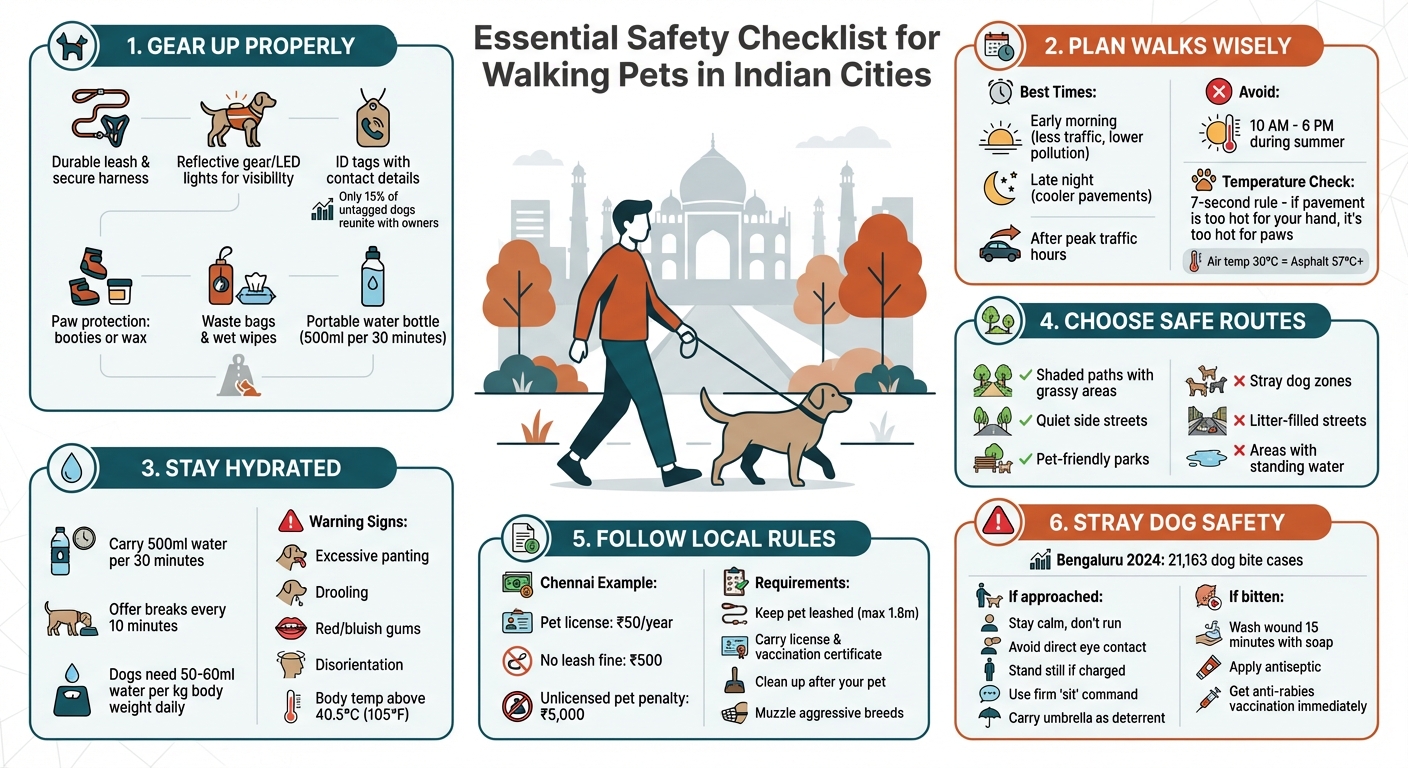
Essential Safety Checklist for Walking Pets in Indian Cities
Dog Walking In the City - Would This Help You?
Equipment You Need for Safe City Walks
Having the right gear is crucial for safe urban walks with your pet. Start with a durable leash and secure harness, especially in city settings where traffic, stray animals, and unexpected distractions are common hazards. Choose materials that can handle sudden pulls, and if your pet has neck or breathing issues, a harness is a much safer option than a collar.
Visibility matters, particularly during early morning or late evening walks. Look for leashes and harnesses with reflective stitching, LED lights, or glow-in-the-dark features to ensure drivers and cyclists can easily spot you and your pet. In cities like Chennai, keeping your dog leashed isn't just a safety measure - it’s the law. Walking without a leash could land you a ₹500 fine, while owning an unlicensed pet may result in penalties of up to ₹5,000. Dr. J Kamal Hussain, Veterinary Officer at Greater Chennai Corporation, explained:
From Nov 24, door-to-door inspections will be carried out by health workers. If a dog is found unlicensed... a penalty of ₹5,000 will be imposed on the owner.
To further safeguard your pet, ensure they have clear identification.
ID tags with updated contact details are essential. Studies show that only 15% of untagged dogs are reunited with their owners. Keep your pet's registration current and consider adding a microchip or GPS tracker as a backup. Alongside identification, protect your pet’s paws from urban dangers.
Paw protection is especially important on Indian streets. Pavement temperatures can soar - when the air is 30°C, asphalt can reach over 57°C, which can burn your pet’s paw pads. A simple test: place your hand on the pavement for 7–10 seconds. If it feels too hot for you, it’s too hot for your pet. Dog booties are a great solution, shielding paws from extreme heat, broken glass, and irritants like chemical salts. If your pet dislikes booties, applying paw wax or coconut oil can help prevent cracking.
Lastly, don’t forget waste bags. Cleaning up after your dog isn’t just courteous - it helps curb the spread of diseases like leptospirosis and parvovirus. Keep a few wet wipes handy to clean grime or allergens from your pet’s paws after a walk.
Choosing Safe Routes and Walking Times
Selecting the right route and time for your city walks is crucial to keep your pet safe and comfortable. Early morning walks are ideal - there’s less traffic, lower pollution levels, and reduced noise, which can help keep your pet calm and stress-free. Dr. Gautam Anand, Senior Veterinary Consultant at Dr. Anand's Pet Clinic, highlights:
There is less traffic, almost no factory pollution, and considerably less noise pollution to discomfort the animals at early morning hour.
If early mornings aren’t an option, adjust your schedule to avoid peak traffic and hot weather. Walking after peak traffic hours can significantly improve air quality for both you and your pet. Karthik Rajan, Chief Operating Officer at SAVAVET, advises:
It is very important that pet parents take their pets for walks post peak traffic hours, when the air quality improves.
In warmer months, consider late-night walks. Pavements can retain heat for hours after sunset, so waiting until later ensures the ground is cool enough for your pet’s paws.
Avoid walking between 10 am and 6 pm during summer, as this is when pavement surfaces are at their hottest. In cities with high pollution levels, like Delhi or Mumbai, plan walks around real-time Air Quality Index (AQI) updates rather than sticking to a fixed routine. On days when the AQI falls into the "severe" category, keep outdoor trips short and functional, limiting them to toilet breaks rather than long walks.
When it comes to routes, opt for quiet side streets and pet-friendly parks. Look for paths with even surfaces, shade, and minimal risks like broken glass or standing water. Steer clear of isolated streets with stray dogs or areas filled with litter and food waste. If you’re in an area with stray dogs, carrying a walking stick or umbrella can serve as a gentle deterrent. Whenever possible, stick to shaded paths with grassy areas to protect your pet’s paws from hot asphalt.
Keeping Your Pet Healthy and Hydrated
Bringing Water and Offering Regular Breaks
When heading out with your pet, especially in warm weather, it's essential to carry enough water - about 500 ml for every 30 minutes of activity. Plan for short breaks every 10 minutes, ideally in shaded spots, to keep your furry friend comfortable and hydrated. A portable water bottle with a collapsible bowl can make these breaks much easier. Darshankaur Khalsa, Co-Founder of Pets of Paradise, shares a simple tip:
"Always keep water handy during walks and change it every few hours. You can also add ice cubes in their bowl."
Dogs generally need around 50–60 ml of water per kg of body weight daily. To make hydration more appealing, you can add ice cubes or a splash of low-sodium bone broth to their water. Treats like seedless watermelon, cucumber, or frozen curd pops are also refreshing and hydrating options. However, avoid human sports drinks as they often contain sugar and caffeine, which are harmful to pets.
Keeping your pet hydrated and taking regular breaks not only ensures their comfort but also helps you notice early signs of fatigue or overheating.
Spotting Signs of Fatigue or Heatstroke
Heatstroke is a serious risk for dogs, especially when their body temperature exceeds 40.5°C (105°F). Certain breeds, like Pugs, Bulldogs, and Shih Tzus, are particularly vulnerable because their shorter snouts make it harder for them to cool down through panting.
Dr Harsh Veerbhan, Founder of WAAT Pet Clinic, emphasises this:
"Pets do not sweat like us. They cool themselves by panting... in extreme heat, panting alone may not be enough."
Watch out for warning signs such as excessive panting, drooling, glassy eyes, disorientation, or stumbling. Heatstroke symptoms may also include red or bluish gums, hot skin (especially on ears and paws), and a rapid heart rate. Dehydration, another concern, can show up as sticky gums, sunken eyes, loss of appetite, or lethargy. A quick way to check is by pinching the skin on your pet’s neck - if it doesn’t snap back quickly, they may be dehydrated.
Dr Ajay Satbige, Veterinary Officer at Wiggles, offers this advice:
"If you notice any of these signs, get a cool towel, put it on them and call a veterinarian immediately."
If your pet shows signs of overheating, move them to a cool, shaded area right away. Sponge their belly, paws, and groin with cool water, as these areas help release heat quickly. You can also use a fan to aid cooling and offer small sips of water to prevent further overheating.
Checking Paws for Injuries
Hot surfaces can be especially harsh on your pet’s paws, so it’s crucial to check them regularly. Before heading out, use the 7-second rule: press your hand on the pavement for 7 seconds - if it’s too hot for you, it’s too hot for your pet. Asphalt can reach 55°C by midday, which can burn paw pads in under a minute. Since dogs primarily sweat through their paw pads, they’re even more susceptible to damage from hot surfaces.
After each walk, inspect your pet’s paws for cuts, burns, or injuries caused by debris like broken glass or rough surfaces. Wipe their paws clean with wet wipes to remove dirt, and consider applying paw butter to prevent cracking and infections. If walking on hot pavement is unavoidable, dog booties can provide an extra layer of protection. Whenever possible, choose grassy paths for walks, and avoid artificial turf during the day - it can be up to 15°C hotter than the surrounding air.
sbb-itb-5205b1e
Dealing with Traffic, Stray Animals, and Urban Dangers
Using Leashes Near Roads and Traffic
When walking your pet near busy roads, always keep them on a short leash - ideally not longer than 1.8 metres. This gives you better control and reduces the risk of your pet suddenly running into traffic. A harness is often a better choice than a collar, especially for dogs that pull, as it spreads the pressure evenly.
Teaching your dog basic commands like sit, wait, and stay at kerbs is a smart way to keep them safe. Denise Fleck, known as The Pet Safety Crusader, emphasises the importance of these commands:
"'Stay' just may prevent a dog from running into traffic while 'leave it' could deter the consumption of poison".
Once you’ve secured control near roads, it’s time to prepare for other unexpected urban encounters.
Managing Encounters with Stray Dogs
Stray dogs are a common sight in Indian cities. For instance, Bengaluru reported 21,163 dog bite cases in 2024 alone. If you come across a stray dog, it’s important to stay calm and avoid running, as this can trigger their instinct to chase. Instead, avoid direct eye contact, turn your shoulders slightly, and keep the dog in your peripheral vision.
In case a stray approaches, try using a loud, firm "sit" command with a clear hand gesture - this can often make the dog pause. If the dog charges, stand completely still with your hands at your sides. Most of the time, the dog will sniff you and lose interest.
Carrying a spring-loaded umbrella can be a practical deterrent. Opening it quickly creates a barrier between you and the dog. Citronella-based sprays are another non-harmful way to deter aggressive dogs.
If you’re bitten, wash the wound thoroughly with soap and water for 15 minutes, apply antiseptic, and seek an anti-rabies vaccination immediately. Dr. Chandraiah, Joint Director at BBMP Animal Husbandry Department, offers this advice:
"Staring or provoking animals will enrage the animals. One should not throw stones or chase the dogs. Do not run when a dog chases, instead stay calm and call for help".
While stray dogs are a concern, urban areas pose other hidden risks to watch out for.
Staying Away from Hazardous Areas
City streets can be full of dangers like broken glass, discarded food, and toxic substances that your pet might try to step on or eat. Teaching your pet the leave it command can help prevent them from picking up harmful items. Keep them on a short leash, especially in areas with litter or near garbage bins.
Standing water and puddles are another hazard, as they can carry diseases like leptospirosis and parvovirus, often spread through waste from stray animals. Avoid areas where stray dogs gather, especially if they appear territorial or are caring for puppies. Also, steer clear of disturbing dogs that are sleeping or eating.
Air pollution is another urban challenge. On days with poor air quality, try to walk your pet early in the morning when traffic and industrial emissions are lower. Adding a drop of lemon or orange juice to their water can help soothe their throat from irritants.
Following Local Rules and Walking Etiquette
Complying with city regulations and maintaining good neighbourly behaviour are essential for ensuring the safety of your pet and the community. Along with using proper safety gear and choosing the right routes, following local rules is a must for urban pet walks. In major Indian cities like Delhi, Mumbai, Chennai, and Bangalore, pet dogs must be registered with the local municipal corporation. For example, in Chennai, the annual pet license fee is ₹50. However, as of October 2025, only 3,401 dogs out of over 1,00,000 were registered. These regulations are designed to protect pets while promoting hygiene and safety in the community.
Following Leash Laws and Pet Regulations
Always keep your dog on a leash during walks to prevent accidents and ensure the safety of others. In Chennai, walking a dog without a leash can lead to a spot fine of ₹500. Additionally, aggressive breeds must be muzzled in public, and certain municipal bodies, like the Greater Chennai Corporation, allow only one pet per outing.
Carry a copy of your pet's license and anti-rabies vaccination certificate - either digital or physical - during walks. Municipal authorities may conduct inspections, and failing to register your dog could result in a ₹5,000 penalty. In Mumbai, children under 18 are not allowed to walk dogs alone. Dr. J Kamal Hussain of the Greater Chennai Corporation emphasises:
From Nov 24, door-to-door inspections will be carried out by health workers. If a dog is found unlicensed, the workers will inform the zonal veterinarian, and a penalty of 5,000 will be imposed on the owner.
Equally important is managing your pet’s waste to maintain cleanliness in public spaces.
Cleaning Up After Your Pet
According to Section 191B of the Mumbai Municipal Corporation Act, 1888, pet registration is mandatory, and owners are legally responsible for maintaining hygiene during walks. The Brihanmumbai Municipal Corporation requires pet owners to clean up after their pets in public spaces. Always carry waste bags and clean up immediately after your pet to keep the environment clean. The Animal Welfare Board of India advises:
Pet-owners, caregivers or dog walkers are advised to clean-up when the pet defecates in public premises and participate in other solutions for maintaining the cleanliness.
Respecting Housing Society Rules
While Resident Welfare Associations (RWAs) cannot ban pets, impose size restrictions, or prevent pets from using lifts and common areas, as per the Animal Welfare Board of India guidelines, it’s still important to maintain harmony within your housing society. The Brihanmumbai Municipal Corporation confirms:
Housing societies cannot ban pets or fix size limits for them. These actions go against citizens' basic rights.
To foster good relations with neighbours, follow society norms and ensure your pet does not disturb others, especially at night. If your society suggests using a service lift for pets, consider complying if it is convenient. Share your pet’s vaccination and sterilisation records with your housing society. Engage with your RWA or Apartment Owners Association (AOA) to establish solutions for pet waste disposal and designate walking areas.
Conclusion
Taking your pet for a walk in Indian cities comes with its own set of challenges, but a little preparation can go a long way. It’s not just about having the right leash or choosing the right time of day. Teaching basic commands like “sit,” “wait,” and “leave it” can make a world of difference in keeping your pet safe in urban environments. As Denise Fleck, The Pet Safety Crusader™, wisely points out:
'Stay' just may prevent a dog from running into traffic while 'leave it' could deter the consumption of poison.
Equally important is paying attention to your pet’s body language. Recognising signs of fatigue or heat stress is especially crucial for brachycephalic breeds and senior dogs, who are more prone to respiratory issues. A mix of training and awareness can create a safer experience for both your pet and the community around you.
Being a responsible pet owner isn’t just about caring for your pet - it’s also about respecting community rules and regulations. Many pet owners overlook legal requirements like carrying a pet licence, keeping their pet on a leash, or cleaning up after them. Following these guidelines not only keeps you compliant but also helps maintain a cleaner, safer environment for everyone.
City walks don’t have to be overwhelming. With the right mindset, preparation, and a little respect for the rules, you can turn each outing into a safe and enjoyable experience for both you and your furry friend.
FAQs
What is the best time to walk my pet in the city to avoid heat and pollution?
The best time to take your pet for a city walk is during the early morning hours, ideally between 5:30 AM and 7:30 AM. At this time, the air is cleaner, traffic is light, and the temperature is cooler, creating a safer and more comfortable environment for your pet.
If mornings don't fit your schedule, late evening walks, starting after 6:00 PM, can be a good alternative. However, make sure to check the day’s air quality index (AQI) before heading out, as pollution levels can spike again after rush-hour traffic. It's best to avoid walking your pet during the midday hours (10:00 AM to 4:00 PM), when temperatures often climb above 30°C, and the hot pavements can hurt your pet's paws.
By sticking to cooler and less polluted times, you can help protect your pet from heatstroke, dehydration, and respiratory problems, ensuring their walks are both safe and enjoyable.
How can I keep my pet's paws safe from hot pavements during city walks?
Protecting your pet’s paws from scorching pavements is essential, especially in India’s warm climate. Here’s how you can keep your furry companion comfortable and safe:
- Walk during cooler hours: Aim for early mornings (6:00–8:00) or late evenings (after 18:00) when the ground is less hot.
- Test the pavement: Press the back of your hand against the surface for a few seconds. If it feels too hot for your hand, it’s definitely too hot for your pet’s paws.
- Use paw protection: Lightweight dog booties or paw balms can act as a barrier against the heat.
- Stick to shaded paths: Opt for grassy areas, shaded sidewalks, or cooler surfaces to reduce contact with hot asphalt.
- Keep them hydrated: Carry water and a collapsible bowl. Offer small sips every 15–20 minutes to prevent overheating.
After your walk, rinse your pet’s paws with cool water to remove debris and soothe any heat irritation. Applying a moisturiser or paw balm can help prevent dryness and cracking. Watch out for signs of discomfort, such as limping or excessive paw licking. If you notice these, move your pet to a shaded spot and check for burns. With these simple precautions, you can ensure your pet enjoys safe and happy walks, even during the hottest days.
What should I do if my pet encounters a stray dog during a city walk?
If you and your pet encounter a stray dog while out in the city, staying composed is crucial. Sudden movements or a panicked tone can escalate the situation, so keep your voice calm and steady. Avoid direct eye contact, as it may be perceived as a challenge. Instead, rely on your peripheral vision to keep track of the stray.
If the situation calls for it, use a walking stick, umbrella, or any sturdy object to create a barrier and maintain a safe distance. Gradually back away, keeping your pet close with a tightened leash. Never turn your back or run, as this could provoke the dog to chase. Instead, try to redirect your pet’s focus and head towards a quieter spot to minimise the chances of the stray following.
If the stray shows signs of aggression, don’t hesitate to ask for help from nearby people or contact local authorities. Also, ensure your pet always wears updated identification tags - this can be a lifesaver in unexpected situations.


