Skip to content


INJECTABLE
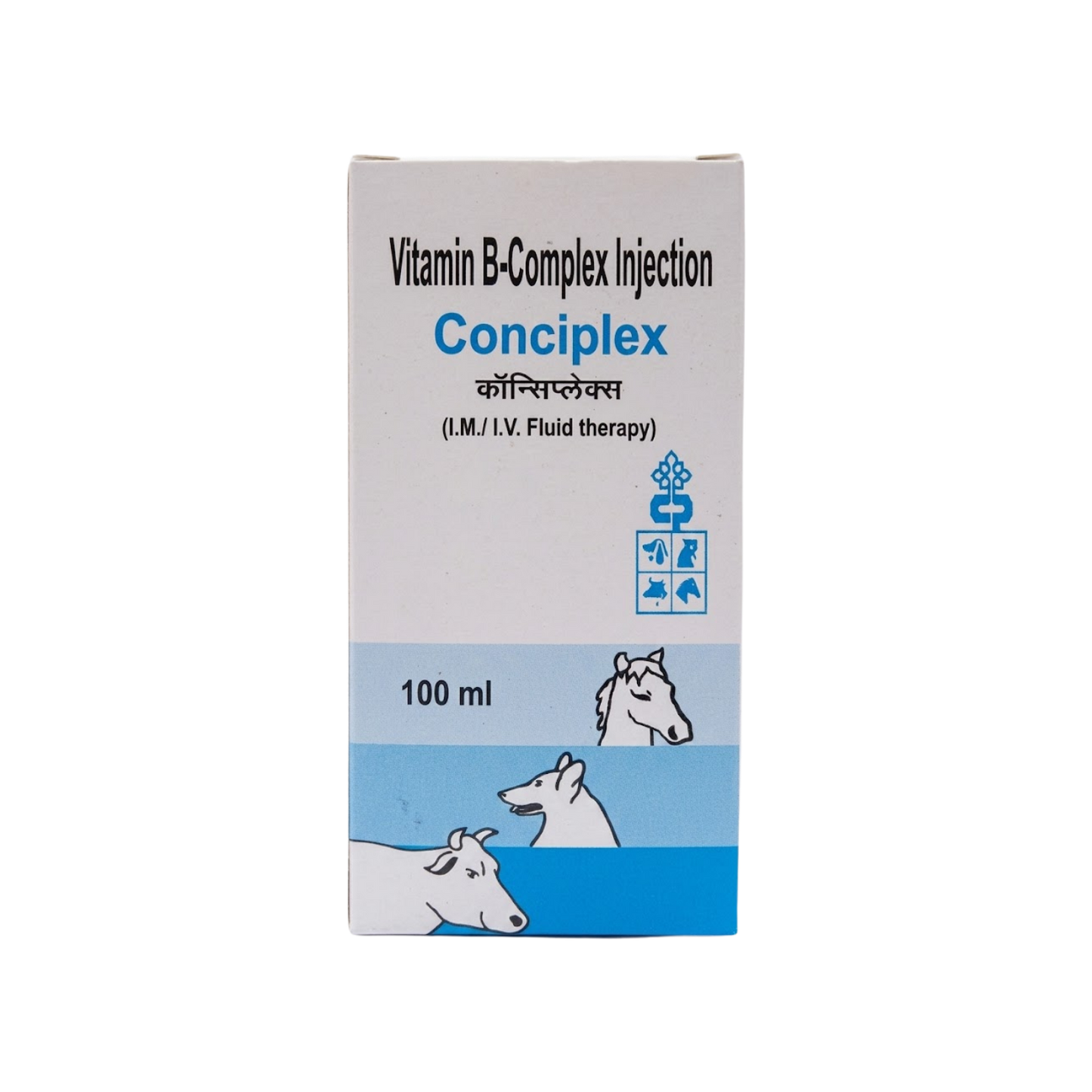
Concept Conciplex Injection, 100ml
Concept Conciplex Injection, 100ml
By CONCEPT
Out of Stock
Prescription Required
Check Availability
Rapid 3-4 Day Delivery,Tiny Extra Fee!
-
 Pet Safe
-
 Best Quality
-
 Fast Delivery
-
 Secure Payment


About Conciplex Injection
Some medicines work best as an injection, given by a vet when a fast or reliable dose is needed.
Conciplex Injection is an injection from Concept that contains b vitamins.
It is used for nerve health and B vitamin deficiency. Ask your vet whether it suits your animal, especially if your animal has a health condition or takes other medicines.
Available Sizes and Strengths
- Conciplex Injection, 30ml
- Conciplex Injection, 100ml (this page)
This is the 100ml pack. Other sizes of the same product are listed above.
Key Ingredients
Active ingredients listed for this product. The exact strength is printed on the pack.
| Ingredient | What it does |
|---|---|
| B vitamins | Vitamins B1, B2, B6 and B12 support nerves, energy use and red blood cells. |
Features and Benefits
- Injection. Works quickly and gives a reliable dose when tablets are not practical.
How It Works
- B vitamins. B vitamins help nerves send signals and help the body turn food into energy.
How to Use
- Given by a vet. Injections should be given by a vet, or by someone your vet has trained, using a sterile needle and syringe each time.
- Dose. Your vet works out the dose from your animal's weight and condition, and decides how many injections are needed.
- Storage. Store in a cool, dry place away from direct sunlight, unless the pack gives other storage directions. Keep out of reach of children.
Safety and Precautions
- Tell your vet about any other medicines your animal takes, and if your animal is pregnant, nursing or has liver or kidney problems.
Frequently Asked Questions
What is Conciplex Injection used for?
Conciplex Injection contains b vitamins. Vets use it for nerve health and B vitamin deficiency. Your vet decides whether it is right for your animal and for how long.
Can I give Conciplex Injection at home?
Only if your vet has prescribed it and shown you how to inject safely. Most injections are given at the clinic.
Do I need a prescription for Conciplex Injection?
No, a prescription is not needed. It is still best to check with your vet before you start.
Also in: Injectables for Dogs · Injectables for Cats · Injectables for Farm Animals · All Dog Products · All Cat Products · All Farm Animal Products
Product Information
| Detail | Information |
|---|---|
| Brand | Concept |
| Active ingredients | B vitamins |
| Form | Injection |
| Pack size | 100ml |
| Suitable for | Dogs, cats and farm animals |
| Prescription | Not required |
| Sold by | Goodman Vetcare Pvt. Ltd. (Animeal), Warehouse No - 501 5th floor, Bharat industrial estate, Tokershi Jivraj Rd, Sewree West, Sindhu Nagar, Sewri, Mumbai, Maharashtra 400015 |
Animeal shares this information to help you make informed choices. It is not a substitute for professional veterinary advice. If your pet's condition does not improve or gets worse, please visit your vet.

Concept Conciplex Injection, 100ml
Out of Stock
Prescription Required
About Conciplex Injection
Some medicines work best as an injection, given by a vet when a fast or reliable dose is needed.
Conciplex Injection is an injection from Concept that contains b vitamins.
It is used for nerve health and B vitamin deficiency. Ask your vet whether it suits your animal, especially if your animal has a health condition or takes other medicines.
Available Sizes and Strengths
- Conciplex Injection, 30ml
- Conciplex Injection, 100ml (this page)
This is the 100ml pack. Other sizes of the same product are listed above.
Key Ingredients
Active ingredients listed for this product. The exact strength is printed on the pack.
| Ingredient | What it does |
|---|---|
| B vitamins | Vitamins B1, B2, B6 and B12 support nerves, energy use and red blood cells. |
Features and Benefits
- Injection. Works quickly and gives a reliable dose when tablets are not practical.
How It Works
- B vitamins. B vitamins help nerves send signals and help the body turn food into energy.
How to Use
- Given by a vet. Injections should be given by a vet, or by someone your vet has trained, using a sterile needle and syringe each time.
- Dose. Your vet works out the dose from your animal's weight and condition, and decides how many injections are needed.
- Storage. Store in a cool, dry place away from direct sunlight, unless the pack gives other storage directions. Keep out of reach of children.
Safety and Precautions
- Tell your vet about any other medicines your animal takes, and if your animal is pregnant, nursing or has liver or kidney problems.
Frequently Asked Questions
What is Conciplex Injection used for?
Conciplex Injection contains b vitamins. Vets use it for nerve health and B vitamin deficiency. Your vet decides whether it is right for your animal and for how long.
Can I give Conciplex Injection at home?
Only if your vet has prescribed it and shown you how to inject safely. Most injections are given at the clinic.
Do I need a prescription for Conciplex Injection?
No, a prescription is not needed. It is still best to check with your vet before you start.
Also in: Injectables for Dogs · Injectables for Cats · Injectables for Farm Animals · All Dog Products · All Cat Products · All Farm Animal Products
Product Information
| Detail | Information |
|---|---|
| Brand | Concept |
| Active ingredients | B vitamins |
| Form | Injection |
| Pack size | 100ml |
| Suitable for | Dogs, cats and farm animals |
| Prescription | Not required |
| Sold by | Goodman Vetcare Pvt. Ltd. (Animeal), Warehouse No - 501 5th floor, Bharat industrial estate, Tokershi Jivraj Rd, Sewree West, Sindhu Nagar, Sewri, Mumbai, Maharashtra 400015 |
Animeal shares this information to help you make informed choices. It is not a substitute for professional veterinary advice. If your pet's condition does not improve or gets worse, please visit your vet.