Skip to content


DEWORMERS
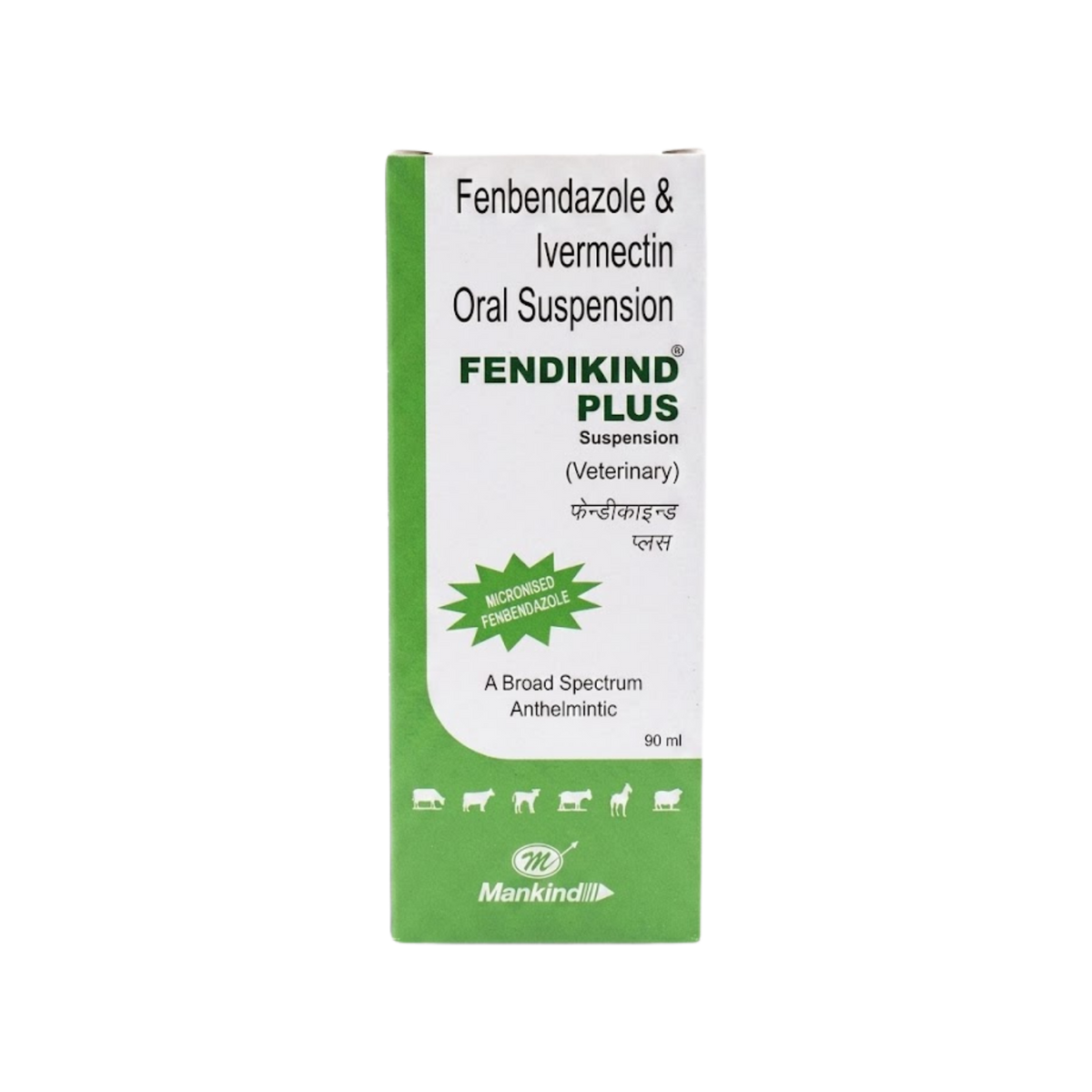
Fendikind-plus Suspension
Fendikind-plus Suspension
By VET MANKIND
Out of Stock
Prescription Required
Couldn't load pickup availability
Check Availability
Rapid 3-4 Day Delivery,Tiny Extra Fee!
-
 Pet Safe
-
 Best Quality
-
 Fast Delivery
-
 Secure Payment


About Fendikind-plus Suspension
Worms are common in animals of every age. They rob nutrients, upset the gut and some can pass to people.
Fendikind-plus Suspension is an oral suspension from Vet Mankind that contains fenbendazole and ivermectin. Fenbendazole is a benzimidazole dewormer. Ivermectin is an antiparasitic medicine from the avermectin group.
Vets commonly use it for roundworms, hookworms, whipworms, lungworms and some tapeworms. Your vet will confirm it suits your animal and set the dose and how long to give it.
Prescription Notice
This is a prescription veterinary product. Animeal dispenses it only against a valid prescription from a registered veterinarian. You can upload the prescription at checkout or send it on WhatsApp to +91 90041 57093.
Composition
Active ingredients listed for this product. The exact strength is printed on the pack.
| Ingredient | What it does |
|---|---|
| Fenbendazole | Kills roundworms, hookworms, whipworms and some tapeworms. |
| Ivermectin | Kills many worms and mites, and some lice and ticks. |
Features and Benefits
- Broad deworming. Covers the main round, hook and whip worms.
- Inside and out. Acts on many internal worms and external mites.
- Liquid form. Easy to measure for small pets and those who refuse tablets.
- Vet-guided. Your vet sets the dose and length of treatment for your animal.
How It Works
- Fenbendazole. It stops worms from absorbing sugar, so they starve and die.
- Ivermectin. It paralyses the nerves and muscles of parasites, so they die.
How to Use
- Dose. Give Fendikind-plus Suspension exactly as your vet prescribes. The dose depends on your animal's weight, age and condition.
- Measuring. Shake well before each dose. Measure with a dosing syringe and give slowly into the side of the mouth.
- Missed dose. Give it as soon as you remember, unless the next dose is nearly due. Never give two doses together.
- Storage. Store in a cool, dry place away from direct sunlight, unless the pack gives other storage directions. Keep out of reach of children.
Safety and Precautions
- Very occasional vomiting or loose stools can happen.
- Weigh your animal so the dose is right.
- Collies, Shelties, Australian Shepherds and related breeds can carry a gene that makes ivermectin dangerous. Never use it in these breeds without your vet's advice.
- Dogs must be tested for heartworm before ivermectin is used at higher doses.
- Follow the milk and meat withdrawal period printed on the pack before milk or meat from treated animals is used for food.
- Tell your vet about any other medicines your animal takes, and if your animal is pregnant, nursing or has liver or kidney problems.
Frequently Asked Questions
Do I need a prescription for Fendikind-plus Suspension?
Yes. Fendikind-plus Suspension is a prescription medicine. Animeal needs a valid prescription from a registered vet before it can be dispatched. You can upload it at checkout or send it on WhatsApp to +91 90041 57093.
What is Fendikind-plus Suspension used for?
Fendikind-plus Suspension contains fenbendazole and ivermectin. Vets use it for roundworms, hookworms, whipworms, lungworms and some tapeworms. Your vet decides whether it is right for your animal and for how long.
What if I miss a dose of Fendikind-plus Suspension?
Give it as soon as you remember. If the next dose is nearly due, skip the missed one and carry on as normal. Never give a double dose.
Also in: Dewormers for Farm Animals · All Farm Animal Products
Product Information
| Detail | Information |
|---|---|
| Brand | Vet Mankind |
| Active ingredients | Fenbendazole and Ivermectin |
| Form | Oral suspension |
| Pack size | 90ml |
| Suitable for | Cattle, buffaloes, sheep and goats |
| Prescription | Required |
| Sold by | Goodman Vetcare Pvt. Ltd. (Animeal), Warehouse No - 501 5th floor, Bharat industrial estate, Tokershi Jivraj Rd, Sewree West, Sindhu Nagar, Sewri, Mumbai, Maharashtra 400015 |
This product requires a valid prescription from a registered veterinarian. Animeal shares this information for educational purposes only. Always consult your vet before use.
| Company Name & Address | Mankind Pharmaceutical Company, 262, Okhla Industrial Estate, Phase-III, New Delhi – 110020 |
|---|---|
| Manufacturer Name & Address | Mankind Pharmaceutical Company, 262, Okhla Industrial Estate, Phase-III, New Delhi – 110020 |
| Marketer Name & Address | Mankind Pharmaceutical Company, 262, Okhla Industrial Estate, Phase-III, New Delhi – 110020 |
| Country of Origin | India |

Fendikind-plus Suspension
Out of Stock
Prescription Required
About Fendikind-plus Suspension
Worms are common in animals of every age. They rob nutrients, upset the gut and some can pass to people.
Fendikind-plus Suspension is an oral suspension from Vet Mankind that contains fenbendazole and ivermectin. Fenbendazole is a benzimidazole dewormer. Ivermectin is an antiparasitic medicine from the avermectin group.
Vets commonly use it for roundworms, hookworms, whipworms, lungworms and some tapeworms. Your vet will confirm it suits your animal and set the dose and how long to give it.
Prescription Notice
This is a prescription veterinary product. Animeal dispenses it only against a valid prescription from a registered veterinarian. You can upload the prescription at checkout or send it on WhatsApp to +91 90041 57093.
Composition
Active ingredients listed for this product. The exact strength is printed on the pack.
| Ingredient | What it does |
|---|---|
| Fenbendazole | Kills roundworms, hookworms, whipworms and some tapeworms. |
| Ivermectin | Kills many worms and mites, and some lice and ticks. |
Features and Benefits
- Broad deworming. Covers the main round, hook and whip worms.
- Inside and out. Acts on many internal worms and external mites.
- Liquid form. Easy to measure for small pets and those who refuse tablets.
- Vet-guided. Your vet sets the dose and length of treatment for your animal.
How It Works
- Fenbendazole. It stops worms from absorbing sugar, so they starve and die.
- Ivermectin. It paralyses the nerves and muscles of parasites, so they die.
How to Use
- Dose. Give Fendikind-plus Suspension exactly as your vet prescribes. The dose depends on your animal's weight, age and condition.
- Measuring. Shake well before each dose. Measure with a dosing syringe and give slowly into the side of the mouth.
- Missed dose. Give it as soon as you remember, unless the next dose is nearly due. Never give two doses together.
- Storage. Store in a cool, dry place away from direct sunlight, unless the pack gives other storage directions. Keep out of reach of children.
Safety and Precautions
- Very occasional vomiting or loose stools can happen.
- Weigh your animal so the dose is right.
- Collies, Shelties, Australian Shepherds and related breeds can carry a gene that makes ivermectin dangerous. Never use it in these breeds without your vet's advice.
- Dogs must be tested for heartworm before ivermectin is used at higher doses.
- Follow the milk and meat withdrawal period printed on the pack before milk or meat from treated animals is used for food.
- Tell your vet about any other medicines your animal takes, and if your animal is pregnant, nursing or has liver or kidney problems.
Frequently Asked Questions
Do I need a prescription for Fendikind-plus Suspension?
Yes. Fendikind-plus Suspension is a prescription medicine. Animeal needs a valid prescription from a registered vet before it can be dispatched. You can upload it at checkout or send it on WhatsApp to +91 90041 57093.
What is Fendikind-plus Suspension used for?
Fendikind-plus Suspension contains fenbendazole and ivermectin. Vets use it for roundworms, hookworms, whipworms, lungworms and some tapeworms. Your vet decides whether it is right for your animal and for how long.
What if I miss a dose of Fendikind-plus Suspension?
Give it as soon as you remember. If the next dose is nearly due, skip the missed one and carry on as normal. Never give a double dose.
Also in: Dewormers for Farm Animals · All Farm Animal Products
Product Information
| Detail | Information |
|---|---|
| Brand | Vet Mankind |
| Active ingredients | Fenbendazole and Ivermectin |
| Form | Oral suspension |
| Pack size | 90ml |
| Suitable for | Cattle, buffaloes, sheep and goats |
| Prescription | Required |
| Sold by | Goodman Vetcare Pvt. Ltd. (Animeal), Warehouse No - 501 5th floor, Bharat industrial estate, Tokershi Jivraj Rd, Sewree West, Sindhu Nagar, Sewri, Mumbai, Maharashtra 400015 |
This product requires a valid prescription from a registered veterinarian. Animeal shares this information for educational purposes only. Always consult your vet before use.
| Company Name & Address | Mankind Pharmaceutical Company, 262, Okhla Industrial Estate, Phase-III, New Delhi – 110020 |
|---|---|
| Manufacturer Name & Address | Mankind Pharmaceutical Company, 262, Okhla Industrial Estate, Phase-III, New Delhi – 110020 |
| Marketer Name & Address | Mankind Pharmaceutical Company, 262, Okhla Industrial Estate, Phase-III, New Delhi – 110020 |
| Country of Origin | India |