Skip to content


WOUND AND PAIN RELIEF
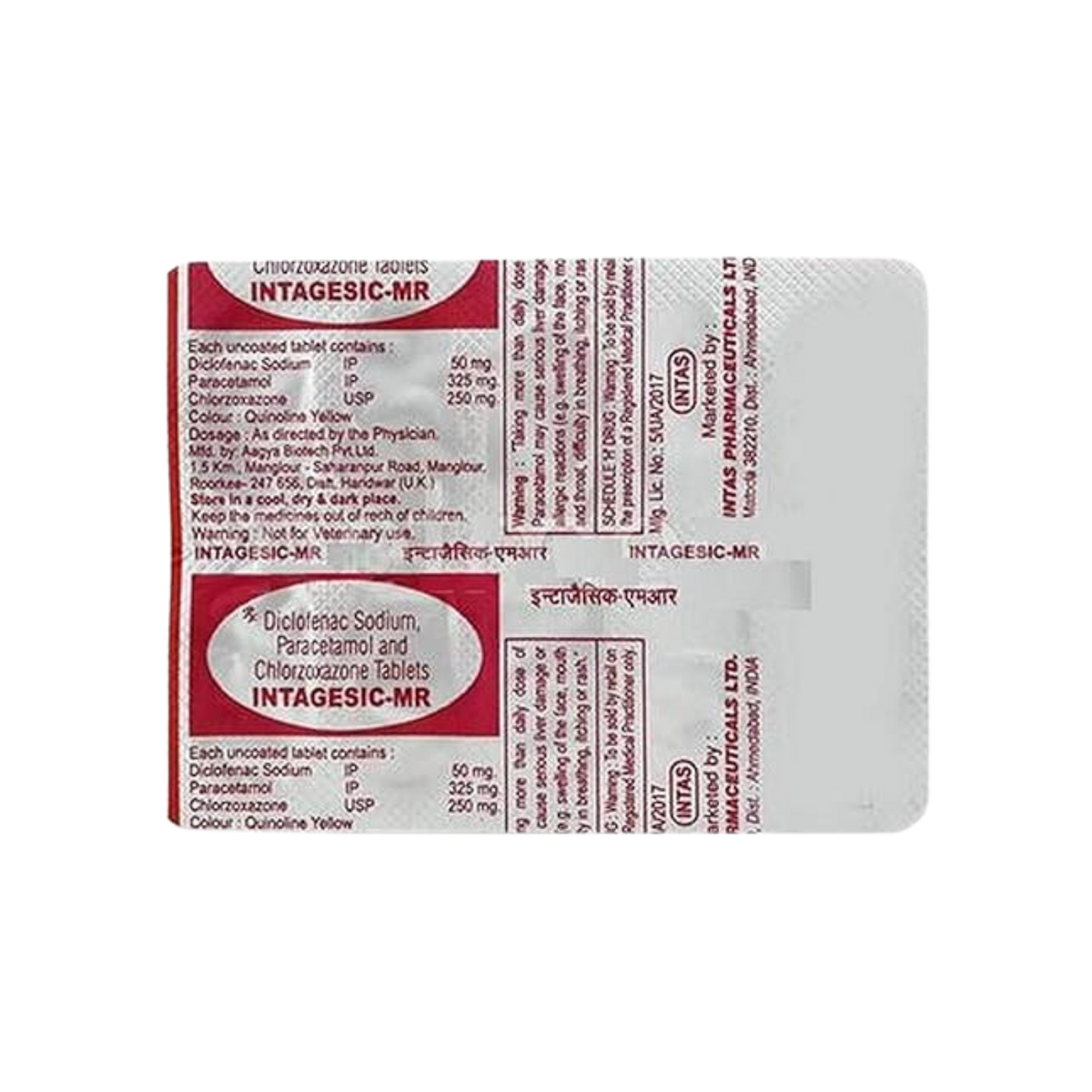
Intas Intagesic-mr Tablet for Dogs and Cats, 10 Tablets
Intas Intagesic-mr Tablet for Dogs and Cats, 10 Tablets
By INTAS
Out of Stock
Prescription Required
Couldn't load pickup availability
Check Availability
Rapid 3-4 Day Delivery,Tiny Extra Fee!
-
 Pet Safe
-
 Best Quality
-
 Fast Delivery
-
 Secure Payment


About Intagesic-mr Tablet
Pain and swelling from injuries, arthritis or surgery can stop a pet from moving, eating and resting normally.
Intagesic-mr Tablet is a tablet from Intas that contains paracetamol. Paracetamol eases pain and brings down fever.
Vets commonly use it for pain and fever. Your vet will confirm it suits your pet and set the dose and how long to give it.
Prescription Notice
This is a prescription veterinary product. Animeal dispenses it only against a valid prescription from a registered veterinarian. You can upload the prescription at checkout or send it on WhatsApp to +91 90041 57093.
Composition
Active ingredients listed for this product. The exact strength is printed on the pack.
| Ingredient | What it does |
|---|---|
| Paracetamol | Reduces pain and fever. |
Features and Benefits
- Tablet form. Easy to store, and you can hide it in a small piece of food if your vet allows.
- Vet-guided. Your vet sets the dose and length of treatment for your pet.
How It Works
- Paracetamol. It acts mainly in the brain and spinal cord to reduce pain signals and lower fever.
How to Use
- Dose. Give Intagesic-mr Tablet exactly as your vet prescribes. The dose depends on your pet's weight, age and condition.
- Giving a tablet. Place it at the back of the tongue, close the mouth gently and stroke the throat until your pet swallows. You can also hide it in a small piece of food if your vet says this is fine.
- Missed dose. Give it as soon as you remember, unless the next dose is nearly due. Never give two doses together.
- Storage. Store in a cool, dry place away from direct sunlight, unless the pack gives other storage directions. Keep out of reach of children.
Safety and Precautions
- Paracetamol is poisonous to cats. Never give a product with paracetamol to a cat.
- Tell your vet about any other medicines your pet takes, and if your pet is pregnant, nursing or has liver or kidney problems.
About Intas
- Who is Intas. Intas Pharmaceuticals is an Indian pharmaceutical company based in Ahmedabad, Gujarat.
- Animal health. Its animal health division makes medicines and supplements for pets and farm animals across India.
Frequently Asked Questions
Do I need a prescription for Intagesic-mr Tablet?
Yes. Intagesic-mr Tablet is a prescription medicine. Animeal needs a valid prescription from a registered vet before it can be dispatched. You can upload it at checkout or send it on WhatsApp to +91 90041 57093.
What is Intagesic-mr Tablet used for?
Intagesic-mr Tablet contains paracetamol. Vets use it for pain and fever. Your vet decides whether it is right for your pet and for how long.
What if I miss a dose of Intagesic-mr Tablet?
Give it as soon as you remember. If the next dose is nearly due, skip the missed one and carry on as normal. Never give a double dose.
Also in: Wound and Pain Relief for Dogs · Wound and Pain Relief for Cats · All Dog Products · All Cat Products
Product Information
| Detail | Information |
|---|---|
| Brand | Intas |
| Active ingredients | Paracetamol |
| Form | Tablet |
| Pack size | 10 tablets |
| Suitable for | Dogs and cats |
| Prescription | Required |
| Sold by | Goodman Vetcare Pvt. Ltd. (Animeal), Warehouse No - 501 5th floor, Bharat industrial estate, Tokershi Jivraj Rd, Sewree West, Sindhu Nagar, Sewri, Mumbai, Maharashtra 400015 |
This product requires a valid prescription from a registered veterinarian. Animeal shares this information for educational purposes only. Always consult your vet before use.

Intas Intagesic-mr Tablet for Dogs and Cats, 10 Tablets
Out of Stock
Prescription Required
About Intagesic-mr Tablet
Pain and swelling from injuries, arthritis or surgery can stop a pet from moving, eating and resting normally.
Intagesic-mr Tablet is a tablet from Intas that contains paracetamol. Paracetamol eases pain and brings down fever.
Vets commonly use it for pain and fever. Your vet will confirm it suits your pet and set the dose and how long to give it.
Prescription Notice
This is a prescription veterinary product. Animeal dispenses it only against a valid prescription from a registered veterinarian. You can upload the prescription at checkout or send it on WhatsApp to +91 90041 57093.
Composition
Active ingredients listed for this product. The exact strength is printed on the pack.
| Ingredient | What it does |
|---|---|
| Paracetamol | Reduces pain and fever. |
Features and Benefits
- Tablet form. Easy to store, and you can hide it in a small piece of food if your vet allows.
- Vet-guided. Your vet sets the dose and length of treatment for your pet.
How It Works
- Paracetamol. It acts mainly in the brain and spinal cord to reduce pain signals and lower fever.
How to Use
- Dose. Give Intagesic-mr Tablet exactly as your vet prescribes. The dose depends on your pet's weight, age and condition.
- Giving a tablet. Place it at the back of the tongue, close the mouth gently and stroke the throat until your pet swallows. You can also hide it in a small piece of food if your vet says this is fine.
- Missed dose. Give it as soon as you remember, unless the next dose is nearly due. Never give two doses together.
- Storage. Store in a cool, dry place away from direct sunlight, unless the pack gives other storage directions. Keep out of reach of children.
Safety and Precautions
- Paracetamol is poisonous to cats. Never give a product with paracetamol to a cat.
- Tell your vet about any other medicines your pet takes, and if your pet is pregnant, nursing or has liver or kidney problems.
About Intas
- Who is Intas. Intas Pharmaceuticals is an Indian pharmaceutical company based in Ahmedabad, Gujarat.
- Animal health. Its animal health division makes medicines and supplements for pets and farm animals across India.
Frequently Asked Questions
Do I need a prescription for Intagesic-mr Tablet?
Yes. Intagesic-mr Tablet is a prescription medicine. Animeal needs a valid prescription from a registered vet before it can be dispatched. You can upload it at checkout or send it on WhatsApp to +91 90041 57093.
What is Intagesic-mr Tablet used for?
Intagesic-mr Tablet contains paracetamol. Vets use it for pain and fever. Your vet decides whether it is right for your pet and for how long.
What if I miss a dose of Intagesic-mr Tablet?
Give it as soon as you remember. If the next dose is nearly due, skip the missed one and carry on as normal. Never give a double dose.
Also in: Wound and Pain Relief for Dogs · Wound and Pain Relief for Cats · All Dog Products · All Cat Products
Product Information
| Detail | Information |
|---|---|
| Brand | Intas |
| Active ingredients | Paracetamol |
| Form | Tablet |
| Pack size | 10 tablets |
| Suitable for | Dogs and cats |
| Prescription | Required |
| Sold by | Goodman Vetcare Pvt. Ltd. (Animeal), Warehouse No - 501 5th floor, Bharat industrial estate, Tokershi Jivraj Rd, Sewree West, Sindhu Nagar, Sewri, Mumbai, Maharashtra 400015 |
This product requires a valid prescription from a registered veterinarian. Animeal shares this information for educational purposes only. Always consult your vet before use.