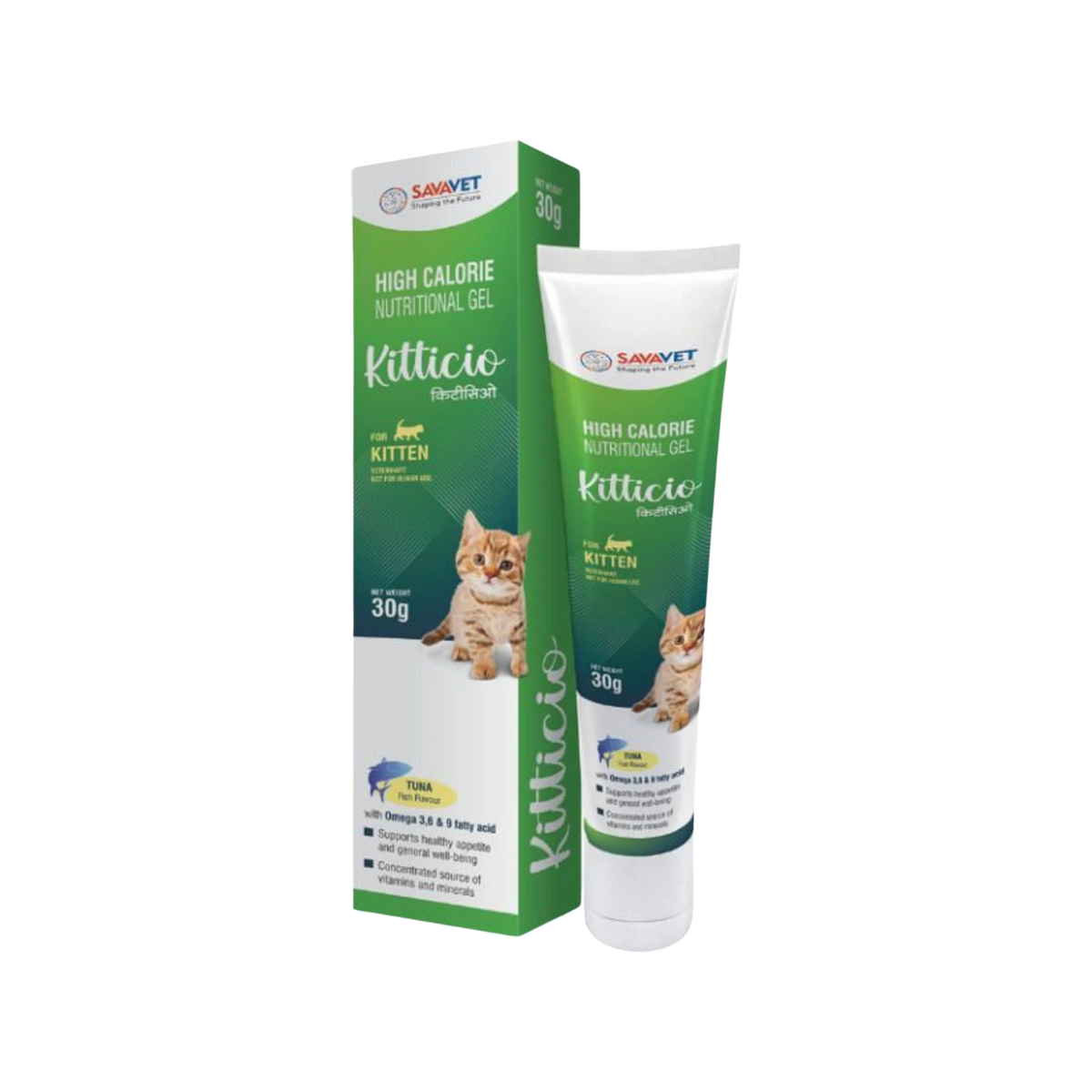
KITTICIO CAT GEL
In Stock
Sava Vet Kitticio High Calorie Nutritional Gel by SAVAVET is a scientifically formulated, high-density nutritional supplement gel developed specifically to address the elevated energy and micronutrient demands of growing kittens whose regular food intake is insufficient, inconsistent, or nutritionally incomplete. Kittens undergo rapid organogenesis, musculoskeletal development, and immune system maturation during the first months of life, and any deficit in caloric density, essential amino acids, omega fatty acids, or micronutrients during this critical window can result in growth retardation, immunosuppression, suboptimal neurological development, and systemic health compromise. Sava Vet Kitticio delivers 40 kcal per teaspoon in a highly palatable tuna fish-flavoured gel format, combining a precisely dosed vitamin and mineral matrix, a comprehensive essential amino acid profile, omega-3-6-9 fatty acids, and glucosamine sulphate into a single, easy-to-administer supplement that your feline companion will eagerly accept directly from the tube, from a spoon, or mixed into regular food. Animeal is proud to offer Sava Vet Kitticio High Calorie Nutritional Gel as part of our trusted range of feline health and nutritional supplements.
Ingredients:
Vitamin A Palmitate - 1,285 IU: Vitamin A in the retinyl palmitate ester form is absorbed in the small intestine and converted to retinol, which is essential for epithelial cell differentiation, maintenance of mucosal barrier integrity throughout the gastrointestinal and respiratory tracts, normal retinal function (particularly rod photoreceptor activity in low-light vision), and immune regulation. Kittens with inadequate Vitamin A intake are at heightened risk of respiratory infections, ocular abnormalities, and impaired growth.
Vitamin D3 (Cholecalciferol) - 145 IU: Cholecalciferol is the biologically active form of vitamin D, undergoing hepatic and renal hydroxylation to its most potent form, calcitriol. Calcitriol upregulates intestinal calcium and phosphorus absorption at the enterocyte level and governs serum mineral homeostasis, making adequate D3 supply non-negotiable for normal skeletal mineralisation, neuromuscular transmission, and immune cell differentiation in rapidly developing kittens.
Vitamin E (d-Alpha Tocopheryl) - 8 IU: Vitamin E is the primary lipid-soluble chain-breaking antioxidant within cellular membranes. It intercepts and neutralises lipid peroxyl radicals generated during oxidative phosphorylation, protecting polyunsaturated fatty acids embedded in cell membrane phospholipids from peroxidative degradation. This antioxidant protection is especially critical in kittens, whose elevated metabolic rates generate higher levels of reactive oxygen species relative to adult cats.
Vitamin B1 (Thiamine Hydrochloride) - 0.9 mg: Thiamine functions as an essential cofactor for pyruvate dehydrogenase and alpha-ketoglutarate dehydrogenase, two rate-limiting enzymes of aerobic glucose metabolism and the Krebs cycle. Cats have a notably high dietary thiamine requirement due to their limited hepatic thiaminase inhibitory capacity, making supplementation clinically meaningful, particularly for kittens consuming diets with variable B1 content.
Vitamin B2 (Riboflavin Sodium Phosphate) - 1.6 mg: Riboflavin is the precursor to the coenzymes flavin mononucleotide (FMN) and flavin adenine dinucleotide (FAD), which are indispensable electron carriers in the mitochondrial electron transport chain and in the oxidative metabolism of amino acids, fatty acids, and carbohydrates. Adequate riboflavin supports sustained energy release from all macronutrient substrates at the cellular level.
Vitamin B3 (Niacinamide) - 6.2 mg: Niacinamide is a direct precursor to nicotinamide adenine dinucleotide (NAD+) and its phosphorylated form (NADP+), which serve as universal hydride acceptors in hundreds of oxidation-reduction reactions central to energy metabolism, DNA repair, and cellular signalling. Cats, unlike most mammals, cannot synthesise niacin from tryptophan, making direct dietary supplementation essential.
Vitamin B5 (D-Panthenol) - 27 mcg: Panthenol is converted in tissue to pantothenic acid and subsequently incorporated into coenzyme A (CoA), the central acyl group carrier in fatty acid oxidation, synthesis, and the citric acid cycle. CoA-dependent reactions are fundamental to energy homeostasis, steroid hormone synthesis, and heme biosynthesis in developing feline tissue.
Vitamin B6 (Pyridoxine Hydrochloride) - 1.4 mg: Pyridoxal phosphate, the active coenzyme form of B6, is required by over 100 enzymatic reactions, most critically aminotransferases involved in amino acid interconversion and gluconeogenesis. It also participates in the synthesis of neurotransmitters including serotonin, dopamine, and gamma-aminobutyric acid, supporting early neurological development in kittens.
Vitamin B7 (Biotin) - 6 mcg: Biotin serves as the prosthetic group of carboxylase enzymes involved in fatty acid synthesis (acetyl-CoA carboxylase), gluconeogenesis (pyruvate carboxylase), and amino acid catabolism (propionyl-CoA carboxylase). Adequate biotin is particularly important for the maintenance of healthy skin barrier integrity and coat quality in growing kittens.
Vitamin B8 (Inositol) - 1.4 mg: Inositol, as phosphatidylinositol, is a structural component of cell membranes and a second messenger precursor in intracellular signalling cascades, including those governing cell growth, insulin signalling, and neuronal development. Its inclusion supports membrane phospholipid integrity across all rapidly proliferating cell populations in the developing kitten.
Vitamin B9 (Folic Acid) - 27 mcg: Folic acid is the precursor to tetrahydrofolate, the metabolically active coenzyme required for one-carbon transfer reactions in purine and pyrimidine nucleotide synthesis, DNA methylation, and the conversion of homocysteine to methionine. Folate sufficiency is critical during periods of rapid cellular replication, such as the kitten growth phase, where DNA synthesis rates are substantially elevated.
Vitamin B12 (Cyanocobalamin) - 5.3 mcg: Cyanocobalamin supports myelin sheath formation, erythropoiesis via its role in red blood cell maturation, and the methylation cycle alongside folate. B12 deficiency in kittens can manifest as anaemia, peripheral neuropathy, and impaired neurological development, making its inclusion in a growth-phase supplement clinically significant.
Taurine - 180 mg: Taurine is an obligatory conditionally essential amino acid for cats, who have a limited capacity to synthesise it endogenously from cysteine and methionine due to low hepatic cysteine sulphinate decarboxylase activity. At the physiological level, taurine conjugates with bile acids in the liver to form taurocholate, which is essential for dietary fat emulsification and fat-soluble vitamin absorption. It also plays a structural role in retinal photoreceptor maintenance, where its depletion causes progressive feline central retinal degeneration and irreversible blindness. Additionally, taurine regulates intracellular calcium flux in myocardial cells, and taurine deficiency in cats is a recognised primary cause of dilated cardiomyopathy.
L-Arginine - 75 mg: Arginine is an essential amino acid for cats, who cannot synthesise it via the urea cycle intermediates as efficiently as other species. It is required for the hepatic urea cycle to detoxify ammonia, for nitric oxide production via nitric oxide synthase (supporting vascular tone and immune activity), and for the secretion of growth hormone and insulin, both of which drive anabolic growth in the developing kitten.
L-Lysine - 37 mg | L-Leucine - 30 mg | L-Isoleucine - 15 mg | L-Valine - 15 mg: This complement of essential amino acids includes lysine, a critical building block for carnitine synthesis and collagen cross-linking, alongside the three branched-chain amino acids (BCAAs) leucine, isoleucine, and valine. BCAAs are preferentially oxidised in skeletal muscle during exercise and periods of heightened energy demand, and leucine in particular functions as a direct activator of the mTOR signalling pathway, promoting protein synthesis and muscle accretion in growing kittens.
L-Methionine - 15 mg: Methionine is the initiating amino acid in polypeptide synthesis and the primary methyl donor in the transmethylation cycle, supporting the synthesis of cysteine, taurine, carnitine, creatine, and SAM (S-adenosylmethionine), which participates in epigenetic DNA methylation. Methionine also supports hepatic glutathione synthesis, the principal intracellular antioxidant tripeptide.
L-Histidine, L-Phenylalanine, L-Threonine, L-Tryptophan - 7 mg each: These four essential amino acids collectively support histamine production and gastric acid regulation (histidine), thyroid hormone and dopamine synthesis (phenylalanine), gut mucosal integrity (threonine), and serotonin and melatonin biosynthesis (tryptophan), contributing to the comprehensive physiological and neurochemical development of the young feline.
Glucosamine Sulphate - 50 mg (as 63 mg glucosamine sulphate sodium chloride): Glucosamine sulphate is a naturally occurring aminomonosaccharide that serves as the primary biosynthetic precursor for glycosaminoglycans (GAGs) such as chondroitin sulphate and hyaluronic acid, the key structural components of articular cartilage and synovial fluid. Its inclusion in a kitten supplement supports the healthy development of joint cartilage matrix during the rapid musculoskeletal growth phase, laying a foundation for long-term joint health.
Omega-3 (Alpha-Linolenic Acid) - 20.26 mg | Omega-6 (Linoleic Acid) - 5.2 mg | Omega-9 (Oleic Acid) - 7.4 mg: This tri-spectrum fatty acid complex delivers the full omega nutritional profile in a single gel dose. Alpha-linolenic acid (ALA) is the essential omega-3 precursor converted to longer-chain eicosapentaenoic acid (EPA) and docosahexaenoic acid (DHA), the latter of which is concentrated in neural and retinal tissue and is indispensable for normal brain development and visual acuity in neonatal and juvenile cats. Linoleic acid (omega-6) is the essential precursor to arachidonic acid, which cats cannot synthesise independently and which is required for inflammatory regulation, platelet function, and reproductive health. Oleic acid (omega-9) is a monounsaturated fatty acid that reinforces skin lipid barrier function and supports cardiovascular health.
Complete Mineral Complex: Magnesium Sulphate - 20 mg | Ferrous Sulphate Heptahydrate - 17 mg | Zinc - 5 mg | Manganese - 2.5 mg | Copper - 1 mg | Iodine - 150 mcg | Chromium - 25 mcg | Selenium - 25 mcg: This eight-mineral complex covers the essential trace and macro-mineral requirements of the developing kitten. Iron supports haemoglobin and myoglobin oxygen transport. Zinc activates metalloenzymes critical for immune function, protein synthesis, and wound healing. Manganese and copper act as cofactors for antioxidant superoxide dismutase. Iodine is essential for thyroid hormone synthesis governing metabolic rate and growth. Selenium activates glutathione peroxidase, the principal selenoprotein antioxidant enzyme. Chromium supports insulin sensitivity and glucose homeostasis, while magnesium participates in over 300 enzymatic reactions including ATP hydrolysis and DNA synthesis.