 Skip to content


GASTRO INTESTINAL AND DIGESTIVE CARE
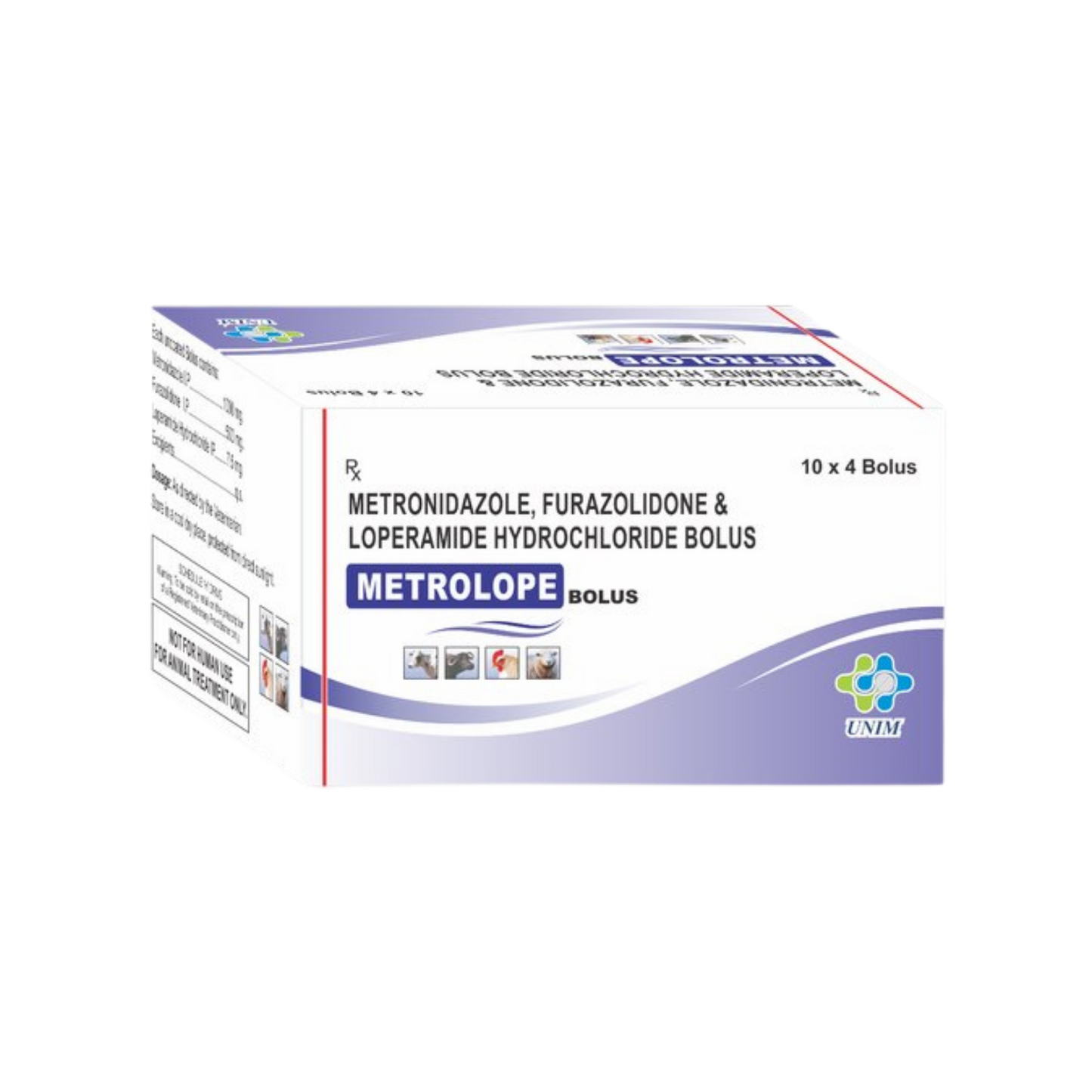
METROPLOPE BOLUS
METROPLOPE BOLUS
By UNIM
Out of Stock
Prescription Required
Couldn't load pickup availability
Check Availability
Rapid 3-4 Day Delivery,Tiny Extra Fee!
-
 Pet Safe
-
 Best Quality
-
 Fast Delivery
-
 Secure Payment


Unim Metrolope Bolus, manufactured by Unim Pharma Lab Pvt. Ltd., is a veterinary prescription-grade oral bolus formulation containing Metronidazole BP as its active pharmaceutical ingredient, indicated for the treatment and management of anaerobic bacterial infections, protozoal infestations, and associated reproductive tract disorders in large livestock animals including cattle, buffalo, sheep, and goats. Metronidazole, a second-generation nitroimidazole antibacterial and antiprotozoal compound, is one of the most clinically respected drugs in veterinary medicine for its targeted, selective action against obligate anaerobes and susceptible protozoal organisms, making it a cornerstone therapeutic option for conditions ranging from intrauterine infections and metritis to gastrointestinal anaerobic disease and trichomoniasis in farm animals. The bolus format ensures precise, convenient oral delivery with high gastrointestinal absorption, eliminating the compliance challenges associated with powdered or liquid formulations in large animal practice. Animeal is proud to offer Unim Metrolope Bolus as part of its curated veterinary prescription livestock catalogue, supporting veterinary professionals and livestock owners in accessing cutting-edge, evidence-based antimicrobial therapy for their animals.
Ingredients:
Metronidazole BP: Metronidazole is a synthetic nitroimidazole compound that exerts its bactericidal and antiprotozoal activity through a well-characterized reductive mechanism that is selectively operative in anaerobic and microaerophilic organisms. Upon oral ingestion and gastrointestinal absorption, Metronidazole is taken up by susceptible anaerobic bacteria and protozoa, where the nitro group of the molecule undergoes enzymatic reduction by intracellular electron transport proteins, particularly ferredoxin and flavodoxin, which are exclusively present in anaerobic metabolic pathways. This reduction generates short-lived, highly cytotoxic nitro radical anion intermediates. These reactive species directly attack and bind to the helical structure of microbial DNA, inducing strand breaks, loss of double-helix integrity, and impairment of DNA replication and transcription functions. The result is rapid cell death of the target organism with a bactericidal rather than bacteriostatic outcome.

METROPLOPE BOLUS
Out of Stock
Prescription Required
Unim Metrolope Bolus, manufactured by Unim Pharma Lab Pvt. Ltd., is a veterinary prescription-grade oral bolus formulation containing Metronidazole BP as its active pharmaceutical ingredient, indicated for the treatment and management of anaerobic bacterial infections, protozoal infestations, and associated reproductive tract disorders in large livestock animals including cattle, buffalo, sheep, and goats. Metronidazole, a second-generation nitroimidazole antibacterial and antiprotozoal compound, is one of the most clinically respected drugs in veterinary medicine for its targeted, selective action against obligate anaerobes and susceptible protozoal organisms, making it a cornerstone therapeutic option for conditions ranging from intrauterine infections and metritis to gastrointestinal anaerobic disease and trichomoniasis in farm animals. The bolus format ensures precise, convenient oral delivery with high gastrointestinal absorption, eliminating the compliance challenges associated with powdered or liquid formulations in large animal practice. Animeal is proud to offer Unim Metrolope Bolus as part of its curated veterinary prescription livestock catalogue, supporting veterinary professionals and livestock owners in accessing cutting-edge, evidence-based antimicrobial therapy for their animals.
Ingredients:
Metronidazole BP: Metronidazole is a synthetic nitroimidazole compound that exerts its bactericidal and antiprotozoal activity through a well-characterized reductive mechanism that is selectively operative in anaerobic and microaerophilic organisms. Upon oral ingestion and gastrointestinal absorption, Metronidazole is taken up by susceptible anaerobic bacteria and protozoa, where the nitro group of the molecule undergoes enzymatic reduction by intracellular electron transport proteins, particularly ferredoxin and flavodoxin, which are exclusively present in anaerobic metabolic pathways. This reduction generates short-lived, highly cytotoxic nitro radical anion intermediates. These reactive species directly attack and bind to the helical structure of microbial DNA, inducing strand breaks, loss of double-helix integrity, and impairment of DNA replication and transcription functions. The result is rapid cell death of the target organism with a bactericidal rather than bacteriostatic outcome.





Prescription Uploaded Successfully.

- Choosing a selection results in a full page refresh.
- Opens in a new window.