Skip to content



RENAL & URINARY SUPPLEMENTS
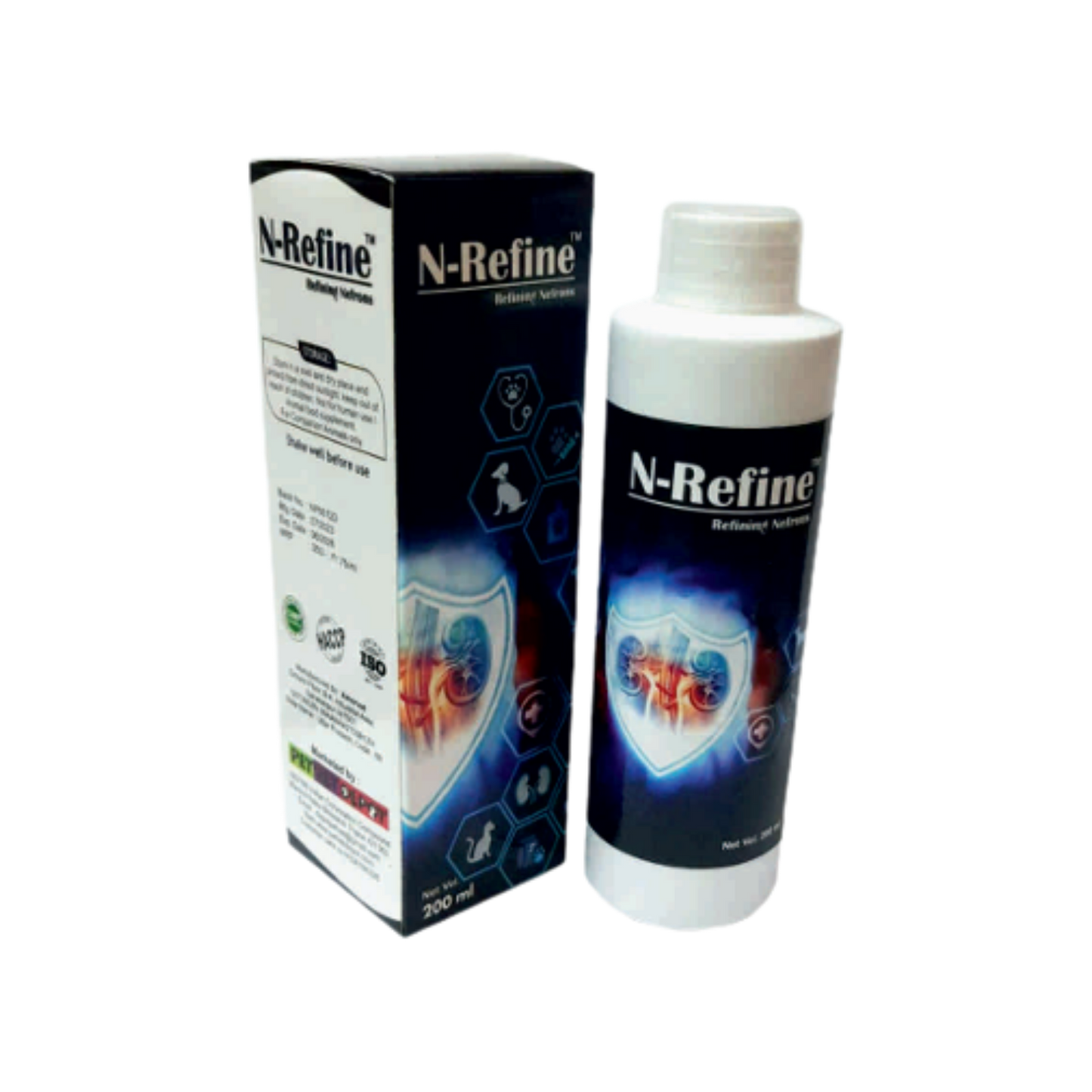
N-REFINE PET SYRUP
N-REFINE PET SYRUP
By PET VET DEPOT
In Stock
Couldn't load pickup availability
Check Availability
Rapid 3-4 Day Delivery,Tiny Extra Fee!
-
 Pet Safe
-
 Best Quality
-
 Fast Delivery
-
 Secure Payment


N-Refine Pet Syrup by Amorvet is a scientifically crafted herbal renal supplement developed to address one of the most silent yet serious health challenges facing dogs and cats today: progressive nephron damage, declining kidney function, urinary stone formation, and the accumulation of metabolic toxins that the compromised renal system can no longer efficiently eliminate. Formulated as a synergistic blend of time-tested Ayurvedic renal botanicals including Tinospora Cardifolia, Boerhavia diffusa, Asparagus racemosus, Bergenia legulata, Cyperus rotundus, Organic Cranberry Extract, Barley Extract, Asparagus, and Astragalus membranaceus, N-Refine targets renal health through multiple complementary pathways: antioxidant protection of nephron cells, reduction of renal inflammation, natural diuresis to support toxin clearance, urinary stone disintegration, pathogen binding through MOS and FOS prebiotics, and immune modulation. Delivered as a liquid syrup for superior bioavailability and ease of oral administration, this 200ml presentation offers an extended course of support for your canine companion or feline friend. Animeal is proud to offer N-Refine Pet Syrup as a trusted herbal renal supplement for the informed and caring pet parent.
Ingredients:
Tinospora Cardifolia (Guduchi): Tinospora cordifolia, revered in Ayurvedic medicine as Guduchi or Giloy, is one of the most extensively researched immunomodulatory and nephroprotective medicinal plants in the Indian pharmacopoeial tradition. Its active phytoconstituents, including alkaloids such as berberine and palmatine, diterpenoid lactones, glycosides, polysaccharides, and flavonoids, exert their renoprotective action by enhancing the activity of endogenous antioxidant enzymes, specifically superoxide dismutase (SOD), catalase (CAT), glutathione peroxidase (GPx), and glutathione S-transferase (GST) in kidney tissue. These enzymes neutralise reactive oxygen species and lipid peroxidation products that accumulate during nephrotoxic injury, ischaemia, or metabolic stress, thereby protecting renal tubular cells from oxidative damage. Tinospora cordifolia also activates the PPARgamma pathway in both glomerular and tubular cells, reducing TGF-beta-mediated fibrotic remodelling of the kidney. Its immunomodulatory polysaccharides stimulate macrophage activation and reinforce the innate defence against secondary infections that commonly complicate renal compromise in companion animals.
Boerhavia diffusa (Punarnava): Boerhavia diffusa, known as Punarnava in the Ayurvedic system, is one of the most clinically studied and highly regarded nephroprotective herbs in both human and veterinary medicine. Rich in rotenoids, punarnavoside (a phenolic glycoside), C-methyl flavones, ursolic acid, and potassium nitrate, Punarnava exerts its renal benefits through three distinct pharmacological mechanisms. As a natural diuretic, it increases urinary sodium excretion and urine output, thereby promoting the flushing of metabolic waste products, urea, creatinine, and urinary crystals from the collecting system. As a potent nephroprotectant, it normalises elevated serum creatinine, blood urea nitrogen, uric acid, and urinary protein levels that are hallmark indicators of renal stress. Crucially, Boerhavia diffusa has demonstrated antifibrotic activity by reducing the deposition of extracellular collagen in renal tubules, thereby decelerating the structural deterioration that characterises chronic kidney disease. In canine clinical studies, B. diffusa root extract demonstrated efficacy in managing chronic renal failure comparable to the ACE inhibitor enalapril, with faster normalisation of haemoglobin, potassium, phosphorus, and urinary protein levels.
Asparagus racemosus (Shatavari): Asparagus racemosus, the revered Ayurvedic adaptogen known as Shatavari, contains steroidal saponins (shatavarins), polyphenols, and isoflavones that collectively exert anti-inflammatory, antioxidant, and immunomodulatory actions at the renal level. Its saponin compounds support the integrity of glomerular filtration membranes, reducing glomerular permeability and the resulting proteinuria that accompanies inflammatory nephropathy. Asparagus racemosus also promotes natural diuresis, assisting in the clearance of urinary irritants and supporting a clean, infection-resistant urinary environment for your pet.
Bergenia legulata (Pashanbhed): Bergenia legulata, traditionally known as Pashanbhed, meaning stone-breaker, is a cornerstone herb in Ayurvedic lithotriptic formulations. Its active constituents, including bergenin and tannins, inhibit the crystallisation of calcium oxalate and calcium phosphate in renal tubules and the urinary bladder by reducing urinary oxalate excretion and chelating calcium ions in solution. Bergenia legulata also exerts antispasmodic effects on ureteral smooth muscle, reducing the pain and obstruction associated with the passage of urinary stones or gravel. This dual ability to prevent crystal nucleation and facilitate the disintegration of existing calculi makes it the primary lithotriptic agent in the N-Refine formulation.
Cyperus rotundus (Mustaka / Nutgrass): Cyperus rotundus, known as Mustaka or Nutgrass, is valued in traditional medicine for its anti-inflammatory, diuretic, and antipyretic properties. Its sesquiterpene alkaloids and flavonoids modulate prostaglandin synthesis and reduce renal tubular inflammation, while its mild diuretic action augments urinary flow and assists in the clearance of crystalline deposits and microbial elements from the lower urinary tract.
Organic Cranberry Extract: Cranberry extract is rich in A-type proanthocyanidins (PACs), which are unique oligomeric compounds that specifically prevent type-1 and type-P fimbriated strains of Escherichia coli from adhering to the uroepithelial cells lining the bladder and urethra. By blocking the bacterial adhesion mechanism at the cellular level, cranberry PACs actively reduce the colonisation and biofilm formation by uropathogens without exerting antibiotic activity. This anti-adhesion mechanism also reduces the inflammatory burden on the renal tubular and collecting duct epithelium, making Organic Cranberry Extract a highly targeted tool for maintaining urinary tract hygiene in dogs and cats prone to recurrent urinary tract infections.
Barley Extract: Barley extract is a source of beta-glucans and dietary polyphenols that support kidney health by reducing oxidative stress markers and modulating inflammatory cytokine activity in the renal interstitium. Beta-glucans from barley also act as prebiotic substrates, reinforcing the beneficial gut microbiome that plays an indirect but important role in reducing the systemic uraemic toxin load processed by the kidneys.
Asparagus (Shatavar / Asparagus officinalis): This complementary asparagus fraction provides additional steroidal saponins and asparagine, a natural amino acid diuretic, which gently increases glomerular filtration rate and urinary output to support the clearance of dissolved waste metabolites, further reinforcing the overall diuretic and renal flushing action of the formulation.
Astragalus membranaceus (Huang Qi / Milk Vetch Root): Astragalus membranaceus is a powerful immune-modulatory and adaptogenic botanical whose active polysaccharides, saponins, and flavonoids exert direct protective effects on renal cells. Astragalus reinforces renal tubular cell integrity by reducing hypoxia-induced apoptosis, attenuating glomerular hypertrophy, and modulating the renin-angiotensin pathway to reduce glomerular hypertension. It also upregulates regulatory T-cell activity, reducing the autoimmune-mediated glomerular inflammation that contributes to the progression of immune-mediated nephropathy in companion animals.
MOS (Mannanoligosaccharides) and FOS (Fructooligosaccharides): MOS and FOS are prebiotic compounds derived from yeast cell walls and plant-based carbohydrates respectively. In the context of renal health, these compounds act as pathogen binders within the gastrointestinal tract, competitively occupying the lectin receptor sites through which harmful gram-negative bacteria such as Salmonella and E. coli attach to intestinal mucosa. By binding and eliminating these uropathogens from the gut before they can translocate into the urinary system, MOS and FOS reduce the urinary pathogen load, support a healthy intestinal microbiome, and indirectly alleviate the systemic inflammatory and toxic burden on the kidneys.


N-REFINE PET SYRUP
In Stock
N-Refine Pet Syrup by Amorvet is a scientifically crafted herbal renal supplement developed to address one of the most silent yet serious health challenges facing dogs and cats today: progressive nephron damage, declining kidney function, urinary stone formation, and the accumulation of metabolic toxins that the compromised renal system can no longer efficiently eliminate. Formulated as a synergistic blend of time-tested Ayurvedic renal botanicals including Tinospora Cardifolia, Boerhavia diffusa, Asparagus racemosus, Bergenia legulata, Cyperus rotundus, Organic Cranberry Extract, Barley Extract, Asparagus, and Astragalus membranaceus, N-Refine targets renal health through multiple complementary pathways: antioxidant protection of nephron cells, reduction of renal inflammation, natural diuresis to support toxin clearance, urinary stone disintegration, pathogen binding through MOS and FOS prebiotics, and immune modulation. Delivered as a liquid syrup for superior bioavailability and ease of oral administration, this 200ml presentation offers an extended course of support for your canine companion or feline friend. Animeal is proud to offer N-Refine Pet Syrup as a trusted herbal renal supplement for the informed and caring pet parent.
Ingredients:
Tinospora Cardifolia (Guduchi): Tinospora cordifolia, revered in Ayurvedic medicine as Guduchi or Giloy, is one of the most extensively researched immunomodulatory and nephroprotective medicinal plants in the Indian pharmacopoeial tradition. Its active phytoconstituents, including alkaloids such as berberine and palmatine, diterpenoid lactones, glycosides, polysaccharides, and flavonoids, exert their renoprotective action by enhancing the activity of endogenous antioxidant enzymes, specifically superoxide dismutase (SOD), catalase (CAT), glutathione peroxidase (GPx), and glutathione S-transferase (GST) in kidney tissue. These enzymes neutralise reactive oxygen species and lipid peroxidation products that accumulate during nephrotoxic injury, ischaemia, or metabolic stress, thereby protecting renal tubular cells from oxidative damage. Tinospora cordifolia also activates the PPARgamma pathway in both glomerular and tubular cells, reducing TGF-beta-mediated fibrotic remodelling of the kidney. Its immunomodulatory polysaccharides stimulate macrophage activation and reinforce the innate defence against secondary infections that commonly complicate renal compromise in companion animals.
Boerhavia diffusa (Punarnava): Boerhavia diffusa, known as Punarnava in the Ayurvedic system, is one of the most clinically studied and highly regarded nephroprotective herbs in both human and veterinary medicine. Rich in rotenoids, punarnavoside (a phenolic glycoside), C-methyl flavones, ursolic acid, and potassium nitrate, Punarnava exerts its renal benefits through three distinct pharmacological mechanisms. As a natural diuretic, it increases urinary sodium excretion and urine output, thereby promoting the flushing of metabolic waste products, urea, creatinine, and urinary crystals from the collecting system. As a potent nephroprotectant, it normalises elevated serum creatinine, blood urea nitrogen, uric acid, and urinary protein levels that are hallmark indicators of renal stress. Crucially, Boerhavia diffusa has demonstrated antifibrotic activity by reducing the deposition of extracellular collagen in renal tubules, thereby decelerating the structural deterioration that characterises chronic kidney disease. In canine clinical studies, B. diffusa root extract demonstrated efficacy in managing chronic renal failure comparable to the ACE inhibitor enalapril, with faster normalisation of haemoglobin, potassium, phosphorus, and urinary protein levels.
Asparagus racemosus (Shatavari): Asparagus racemosus, the revered Ayurvedic adaptogen known as Shatavari, contains steroidal saponins (shatavarins), polyphenols, and isoflavones that collectively exert anti-inflammatory, antioxidant, and immunomodulatory actions at the renal level. Its saponin compounds support the integrity of glomerular filtration membranes, reducing glomerular permeability and the resulting proteinuria that accompanies inflammatory nephropathy. Asparagus racemosus also promotes natural diuresis, assisting in the clearance of urinary irritants and supporting a clean, infection-resistant urinary environment for your pet.
Bergenia legulata (Pashanbhed): Bergenia legulata, traditionally known as Pashanbhed, meaning stone-breaker, is a cornerstone herb in Ayurvedic lithotriptic formulations. Its active constituents, including bergenin and tannins, inhibit the crystallisation of calcium oxalate and calcium phosphate in renal tubules and the urinary bladder by reducing urinary oxalate excretion and chelating calcium ions in solution. Bergenia legulata also exerts antispasmodic effects on ureteral smooth muscle, reducing the pain and obstruction associated with the passage of urinary stones or gravel. This dual ability to prevent crystal nucleation and facilitate the disintegration of existing calculi makes it the primary lithotriptic agent in the N-Refine formulation.
Cyperus rotundus (Mustaka / Nutgrass): Cyperus rotundus, known as Mustaka or Nutgrass, is valued in traditional medicine for its anti-inflammatory, diuretic, and antipyretic properties. Its sesquiterpene alkaloids and flavonoids modulate prostaglandin synthesis and reduce renal tubular inflammation, while its mild diuretic action augments urinary flow and assists in the clearance of crystalline deposits and microbial elements from the lower urinary tract.
Organic Cranberry Extract: Cranberry extract is rich in A-type proanthocyanidins (PACs), which are unique oligomeric compounds that specifically prevent type-1 and type-P fimbriated strains of Escherichia coli from adhering to the uroepithelial cells lining the bladder and urethra. By blocking the bacterial adhesion mechanism at the cellular level, cranberry PACs actively reduce the colonisation and biofilm formation by uropathogens without exerting antibiotic activity. This anti-adhesion mechanism also reduces the inflammatory burden on the renal tubular and collecting duct epithelium, making Organic Cranberry Extract a highly targeted tool for maintaining urinary tract hygiene in dogs and cats prone to recurrent urinary tract infections.
Barley Extract: Barley extract is a source of beta-glucans and dietary polyphenols that support kidney health by reducing oxidative stress markers and modulating inflammatory cytokine activity in the renal interstitium. Beta-glucans from barley also act as prebiotic substrates, reinforcing the beneficial gut microbiome that plays an indirect but important role in reducing the systemic uraemic toxin load processed by the kidneys.
Asparagus (Shatavar / Asparagus officinalis): This complementary asparagus fraction provides additional steroidal saponins and asparagine, a natural amino acid diuretic, which gently increases glomerular filtration rate and urinary output to support the clearance of dissolved waste metabolites, further reinforcing the overall diuretic and renal flushing action of the formulation.
Astragalus membranaceus (Huang Qi / Milk Vetch Root): Astragalus membranaceus is a powerful immune-modulatory and adaptogenic botanical whose active polysaccharides, saponins, and flavonoids exert direct protective effects on renal cells. Astragalus reinforces renal tubular cell integrity by reducing hypoxia-induced apoptosis, attenuating glomerular hypertrophy, and modulating the renin-angiotensin pathway to reduce glomerular hypertension. It also upregulates regulatory T-cell activity, reducing the autoimmune-mediated glomerular inflammation that contributes to the progression of immune-mediated nephropathy in companion animals.
MOS (Mannanoligosaccharides) and FOS (Fructooligosaccharides): MOS and FOS are prebiotic compounds derived from yeast cell walls and plant-based carbohydrates respectively. In the context of renal health, these compounds act as pathogen binders within the gastrointestinal tract, competitively occupying the lectin receptor sites through which harmful gram-negative bacteria such as Salmonella and E. coli attach to intestinal mucosa. By binding and eliminating these uropathogens from the gut before they can translocate into the urinary system, MOS and FOS reduce the urinary pathogen load, support a healthy intestinal microbiome, and indirectly alleviate the systemic inflammatory and toxic burden on the kidneys.