Skip to content


SKIN & COAT SUPPLEMENTS
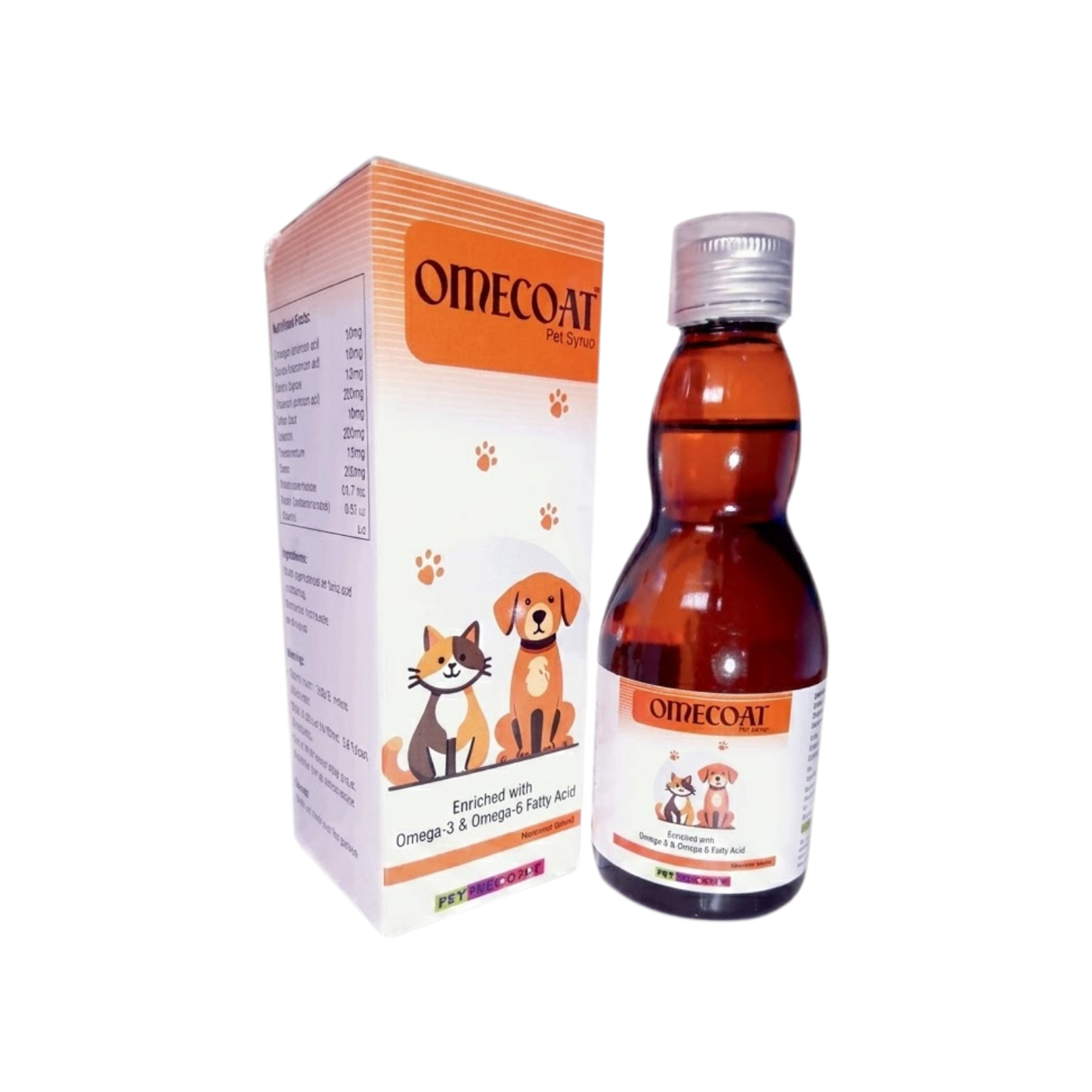
OMECOAT PET SYRUP
OMECOAT PET SYRUP
By PET VET DEPOT
In Stock
Couldn't load pickup availability
Check Availability
Rapid 3-4 Day Delivery,Tiny Extra Fee!
-
 Pet Safe
-
 Best Quality
-
 Fast Delivery
-
 Secure Payment


Omecoat Pet Syrup is a scientifically enriched veterinary nutritional supplement formulated to address one of the most common and visually apparent health concerns in companion animals: compromised skin health, excessive hair loss and shedding, inflammatory skin conditions, and dull, lifeless coat quality that signals underlying nutritional deficiencies. Delivering a synergistic blend of Omega 3, 6, and 9 polyunsaturated fatty acids alongside Zinc Sulphate, Inositol, Oleic Acid, Pyridoxine HCL, Biotin, Retinol, and Alpha-Tocopheryl Acetate in each measured dose, Omecoat targets skin and coat health at the cellular, structural, and immunological level simultaneously. Each active ingredient works in concert to reduce allergic inflammation, restore skin barrier integrity, regulate sebaceous gland function, reinforce hair follicle anchoring, and neutralise the oxidative stress that underlies chronic dermatological conditions. Suitable for puppies, adult dogs, and cats of all breeds and sizes, Omecoat Pet Syrup is the preferred choice of veterinarians for managing a wide range of skin, coat, and allergy-related conditions as part of a comprehensive nutritional support protocol. Animeal is proud to offer Omecoat Pet Syrup as a trusted skin and coat supplement for the informed and loving pet parent.
Ingredients:
Eicosapentaenoic Acid, EPA (Omega-3 Fatty Acid): Eicosapentaenoic acid is a long-chain Omega-3 polyunsaturated fatty acid derived from marine sources. At the cellular level, EPA competes with arachidonic acid for incorporation into cell membrane phospholipids, and when incorporated, it serves as the substrate for the synthesis of anti-inflammatory eicosanoids, including prostaglandins of the PG3 series and leukotriene LTB5. These mediators are significantly less pro-inflammatory than the arachidonic acid-derived PG2 and LTB4 series, resulting in a measurable reduction in the intensity and chronicity of allergic skin inflammation, pruritus, and dermatitis in dogs and cats. EPA also supports membrane fluidity in keratinocytes and dermal fibroblasts, maintaining the structural integrity of the epidermal barrier and reducing transepidermal water loss.
Gamma Linolenic Acid, GLA (Omega-6 Fatty Acid): Gamma linolenic acid is a conditionally essential Omega-6 fatty acid of the delta-6-desaturase pathway that plays a critical role in maintaining the skin's transepidermal water barrier. GLA is the direct precursor to dihomo-gamma-linolenic acid (DGLA), which in turn produces the anti-inflammatory prostaglandin E1 (PGE1). PGE1 suppresses arachidonic acid-mediated inflammation, reduces histamine release from mast cells in skin tissue, and reinforces the ceramide content of the stratum corneum, restoring moisture barrier function and reducing the dryness, scaliness, and pruritus associated with barrier-deficient skin conditions in dogs and cats.
Oleic Acid (Omega-9 Fatty Acid): Oleic acid is a monounsaturated Omega-9 fatty acid that supports the fluidity and integrity of epidermal cell membranes and contributes to the moisturising lipid matrix of the stratum corneum. As a non-essential fatty acid synthesised in small amounts by the body but present in much higher therapeutic concentrations in supplemental form, Oleic acid reinforces the lipid barrier of the skin, reduces transepidermal water loss in dry and flaky skin, and improves the overall suppleness and resilience of the coat when delivered systemically through dietary supplementation.
Zinc Sulphate: Zinc is an essential trace mineral that functions as a structural and catalytic component of over 300 enzymes involved in DNA synthesis, protein metabolism, and epidermal cell proliferation. In the skin, zinc plays a specific role in regulating the keratinisation cycle of hair follicle epithelial cells, controlling sebaceous gland activity and sebum secretion, and supporting wound healing through its role in metalloproteinase enzyme activity. Zinc deficiency in dogs and cats manifests as scaly, thickened skin, poor coat quality, and increased susceptibility to secondary bacterial and fungal infections. Supplemental zinc in Omecoat restores normal follicular cycling, normalises sebum output, and reinforces epithelial barrier competence.
Inositol: Inositol is a carbocyclic sugar alcohol that functions as a structural component of cell membrane phosphoinositides. In the skin, inositol supports fat metabolism within sebaceous gland cells, contributing to the production of a balanced and skin-nourishing sebum composition. It also plays a role in maintaining epidermal cell hydration and signalling downstream of growth factor receptors in hair follicle cells, supporting the anagen (active growth) phase of the hair cycle and reducing premature follicle entry into the telogen (resting and shedding) phase.
Pyridoxine HCL, Vitamin B6: Pyridoxine hydrochloride is the bioavailable salt form of Vitamin B6, a water-soluble B-vitamin that functions as a coenzyme in over 100 enzymatic reactions, including those governing amino acid metabolism and protein synthesis. In the context of skin and coat health, Vitamin B6 is essential for the synthesis of structural proteins including collagen and keratin, and its deficiency is directly associated with seborrhoeic dermatitis, flaky and inflamed skin, and poor coat quality in companion animals. Vitamin B6 also modulates histamine synthesis and release, reducing the intensity of allergic skin reactions triggered by environmental allergens.
Biotin, Vitamin B7: Biotin is a water-soluble B-vitamin that functions as an essential cofactor for the carboxylase enzyme family involved in fatty acid synthesis and gluconeogenesis within keratinocytes and hair follicle cells. Biotin is often described as the foundational nutrient for hair and skin integrity, as its deficiency directly causes alopecia, brittle hair, hyperkeratosis, and dry, flaking skin in dogs and cats. At the cellular level, Biotin supports the synthesis of keratin, the primary structural protein of hair shafts and the epidermal surface, and promotes the proliferation and differentiation of hair follicle progenitor cells, directly supporting hair density, growth rate, and coat thickness.
Retinol Concentrate, Vitamin A: Retinol is the preformed fat-soluble Vitamin A present in animal-source foods and supplements. In skin biology, retinoic acid, the active derivative of retinol, binds to nuclear retinoic acid receptors (RARs) in keratinocytes and regulates the transcription of genes governing epidermal cell differentiation, proliferation, and desquamation. Retinol maintains the normal turnover of skin cells, preventing hyperkeratosis and the accumulation of dead skin cells that lead to dandruff, seborrhea, and lichenification in affected companion animals. It also supports the integrity of mucous membranes and reinforces the skin's innate immune barrier against secondary bacterial and fungal colonisation.
Alpha-Tocopheryl Acetate, Vitamin E: Alpha-Tocopheryl Acetate is the stable ester form of Vitamin E, the primary fat-soluble antioxidant incorporated into the phospholipid bilayers of cell membranes throughout the body, including the epidermis, dermis, and hair follicle cells. Vitamin E protects polyunsaturated fatty acids within skin cell membranes from oxidative damage by free radicals and reactive oxygen species generated by UV radiation, environmental pollutants, and inflammatory processes. By preventing lipid peroxidation in epidermal membranes, Vitamin E preserves skin cell integrity, reduces inflammation-induced skin damage, and supports the therapeutic action of the Omega fatty acid components of the Omecoat formulation.
Docosahexaenoic Acid, DHA (Omega-3 Fatty Acid): Docosahexaenoic acid is the primary structural Omega-3 fatty acid incorporated into the phospholipid bilayers of skin cell membranes, hair follicle cells, and sebaceous gland epithelium. DHA maintains the fluidity and permeability of these membranes, which is essential for proper intercellular signalling, moisture retention, and the regulation of inflammatory cytokine activity at the dermal level. DHA is also a precursor for the synthesis of specialised pro-resolving mediators including resolvins and protectins, which actively resolve established inflammatory responses in skin tissue, making it particularly valuable in chronic atopic dermatitis and recurrent allergic skin disease in companion animals.

OMECOAT PET SYRUP
In Stock
Omecoat Pet Syrup is a scientifically enriched veterinary nutritional supplement formulated to address one of the most common and visually apparent health concerns in companion animals: compromised skin health, excessive hair loss and shedding, inflammatory skin conditions, and dull, lifeless coat quality that signals underlying nutritional deficiencies. Delivering a synergistic blend of Omega 3, 6, and 9 polyunsaturated fatty acids alongside Zinc Sulphate, Inositol, Oleic Acid, Pyridoxine HCL, Biotin, Retinol, and Alpha-Tocopheryl Acetate in each measured dose, Omecoat targets skin and coat health at the cellular, structural, and immunological level simultaneously. Each active ingredient works in concert to reduce allergic inflammation, restore skin barrier integrity, regulate sebaceous gland function, reinforce hair follicle anchoring, and neutralise the oxidative stress that underlies chronic dermatological conditions. Suitable for puppies, adult dogs, and cats of all breeds and sizes, Omecoat Pet Syrup is the preferred choice of veterinarians for managing a wide range of skin, coat, and allergy-related conditions as part of a comprehensive nutritional support protocol. Animeal is proud to offer Omecoat Pet Syrup as a trusted skin and coat supplement for the informed and loving pet parent.
Ingredients:
Eicosapentaenoic Acid, EPA (Omega-3 Fatty Acid): Eicosapentaenoic acid is a long-chain Omega-3 polyunsaturated fatty acid derived from marine sources. At the cellular level, EPA competes with arachidonic acid for incorporation into cell membrane phospholipids, and when incorporated, it serves as the substrate for the synthesis of anti-inflammatory eicosanoids, including prostaglandins of the PG3 series and leukotriene LTB5. These mediators are significantly less pro-inflammatory than the arachidonic acid-derived PG2 and LTB4 series, resulting in a measurable reduction in the intensity and chronicity of allergic skin inflammation, pruritus, and dermatitis in dogs and cats. EPA also supports membrane fluidity in keratinocytes and dermal fibroblasts, maintaining the structural integrity of the epidermal barrier and reducing transepidermal water loss.
Gamma Linolenic Acid, GLA (Omega-6 Fatty Acid): Gamma linolenic acid is a conditionally essential Omega-6 fatty acid of the delta-6-desaturase pathway that plays a critical role in maintaining the skin's transepidermal water barrier. GLA is the direct precursor to dihomo-gamma-linolenic acid (DGLA), which in turn produces the anti-inflammatory prostaglandin E1 (PGE1). PGE1 suppresses arachidonic acid-mediated inflammation, reduces histamine release from mast cells in skin tissue, and reinforces the ceramide content of the stratum corneum, restoring moisture barrier function and reducing the dryness, scaliness, and pruritus associated with barrier-deficient skin conditions in dogs and cats.
Oleic Acid (Omega-9 Fatty Acid): Oleic acid is a monounsaturated Omega-9 fatty acid that supports the fluidity and integrity of epidermal cell membranes and contributes to the moisturising lipid matrix of the stratum corneum. As a non-essential fatty acid synthesised in small amounts by the body but present in much higher therapeutic concentrations in supplemental form, Oleic acid reinforces the lipid barrier of the skin, reduces transepidermal water loss in dry and flaky skin, and improves the overall suppleness and resilience of the coat when delivered systemically through dietary supplementation.
Zinc Sulphate: Zinc is an essential trace mineral that functions as a structural and catalytic component of over 300 enzymes involved in DNA synthesis, protein metabolism, and epidermal cell proliferation. In the skin, zinc plays a specific role in regulating the keratinisation cycle of hair follicle epithelial cells, controlling sebaceous gland activity and sebum secretion, and supporting wound healing through its role in metalloproteinase enzyme activity. Zinc deficiency in dogs and cats manifests as scaly, thickened skin, poor coat quality, and increased susceptibility to secondary bacterial and fungal infections. Supplemental zinc in Omecoat restores normal follicular cycling, normalises sebum output, and reinforces epithelial barrier competence.
Inositol: Inositol is a carbocyclic sugar alcohol that functions as a structural component of cell membrane phosphoinositides. In the skin, inositol supports fat metabolism within sebaceous gland cells, contributing to the production of a balanced and skin-nourishing sebum composition. It also plays a role in maintaining epidermal cell hydration and signalling downstream of growth factor receptors in hair follicle cells, supporting the anagen (active growth) phase of the hair cycle and reducing premature follicle entry into the telogen (resting and shedding) phase.
Pyridoxine HCL, Vitamin B6: Pyridoxine hydrochloride is the bioavailable salt form of Vitamin B6, a water-soluble B-vitamin that functions as a coenzyme in over 100 enzymatic reactions, including those governing amino acid metabolism and protein synthesis. In the context of skin and coat health, Vitamin B6 is essential for the synthesis of structural proteins including collagen and keratin, and its deficiency is directly associated with seborrhoeic dermatitis, flaky and inflamed skin, and poor coat quality in companion animals. Vitamin B6 also modulates histamine synthesis and release, reducing the intensity of allergic skin reactions triggered by environmental allergens.
Biotin, Vitamin B7: Biotin is a water-soluble B-vitamin that functions as an essential cofactor for the carboxylase enzyme family involved in fatty acid synthesis and gluconeogenesis within keratinocytes and hair follicle cells. Biotin is often described as the foundational nutrient for hair and skin integrity, as its deficiency directly causes alopecia, brittle hair, hyperkeratosis, and dry, flaking skin in dogs and cats. At the cellular level, Biotin supports the synthesis of keratin, the primary structural protein of hair shafts and the epidermal surface, and promotes the proliferation and differentiation of hair follicle progenitor cells, directly supporting hair density, growth rate, and coat thickness.
Retinol Concentrate, Vitamin A: Retinol is the preformed fat-soluble Vitamin A present in animal-source foods and supplements. In skin biology, retinoic acid, the active derivative of retinol, binds to nuclear retinoic acid receptors (RARs) in keratinocytes and regulates the transcription of genes governing epidermal cell differentiation, proliferation, and desquamation. Retinol maintains the normal turnover of skin cells, preventing hyperkeratosis and the accumulation of dead skin cells that lead to dandruff, seborrhea, and lichenification in affected companion animals. It also supports the integrity of mucous membranes and reinforces the skin's innate immune barrier against secondary bacterial and fungal colonisation.
Alpha-Tocopheryl Acetate, Vitamin E: Alpha-Tocopheryl Acetate is the stable ester form of Vitamin E, the primary fat-soluble antioxidant incorporated into the phospholipid bilayers of cell membranes throughout the body, including the epidermis, dermis, and hair follicle cells. Vitamin E protects polyunsaturated fatty acids within skin cell membranes from oxidative damage by free radicals and reactive oxygen species generated by UV radiation, environmental pollutants, and inflammatory processes. By preventing lipid peroxidation in epidermal membranes, Vitamin E preserves skin cell integrity, reduces inflammation-induced skin damage, and supports the therapeutic action of the Omega fatty acid components of the Omecoat formulation.
Docosahexaenoic Acid, DHA (Omega-3 Fatty Acid): Docosahexaenoic acid is the primary structural Omega-3 fatty acid incorporated into the phospholipid bilayers of skin cell membranes, hair follicle cells, and sebaceous gland epithelium. DHA maintains the fluidity and permeability of these membranes, which is essential for proper intercellular signalling, moisture retention, and the regulation of inflammatory cytokine activity at the dermal level. DHA is also a precursor for the synthesis of specialised pro-resolving mediators including resolvins and protectins, which actively resolve established inflammatory responses in skin tissue, making it particularly valuable in chronic atopic dermatitis and recurrent allergic skin disease in companion animals.