Skip to content


WOUND AND PAIN RELIEF
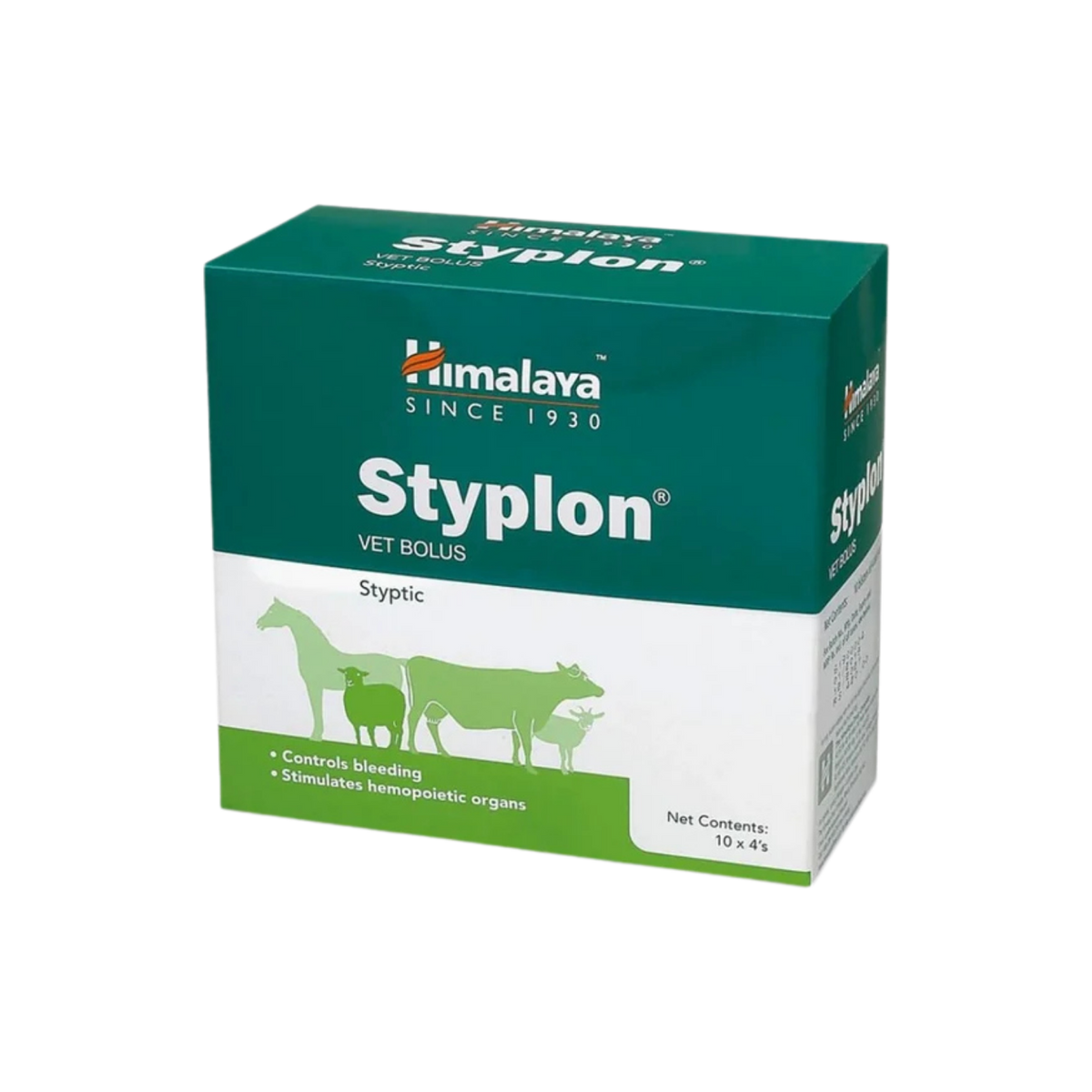
STYPLON BOLUS
STYPLON BOLUS
By HIMALAYA
Out of Stock
Prescription Required
Couldn't load pickup availability
Check Availability
Rapid 3-4 Day Delivery,Tiny Extra Fee!
-
 Pet Safe
-
 Best Quality
-
 Fast Delivery
-
 Secure Payment


About Styplon Bolus
Pain and swelling from injuries, arthritis or surgery can stop a animal from moving, eating and resting normally.
Styplon Bolus is a herbal product from Himalaya. The full list of ingredients and the dose are printed on the pack.
It is used for wound and skin care. Ask your vet whether it suits your animal, especially if your animal has a health condition or takes other medicines.
Key Ingredients
Active ingredients listed for this product. The exact strength is printed on the pack.
| Ingredient | What it does |
|---|---|
| Herbal ingredients | A blend of plant extracts listed on the pack. |
Features and Benefits
- Bolus for large animals. A large tablet made for cattle, buffaloes and other farm animals.
How to Use
- Dose. Follow the dose on the pack or the amount your vet advises for your animal's weight.
- Giving a bolus. Use a bolus gun or place it far back on the tongue, then hold the head up until the animal swallows.
- Storage. Store in a cool, dry place away from direct sunlight, unless the pack gives other storage directions. Keep out of reach of children.
Safety and Precautions
- Follow the milk and meat withdrawal period printed on the pack before milk or meat from treated animals is used for food.
- Tell your vet about any other medicines your animal takes, and if your animal is pregnant, nursing or has liver or kidney problems.
Also in: Wound and Pain Relief for Farm Animals · All Farm Animal Products
Product Information
| Detail | Information |
|---|---|
| Brand | Himalaya |
| Active ingredients | Herbal ingredients |
| Form | Bolus |
| Pack size | 4 boluses |
| Suitable for | Cattle, buffaloes, sheep and goats |
| Prescription | Not required |
| Sold by | Goodman Vetcare Pvt. Ltd. (Animeal), Warehouse No - 501 5th floor, Bharat industrial estate, Tokershi Jivraj Rd, Sewree West, Sindhu Nagar, Sewri, Mumbai, Maharashtra 400015 |
Animeal shares this information to help you make informed choices. It is not a substitute for professional veterinary advice. If your pet's condition does not improve or gets worse, please visit your vet.
| Company Name & Address | Himalaya Wellness Company, Makali, Bengaluru – 562162, Karnataka |
|---|---|
| Manufacturer Name & Address | The Himalaya Drug Company, Plot No. 60, Somapura Industrial Area, 1st Stage, Dabaspet, Nelamangala Taluk, Bengaluru – 562111, Karnataka |
| Marketer Name & Address | The Himalaya Drug Company, Plot No. 60, Somapura Industrial Area, 1st Stage, Dabaspet, Nelamangala Taluk, Bengaluru – 562111, Karnataka |
| Country of Origin | India |

STYPLON BOLUS
Out of Stock
Prescription Required
About Styplon Bolus
Pain and swelling from injuries, arthritis or surgery can stop a animal from moving, eating and resting normally.
Styplon Bolus is a herbal product from Himalaya. The full list of ingredients and the dose are printed on the pack.
It is used for wound and skin care. Ask your vet whether it suits your animal, especially if your animal has a health condition or takes other medicines.
Key Ingredients
Active ingredients listed for this product. The exact strength is printed on the pack.
| Ingredient | What it does |
|---|---|
| Herbal ingredients | A blend of plant extracts listed on the pack. |
Features and Benefits
- Bolus for large animals. A large tablet made for cattle, buffaloes and other farm animals.
How to Use
- Dose. Follow the dose on the pack or the amount your vet advises for your animal's weight.
- Giving a bolus. Use a bolus gun or place it far back on the tongue, then hold the head up until the animal swallows.
- Storage. Store in a cool, dry place away from direct sunlight, unless the pack gives other storage directions. Keep out of reach of children.
Safety and Precautions
- Follow the milk and meat withdrawal period printed on the pack before milk or meat from treated animals is used for food.
- Tell your vet about any other medicines your animal takes, and if your animal is pregnant, nursing or has liver or kidney problems.
Also in: Wound and Pain Relief for Farm Animals · All Farm Animal Products
Product Information
| Detail | Information |
|---|---|
| Brand | Himalaya |
| Active ingredients | Herbal ingredients |
| Form | Bolus |
| Pack size | 4 boluses |
| Suitable for | Cattle, buffaloes, sheep and goats |
| Prescription | Not required |
| Sold by | Goodman Vetcare Pvt. Ltd. (Animeal), Warehouse No - 501 5th floor, Bharat industrial estate, Tokershi Jivraj Rd, Sewree West, Sindhu Nagar, Sewri, Mumbai, Maharashtra 400015 |
Animeal shares this information to help you make informed choices. It is not a substitute for professional veterinary advice. If your pet's condition does not improve or gets worse, please visit your vet.
| Company Name & Address | Himalaya Wellness Company, Makali, Bengaluru – 562162, Karnataka |
|---|---|
| Manufacturer Name & Address | The Himalaya Drug Company, Plot No. 60, Somapura Industrial Area, 1st Stage, Dabaspet, Nelamangala Taluk, Bengaluru – 562111, Karnataka |
| Marketer Name & Address | The Himalaya Drug Company, Plot No. 60, Somapura Industrial Area, 1st Stage, Dabaspet, Nelamangala Taluk, Bengaluru – 562111, Karnataka |
| Country of Origin | India |