


Dental issues in pets are more common than you think. By the age of 3, over 80% of dogs and up to 80% of cats show signs of dental disease. Ignoring these problems can lead to severe health complications, affecting organs like the heart, liver, and kidneys. Here's what to watch out for:
- Bad Breath: Persistent odour could signal gum disease or infections.
- Excessive Drooling: Sudden drooling may indicate oral pain or dental issues.
- Trouble Eating: Difficulty chewing, dropping food, or favouring soft meals is often a red flag.
- Pawing at the Mouth: Pets may paw or rub their face due to discomfort or irritation.
- Swollen or Bleeding Gums: Red, swollen, or bleeding gums are early signs of gum disease.
- Loose or Broken Teeth: This is never normal in adult pets and requires immediate attention.
- Changes in Behaviour: Avoiding play, hiding, or flinching when touched could signal dental pain.
Early detection is key. Regular brushing, professional cleanings, and watching for these signs can help prevent long-term health issues. If you notice any of these symptoms, consult your vet immediately to ensure your pet stays healthy and pain-free.
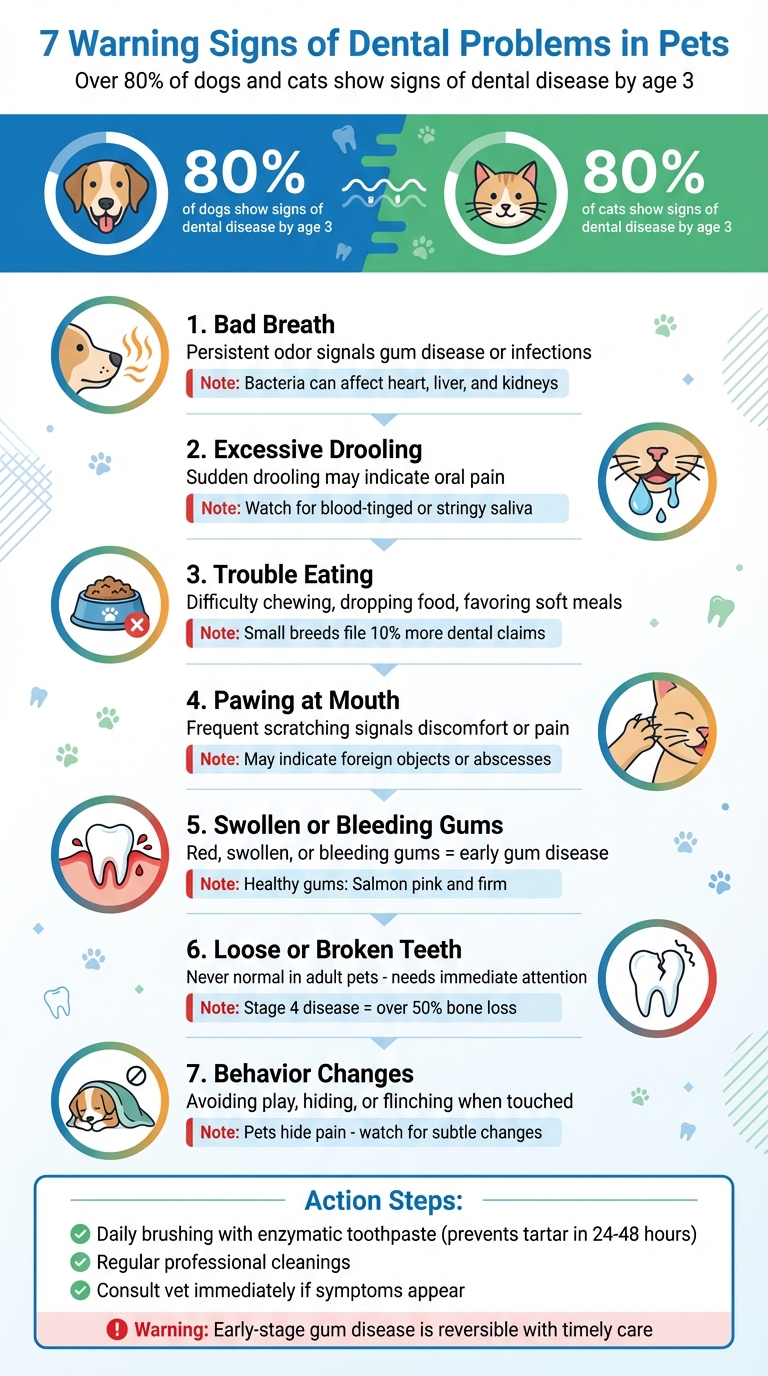
7 Warning Signs of Dental Problems in Dogs and Cats
1. Bad Breath
If your pet's breath smells unusually bad, it might be an early sign of dental trouble. Persistent bad breath, or halitosis, is often one of the first red flags for dental issues in pets. It signals that something might be off with the bacterial balance in their mouth.
The main issue? Bacteria. Over time, bacteria can build up, leading to infections, gum disease, or even decaying teeth. What’s worse, bacteria at the gumline can enter the bloodstream and potentially impact major organs like the heart, liver, and kidneys.
"Unless your pet has just eaten something stinky such as tuna, it is important to recognise that bad breath is not normal and can indicate a problem with her dental health." - The Vetstreet Team
The type of smell can also give clues about underlying problems. A fishy or rotten egg-like odour might mean advanced gum disease, while a sweet or fruity smell could point to diabetes. If it smells like urine, it might indicate kidney problems.
To tackle this, daily brushing with enzymatic toothpaste is key for keeping plaque under control. But if the bad breath doesn’t go away, even with regular care, it’s time to see the vet. They might recommend a professional cleaning under anaesthesia to remove tartar hiding beneath the gumline.
2. Excessive Drooling
While some breeds naturally drool more than others, a sudden spike in drooling is a warning sign that something might be wrong. If your pet, who doesn’t usually drool much, starts leaving wet spots on the furniture, it could be a sign of dental pain.
When oral discomfort is present, the salivary glands often go into overdrive. This can happen due to bacterial imbalances that lead to bad breath and gum irritation, which in turn causes excessive drooling. Essentially, excessive drooling can be your pet's way of signalling oral discomfort.
"Most dental diseases would cause your dog to drool more than normal because the oral tissues, in particular the gums, are irritated and inflamed" - Dr. Arman Chen from Gaia Vets
Dental issues like infected teeth, abscesses, fractured teeth, or even oral tumours are common culprits. In cats, tooth resorption - a condition where the structure of the tooth deteriorates - often leads to drooling. Since cats typically swallow saliva while grooming, any visible drooling is a strong indicator of an underlying issue.
Pay attention to changes in saliva consistency, such as stringy or blood-tinged drool, as these could point to more advanced dental problems. You might also notice brownish stains or wet patches on the fur under your pet’s mouth or chest, which suggest ongoing hypersalivation.
Breeds with small or flat faces, like Pugs, Shih Tzus, and Persian cats, are particularly prone to dental issues due to crowded teeth. If you notice excessive drooling along with other signs of discomfort, it’s time to schedule a vet visit. Early evaluation can make a big difference in addressing the root cause.
3. Trouble Eating or Chewing
If your pet suddenly struggles with meals they once enjoyed, dental pain could be the underlying issue. You might notice behaviours like dropping kibble, chewing only on one side, or eagerly approaching the food bowl only to retreat after the first bite. Many pet parents assume their furry friend has become "picky" or "finicky", but these changes often signal discomfort that shouldn’t be ignored. Such shifts in eating habits can point to deeper dental problems that need attention.
Common dental issues that affect eating include periodontal disease, an infection that damages the tissues and bones supporting the teeth, and fractured teeth caused by chewing on hard objects like bones or antlers. Cats, in particular, may suffer from tooth resorption, a condition where painful holes form in their teeth.
Be on the lookout for signs like taking longer to finish meals, spitting out food, or suddenly favouring soft food over crunchy options. You might even find half-chewed food left near the bowl - a behaviour known as "quidding." Small dog breeds are especially at risk; owners of these breeds file about 10% more dental insurance claims compared to owners of larger breeds.
"Even pets with sore gums, infected mouths and broken teeth will continue to eat so owners may not notice any problems." - Belinda Vaughan, Woofpurnay Veterinary Hospital
If you notice these changes, it’s crucial to book a veterinary appointment as soon as possible. Pets rarely show obvious signs of discomfort, so a thorough dental check-up - often requiring anaesthesia for X-rays and a detailed examination below the gumline - is key. Until you can see a vet, switching to soft food can help ensure your pet gets the nutrition they need. Early intervention will not only pinpoint the problem but also pave the way for effective dental treatment.
4. Pawing at the Mouth
If your pet is frequently scratching or pawing at their face or mouth, it could be a sign that something's wrong. While occasional grooming is perfectly normal, constant pawing often points to discomfort or pain.
There are several reasons why your pet might behave this way. Periodontal disease, infected teeth, or severe gum inflammation are common culprits. Broken or fractured teeth, often caused by chewing on hard items like bones, antlers, or even ice, can cause sharp pain, leading to this reaction. Sometimes, small foreign objects like splinters, bone fragments, or food particles get stuck between their teeth or in the gums, causing irritation. Dental abscesses - painful infections at the tooth root - can also lead to facial swelling and trigger this behaviour. These issues are often accompanied by other subtle signs of dental trouble.
Keep an eye out for related behaviours that might hint at oral discomfort. Your pet might rub their face against furniture or walls, shake their head after meals, or flinch when you touch their face. Dogs may show jaw chattering, while cats might groom excessively around their face or rub against surfaces more than usual.
"Few dogs show obvious signs of dental disease, so it is up to the dog's family and veterinarian to uncover this hidden and often painful condition. If your dog shows signs, they may include pawing at the mouth, head shaking, or jaw chattering." - Dr. Courtney Barnes, BSc, DVM
If you notice your pet pawing at their mouth, carefully check for any foreign objects, like bone shards or splinters. However, if the behaviour continues, it’s essential to schedule a visit to the vet. Many dental issues occur beneath the gumline and aren’t visible to the naked eye, so a professional exam and dental X-rays may be needed. Addressing these signs early can help protect your pet’s health and comfort.
sbb-itb-5205b1e
5. Swollen or Bleeding Gums
Your pet’s gums should ideally be salmon pink and firm to the touch. If you notice they’re bright red, swollen, or bleeding, it’s a red flag for dental trouble. These symptoms often signal gingivitis, an early stage of gum disease caused by plaque and tartar irritating the gumline. Left unchecked, gingivitis can worsen into periodontal disease, a more severe condition that damages the tissues and bones supporting the teeth. Regularly checking your pet’s gums can help you catch these issues early, before they escalate.
"Gingivitis is a milder and reversible form of gum disease affecting only the gums, periodontal disease is a more severe, often irreversible condition that damages the tissues and bone supporting the teeth." - The Veterinary Medicine
Certain breeds, like Yorkshire Terriers, Pugs, and Shih Tzus, are more prone to dental issues. Their small mouths and crowded teeth create an environment where bacteria can thrive, and plaque can harden into tartar much faster than in other breeds.
To keep an eye on your pet’s dental health, gently lift their lip and look for signs like a red gumline, receding gums that make teeth appear longer, or any bleeding when touched. Be cautious, though - pets in pain might react defensively. If you spot these signs, make an appointment with your vet right away. Bleeding gums aren’t just a dental issue; bacteria from the gums can enter the bloodstream and affect vital organs like the heart, liver, and kidneys.
Treatment varies based on how advanced the condition is. Early gingivitis can often be reversed with a professional dental cleaning under anaesthesia, which removes tartar from beneath the gumline. More severe cases might need antibiotics, pain relief, or even tooth extractions. To prevent future problems, brush your pet’s teeth daily with pet-safe toothpaste and schedule regular vet check-ups.
6. Loose or Broken Teeth
After noticing signs like swollen gums, another unmistakable red flag for dental problems is loose or broken teeth.
For adult pets, a loose or broken tooth is never normal and needs immediate veterinary attention. Unlike puppies and kittens, who naturally lose their baby teeth, adult dogs and cats are meant to keep their permanent teeth for life. A tooth that wiggles, shifts, or has broken off could point to advanced periodontal disease or trauma to the mouth.
Periodontal disease is often the main culprit behind loose teeth. By the time a tooth becomes loose, the condition has usually reached Stage 4, which means over 50% of the bone supporting the tooth has been lost. This process doesn’t happen overnight - it’s the result of plaque hardening into tartar, leading to chronic infection. Over time, this infection weakens the bone and ligaments that hold the tooth in place. You’ll often notice other signs like heavy tartar build-up, bad breath, and gums that are red or receding.
On the other hand, trauma is a common cause of sudden tooth fractures or breaks, often affecting one or two teeth. Chewing on hard items like antlers, bones, or even rocks is a frequent cause of these injuries, especially in the canine teeth. Smaller dog breeds are particularly prone to dental issues - owners of small dogs report about 10% more dental claims compared to those with larger breeds.
Even if your pet seems to eat normally, don’t wait to act. Pets are experts at hiding pain and may continue eating despite discomfort from broken or infected teeth. An untreated infection can allow bacteria to enter the bloodstream, potentially harming vital organs like the heart, liver, and kidneys. If you notice a loose or broken tooth, book a veterinary appointment right away. Early treatment could save the tooth, with options like root canals available in some cases.
7. Changes in Behaviour
Severe dental pain can lead to noticeable shifts in your pet's behaviour. For instance, a dog that usually loves to play might suddenly avoid games, while a sociable cat could start hiding away. These changes are often your pet's only way of letting you know something is wrong.
"Some pets become irritable when they have dental problems, and any changes in your pet's behavior should prompt a visit to your veterinarian." - American Veterinary Medical Association
Pay attention to how your pet reacts when you touch their face or jaw. If they flinch, pull away, or respond defensively, it could be a sign of pain. In some cases, pets might even snap or bite instinctively to protect themselves from discomfort.
Behavioural changes like losing interest in chew toys or hard treats they once enjoyed are another red flag. This could mean chewing has become painful. Watch for signs around mealtime too - if your pet approaches their food eagerly but stops after a bite or seems uncomfortable while eating, it’s worth investigating further. Cats, in particular, might start grooming excessively around their face, avoid social interaction, or tilt their head in unusual ways while eating.
Conclusion
Dental health isn't just about having clean teeth; untreated dental problems can have far-reaching effects on overall health. When gum disease advances, bacteria from the mouth can enter the bloodstream, potentially causing severe harm to vital organs. Dr. Bernadine Cruz from Laguna Hills Animal Hospital highlights this risk:
"If left untreated, dental disease can spread infection throughout the body. When the health of the gums is compromised, the bacteria can get into the bloodstream and cause infection in your pet's liver, lungs, kidneys and heart."
Catching these issues early is crucial. The good news? Early-stage gum disease is reversible with timely care. Unfortunately, many pets endure these conditions silently, showing no clear signs of discomfort until the situation worsens. If you notice symptoms like bad breath, trouble eating, or changes in behaviour, it's time to consult your vet. Early action can prevent long-term damage and spare your pet from unnecessary pain.
Everyday care at home is just as important as professional treatment. Establishing a daily routine with pet-friendly products can make a huge difference. For instance, brushing your pet’s teeth daily with enzymatic toothpaste can stop plaque from turning into tartar within 24 to 48 hours. Platforms like Animeal simplify access to dental essentials, offering everything from finger brushes and enzymatic toothpastes to dental water additives and specialised treats - all delivered conveniently across India.
FAQs
What can I do to keep my pet’s teeth healthy?
Maintaining your pet’s dental health is a key part of ensuring their overall well-being. Begin by scheduling regular dental check-ups with your veterinarian - aim for at least once a year. These visits can help detect early signs of dental issues, such as bad breath, swollen gums, or difficulty eating. Catching problems early can save your pet from unnecessary pain and complications.
Daily oral care is just as important. Use a pet-safe toothpaste and brush your pet’s teeth regularly to help remove plaque and reduce tartar buildup. You can also incorporate dental chews or toys specifically designed to support oral hygiene into their routine. A balanced diet plays a role too, as it contributes to strong teeth and healthy gums.
Keep an eye out for warning signs like bleeding gums, loose teeth, or a sudden reluctance to eat. If you notice any of these, consult your vet without delay. By combining routine check-ups, consistent oral care, and preventive steps, you can help your pet avoid painful dental issues and live a more comfortable, joyful life.
Why does my pet have bad breath even with regular brushing?
If your pet's breath smells unpleasant even with regular brushing, it might be signalling deeper dental problems like plaque buildup, gum disease, or even tooth infections. These issues often require professional attention, as brushing alone can't tackle hardened tartar or more serious concerns.
Chronic bad breath might also hint at other health problems, such as oral infections or digestive disorders. If you notice symptoms like trouble eating, swollen gums, or your pet pawing at their mouth, it's wise to consult a veterinarian for a detailed check-up and treatment. Regular dental visits and professional cleaning sessions play a big role in maintaining your pet's oral health.
To make pet care easier, you can check out Animeal, an online store offering a variety of pet supplies, including dental care products, with quick delivery across India.
Why is it important to spot dental problems in pets early?
Spotting dental issues in pets early is crucial for their well-being. Signs like bad breath, swollen gums, or difficulty eating could point to problems such as gum disease or tooth decay. Left unaddressed, these issues can cause severe pain and even lead to infections that may spread to vital organs like the heart, liver, or kidneys - posing serious health risks.
Taking action at the first signs of trouble and consulting a vet can help prevent complications, keep treatment costs manageable, and ensure your pet remains healthy and comfortable. Routine dental check-ups and maintaining good oral hygiene are key to avoiding severe dental problems and safeguarding your pet’s quality of life.


