


Keeping your pets hydrated during India’s hot summers is essential for their health. High temperatures, often exceeding 40°C, combined with humidity, can lead to dehydration and heatstroke in dogs and cats. Pets cool themselves differently than humans - dogs pant, and cats lick their fur - but these methods may not suffice in extreme heat. Here’s what you need to know:
- Daily Water Needs: Pets require 50–80 ml of water per kg of body weight. For example, a 10 kg dog needs 500–800 ml per day, and this increases with activity or heat.
- Dehydration Signs: Watch for sticky gums, sunken eyes, thick saliva, and lethargy. Test hydration by lifting their skin - slow return indicates dehydration.
- Heatstroke Symptoms: Heavy panting, drooling, red gums, vomiting, and disorientation. Immediate action is crucial.
- Hydration Hacks: Use stainless steel bowls, add ice cubes, and offer wet food or hydrating treats like cucumber, watermelon, or coconut water (unsweetened). Frozen snacks or homemade electrolyte solutions can also help.
- Diet Adjustments: Wet food has 80% moisture compared to 10% in kibble. Mix water with meals or serve chilled foods for added hydration.
- Cool Environment: Provide shaded resting spots, cooling mats, and avoid outdoor walks during peak heat (10 AM–6 PM). Always check pavement temperatures before walks.
Actively monitoring your pet’s water intake, adjusting their diet, and creating a cool living space can help prevent dehydration and heat-related illnesses. Stay alert for early warning signs and consult a vet if needed.
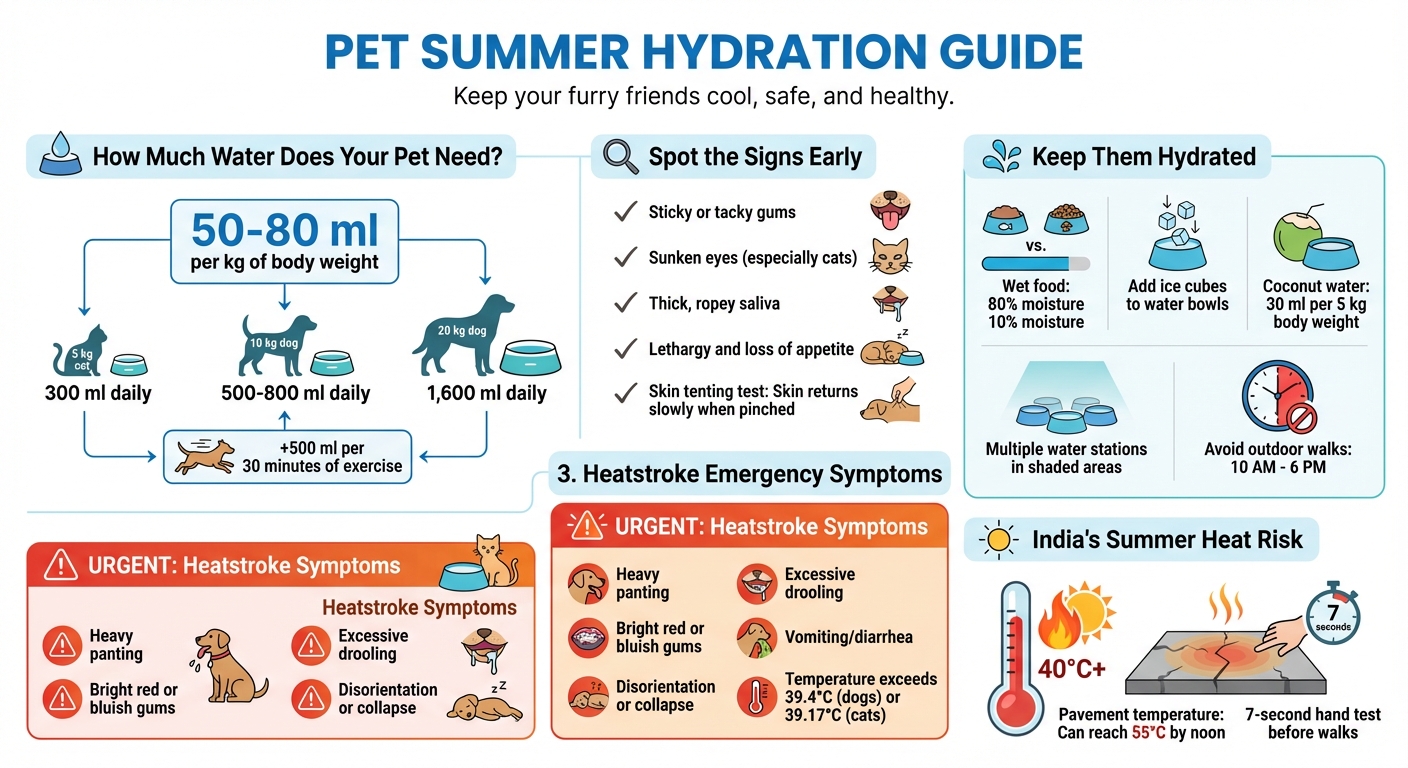
Pet Hydration Guide: Daily Water Needs and Dehydration Warning Signs
How to keep your #pets cool and hydrated this summer | PET CIRCLE
sbb-itb-5205b1e
How Much Water Do Dogs and Cats Need?
With the extreme heat risks discussed earlier, understanding how much water your pets need becomes crucial. Typically, dogs and cats require about 50–80 ml of water per kilogram of body weight daily. For instance, a 10 kg dog would need approximately 500–800 ml of water each day. But when temperatures soar past 40°C, these numbers can rise significantly. Let’s dive into how daily water requirements vary and the signs of dehydration you should watch out for.
Several factors influence a pet’s water needs, including their size, activity level, and breed characteristics. Smaller pets, like toy breeds or cats, are particularly vulnerable because their lower fluid reserves mean they can dehydrate much faster. For example, a Pomeranian or a small cat can reach dangerous dehydration levels within hours if water is scarce. Active pets, especially during walks in hot weather, may need an additional 500 ml of water for every 30 minutes of exercise.
"Smaller pets dehydrate faster due to lower fluid reserves, so missing even one water refill or meal in the heat can have noticeable effects." - Darshankaur Khalsa, Co-Founder, Pets of Paradise
Breed-specific traits also play a role. Flat-faced breeds, like Pugs and Bulldogs, struggle to cool themselves efficiently through panting. On the other hand, larger breeds with thick coats, such as Huskies or Golden Retrievers, can trap heat in their fur, increasing their need for hydration breaks. Older pets face additional challenges, as they may become less mobile and forget to drink unless water is easily accessible in multiple locations.
To monitor your pet’s hydration, mark water bowl levels each morning and check them at night. This helps you establish a baseline and spot any unusual changes in water consumption, which could indicate health issues.
Daily Water Intake Requirements
You can calculate your pet’s water needs using this formula: weight (kg) x 60–80 ml, adjusted for factors like activity level, temperature, and humidity. For example, a 5 kg indoor cat may need about 300 ml daily, while a 20 kg active Labrador might require up to 1,600 ml during peak heat.
Diet also plays a huge role in hydration. Wet food contains about 78–80% moisture, compared to just 10% in dry kibble. Pets on wet food diets often meet much of their water needs through their meals, while those eating dry food need to drink more water to stay hydrated.
"Dogs don't have sweat glands hence their body tends to heat up very quickly. During summer months dogs are susceptible to conditions like heavy panting, dehydration, dry and bright red gums, and even heat stroke." - Dr. Punith G, Asst. Product and Technocommercial Manager, Drools
To keep water cooler and cleaner, use stainless steel or ceramic bowls instead of plastic. Adding ice cubes can help maintain a refreshing temperature. For pets that are reluctant to drink, placing multiple water bowls in shaded or resting areas can encourage hydration, especially for older or less mobile animals.
Meeting these hydration needs is essential because deviations often signal early dehydration or heat stress.
Signs of Dehydration and Heatstroke
Spotting early signs of dehydration can prevent emergencies. Symptoms to watch for include sticky gums, sunken eyes (especially in cats), thick saliva, a lack of appetite, and lethargy. A quick test involves lifting the skin near the shoulder blades - if it snaps back immediately, hydration is likely fine; a slow return indicates dehydration.
Heatstroke symptoms are more severe and include heavy panting, excessive drooling, bright red or bluish gums, vomiting, diarrhoea, disorientation, and even collapse. Cats may also show signs like sweaty paw pads, restlessness, or excessive grooming as they attempt to cool down. A pet’s normal body temperature should not exceed 39.4°C (103°F) for dogs or 39.17°C (102.5°F) for cats.
| Symptom | What to Check | Action Required |
|---|---|---|
| Sticky/Tacky Gums | Gums should be moist, not sticky | Offer water and monitor |
| Skin Tenting | Skin should snap back in under 1 second | Increase water access; consult a vet if persistent |
| Sunken Eyes | Common in cats with low fluid intake | Provide urgent hydration; contact a vet |
| Thick Saliva | Saliva appears pasty or ropey | Indicates advanced dehydration; consult a vet |
| Rapid Panting | Sign of severe heat stress | Move to a cool area, apply cool water, seek vet care |
Another quick test is the capillary refill test: press your finger against your pet’s gums until they turn white, then release. The pink colour should return almost immediately. If it takes longer than two seconds, dehydration could be an issue.
"If your dog has any of the symptoms of dehydration... persistent vomiting, or you suspect heatstroke, take him to the vet immediately. This is considered a medical emergency." - Dr. Jerry Klein, Chief Veterinary Officer, AKC
If you suspect heatstroke, act fast. Move your pet to a shaded or air-conditioned area, apply cool (but not iced) water to their neck, armpits, and groin, and offer small amounts of water. Seek immediate veterinary care. Avoid using ice-cold water, as this can constrict blood vessels and worsen the situation.
How to Keep Your Pet Hydrated
Keeping your pet hydrated becomes even more crucial during extreme heat, especially when temperatures soar past 40°C. Beyond just watching for signs of dehydration, it’s important to make water easily accessible, appealing, and cool. Here’s how you can ensure your furry friend stays hydrated and healthy.
Providing Fresh and Cool Water
Place several water bowls in shaded areas, both indoors and outdoors, so your pet always has access to water. For outdoor spaces, Indian mud pots are a fantastic option - they’re affordable, sturdy, and naturally cool water through evaporation.
For better hygiene and to keep the water cooler, opt for stainless steel or ceramic bowls, which also help prevent bacterial growth. During the hottest part of the day, between 12 PM and 4 PM, consider adding ice cubes to the water bowls.
"Always keep water handy during walks and change it every few hours. You can also add ice cubes in their bowl." - Darshankaur Khalsa, Co-Founder, Pets of Paradise
Cats, on the other hand, often prefer running water. A pet fountain can encourage them to drink more. Refill water bowls frequently throughout the day, and ensure they’re stable enough to avoid spilling during enthusiastic drinking sessions.
Hydrating Foods and Treats
Adding wet food to your pet’s diet is one of the simplest ways to increase their water intake. Wet food contains significantly more water than dry kibble. If your pet isn’t used to wet food, start small by mixing in a tablespoon or two of water with their regular kibble.
Summer fruits and vegetables can also help. Seedless watermelon chunks make a refreshing treat - just be sure to remove the seeds and rind to prevent choking. Other options include cucumber slices, bottle gourd (lauki), and pumpkin, all of which are over 90% water. You can serve them raw (shredded) or lightly steamed and mixed into meals.
"While offering fresh water is crucial, integrating hydrating foods and treats into their diet can significantly boost their water intake and keep them feeling refreshed." - J.S. Rama Krishna, Business Head for Pet Food, Growel Group
Frozen treats are another great option, combining hydration with mental stimulation. Try freezing lactose-free yogurt blended with diced cucumber in silicone moulds. Coconut water ice cubes are another hit - just ensure you’re using plain, unsweetened tender coconut water, with a recommended amount of 30 ml per 5 kg of body weight. Low-sodium bone broth frozen into ice cubes also makes for a tasty, hydrating snack. For cats, stick to lactose-free options to avoid stomach issues.
Homemade Electrolyte Solutions
After outdoor play or long walks, your pet may lose electrolytes along with water. A simple homemade solution can help replenish those: mix 1 litre of water with a pinch of salt, 1 teaspoon of honey, and a few drops of lemon juice. Offer this in small sips, especially after exercise in the heat.
Natural alternatives like plain tender coconut water are excellent as they naturally contain potassium and other electrolytes. Buttermilk and plain curd are traditional Indian options that help keep pets cool and hydrated. Low-sodium bone broth is another great choice, but make sure it’s completely free of onions, garlic, and excessive salt.
For emergencies, keep unflavoured ORS (Oral Rehydration Salts) in your pet’s first-aid kit - it’s a quick fix for heat stress. However, avoid giving your pet human sports drinks, as they often contain harmful ingredients like sugar, caffeine, or xylitol. If you’re introducing new hydrating drinks like goat’s milk or herbal teas, do so gradually and keep an eye out for any adverse reactions.
These hydration strategies, when combined with dietary and environmental adjustments, can help ensure your pet stays comfortable and safe during the hot summer months.
Adjusting Your Pet's Diet for Summer
As the temperature rises, pets naturally tend to eat less - sometimes up to 30% less. Tweaking their diet can help maintain their hydration and energy levels during the summer months.
Switching to Lighter, Wetter Meals
One easy way to keep your pet hydrated is by incorporating wet food into their diet. Wet food contains about 80% moisture, as opposed to the mere 10% found in dry kibble, providing a significant hydration boost.
"Feeding your pooches wet food is a great idea... Not only does it provide a good number of calories, being rich in water (about 80%), it also helps in proper hydration of the body." - Dr. Punith G, Animal Nutritionist, Drools
For cats that resist wet food, you can soften their kibble by adding water. Dr. Shantanu Kalambi, Chief Veterinarian, suggests:
"In case your cat is unwilling to switch to wet food, one can start by adding water to the kibble. The kibble becomes softer by absorbing water. It is a gradual way of adding water to the food."
Opt for easily digestible proteins like chicken or eggs, and pair them with fibre-rich vegetables such as spinach or pumpkin. Another option is to mix low-sodium bone broth into meals. This not only adds moisture but also provides collagen and amino acids, which are beneficial for joint health. For cats, even a small addition - just 1–2 teaspoons of water to their wet food - can improve hydration.
These small adjustments to their diet work hand-in-hand with other hydration methods to help your pet stay comfortable in the heat.
Meal Frequency and Portion Adjustments
Beyond changing the type of food, altering when and how much your pet eats can also make a difference. Large meals during the hottest parts of the day can increase body temperature, so it’s better to divide their daily food into 3–4 smaller portions spread throughout the day.
Timing matters too. Serve meals during the cooler parts of the day - before 8 a.m. or after 7 p.m. - to help your pet stay comfortable.
If your pet’s appetite drops significantly, consider adding vet-approved multi-vitamin supplements or a small amount of glucose to their water to maintain their energy levels. Serving meals at room temperature or slightly chilled can also help cool them down while ensuring they get the nutrition they need.
Creating a Cool Environment for Your Pet
Keeping your pet comfortable during the summer isn’t just about hydration and diet - it’s also about creating a safe and cool environment. Adjusting their resting areas and planning outdoor activities wisely can go a long way in protecting them from the heat.
Shaded and Cool Resting Areas
Your pet needs a cool spot to escape the heat, especially during the hottest parts of the day. Keep indoor temperatures between 24°C and 30°C with the help of an air conditioner or fans placed near their bedding. During peak heat hours (12 PM–4 PM), close windows and draw curtains to block out direct sunlight.
To help your pet stay cool, consider using cooling mats, damp towels, or marble slabs, which are excellent at drawing away heat. If your pet enjoys spending time on the balcony, bamboo blinds can be a great addition - they can lower radiant heat by up to 45%. For outdoor dogs, make sure there’s plenty of deep shade available, and spraying water on the ground can provide some relief through evaporation.
"The pet must not be addicted to staying in air-conditioned rooms only" - Dr. Ashok Kaushik, Veterinarian
While cooling is essential, gradual exposure to different temperatures helps your pet adapt better. And remember, never leave your pet in poorly ventilated spaces like parked cars or conservatories. Even on a mild 28°C day, the inside of a parked car can climb to 32°C in the shade and an alarming 71°C in the sun within minutes.
While a comfortable indoor environment is crucial, managing outdoor exposure is just as important to keep your pet safe.
Limiting Outdoor Activities
To complement indoor cooling, plan your pet’s outdoor activities carefully to avoid heat stress. Avoid taking them out between 10 AM and 6 PM. Instead, schedule walks early in the morning before 8 AM or later in the evening after 7 PM.
"A late-night walk is better because pavements continue to release heat after sunset" - Darshankaur Khalsa, Co-Founder, Pets of Paradise
Before heading out, check the pavement’s temperature by placing your hand on it for seven seconds. If it feels too hot for your hand, it’s too hot for your pet’s paws. Asphalt can reach a scorching 55°C by noon - enough to cause burns in under a minute. Whenever possible, stick to grassy areas instead of pavement or artificial turf, as the latter can be up to 15°C hotter than the air temperature. And don’t forget to carry a collapsible bowl and about 500 ml of water for every 30 minutes of walking to keep your pet hydrated.
Conclusion
Keeping your dog or cat hydrated during India’s scorching summers doesn’t have to be complicated. A few thoughtful steps can make all the difference: always ensure there’s fresh, cool water available in multiple spots around your home, add moisture-rich options like wet food or broths to their meals, and stay alert for signs of dehydration, such as sticky gums or skin that doesn’t bounce back when pinched.
Make it a habit to check your pet’s gums and use the skin-tenting test regularly. If you spot symptoms like thick saliva, sunken eyes, or unusual lethargy, these could be serious warning signs that call for immediate action.
"Many animals suffer during India's long summers. You can help them weather the high temperatures by following our tips." - Dr. Manilal Valliyate, Director of Veterinary Affairs, PETA India
Beyond hydration, think about how your pet’s daily routine can help manage the heat. Keep the indoors cool with fans, cooling mats, or damp towels, and pair this with the outdoor timing adjustments mentioned earlier. Together, these steps create a well-rounded summer safety plan that tackles both hydration and heat concerns.
FAQs
What are the signs of dehydration in pets during the summer?
Dehydration in pets during the summer can show up in various ways, such as excessive panting, lethargy, loss of appetite, dry gums, and reduced skin elasticity. If the situation worsens, you might also notice vomiting or sunken eyes. These are clear signs that your furry friend is struggling to stay hydrated and may require quick intervention.
To keep dehydration at bay, make sure your pet always has access to fresh, clean water. You can also offer them cooling treats like chilled, seedless watermelon or cucumber slices in small amounts. Create a comfortable environment by keeping them in shaded and cool areas, and try to avoid outdoor activities during the hottest part of the day, which in India is typically between 11:00 AM and 4:00 PM.
What are the best foods and treats to keep pets hydrated during summer in India?
Keeping your pets hydrated during India's scorching summers is essential for their health and comfort. Incorporating water-rich foods and cooling treats into their diet can make a big difference.
For dogs, you can offer chilled watermelon cubes, frozen banana-yogurt bites, or even coconut water ice cubes. These not only provide hydration but also serve as refreshing snacks. If your dog primarily eats dry kibble, consider adding wet foods, broths, or gravy pouches to their meals to increase their moisture intake.
Cats, being naturally picky drinkers, often prefer running water. A pet water fountain can be a great way to encourage them to drink more. You can also mix wet food into their diet or add ice cubes to their water bowl to keep them hydrated. For a summery treat, both cats and dogs can enjoy small amounts of watermelon or bananas, provided they’re prepared safely.
Make sure fresh, clean water is always available for your pets, and keep an eye on their hydration levels to ensure they stay cool and healthy during the heat.
How can I keep my pet safe from heatstroke during summer outdoor activities?
To keep your pet safe from heatstroke during the summer, it’s important to adjust their outdoor routine. Plan walks or playtime for the cooler parts of the day - early mornings or late evenings are ideal. Steer clear of outdoor activities between 11 a.m. and 4 p.m., as this is usually when the heat is at its peak.
Make sure your pet always has access to fresh, clean water and a shaded spot to relax. And remember, never leave your pet in a parked car, even for a short time. The temperature inside can skyrocket within minutes, putting your pet at serious risk. By managing their activity and ensuring they stay hydrated, you can help your furry friend enjoy a safe and comfortable summer.


