


When your cat stops eating, it’s more than just fussiness - it’s often a sign of a health issue. Cats are sensitive to even short periods without food, which can lead to serious conditions like fatty liver disease. Appetite loss can stem from dental pain, stress, or systemic illnesses like kidney disease or diabetes. Here's what you need to know:
- Key Signs: Sniffing food but not eating, walking away after approaching the bowl, or complete food refusal.
-
Types:
- Hyporexia: Eating less than usual.
- Anorexia: Total refusal to eat.
- Pseudo-anorexia: Wants to eat but physically cannot due to oral or dental pain.
- Common Causes: Dental problems, systemic illnesses (e.g., kidney or liver disease), stress, or environmental changes.
- When to Act: If your cat hasn’t eaten for 24 hours (or 12 hours for kittens), consult a vet immediately.
Early detection and veterinary care are essential to prevent complications. If your cat shows appetite changes, don’t wait - act quickly to protect their health.
Cat Not Eating? A Vet Gives 10 Reasons Why
Appetite vs. Anorexia in Cats
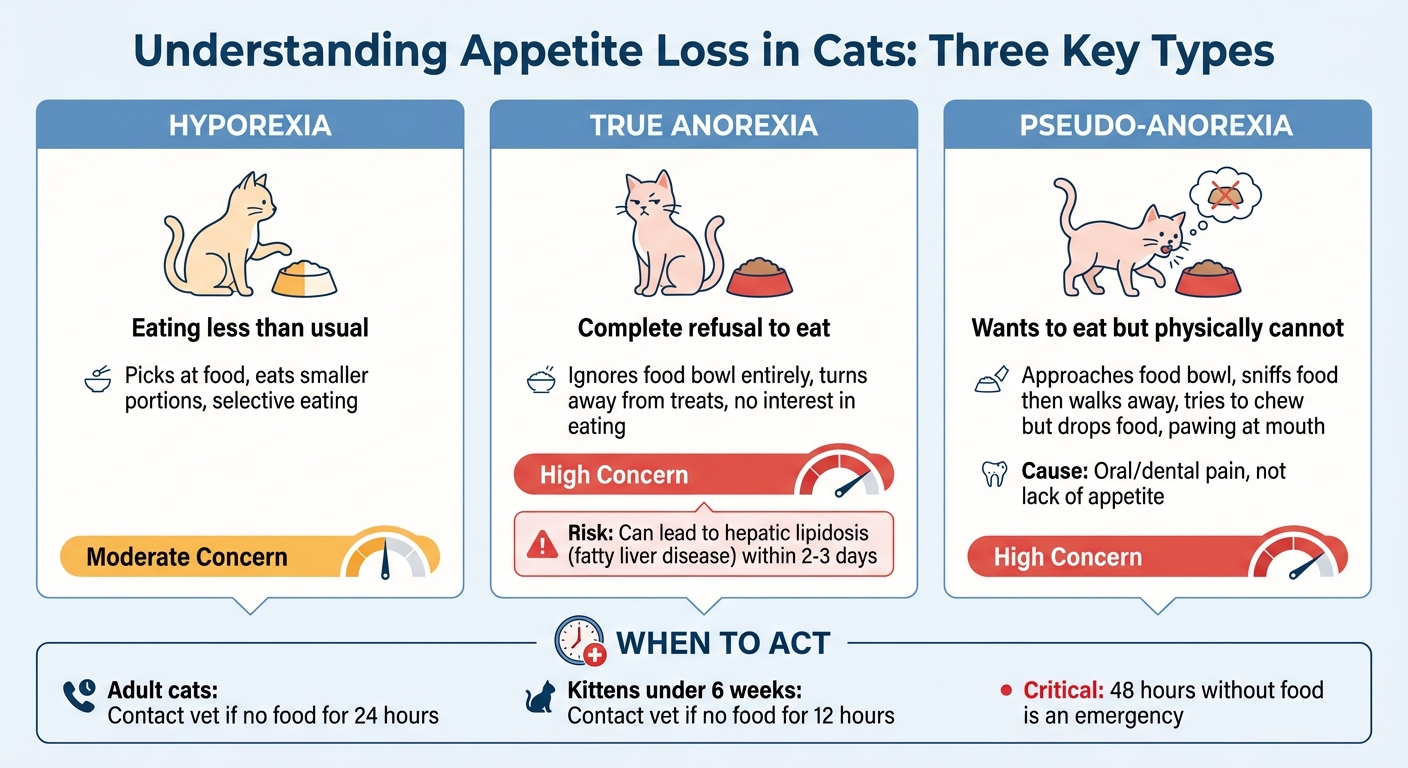
Types of Appetite Loss in Cats: Hyporexia vs Anorexia vs Pseudo-Anorexia
Knowing the difference between a cat eating less and completely refusing food is key to understanding when to take action. Vets use specific terms to describe these behaviours: hyporexia is when a cat's appetite decreases, and they eat less than their usual caloric needs, while anorexia refers to a total refusal to eat. Another term, dysrexia, covers any abnormal eating patterns. These distinctions are vital for recognising the problem and ensuring timely veterinary intervention.
"A lack of appetite might also be referred to as 'anorexia' when a cat eats nothing at all, and 'hyporexia' when food intake is below what's normal."
It's important to note that appetite is different from hunger. Hunger is a physical need for nutrients, while appetite is the psychological drive to eat, influenced by factors like smell, memory, and past food experiences. For example, a sick cat might feel hungry but lack the appetite to eat.
Reduced Appetite vs. Complete Refusal to Eat
The difference between eating less and not eating at all can help your vet identify potential issues. A cat with hyporexia might pick at their food, eat only specific items, or consume smaller portions than usual. On the other hand, a cat with anorexia avoids all food entirely.
There’s also a condition called pseudo-anorexia, where a cat wants to eat but is physically unable to. Signs include approaching the food bowl, sniffing the food, and then walking away, or trying to chew but dropping the food. This behaviour often points to oral pain, dental issues, or swallowing difficulties rather than a lack of interest in eating.
Why Early Detection Matters
Cats are particularly vulnerable to the effects of not eating. When a cat stops consuming food, their body starts breaking down fat for energy. Unfortunately, their liver isn't designed to handle large amounts of fat, which can lead to a serious condition known as hepatic lipidosis (fatty liver disease). This can occur even after a short period of fasting, making early detection critical.
"The metabolism of cats is more sensitive to lack of calories than other pets, and cats are not capable of tolerating long time periods without eating."
- Vetster Editorial Team
Overweight and obese cats are at a higher risk since their larger fat reserves speed up liver damage during fasting. If your cat refuses food for more than two days, or if you notice symptoms like yellowing of the gums or eyes (jaundice), consult a vet immediately.
Types of Anorexia in Cats
Understanding whether your cat is unwilling or physically unable to eat is key to addressing their appetite loss. Veterinarians categorise this issue into two distinct types, and identifying the correct one can make a significant difference in diagnosis and treatment.
"The first, most important step is to determine whether the cat has true or pseudo-anorexia. Does she want to eat but is unable to, or is she truly not interested in eating?" - VCA Animal Hospitals
Let’s break down the two types of anorexia commonly seen in cats.
True Anorexia: Loss of Interest in Food
True anorexia occurs when a cat completely loses interest in eating. This isn’t just your cat being picky - there’s a total absence of the psychological drive to eat, even though their body still requires nutrients. Cats with true anorexia will likely ignore their food bowls and even turn away from their favourite treats.
This loss of appetite is often linked to systemic illnesses like kidney disease, liver failure, or diabetes. Psychological factors, such as stress from a recent move or the loss of a companion, can also play a role. Additionally, symptoms like nausea, fever, or a diminished sense of smell can further suppress their desire to eat.
Spotting true anorexia is critical because it often signals an underlying systemic condition that requires immediate veterinary attention.
Pseudo-Anorexia: Physical Inability to Eat
Pseudo-anorexia, on the other hand, occurs when a cat wants to eat but is physically unable to do so. You might notice your cat approach their food bowl, sniff the food, and then back away or avoid eating altogether. Other signs include crying out while trying to chew, pawing at their mouth, or struggling to pick up or swallow food.
This type of behaviour often points to physical issues such as oral pain, dental disease, jaw injuries, or even oral tumours. Dental disease, in particular, is a common culprit, affecting up to 85% of cats aged three and older.
A simple treat test can help you distinguish between the two types. If your cat ignores a delicious treat, it may indicate true anorexia. However, if they struggle to eat the treat, pseudo-anorexia is more likely. Identifying pseudo-anorexia shifts the focus to oral or dental problems, which can often be treated effectively when caught early.
Common Causes of Appetite Loss
Understanding why your cat may stop eating can help you take the right steps toward addressing the issue. From dental pain to serious illnesses and even stress, there are several reasons your feline friend might lose their appetite. Recognising these causes can help you determine how urgently veterinary care is needed.
Dental Problems and Oral Pain
Dental issues are a surprisingly common reason for appetite loss in cats, yet they’re often overlooked. Did you know that nearly 85% of cats over the age of three experience some form of dental disease? When eating becomes painful, it’s no wonder your cat might start avoiding food.
Common dental problems include gingivitis, advanced periodontal disease, stomatitis, and Feline Odontoclastic Resorption Lesions (FORLS). These conditions can cause chronic pain, making chewing and swallowing difficult.
"Pain that accompanies dental disease is often responsible for a cat's refusal to eat." - Carolyn McDaniel, VMD, Cornell University's College of Veterinary Medicine
You might notice signs like bad breath, drooling, pawing at the mouth, or your cat dropping food while eating. Another telltale behaviour is when your cat approaches the food bowl with interest but then backs away - this is often a sign of pseudo-anorexia caused by oral pain. In less frequent cases, oral tumours, foreign objects stuck in the mouth, or injuries from biting electric cords can also make eating impossible.
If you feel comfortable, you can gently lift your cat’s lips to check for red or bleeding gums, broken teeth, or visible masses. However, a visit to the vet is essential for a complete diagnosis and treatment.
Systemic Illnesses
Appetite loss can also signal serious internal health problems. Unlike dental issues, these illnesses often cause true anorexia, where your cat loses interest in food due to underlying sickness.
Kidney disease is a common culprit, especially in older cats. As the kidneys fail to filter toxins from the blood, a condition called uraemia develops, causing nausea and painful ulcers that make food unappealing. Early warning signs include increased thirst, frequent urination, and lethargy. Liver disease can have similar effects, with toxins building up and suppressing your cat’s natural hunger cues. Look for symptoms like jaundice (yellowing of the gums, eyes, or skin), drooling, and vomiting.
Another condition to watch for is pancreatitis, where digestive enzymes leak into surrounding tissues, causing severe abdominal pain and complete food refusal. Other illnesses like diabetes, hyperthyroidism, or cancer can also lead to appetite loss.
One critical thing to keep in mind: if your cat stops eating for just 2–3 days, they risk developing hepatic lipidosis, or fatty liver disease. This condition occurs when the liver struggles to process stored fat for energy, and it can be life-threatening. Obese cats are particularly vulnerable to this complication.
Stress and Environmental Changes
Cats thrive on routine, and even small disruptions can cause stress, which may lead to appetite loss. Unlike hunger, which is a physical need, appetite is influenced by memory, association, and emotional state.
Stress triggers can include moving to a new home, introducing a new pet or family member, changes in daily routines, or even switching to a new type of food too quickly. High temperatures or a diet your cat finds unappealing can also lead to food refusal.
"Appetite is psychological, dependent on memory and association, as compared with hunger, which is physiologically aroused by the body's need for food." - Dr. Etienne Cote
If stress seems to be the issue, try adjusting your cat’s feeding environment. Consult your vet for tips on making food more enticing, and if you’re introducing a new diet, do it gradually by mixing small amounts with their current food over several days.
In more severe cases, persistent stress-related appetite loss may require help from a clinical animal behaviourist to identify and address the root cause. Avoid force-feeding your cat unless your vet specifically advises it, as this can increase stress, worsen food aversion, and even cause aspiration pneumonia.
sbb-itb-5205b1e
When to Seek Immediate Veterinary Care
Understanding when a loss of appetite becomes an emergency can make all the difference for your cat's health. While some changes in eating habits might not seem alarming at first, certain signs require immediate attention from a veterinarian.
Cats have a unique metabolism, and even short periods without food can be dangerous. If your adult cat hasn’t eaten for 24 hours - or if kittens under six weeks old go 12 hours without eating - you should contact your vet right away. A refusal to eat for 48 hours is considered a critical emergency. When cats stop eating, their bodies start breaking down fat for energy, which can overwhelm the liver. This is especially risky for overweight or obese cats. Acting quickly can prevent severe complications.
"Cats who go without eating for as little as a few days are at risk for developing life-threatening fatty liver disease." - Dr Jo Myers, DVM
Be alert for other warning signs like jaundice, difficulty breathing, persistent vomiting or diarrhoea, extreme lethargy, excessive drooling, unusual mouth discharge, or rapid weight loss. If your cat seems hungry but struggles to pick up or chew food, that’s another red flag needing urgent evaluation.
"The presence of these [symptoms] in conjunction with anorexia warrants an immediate consultation with your veterinarian, regardless of how long the loss of appetite has been present." - Dr Etienne Cote, DVM
A cat refusing food should undergo a thorough veterinary examination, which may include diagnostic tests to uncover the root cause. Early intervention is key to preventing liver damage and addressing the underlying issue before it becomes life-threatening.
Treatment and Support Options
Addressing a cat's loss of appetite involves a combination of medical interventions and supportive care. Once your vet identifies the underlying cause, they will craft a treatment plan that tackles both the root issue and the immediate nutritional needs. These approaches are always tailored to the individual cat and carried out under professional supervision.
Veterinary Interventions
To encourage eating and prevent muscle loss, your vet might prescribe appetite stimulants like mirtazapine or capromorelin. Mirtazapine, for instance, is available as a transdermal ointment that can be applied to the ear, making it easier to administer.
If your cat eats less than 80% of its resting energy requirement for over three days, your vet may suggest a feeding tube. This isn't considered a last resort but rather a practical way to provide nutrition, hydration, and medication without causing stress. The oesophagostomy tube (E-tube) is a common choice for home care. It allows for feeding blended solid foods and crushed medications, and most cats tolerate it well. Though placing the tube requires general anaesthesia, it avoids the emotional distress and risk of aspiration that can come with force-feeding.
"We've gotten away from the idea of forcing food into a cat's mouth. That can make a cat's aversion to food even worse." - Dr Carolyn McDaniel, VMD, Cornell University College of Veterinary Medicine
Fluid therapy is another key part of treatment. Administered intravenously or subcutaneously, it helps combat dehydration and correct electrolyte imbalances. If blood work reveals deficiencies, your vet may add supplements like potassium or B-vitamins to the fluids. Pain and nausea management are equally important, as discomfort can further discourage eating. Anti-emetics and pain relievers can make a noticeable difference in your cat's recovery.
In addition to these medical steps, improving the appeal of your cat's food is an essential supportive measure.
Making Food More Appealing
You can help stimulate your cat's appetite by making their food more enticing. For example, warming wet food to around 38°C can enhance its aroma, which is a key trigger for feline appetite. Be sure to stir the food well to avoid any hot spots.
Offering highly palatable, protein-rich options or adding a splash of low-sodium chicken or vegetable broth can also improve the flavour. Some cats may respond positively to hand-feeding or having small pieces of food gently placed on their tongue. Additionally, ensure the feeding area is quiet and free of disturbances. Using low-sided bowls can also make eating more comfortable.
If your cat still refuses food despite these efforts, reach out to your vet immediately rather than trying unverified home remedies.
Appetite Changes in Senior Cats
As cats age, their eating habits can shift due to a mix of physical and metabolic changes. For senior cats, even small appetite changes can signal underlying issues. Dental problems like periodontal disease, gingivitis, or tooth resorption are common in older cats and can make eating painful, leading to food avoidance.
Beyond dental health, chronic conditions such as kidney disease, liver cirrhosis, and pancreatitis often contribute to appetite loss in senior cats. A diminished sense of smell caused by nasal problems can also reduce their interest in food. Additionally, osteoarthritis may make approaching or eating from a bowl uncomfortable. These challenges make it crucial to pay attention to their eating patterns.
Monitoring Changes in Senior Cats
For senior cats, even slight appetite changes should not be ignored. If your cat refuses food and shows other symptoms - such as increased thirst, drooling, or behavioural changes like withdrawal - it’s time to consult a vet.
"A cat who is merely being fussy is unlikely to lose weight or show other symptoms like lethargy, vomiting, diarrhoea, coughing, or sneezing." - Vetster Editorial Team
Keeping track of your cat’s weight is critical. Use a precise scale for weekly weight checks to catch small weight fluctuations. Weighing yourself with and without your cat may not provide the accuracy needed to spot early warning signs. If your cat refuses food for more than two days or shows a noticeable decline in appetite over three days, contacting your vet is essential.
Proactive monitoring helps ensure that any issues are addressed early, as highlighted in the next section on preventive care.
Preventive Care for Ageing Cats
Routine veterinary care becomes increasingly important as cats grow older. Experts recommend health evaluations every six months for senior cats. Regular check-ups can identify potential issues early. These visits often include blood tests, urinalysis, and diagnostic imaging like X-rays or ultrasounds, which are essential for detecting conditions such as kidney disease, liver dysfunction, diabetes, and certain cancers.
"A cat that is not eating deserves to have a full veterinary workup - a thorough physical exam followed by any lab work and imaging that's indicated by the exam." - Carolyn McDaniel, VMD, Lecturer in Clinical Sciences, Cornell University
Since appetite loss is often the first noticeable symptom of illness in senior cats, regular check-ups and early intervention can make a significant difference in maintaining their health and quality of life.
Conclusion
When a cat loses its appetite, it’s not just a matter of being picky. Whether it’s true anorexia (a complete lack of interest in eating) or pseudo-anorexia (an inability to eat due to physical issues), even a short period without food can lead to severe complications like hepatic lipidosis - a potentially fatal condition, particularly in overweight cats.
"Rather than being a disease entity in itself, anorexia is a very broad clinical sign." - Carolyn McDaniel, VMD, Lecturer in Clinical Sciences, Cornell University's College of Veterinary Medicine
Keep a close eye on your cat’s eating habits, as well as any accompanying signs like drooling, lethargy, or jaundice. If your cat refuses food for more than two days, it’s critical to contact a veterinarian immediately.
Preventive care is equally important in maintaining your cat’s health. Routine checkups, dental cleanings, and regular blood tests can help catch potential issues early. Appetite loss is often one of the first outward signs of a deeper health problem, and addressing it promptly can make all the difference in ensuring your cat stays healthy and happy.
FAQs
How can I tell if my cat's loss of appetite is serious?
Cats can quickly face serious health issues if they lose their appetite. Be alert for warning signs such as your cat refusing food for 24–48 hours, sudden weight loss, lethargy, vomiting, yellowing of the eyes or gums, trouble breathing, inability to urinate, or unusual withdrawal from interaction. These symptoms could point to an underlying health problem that needs immediate veterinary attention.
Because cats are particularly vulnerable to the effects of not eating, even brief periods of food deprivation can cause complications. If you spot any of these signs, don’t wait - reach out to your veterinarian right away to get your cat the care it needs.
How do I know if my cat isn’t eating because it’s uninterested or physically unable to?
If your cat is completely avoiding food - showing no interest in even sniffing or tasting - it might be dealing with true anorexia, which indicates a total loss of appetite. On the flip side, if your cat appears hungry but struggles to eat - sniffing the food, attempting to chew but then dropping it, pawing at its mouth, or even drooling - it could be experiencing pseudo-anorexia. This happens when a physical issue makes eating difficult.
To figure out what's going on, a vet can examine your cat's behaviour and perform a detailed physical check, paying close attention to the mouth, teeth, and gums. Problems like gingivitis, stomatitis, or oral pain are often linked to pseudo-anorexia. Meanwhile, true anorexia might stem from systemic illnesses, a loss of smell, or side effects from medications. Watching whether your cat is avoiding food entirely or trying but struggling to eat can provide important clues for the right course of action.
What should I do if my cat hasn’t eaten for over 24 hours?
If your cat hasn’t eaten for more than 24 hours, it’s crucial to contact your veterinarian or the closest emergency vet clinic right away. Cats are particularly vulnerable to going without food for extended periods, as it can lead to serious conditions like hepatic lipidosis (fatty liver disease). While you’re arranging care, keep an eye out for other warning signs, including lethargy, vomiting, yellowing of the skin or eyes (jaundice), or difficulty breathing. These could signal a medical emergency that needs immediate attention.
Acting quickly can make all the difference, so don’t hesitate to get professional help.


