


Tracking your pet's feeding habits is a simple yet powerful way to monitor their health and ensure they get the right nutrition. Here's why it matters and how to do it:
-
Why Monitor Feeding Patterns?
Changes in appetite can signal health issues like diabetes, kidney problems, or digestive disorders. Keeping accurate records helps maintain a healthy weight and ensures your pet gets proper nutrition. For example:- 59% of dogs are overweight or obese, leading to joint strain and heart issues.
- Underfeeding can weaken immunity and reduce energy.
-
What to Track:
- Meal times (morning, afternoon, evening)
- Portion sizes (use a measuring cup or scale)
- Type of food (wet, dry, or semi-solid)
- Behaviour during meals (excited, distracted, uninterested)
- Treats (shouldn't exceed 10% of daily calories)
-
How to Track:
- Use a notebook, spreadsheet, or mobile apps.
- Smart feeders and bowls can automate tracking and portion control.
-
When to Worry:
- Appetite loss for 24 hours (12–24 hours for puppies, kittens, or senior pets).
- Signs like vomiting, diarrhoea, lethargy, or weight loss need immediate vet attention.
Start with a simple feeding log for a week to establish a baseline. This helps identify changes early and ensures your pet stays healthy.
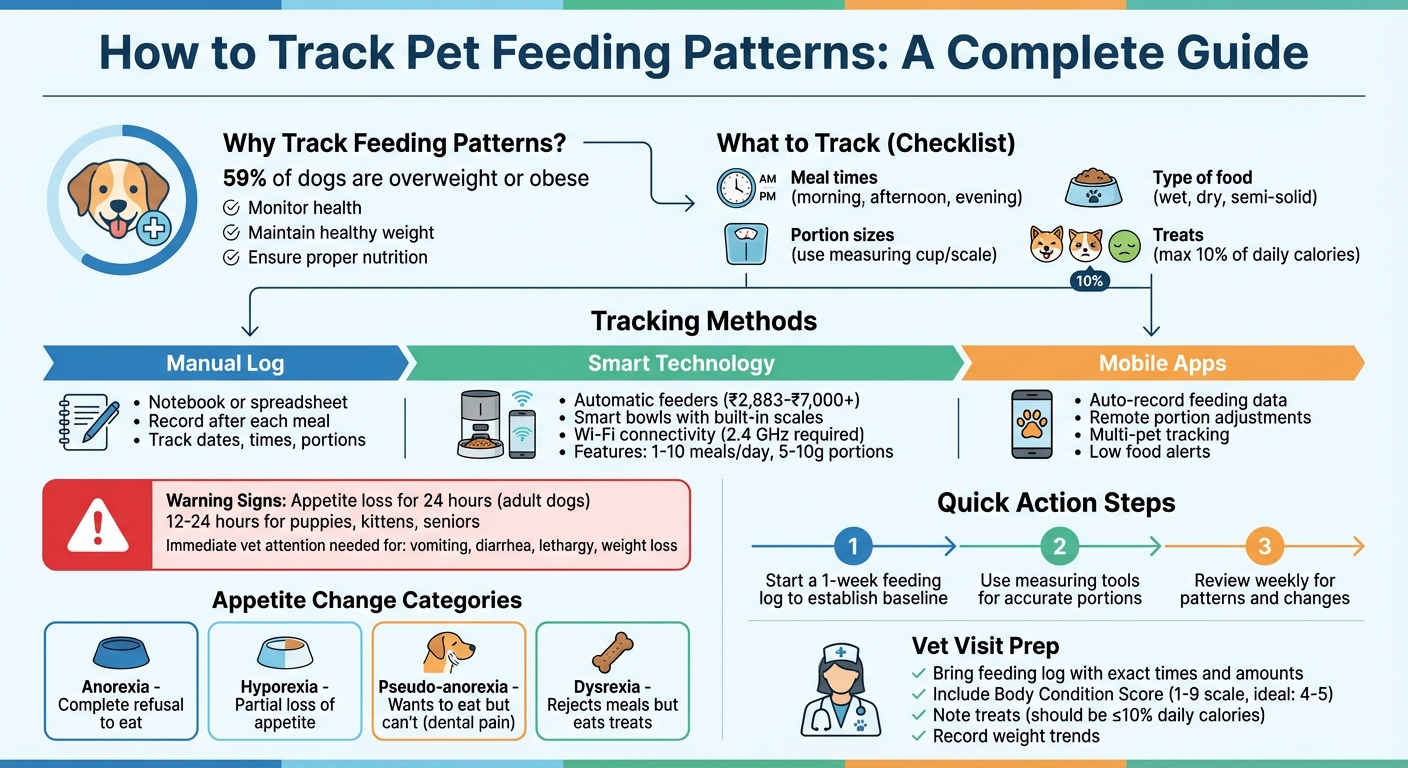
Complete Guide to Tracking Your Pet's Feeding Patterns
Setting Up a Manual Feeding Log
A manual feeding log is a great way to monitor your pet's eating habits closely. It adds structure to your observations and helps you notice any changes in their health early on. All you need is a notebook or a simple spreadsheet to jot down details. Placing your log somewhere convenient - like near the food bowl or on the fridge - makes it easier to update right after each meal.
What Information to Record
Your log should cover all the key details of every meal. Start with your pet's name, the date, and the time of feeding (morning, afternoon, or evening). Then, note the type of food (wet, dry, or semi-solid), the brand, and the exact portion size (in grams or millilitres). Most importantly, track how much your pet actually eats - whether they finish it all, leave half, or barely touch it.
Treats and extras are just as important to include. These should make up no more than 10% of your pet's daily calorie intake, so be sure to log every biscuit, chew, or table scrap they get. Additionally, record your pet's current weight and any observations about their behaviour during mealtime. Did they seem excited, distracted, or uninterested? If there were distractions like other pets or background noise (like the TV), make a note of that too, as these can affect their eating habits.
Staying Consistent with Your Log
The secret to an effective feeding log is consistency. Make it a habit to record everything immediately after each meal - waiting until later can lead to forgotten details, especially about treats or portion sizes. A digital spreadsheet or a printed form with clear columns for Date, Time, Food Type/Brand, Amount Offered, Amount Eaten, and Behaviour Notes can help keep things organised. You can even set phone reminders to ensure no meal goes unlogged, especially if multiple household members are involved.
At the end of the week, review your notes to look for patterns. For instance, does your pet eat less on noisy days or skip meals when guests are over? Always measure portions with a standard measuring cup or a digital scale instead of guessing. This level of precision not only helps maintain your pet's ideal weight but also makes it easier to catch early signs of potential health issues.
Using Technology to Track Feeding Patterns
If jotting down feeding details feels like too much work, technology offers a much-needed shortcut. Tools like smart bowls, automatic feeders, and mobile apps can automatically log feeding times, portion sizes, and even the amount your pet consumes. This makes life easier for pet parents, especially those managing busy schedules or multiple pets.
Smart Bowls and Automatic Feeders
Automatic feeders take the hassle out of meal management by recording feeding times, portion sizes, and consumption details automatically. Some advanced Wi-Fi-enabled feeders even sync with your smartphone to log every meal and send real-time updates. These alerts can notify you of successful feedings, low food levels, or any issues like malfunctions. For example, the Qpets 3L Wi-Fi feeder lets you schedule between 1 and 10 meals daily, with portion sizes adjustable from 5 to 10 grams per serving. Another option, the Feeder-Robot, dispenses up to ½ cup of food in 1/8-cup increments and can handle up to eight feedings a day.
These feeders often come with features like anti-jam technology and dual power options (plug-in and battery backup), ensuring your pet is fed even during power cuts. Some models also include built-in scales to measure the exact amount of food consumed, which can help you detect appetite changes early on. However, it's a good idea to double-check portion sizes using a kitchen scale, as kibble density can vary across brands.
"The feeder is incredibly reliable. Even when I'm travelling, I know my dog is being fed on time and with the right portion at the right time." – Arjun Malhotra, Delhi
These smart feeders work hand-in-hand with mobile apps, offering even more control and insight into your pet's nutrition.
Mobile Apps for Tracking Pet Nutrition
Mobile apps take the convenience of smart feeders to the next level by automatically recording and managing feeding data. They can log dispensing times, portion sizes, and even help you create customised feeding schedules. You can adjust portions remotely based on your pet's activity levels or weight trends. Some apps even allow you to trigger audio cues during meal times, adding a personal touch.
For homes with multiple pets, these apps can connect to several feeders placed in different areas, making it easy to track each pet's intake individually. Keep in mind that most smart feeders require a 2.4 GHz Wi-Fi network for app connectivity, as they typically don’t support 5 GHz bands. Notifications for low food levels or jams are another handy feature, ensuring your pet doesn't miss a meal even on hectic days.
In India, the price of these devices varies widely. Basic programmable feeders start at around ₹2,883, while advanced Wi-Fi-enabled models with features like fresh-lock technology can cost upwards of ₹7,000.
Identifying and Responding to Unusual Feeding Behaviors
Once you’ve established a routine for tracking your pet’s eating habits, it becomes easier to notice when something seems off. A consistent feeding log can help you identify deviations that might signal health concerns. Knowing your pet’s usual eating patterns is crucial for recognising early warning signs and taking the right steps when needed.
Common Changes in Eating Patterns
Veterinarians generally classify appetite changes into four main categories:
- Anorexia: Complete refusal to eat.
- Hyporexia: A partial loss of appetite.
- Pseudo-anorexia: When a pet wants to eat but can’t, often due to issues like dental pain or mouth injuries.
- Dysrexia: Abnormal eating behaviours, such as rejecting regular meals but eagerly consuming treats.
These changes can stem from medical problems like dental diseases, gastrointestinal issues, or other systemic illnesses. Behavioural factors - such as moving to a new home, introducing new pets, or loud disturbances - can also disrupt eating habits. Dr. Jesse Williams from Goodheart Broadway shares:
In my experience, this [nausea and pain] usually comes from back or neck issues. Not so much from tooth pain, as Dr Google might report.
Sometimes, the cause could be something as simple as spoiled food or a sudden change in diet.
To monitor these patterns, track your pet’s food intake at set times - morning, midday, and evening. This helps you spot trends over time. You can also use the "knuckle test" to assess your pet’s weight. Feel their ribs: if they resemble the knuckles of a closed fist, your pet may be underweight. If they feel more like the knuckles on the back of your open hand, their weight is likely normal. Compare these observations with the baseline data in your feeding log. Additionally, watch for other signs like increased lethargy, withdrawal, or unusual vocalisations during meals.
If you notice any unusual patterns, it’s important to consult your veterinarian promptly.
When to Contact Your Veterinarian
Timing is everything when it comes to changes in appetite. For adult dogs, contact your vet if they haven’t eaten for 24 hours or have skipped two meals in a row. Puppies and senior dogs need attention sooner - within 12–24 hours of food refusal. Cats are especially sensitive; if a cat stops eating for 24 hours, immediate veterinary care is crucial, particularly for overweight cats, as they risk developing life-threatening fatty liver disease. For kittens under six weeks old, even a 12-hour gap without food is a serious concern.
Certain symptoms demand immediate attention, regardless of how long your pet has been off their food. If your pet shows signs like vomiting, diarrhoea, lethargy, weight loss, breathing difficulties, yellowing gums, or trouble urinating along with reduced appetite, seek veterinary care right away.
When visiting the vet, bring your feeding log, noting exact times, amounts, and any changes you’ve observed. This detailed record can be invaluable for diagnosis.
While waiting for your appointment, you can try warming your pet’s food to make it more appealing or offering a bland meal of boiled plain chicken breast (without skin, bones, or seasoning) and white rice for mild stomach upset. However, avoid force-feeding, as it can increase stress and potentially worsen their condition unless specifically advised by your vet.
sbb-itb-5205b1e
Sharing Feeding Data with Your Veterinarian
Your feeding log can be a game-changer when shared with your veterinarian. It acts as a detailed roadmap, helping your vet evaluate your pet’s diet and create effective treatment plans. Well-organised records make it easier to spot trends and address concerns during consultations. By preparing your data in advance, you can make the most of your vet visit.
Organising Your Feeding Data for Vet Visits
A clear and organised feeding log can make all the difference during vet appointments. It highlights patterns in your pet’s diet, helping your veterinarian quickly understand their nutritional habits. Presenting this data in a structured table - tracking feeding times (morning, midday, evening) and the exact amounts consumed - makes it easier to review. Don’t forget to include key details like your pet’s species, age, breed, and activity level, as these factors influence their dietary needs.
Accuracy is essential. Use a measuring cup or scale to record exact portions, and note what your pet actually eats - not just what’s served. This distinction is critical for assessing appetite changes. As ASPCApro explains:
Food intake is an important indicator of animal health, so the form provides crucial information for the shelter's medical staff.
Be specific about the type of food, brand, and treats given. Tracking treats is especially important since they should make up no more than 10% of your pet’s daily calories. Regular weigh-ins and Body Condition Scores (on a 1–9 scale) are also valuable additions to your log, offering a visual representation of your pet’s health.
Organise your data by timeframes - daily and weekly snapshots work well. This format helps your veterinarian quickly identify patterns or triggers, saving time and improving the accuracy of their diagnosis.
How Feeding Logs Support Long-Term Health
Consistent feeding logs aren’t just useful for vet visits; they’re also a key tool for long-term health monitoring. Tracking your pet’s diet over time can help detect potential health issues early. This is especially important for pets with chronic conditions like diabetes, kidney disease, or obesity, as it allows your veterinarian to adjust treatment plans based on actual consumption patterns rather than assumptions.
Your records establish a baseline, making it easier to notice subtle changes, such as a slow decline in appetite or unexpected weight loss, that might otherwise go unnoticed between check-ups.
As your pet ages, their nutritional needs evolve. A well-maintained feeding log helps your vet recommend diet changes tailored to each life stage, from the energetic puppy or kitten phase to their senior years. The American Animal Hospital Association (AAHA) advises:
Keep a weight journal to track trends and identify potential problems early.
When feeding data reveals a Body Condition Score of 4 or 5 out of 9 - considered ideal for most pets - it confirms that their diet is meeting energy requirements. If fluctuations appear, they may signal underlying health concerns that need attention. By staying proactive with your feeding log, you transform it into a vital tool for preventive care, ensuring your pet’s well-being at every stage of life.
Conclusion
Keeping track of your pet's feeding habits doesn't have to be complicated. Whether you prefer jotting down notes manually or relying on tech-savvy feeders, the key is finding a system that works well with your lifestyle and home setup.
Beyond simply monitoring how much your pet eats, consistent tracking offers a range of benefits. For instance, using tools like measuring cups or scales ensures accurate portion sizes, which can help prevent weight-related health issues. As Dr Jennifer Coates points out:
Feeding the right amount of a high-quality dog food is one of the simplest things you can do to help keep your dog healthy.
Start by logging meal times and portions for just a week. This short exercise can help you establish a solid baseline of your pet's eating habits. Over time, this baseline can become a valuable tool for identifying changes, such as a drop in appetite or unexpected weight changes, allowing you to address potential issues early.
FAQs
How can technology help me track my pet's feeding habits more effectively?
Technology has made it easier than ever to keep track of your pet's feeding habits, thanks to tools like smart feeders and tracking apps.
Smart feeders, which come with Wi-Fi connectivity, let you schedule meal times and control portion sizes directly from a mobile app. These devices can automatically dispense food while keeping a log of meal timings and portions. This ensures your pet's diet remains consistent and well-regulated.
On the other hand, tracking apps designed for pet care allow you to record essential details like the type of food, portion sizes, and feeding schedules. Over time, these logs provide insights into your pet's eating habits, making it simpler to tweak their diet to meet specific nutritional requirements. By incorporating these tools into your daily routine, you can manage your pet's feeding needs more effectively while promoting their overall health.
What changes in my pet's eating habits should prompt a visit to the vet?
If your pet starts showing strange eating habits, it might be a sign of a health issue that needs attention. Keep an eye out for these warning signs:
- A sudden loss of appetite or a noticeable drop in how much they eat. This could hint at dental problems, digestive troubles, or even kidney-related issues.
- Drinking too much or too little water, which might signal conditions like diabetes, kidney problems, or dehydration.
On top of that, if your pet seems more tired than usual, avoids playtime, or has unusual sleeping patterns, it could point to pain, infections, or other internal health problems. If you spot any of these changes, reaching out to a veterinarian quickly is the best way to make sure your furry friend gets the care they need.
How does keeping a feeding log benefit my pet's health?
Keeping a feeding log for your pet can do wonders for their health. By tracking meal times, portion sizes, and food types, you gain a clear picture of their eating habits. This can help you notice any unusual changes, like a sudden drop in appetite or overeating, which might hint at potential health problems. It’s especially helpful for pets dealing with conditions like diabetes or obesity, ensuring their dietary needs are met without fail.
Another benefit? It simplifies conversations with your veterinarian. A detailed feeding log offers precise insights into your pet’s diet, making it easier to develop customised nutrition plans. It can also help prevent overfeeding or underfeeding and keep track of weight fluctuations. By staying consistent with this habit, you’re setting the stage for better health and a happier life for your furry friend.


