


If your dog is constantly itching, battling ear infections, or experiencing digestive troubles, chicken could be the hidden trigger. Chicken allergies in dogs occur when their immune system wrongly identifies chicken protein as harmful, leading to symptoms like:
- Skin issues: Persistent itching, red patches, hair loss, or hot spots.
- Ear problems: Recurring infections, head shaking, redness, and discharge.
- Digestive troubles: Vomiting, diarrhoea, bloating, or excessive gas.
Chicken is a common ingredient in dog food, making it a frequent allergen. Allergies can develop over time, even if your dog has eaten chicken without problems before. The best way to confirm a chicken allergy is through an elimination diet, avoiding all chicken-based ingredients for 8–12 weeks. Watch for improvements and reintroduce chicken to check for reactions.
Managing a chicken allergy involves completely removing chicken from your dog's diet, including hidden sources like chicken fat, broth, or flavoured medications. Safe alternatives include lamb, fish, or novel proteins like rabbit or venison. Always consult your vet for guidance on suitable diets and supplements to keep your dog healthy and comfortable.
Why Your Dog is Allergic to Chicken (And How to Fix It)
Signs Your Dog May Be Allergic to Chicken
Identifying a chicken allergy early can save your dog from unnecessary discomfort. Keep an eye out for symptoms affecting their skin, ears, and digestion.
Skin-Related Signs
Skin issues are often the first and most noticeable sign of a chicken allergy. If your dog is constantly itching, scratching, or licking areas like their paws, face, ears, belly, groin, or the base of their tail, this could indicate a problem. Unlike occasional scratching, this behaviour is persistent and chronic.
You might also spot red, inflamed patches of skin (urticaria) in areas like between the toes, on the chest, stomach, or around the ears. In some cases, moist lesions known as hot spots can develop. These can crust over, bleed, or even become infected if not treated. Repeated scratching and inflammation may lead to hair loss, leaving bald spots or thinning fur. Although less common, raised, itchy hives can also appear. If the skin is broken, secondary infections caused by bacteria or yeast are a real risk.
As noted by South Kendall Animal Hospital:
"The skin is the largest organ, and often the first place where allergy symptoms appear."
Another common symptom is excessive paw licking or chewing. Some dogs may even scoot their rear across the floor or obsessively lick their anal area, which could indicate irritation of the anal glands.
Skin issues often go hand in hand with ear problems in allergic dogs.
Ear-Related Signs
Frequent ear infections are a major clue that your dog might be allergic to chicken. When their immune system reacts to chicken protein, the resulting inflammation in the ear canal creates a warm, moist environment that encourages bacterial and yeast growth. Symptoms to watch for include head shaking, a noticeable odour, redness, or discharge from the ears. While a single ear infection might be due to external factors, recurring infections are often linked to food allergies.
Dr. Alysper Cormanes explains:
"Recurring ear infections are a common sign of food allergies. The warm, moist, and narrow environment of a dog's ear canal, combined with ongoing inflammation, creates the perfect setting for bacteria and fungi to thrive and cause infections."
If your dog is dealing with both skin and ear issues, digestive symptoms might also be part of the picture.
Digestive Signs
Although less common than skin or ear symptoms, digestive problems can also indicate a chicken allergy. Chronic diarrhoea, vomiting - especially after meals - and excessive gas or bloating are key signs. Some dogs may also have more frequent bowel movements or unusually smelly flatulence, which can point to an issue with their diet.
Chicken Allergy vs Chicken Intolerance: What's the Difference?
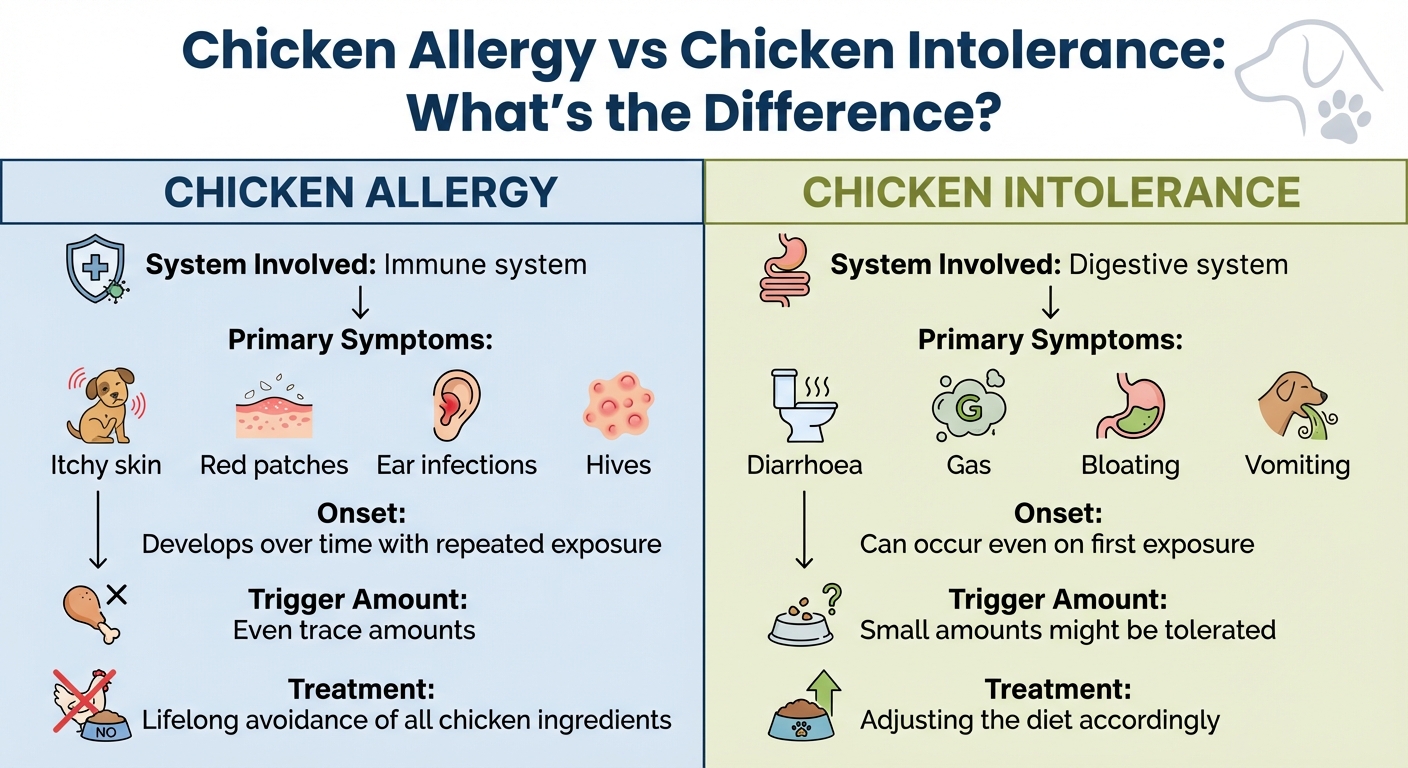
Chicken Allergy vs Intolerance in Dogs: Key Differences
Pet parents often mistake chicken allergies for intolerances. While they might seem similar, they affect your dog's body in completely different ways and need distinct management strategies.
How They Differ
A chicken allergy happens when your dog's immune system overreacts to chicken protein. This overreaction leads to inflammation, causing symptoms like itchy, red skin and chronic ear infections.
On the other hand, chicken intolerance, sometimes called sensitivity, is purely a digestive issue. Here, the immune system isn't involved. Instead, your dog's body struggles to properly digest chicken protein, leading to symptoms like gas, diarrhoea, or bloating.
To clarify the distinction, South Kendall Animal Hospital explains:
"A true food allergy involves the immune system... In contrast, a food sensitivity (or intolerance) is a digestive issue. It usually results in mild gastrointestinal upset, such as gas or diarrhea, and does not involve an immune response."
Quick Tip: If your dog shows skin-related symptoms like itching or rashes, it's likely an allergy. Intolerances typically cause only digestive problems, while allergies often involve both skin and digestive symptoms, with skin issues being more prominent.
Another important difference lies in the trigger threshold. A chicken allergy can flare up even with trace amounts of chicken - like hidden chicken fat or broth in treats. In contrast, a dog with intolerance may handle small amounts of chicken without any noticeable reaction.
| Feature | Chicken Allergy | Chicken Intolerance |
|---|---|---|
| System Involved | Immune system | Digestive system |
| Primary Symptoms | Itchy skin, red patches, ear infections, hives | Diarrhoea, gas, bloating, vomiting |
| Onset | Develops over time with repeated exposure | Can occur even on first exposure |
| Trigger Amount | Even trace amounts | Small amounts might be tolerated |
| Treatment | Lifelong avoidance of all chicken ingredients | Adjusting the diet accordingly |
Understanding these distinctions is essential before diving into why dogs develop chicken allergies in the first place.
Why Dogs Develop Chicken Allergies
Chicken allergies in dogs don't appear overnight - they build up over time. Understanding how and why this happens can help you take steps to prevent it.
One major culprit is repeated exposure to the same protein. When a dog is exposed to chicken protein repeatedly, their immune system can eventually misidentify it as harmful. Since chicken is a common ingredient in many commercial dog foods, frequent exposure increases the likelihood of this immune response over time.
Another factor is poor gut health. A healthy gut breaks chicken down into harmless amino acids. But when the gut's protective barriers are weakened, larger protein fragments can slip through and trigger an immune reaction. Studies have shown that dogs with allergies often have less diverse gut microbiomes compared to those without allergies.
Early dietary habits can also play a role. Most food allergies in dogs show up between 6 months and 3 years of age. Feeding a diet heavily reliant on chicken during a puppy's early months may increase the risk of developing an allergy later. This is why many vets suggest rotating protein sources every month or two to minimise overexposure.
Lastly, genetics can't be ignored. If one parent has food allergies, there's a 30–50% chance the puppy will inherit this tendency. If both parents are allergic, the risk jumps to 60–80%. Certain breeds, like Labradors, Golden Retrievers, German Shepherds, Cocker Spaniels, and Bulldogs, are more prone to food allergies due to their genetic makeup. While you can't change your dog's genes, knowing these predispositions can guide you in making smarter dietary choices early on.
How to Test if Your Dog Has a Chicken Allergy
If you think chicken might be the culprit behind your dog's symptoms, the best way to confirm it is through an elimination diet. Unlike blood tests, which are often unreliable, this method is straightforward and proven to work.
The Elimination Diet Method
The elimination diet is considered the most accurate way to identify food allergies in dogs. In India, this usually means completely removing chicken, since it’s the most common protein in commercial dog food and home-cooked diets.
Chicken is then replaced with a novel protein your dog has never eaten before, such as duck, lamb, fish, or turkey, which are far more practical and available in the Indian market than exotic options.
Another vet-recommended option is a hydrolysed protein diet, where the protein is broken down into very small particles. These are unlikely to trigger an allergic reaction and are commonly prescribed by Indian veterinarians during allergy trials.
This diet needs to be followed for 8–12 weeks. This timeframe allows your dog's immune system to calm down and any inflammation to subside. Research shows that sticking to the diet for at least 8 weeks can make the results over 90% accurate. By the 5-week mark, around 80% of dogs show noticeable improvement. However, during this period, it's crucial to eliminate all potential sources of chicken. This includes treats, table scraps, flavoured medications, and supplements, as even a small amount can cause inflammation and disrupt the trial. If you have multiple pets, make sure to either feed them separately or have all of them follow the same diet to avoid accidental exposure.
"The elimination diet is the gold standard for diagnosing food allergies." - Sam Varon, DVM, Broadway Veterinary Hospital
Once the elimination phase is complete and your dog's symptoms have improved, you can start the rechallenge phase. Reintroduce chicken into their diet and monitor for any reactions. If symptoms like itching, ear infections, or digestive issues return within 7–14 days, it confirms the chicken allergy.
When reintroducing chicken, make the transition gradual over 5–7 days. Keep avoiding flavoured medications and maintain a food diary to track any changes. If your dog accidentally consumes chicken during the trial, you'll need to extend the elimination period to ensure accurate results.
This method is the most reliable way to diagnose and manage a chicken allergy in dogs. Unlike blood tests, which often provide inconsistent results, the elimination diet gives clear and actionable insights.
Why Blood Tests Often Don't Work
While blood tests (like IgE panels) might seem like a quick and scientific solution, they are not dependable for diagnosing food allergies.
"Blood or saliva tests may be appealing as an easy way to diagnose food allergy, but they are highly inaccurate so don't waste your money on them!" - Lisa M. Freeman, DVM, PhD, DACVIM (Nutrition)
These tests measure antibodies, but they are prone to both false positives and false negatives. In one study, only 3 out of 30 dogs with positive blood or skin test results for food allergens improved when placed on a hypoallergenic diet. While blood tests can be helpful for identifying environmental allergens like pollen or dust mites, they fall short for food-related issues. That’s why veterinary dermatologists trust the elimination diet - it directly observes your dog's reaction to chicken.
If you’re serious about confirming whether chicken is the problem, skip the shortcuts. Commit to the 8–12 week elimination trial, stick to it strictly, and let your dog's response guide the way.
sbb-itb-5205b1e
What Foods to Avoid if Your Dog Is Allergic to Chicken
Once a chicken allergy is confirmed through an elimination diet, it’s time to make immediate changes to your dog’s meals. Removing all sources of chicken from their diet is essential. Many pet owners unknowingly include hidden chicken proteins in their dog's food, which can still trigger allergic reactions. Spotting these hidden sources is the next critical step after completing the elimination diet.
Chicken-Based Ingredients to Look Out For
Chicken can show up in more ways than you might think. Ingredients like chicken meat, liver, heart, and broth are the obvious culprits. However, even foods labelled with other primary proteins - like "Beef Kibble" or "Lamb Recipe" - may still include chicken fat or chicken meal as secondary ingredients.
"Someone may pick up a bag titled 'Beef Kibble' when the food also contains chicken." - Spot & Tango
Dogs with chicken allergies might also react to eggs, as both are poultry. During the elimination trial, it’s best to avoid eggs until you can confirm how your dog responds to them.
Hidden chicken proteins aren’t limited to food. Non-food items like flavoured heartworm tablets, flea and tick preventatives, dental chews, and even some toothpastes often use chicken for flavour. Always consult your vet to find unflavoured alternatives.
| Hidden Chicken Ingredient | Common Sources |
|---|---|
| Chicken Fat | Found in "Beef" or "Lamb" kibbles to enhance taste. |
| Chicken Meal / By-products | A concentrated protein source in many budget or mid-range dog foods. |
| Chicken Liver / Heart | Added to wet foods or "natural flavours" as a nutrient booster. |
| Poultry / Animal Fat | Generic terms that often include chicken-derived fats. |
| Chicken Broth | Common in wet food and "stew" recipes for flavour and moisture. |
| Medications | Chewable heartworm, flea, and tick treatments often use chicken protein. |
Tips for Reading Pet Food Labels
Understanding pet food labels is crucial for avoiding hidden chicken. Claims like "Chicken-Free" or "Beef Formula" on the packaging can be misleading. Always read the full ingredient list, focusing on the first few ingredients for a clearer idea of what’s inside.
Be cautious of vague terms like "poultry meal", "animal fat", "meat by-products", or "natural flavours", as these often include chicken unless specifically stated otherwise. Cross-contamination is another risk to watch out for. Even if chicken isn’t listed, products made in facilities that handle chicken-based items may still contain traces. If your dog has severe allergies, consult your vet about prescription or therapeutic diets, which often have stricter production and quality controls.
What to Feed a Dog With Chicken Allergy
After eliminating all chicken-based ingredients from your dog's diet, the next step is finding a safe and nutritious alternative. The aim is to offer a protein source that your dog's immune system won't flag as harmful. This usually involves choosing either novel proteins - ones your dog hasn’t eaten before - or hydrolyzed proteins, which are processed into tiny peptides to avoid triggering an allergic response. Let’s dive into some protein options and feeding strategies designed for dogs with chicken allergies.
Alternative Protein Sources
In India, lamb is a popular and nutritious substitute for chicken. It’s packed with iron, vitamin B-12, and carnitine, which supports heart health - perfect for active dogs. Fish-based proteins like salmon, cod, sardines, and ocean whitefish are also excellent choices. These not only provide high-quality protein but are also rich in Omega-3 and Omega-6 fatty acids, which help reduce inflammation and promote healthy skin and a shiny coat.
For dogs with more complex sensitivities, you can explore novel proteins such as venison, bison, duck, rabbit, or even kangaroo. Turkey, although lean, is still a type of poultry and might cause issues, so it’s best to introduce it cautiously.
Hydrolyzed protein diets are another option. These proteins are broken down into small peptides, making them less likely to trigger an immune reaction. Such diets are often available as prescription formulas, manufactured under strict conditions to avoid cross-contamination.
Types of Diets to Consider
When it comes to feeding your chicken-allergic dog, you have three primary options: hypoallergenic dry food, limited-ingredient diets, and home-cooked meals approved by a veterinarian.
- Hypoallergenic diets: These often include hydrolyzed or novel proteins and are specially designed to minimise allergic reactions.
- Limited-ingredient diets: These focus on a single protein and a single carbohydrate source, reducing the risk of hidden allergens.
- Home-cooked meals: If you prefer to prepare your dog’s meals at home, consult a board-certified veterinary nutritionist to ensure the meals are balanced and meet all nutritional requirements.
Prescription hydrolyzed diets are particularly reliable, as they are produced using dedicated equipment to avoid cross-contamination. Always check the labels and ensure the food meets AAFCO standards for complete and balanced nutrition.
Choosing the right diet is essential for managing your dog’s chicken allergy and ensuring their long-term health.
How to Manage Chicken Allergy and When to See a Vet
Once a chicken allergy is confirmed through an elimination diet, the focus shifts to managing it effectively. While there’s no cure for a chicken allergy, with proper care, dogs can live perfectly healthy and happy lives.
Daily Management Steps
The key to managing a chicken allergy is to completely avoid all chicken-based ingredients. This includes chicken meat, fat, broth, and meal. In some cases, eggs might also need to be excluded. Be cautious - many pet foods labelled as "lamb" or "beef" flavoured may still contain hidden chicken fat or poultry meal. Always read ingredient labels thoroughly.
It’s not just about meals. Treats, chews, table scraps, and even flavoured medications can contain hidden chicken. Be vigilant during walks, ensuring your dog doesn’t scavenge discarded food that might contain poultry.
Consider adding Omega-3 fatty acids to your dog’s diet to help reduce skin inflammation. Probiotics can also support gut health. Interestingly, a study conducted by Cornell University found that 65% of dogs given CBD oil experienced a significant reduction in itching, with nearly half of them seeing the itching stop entirely.
For dogs prone to secondary infections, your vet might recommend antibacterial or antifungal shampoos. Some experts also suggest rotating protein sources periodically to minimise the risk of developing new food intolerances.
Keep a close eye on your dog’s symptoms. If you notice any new or worsening issues, consult your vet promptly.
Warning Signs That Need a Vet Visit
Certain symptoms require immediate veterinary attention. If your dog shows signs of anaphylaxis - such as swelling around the face, difficulty breathing, tremors, or sudden collapse - seek emergency care right away. Similarly, if your dog is scratching so intensely that they’re bleeding or causing open wounds, it’s time to see a vet.
"If your dog has been scratching so severely that they're bleeding or injuring themself, an emergency veterinarian can provide relief and offer options to treat the immediate problem (itching, bleeding, pain, etc.)", says Dr. Shalsee Vigeant, DVM, Medical Director at Veterinary Emergency Group.
Other warning signs include persistent ear infections, noticeable weight loss, blood in the stool, or itching severe enough to interfere with daily activities like sleeping, eating, or walking. Even mild symptoms should not be ignored - early consultation with a vet can help rule out other issues like parasites or hormonal imbalances and ensure your dog gets the care they need.
Conclusion
Managing a chicken allergy in dogs starts with early detection and careful dietary planning. While chicken allergies are quite common in dogs, they can be effectively handled with the right approach. Spotting symptoms like persistent itching, frequent ear infections, or digestive issues early on is crucial. To confirm the allergy, an elimination diet lasting 8–12 weeks with either a novel or hydrolysed protein is recommended, as blood tests often lack reliability.
Once diagnosed, the key to managing the allergy lies in completely eliminating chicken-based ingredients from your dog's diet. With a strict chicken-free diet, dogs can lead healthy, comfortable lives. The difference between ongoing discomfort and a happy, thriving pet often boils down to carefully reading ingredient labels and committing to a chicken-free regimen. If you’re unsure about what to feed your dog, hypoallergenic dog food options can make the transition easier while ensuring balanced nutrition. Staying committed to a chicken-free diet is essential for your dog’s long-term health and well-being.
FAQs
How can I find out if my dog is allergic to chicken?
To figure out if your dog might have a chicken allergy, keep an eye out for signs like persistent itching, red or irritated skin, hair loss, frequent ear infections, loose stools, vomiting, or excessive gas. The best way to confirm an allergy is through an elimination diet. This involves completely removing chicken - including any treats - from your dog's meals and substituting it with a single new protein source for about 8 to 10 weeks. If your dog’s symptoms improve during this time, it’s a good indication that chicken could be the culprit.
However, if the issues continue or get worse, it’s time to consult a veterinarian for a thorough check-up and tailored advice.
What are the best protein options for dogs with chicken allergies?
If your dog has a chicken allergy, there are plenty of safe protein options to keep their diet balanced and nutritious. Proteins like lamb, fish (such as salmon or whitefish), rabbit, duck, and turkey are often good choices for dogs with this sensitivity.
For more tailored options, you could explore hydrolysed protein diets or limited-ingredient foods, ideally recommended by your vet. Make sure to read food labels carefully to avoid any chicken-based ingredients, including chicken fat or by-products, to keep your furry friend safe and healthy.
What foods should I avoid if my dog is allergic to chicken?
If your dog has a chicken allergy, it's important to steer clear of any food containing chicken or its by-products. This includes not just chicken meat, but also chicken liver, heart, fat (commonly found in packaged pet foods), and even eggs, as they might trigger a reaction. Be especially mindful of flavoured biscuits, treats, and other processed foods, as they can sometimes hide chicken-derived ingredients.
Tip: Carefully check ingredient labels for hidden chicken by-products, which might be listed under various names. Sticking to a completely chicken-free diet is essential for effectively managing your dog's allergy.


