


Food allergies in dogs are caused by an overreaction of the immune system to specific food proteins, often after long-term exposure. Symptoms include itching, recurring ear infections, and digestive issues like diarrhoea or vomiting. Diagnosing food allergies can be tricky, as unreliable tests like blood or saliva analysis often lead to incorrect conclusions. The most effective method is an elimination diet trial, where potential allergens are removed and later reintroduced under veterinary supervision.
Key points to manage food allergies:
- Common Allergens: Beef, dairy, chicken, wheat, lamb.
- Symptoms: Persistent itching, ear infections, gastrointestinal issues.
- Diagnosis: Use elimination diets, not unreliable tests.
- Diet Options: Hydrolysed protein diets, novel protein diets (like rabbit or kangaroo), or home-cooked meals under a vet's guidance.
- Hidden Allergens: Check labels for terms like "natural flavours" or "gelatin".
- Prevent Cross-Contamination: Use airtight storage and separate feeding areas.
Food allergies can't be cured, but strict avoidance of allergens ensures your dog stays healthy and comfortable. Always consult your vet before making dietary changes.
What Causes Dog Food Allergies
Most Common Food Allergens in Dogs
When it comes to food allergies in dogs, certain ingredients are more likely to cause trouble. The top culprits include beef, dairy products, chicken, wheat, and lamb. Interestingly, it's not the quality of these ingredients but how often they're consumed that increases their potential to trigger allergies.
"The most common food allergens often correspond with the most commonly fed food sources." - Cherie M. Pucheu-Haston, DVM, PhD, DACVD
For example, if your dog regularly eats chicken, their immune system might eventually become sensitised to it. The same applies to other ingredients like wheat, soy, corn, egg, pork, fish, and even rice. While these are all documented allergens, they appear less frequently simply because they aren’t as commonly fed.
Although many pet owners worry about grains, the truth is that allergies to animal proteins are far more common than grain allergies. This means the "grain-free" craze doesn’t necessarily address the real issue of food allergies in dogs.
Understanding which ingredients are more likely to cause allergies helps explain why repeated exposure can lead to an immune response.
How Allergies Develop Over Time
Once you identify the ingredients your dog eats most often, it’s important to understand the process behind how an allergy develops. Food allergies don’t just appear out of nowhere - they take time to form.
Here’s what happens: your dog’s immune system initially tolerates the protein in their food. But with repeated exposure over months or even years, the immune system might start seeing that protein as a threat. At this point, it begins producing specific antibodies, usually IgE, to fight off what it mistakenly perceives as harmful [3, 10]. When these antibodies are activated during subsequent exposures, they trigger the release of histamines, leading to inflammation and symptoms like itching, redness, and digestive upset [3, 6].
"Since antibody production is required for an allergy to develop, food allergies usually manifest after prolonged exposure to one brand, type, or form of food." - Ryan Llera, BSc, DVM; Catherine Barnette, DVM; Ernest Ward, DVM
Interestingly, while food allergies can develop at any age, studies show that about 22% of dogs with confirmed food allergies show symptoms before six months old, and 38% before their first birthday. However, it’s also possible for allergies to appear much later, even at 13 years of age.
How Dog Food Allergies Show Up
Skin Problems and Itching
One of the most common signs of food allergies in dogs is relentless, year-round itching. You might notice your dog constantly scratching, licking, or rubbing areas like the paws, ears, face, belly, armpits, groin, or even around the anus. Persistent paw chewing is another telltale sign, often leaving brown stains on the fur.
"A food allergy is a hypersensitivity reaction in the immune system that occurs when exposed to a certain food. These foods cause the dog's immune system to overreact and lead to itching, secondary infections, gastrointestinal symptoms, and other health problems." - Dr. Austin Richman DVM, DACVD and Dr. Brittany Lancellotti DVM, DACVD
This overreaction by the immune system triggers inflammation, making the skin flare up with redness and intense itching. Over time, this can lead to secondary infections, including bacterial or yeast infections, which may cause hair loss, redness, and even painful hot spots. Chronic inflammation can also result in recurring ear infections, and in some cases, these ear infections might be the only visible clue pointing to a food allergy.
While skin-related symptoms are the most obvious, food allergies can also upset your dog's digestive system.
Digestive Problems
In addition to skin issues, gastrointestinal troubles often signal food allergies. Around 20% to 26% of dogs with food allergies experience symptoms like chronic diarrhoea, vomiting, excessive gas, or frequent bowel movements (more than three times a day).
Interestingly, some dogs may only show digestive symptoms without any skin problems, while others experience both. This happens because the immune system's response to food proteins can affect different parts of the body, depending on the dog. It's important to note that food allergies involve an immune reaction, whereas food intolerances - caused by enzyme deficiencies - result solely in digestive discomfort.
Other, less obvious signs of food allergies might include weight loss, lethargy, chronic anal gland problems (often noticed when a dog scoots), or even changes in behaviour. If digestive issues occur alongside skin problems, it’s more likely to be a food allergy rather than an environmental one, as the latter rarely causes gastrointestinal symptoms.
Top Signs Your Pet Has a Food Allergy | Vet Explains
How Veterinarians Diagnose Food Allergies
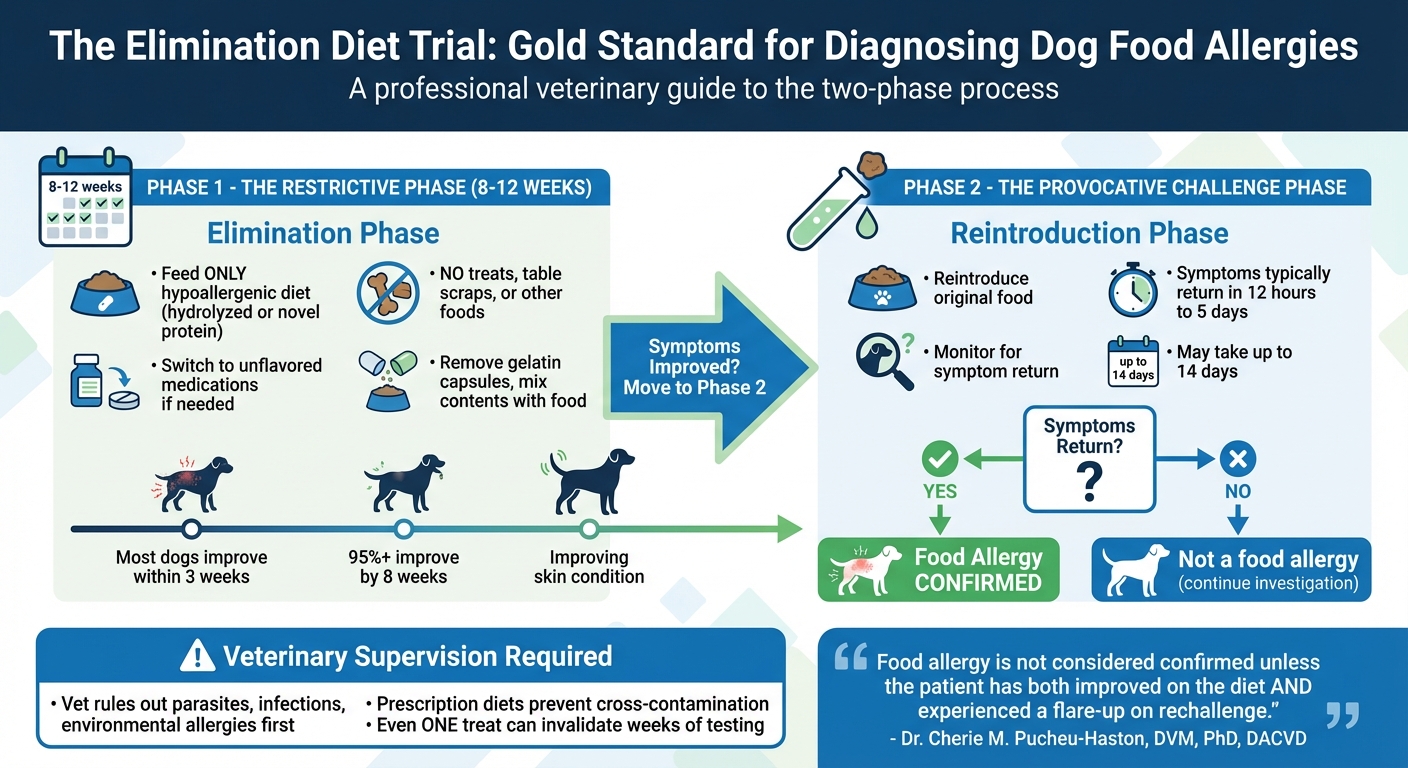
Dog Food Allergy Elimination Diet Trial Process: 8-12 Week Diagnostic Timeline
Why Blood and Skin Tests Don't Work for Food Allergies
If you've seen ads promoting blood, saliva, or hair tests as a way to diagnose food allergies in dogs, here's the truth: these tests are not reliable. Veterinarians avoid using them because they simply don't provide accurate results.
Blood tests, also known as serology tests, measure antibodies like IgE and IgG in your dog's blood. However, research shows that these antibody levels are no different in healthy dogs compared to those with confirmed food allergies. Even worse, these tests often produce inconsistent results - retesting a few weeks later can yield completely different outcomes.
"Blood and skin tests are not reliable for diagnosis." - Dr. Stephen D. White, DVM, DACVD, University of California, Davis
Intradermal skin tests, widely used for diagnosing environmental allergies like pollen or dust mites, are also ineffective for food allergies. Studies reveal that 10% to 30% of dogs with confirmed atopic dermatitis can still test negative using these methods. Hair and saliva tests are even less dependable. One study found that a popular hair-based allergy test kit couldn't distinguish between allergic dogs, non-allergic dogs, and even stuffed animals.
Given these limitations, veterinarians rely on a different approach: the elimination diet trial. It's the only method proven to accurately diagnose food allergies.
The Elimination Diet Trial: The Only Reliable Method
The elimination diet trial is the gold standard for diagnosing food allergies in dogs. This two-step process - eliminating potential allergens and then reintroducing them - provides clear, accurate results. However, it requires careful planning, patience, and strict adherence to the diet.
"The only reliable way to prove a food allergy is with dietary elimination trial followed by a controlled dietary challenge." - Dr. Cherie M. Pucheu-Haston, DVM, PhD, DACVD, Louisiana State University
Phase 1: The Restrictive Phase (8–12 Weeks)
During this phase, your dog will eat a specially formulated hypoallergenic diet. This could be a hydrolysed protein diet (where proteins are broken into tiny fragments too small to trigger an immune response) or a novel protein diet (using an uncommon protein source like kangaroo or rabbit). It's critical that your dog eats only this diet - no treats, table scraps, or other foods that could introduce allergens.
Most food-allergic dogs show noticeable improvement within three weeks, and more than 95% improve after eight weeks. While gastrointestinal symptoms may ease quickly, skin issues often take longer to resolve, which is why the trial typically lasts 8–12 weeks.
Your veterinarian may adjust your dog's routine during this phase. For example, they might recommend switching to unflavoured or injectable parasite preventatives, as some flea and heartworm medications contain allergenic proteins. Even the gelatin in medication capsules could be problematic, so your vet might advise opening capsules and mixing the contents with your dog's food.
Phase 2: The Provocative Challenge Phase
Once your dog's symptoms improve, the next step is to reintroduce the old food to confirm the diagnosis. This is known as the "challenge" or "provocation" phase. If symptoms return - usually within 12 hours to 5 days but sometimes up to 14 days - it confirms the food allergy.
"Food allergy is not considered to be confirmed unless the patient has both improved on the diet and experienced a flare-up on rechallenge." - Dr. Cherie M. Pucheu-Haston, DVM, PhD, DACVD, Louisiana State University
Why Veterinary Supervision Matters
This isn't a process to handle on your own. Before beginning the trial, your vet will rule out other issues like parasites, bacterial or yeast infections, and environmental allergies, as these can mimic food allergy symptoms. They will also prescribe a diet produced under strict protocols to prevent cross-contamination - something many over-the-counter "limited ingredient" diets can't guarantee.
While blood or skin tests might occasionally help guide ingredient selection for the diet, they are never used to make a final diagnosis. Even a single treat or flavoured chew can undo weeks of effort, making professional guidance essential. Following this structured approach ensures accurate results and helps you make the best decisions for your dog's health.
| Diagnostic Method | Use/Limitation |
|---|---|
| Elimination Diet Trial | Only reliable method to confirm diagnosis. |
| Blood (Serology) Test | High false-positive rate; poor repeatability. |
| Saliva/Hair Test | Proven ineffective; cannot distinguish from stuffed animals. |
| Intradermal Skin Test | Used for environmental allergies, not food. |
Diet Options After a Food Allergy Diagnosis
When a vet confirms your dog has a food allergy, the next step is figuring out the best diet to manage it. Depending on your dog's history, the severity of their symptoms, and how much control you can maintain over their meals, there are three main options to consider.
Hydrolyzed Protein Diets
Hydrolyzed protein diets are designed to "hide" proteins from the immune system. How? By breaking proteins down into tiny fragments through a process called hydrolysis. These fragments are so small - often less than 1 kilodalton (kDa) - that they don’t trigger an allergic reaction. Proteins from sources like chicken, soy, or salmon are commonly used in these diets.
"Hydrolysis uses water to chemically break proteins into pieces that are so small that the immune system no longer reacts to them." - Dr. Jennifer Coates, DVM
Veterinarians typically recommend prescription hydrolyzed diets because they are manufactured under stricter quality controls compared to over-the-counter "hypoallergenic" options. These diets are especially helpful if your dog’s dietary history is unclear or if they’ve reacted to multiple proteins before.
"Choosing a hydrolyzed protein diet can take the guesswork out of your pet's diet history. This approach can save frustration, time, and money in the long run." - NC State Veterinary Hospital
However, hydrolyzed diets aren’t foolproof. If the protein fragments aren’t reduced below 1–3 kDa, some dogs may still react. During a trial, it’s crucial that your dog eats only the prescribed food. That means no treats, table scraps, or flavoured medications. If treats are a must, you can use kibble from the same diet or purchase hydrolyzed treats made by the same manufacturer.
Now, let’s move on to another option - novel protein diets.
Novel Protein Diets
Novel protein diets rely on using a protein source - and often a carbohydrate source - that your dog has never eaten before. Think kangaroo, rabbit, venison, or even alligator. Since the immune system can only react to proteins it has previously encountered, these "novel" proteins are less likely to cause an allergic reaction.
"To be a true elimination trial, this special diet must not contain any ingredients that your dog has eaten in the past." - Dr. Ryan Llera, BSc, DVM
The success of this approach depends entirely on knowing your dog’s complete dietary history. If your dog has eaten common proteins like chicken, beef, or lamb - or grains like rice and wheat - these ingredients must be avoided. Watch out for cross-reactivity too; for instance, a dog allergic to beef might also react to lamb or dairy products.
Veterinary-exclusive novel protein diets are preferred over retail "limited-ingredient" options. Why? Over-the-counter foods are often made using shared equipment, which can lead to cross-contamination. In fact, studies show that up to 83% of retail "limited-ingredient" diets contain proteins not listed on the label. If you’re in India, platforms like Animeal offer prescription and limited-ingredient diets tailored for allergic dogs.
Finally, for those seeking complete control, there’s the home-cooked diet option.
Home-Cooked Diets
Home-cooked diets are ideal for dogs with severe food allergies or complex health needs. By preparing meals yourself, you can control every ingredient, significantly reducing the risk of accidental allergen exposure. These diets usually consist of one protein and one carbohydrate source that your dog has never eaten before.
That said, home-cooked diets come with their own challenges. They can be time-consuming, expensive (especially for large or young dogs), and may lead to nutritional imbalances if not properly planned.
"Some authors recommend the use of home-made recipes rather than commercial 'hypoallergenic' diets because this decreases the risk of mistakenly introducing unwanted food components, but these can be problematic – for example, they can be nutritionally unbalanced, time-consuming to prepare, and expensive." - Dr. Elisa Maina, DVM, PhD, Dip. ECVD
If you choose this route, you’ll need a diet formulated by a veterinary nutritionist. Supplements like Balance IT® or Hilary's Blend for Dogs™ are often required to ensure your dog gets all the nutrients they need. Avoid random recipes from the internet or well-meaning friends, as they can lead to serious health issues over time.
| Diet Type | How It Works | Best Used When... |
|---|---|---|
| Hydrolyzed Protein | Proteins are broken into tiny peptides "invisible" to the immune system. | The dog's diet history is unclear, or they’ve reacted to multiple proteins. |
| Novel Protein | Uses a protein your dog has never eaten (e.g., kangaroo, rabbit). | You have a reliable history of every protein your dog has consumed. |
| Home-Cooked | Meals are prepared at home using vet-approved ingredients. | Commercial diets fail, or your dog has complex health needs; requires a nutritionist. |
Important: Always consult your veterinarian before making any dietary changes. What works for one dog might not work for another, and professional guidance ensures your dog gets balanced nutrition while managing their allergy safely.
sbb-itb-5205b1e
How to Read Dog Food Labels and Spot Hidden Allergens
When your dog is diagnosed with a food allergy, understanding ingredient labels becomes crucial. But avoiding allergens isn’t as simple as steering clear of obvious ingredients. Allergens often hide behind different names or sneak into products during manufacturing. Let’s break down how to read those labels like a pro and keep your dog safe.
How Allergens Hide in Ingredient Lists
Imagine your dog is allergic to chicken, and you pick a bag labelled "Lamb and Rice Formula", assuming it’s safe. But a closer look might reveal terms like chicken fat, chicken flavour, or chicken by-products - all of which can trigger an allergic reaction. Allergens are rarely listed under just one name, so it’s important to dig deeper into the ingredient list.
For example:
- Beef might show up as tallow or even in gelatin capsules used in medications.
- Dairy ingredients could be listed as whey, casein, or lactose.
- Soy and corn often appear under vague terms like "vegetable broth", "textured vegetable protein", or "modified food starch".
"Chewable or flavoured heartworm preventatives or flea medications generally contain beef, pork, or soy protein, regardless of whether this ingredient is listed on the label."
Be cautious with labels that use generic terms like "natural flavours" or "animal fat". These can contain proteins from multiple species, making it difficult to confirm if your dog’s allergen is included. For dogs allergic to beef or pork, even gelatin capsules in medications can be problematic. If needed, ask your vet if the capsule contents can be sprinkled directly onto food instead.
Here’s a quick reference for common allergens and their hidden sources:
| Common Allergen | Potential Hidden Names/Sources |
|---|---|
| Chicken | Chicken fat, chicken flavour, chicken by-products, chicken liver, poultry meal |
| Beef | Gelatin (capsules), flavoured medications, rawhide chews, tallow |
| Pork | Gelatin (capsules), flavoured treats, "meat meal" |
| Dairy | Whey, casein, lactose, cheese powder |
| Soy/Corn | Vegetable broth, textured vegetable protein, modified food starch |
Even non-food items like flavoured medications or treats can contain these allergens. If your dog is undergoing an elimination trial or has a confirmed allergy, consider switching to unflavoured, topical, or injectable alternatives to avoid accidental exposure.
Cross-Contamination During Manufacturing
Another challenge is cross-contamination, which happens when allergens from one product mix into another during manufacturing. For instance, a "chicken-free" diet might be made on the same machinery as chicken-based kibble. If the equipment isn’t cleaned thoroughly, trace amounts of chicken protein can end up in the "chicken-free" product.
"Retail pet foods are not manufactured with the extreme health and safety protocols to prevent cross-contamination."
- VCA Hospitals
This is why over-the-counter "limited ingredient" diets may not always be reliable. Research shows that up to 83% of retail limited ingredient diets contain proteins not mentioned on the label. For dogs with confirmed food allergies, veterinary-prescribed diets are a safer option since they’re produced under stricter quality controls to minimise cross-contamination risks.
Cross-contamination isn’t limited to manufacturing. It can also happen at home. For example:
- If your allergic dog shares a water bowl with another pet eating different food.
- If they ingest another animal’s faeces.
To reduce these risks, feed your allergic dog separately and use dedicated food and water bowls.
If you’re in India and searching for high-quality prescription or limited-ingredient diets, platforms like Animeal offer vet-recommended options specifically designed for dogs with allergies. These diets are crafted with stricter safety standards, giving you peace of mind while managing your dog’s health.
Common Myths About Dog Food Allergies
When it comes to managing dog food allergies, understanding the facts is just as important as proper diagnosis and dietary adjustments. Unfortunately, there are several myths that often mislead pet owners, potentially making allergy management even harder. Let’s tackle three of the most common misconceptions.
Myth: Grain-Free Food Solves Allergies
Many pet owners assume that switching to grain-free food is the magic solution for food allergies in dogs. But here’s the truth: grain allergies are actually quite uncommon in dogs. The majority of food allergies are triggered by animal proteins like beef, chicken, or dairy.
"Contrary to popular belief, grain allergies are relatively rare in dogs. Most food allergies stem from animal proteins, such as beef or chicken." - DCC Animal Hospital
Even grain-free diets often include ingredients such as chicken meal or beef fat, which are common allergens. Removing grains doesn’t eliminate these problematic proteins. To put it into perspective, only about 0.2% of dogs are affected by true food allergies, and the primary culprits are beef, chicken, and dairy.
This highlights why focusing solely on grain-free labels isn’t enough. Instead, the goal should be identifying and eliminating the specific allergens causing the reaction.
Myth: Higher Price Means Allergy-Safe
Another widespread misunderstanding is that expensive dog food automatically ensures safety from allergens. The reality is that price doesn’t guarantee quality or safety. Even high-end, over-the-counter dog foods can be at risk of cross-contamination during production. Studies have revealed that up to 83% of retail limited-ingredient diets contain unlisted ingredients.
"Over the counter diets that claim to be 'single protein' or 'limited ingredient' have been found to contain ingredients not listed on the bag in up to 83% of diets studied, and therefore cannot be reliably used to perform an elimination diet trial." - Dr. Austin Richman, DVM, DACVD and Dr. Brittany Lancellotti, DVM, DACVD
Therapeutic veterinary diets, on the other hand, adhere to strict manufacturing standards to avoid cross-contamination. These protocols are rarely matched by retail brands. Instead of relying on words like "premium" or "natural" on packaging, it’s far more effective to carefully examine ingredient lists and consult a veterinarian when planning an elimination diet trial.
This underscores the importance of being cautious and informed when selecting food for your dog.
Myth: Symptom-Free Does Not Equal Allergy-Free
One of the most dangerous myths is the belief that if a dog shows no symptoms, the allergy is "cured." Unfortunately, there is no cure for food allergies in dogs. The only effective treatment is lifelong avoidance of the allergen.
"There is no cure for food allergies in dogs. The only treatment is avoidance." - VCA Animal Hospitals
When symptoms disappear, it simply means the allergen has been successfully removed from the diet - not that the immune system has stopped reacting. If the allergen is reintroduced, symptoms often return within 12 hours to 5 days. Even trace amounts - like those in a flavoured heartworm tablet or a small table scrap - can trigger a full relapse. Additionally, dogs with one food allergy are more likely to develop additional allergies over time.
Maintaining a symptom-free state requires ongoing, vigilant dietary management. It’s a lifelong commitment to your dog’s health and well-being.
Managing Food Allergies Long-Term
Once you've identified your dog's allergen and confirmed a safe diet, the real work begins: managing their condition for the long haul. While food allergies can't be cured, they can be controlled with careful, lifelong avoidance of the trigger ingredient. With consistent effort, your dog can still enjoy a comfortable and healthy life. The key lies in creating routines that minimise the risk of accidental exposure.
Preventing Accidental Exposure to Allergens
Managing food allergies isn't just about the main meals - it’s about everything else your dog might come into contact with. Flavoured medications are often an overlooked source of allergens. Many chewable heartworm and flea preventatives contain proteins like beef, pork, or soy. To avoid these, opt for unflavoured, injectable, or topical alternatives. Similarly, medication capsules made from beef or pork gelatin might need to be opened and mixed directly into your dog's food, as per your vet's guidance.
In homes with multiple pets, feeding your allergic dog separately is crucial to avoid cross-contamination. If this proves challenging, consider transitioning all pets in the household to the same hypoallergenic diet. Another concern is coprophagia, or dogs eating the faeces of other animals, which can reintroduce allergens. Keep a close watch during walks or visits to dog parks to prevent your dog from picking up anything unsafe.
For dogs sensitive to storage mites, buy no more than a 30-day supply of food and store it in airtight containers to minimise exposure. Alongside these precautions, regular monitoring is essential to catch any issues early.
Ongoing Health Monitoring
Even with a strict diet, allergic dogs are prone to secondary bacterial or yeast infections, especially on the skin and in the ears. These infections can aggravate itching, even if the allergen is avoided. Regular veterinary check-ups are vital to address these complications promptly.
Pay attention to your dog's bowel movements. A healthy dog typically defecates 1–2 times a day. If your dog is going more than three times daily or has soft stools, it could indicate a dietary reaction. Keeping a symptom diary can be incredibly helpful - track itching levels, stool consistency, and any unusual exposures. This record can help you and your vet spot patterns and pinpoint accidental exposures.
Consistent monitoring ensures you can address any issues while improving your dog's overall quality of life.
Living Well with Food Allergies
With the right care, dogs with food allergies can enjoy a normal, happy life. Once your dog is stable on an elimination diet, work with your vet to gradually reintroduce ingredients every two weeks. This process helps identify additional safe options, broadening your dog's diet while keeping them protected.
"If a food allergy is well managed, your dog can live a perfectly normal life." - PDSA
Make sure everyone who interacts with your dog - visitors, groomers, veterinary staff - is aware of their dietary restrictions. Bring your own safe treats to appointments or social gatherings. If a flare-up occurs despite your best efforts, medications like Apoquel or Cytopoint can help control severe itching while you figure out the cause. The goal isn't perfection but consistent, informed care that keeps your dog comfortable and thriving.
If you're looking for vet-recommended hypoallergenic or novel protein diets, Animeal offers a variety of options with fast delivery across India.
Conclusion: Making Informed Decisions for Your Dog's Health
Food allergies in dogs can be managed but not cured. The cornerstone of treatment is strict, lifelong avoidance of the allergen that triggers your dog's immune response. This isn't about finding "better" food or hoping the allergy will fade over time - your dog's immune system will always perceive the allergen as a threat. Armed with this understanding, you can take the right steps to ensure your dog's health and comfort.
The most reliable way to identify the allergen is through an 8-week elimination diet, followed by a controlled reintroduction of potential allergens. While it may seem time-consuming, this method is far more effective than alternative tests, which often yield unreliable results. Prescription diets are specifically designed for such trials and meet the required standards, unlike many over-the-counter products.
"The best treatment for food allergies is avoidance. Working with your veterinarian to diagnose a food allergy and figure out exactly what your pet is allergic to will help minimise the number of medications your pet will need throughout its life to be comfortable." - Dr. Austin Richman DVM, DACVD and Dr. Brittany Lancellotti DVM, DACVD
Once the allergen is identified, it’s crucial to eliminate it from every part of your dog's life. This includes flavoured medications, dental chews, gelatin capsules, and even the food given to other pets in the household. Collaborate closely with your veterinarian to address any secondary infections or other allergies that may occur alongside food allergies. Managing these allergies is a lifelong commitment that requires teamwork between you and your vet.
If you suspect your dog has a food allergy, consult your veterinarian instead of experimenting with different foods or self-diagnosing. Starting the proper diagnostic process early can make all the difference, helping your dog get back to an itch-free, comfortable life as quickly as possible.
FAQs
How can I tell if my dog has a food allergy or a food intolerance?
Food allergies and food intolerances in dogs can seem similar at first glance, but they stem from entirely different causes. A food allergy involves the immune system going into overdrive, reacting to specific proteins or carbohydrates. This can lead to symptoms such as itching, ear infections, or digestive troubles, but only after repeated exposure to the offending ingredient. On the other hand, a food intolerance doesn’t involve the immune system at all. Instead, it happens when your dog’s digestive system struggles to process a particular ingredient, resulting in issues like gas, diarrhoea, or vomiting soon after eating.
Because the symptoms can overlap, distinguishing between the two requires a careful approach. A vet-supervised elimination diet trial is the most reliable method. For 8–12 weeks, your dog is fed a diet containing either a novel protein or hydrolysed protein, with no treats or flavoured medications allowed. If the symptoms clear up and then return when the original food is reintroduced, it points to a food allergy. On the other hand, sudden symptoms after a single meal are more likely due to an intolerance. Always consult your veterinarian before making any dietary changes to ensure your dog gets the right diagnosis and care.
How should I conduct an elimination diet trial for my dog to identify food allergies?
An elimination diet trial is considered the most dependable way to identify food allergies in dogs, but it’s essential to carry it out under veterinary supervision to ensure both accuracy and safety.
Before starting, consult your vet to rule out other possible causes like parasites or environmental allergies, as these can mimic the symptoms of a food allergy. The trial involves feeding your dog a diet based on a novel protein or hydrolysed formula - essentially, ingredients your dog hasn’t eaten before. This specialised diet must be followed exclusively for 8–12 weeks. That means no treats, table scraps, flavoured medications, or supplements. If your dog’s symptoms improve during this period, it strongly points to a food-related issue.
Once the trial is complete, reintroduce the original diet or the suspected allergen for no more than 14 days. If symptoms flare up again, it confirms the allergy. Throughout the process, keep a daily log of your dog’s symptoms to track changes. Work closely with your vet to analyse the results and develop a long-term dietary plan. This method ensures a clear diagnosis and prevents unnecessary dietary changes for your furry friend.
What ingredients should I avoid in dog food to prevent allergic reactions?
To help minimise allergic reactions in your dog, steer clear of ingredients known to commonly cause issues, such as chicken, beef, dairy, eggs, lamb, wheat, soy, corn, and other grain-based proteins. These are frequent triggers for dogs with sensitive immune systems.
Keep in mind that food allergies vary from dog to dog. Pinpointing the specific allergen often involves close monitoring or following an elimination diet, ideally under the guidance of a veterinarian. Always check with your vet before making any changes to your dog's diet to ensure they continue to receive balanced nutrition.


