


Ticks are a constant threat to dogs, especially in India, where the warm and humid climate allows them to thrive year-round. These parasites not only cause discomfort but also transmit serious diseases like Lyme disease, Ehrlichiosis, and Babesiosis, which can affect both dogs and humans. Protecting your dog requires regular tick prevention and treatment.
Key Points:
- Tick Risks: Ticks can spread diseases, cause anaemia, and lead to severe health complications.
- India's Climate: Ticks remain active all year due to the tropical weather.
- Treatment Options: Oral tablets, spot-on solutions, and injections are the primary methods to treat and prevent ticks.
- Best Medicines: Products like afoxolaner (NexGard), fluralaner (Bravecto), and sarolaner (Simparica) are effective and widely used.
- Safety: Most tick medicines are safe, but dogs with seizures or certain breeds (e.g., Collies) may need extra care.
- Consistency is Key: Regular treatment, even during cooler months, is essential for protection.
Tick medicines work by targeting the parasite’s nervous system, killing them quickly and reducing the risk of disease transmission. Oral tablets are water-resistant, while spot-on treatments repel ticks. Consult your vet to choose the best option for your dog based on their age, weight, and health history. Regular dosing and maintaining a clean environment are crucial for complete protection.
What Are Ticks and Why Tick Treatment Is Important for Dogs
What Are Ticks?
Ticks are tiny ectoparasites that latch onto your dog's skin and feed on their blood. These pests are usually picked up outdoors - whether it's tall grass, wooded areas, or even your garden - where they wait for a passing host to cling to. One exception to this outdoor lifestyle is the Brown Dog Tick, which can complete its entire life cycle indoors, making it a year-round nuisance in homes and kennels.
Once a tick attaches to your dog's skin, it uses specialised mouthparts to anchor itself securely and feed for several days. This prolonged feeding increases the chance of disease transmission. For example, the bacteria responsible for Lyme disease typically need the tick to remain attached for at least 24–48 hours before infection occurs. Dr. Jason Drake, a veterinary parasitologist at MSD Animal Health, stresses this point:
"It's important to kill ticks as effectively as possible given that the longer a tick is able to feed uninterrupted, the greater the risk of a dog being infected with a tick-borne pathogen".
Understanding how ticks operate is the first step in grasping why India's climate creates an ideal environment for these parasites.
Why India's Climate Increases Tick Risks
India’s warm and humid weather provides the perfect setting for ticks to thrive all year. In colder regions, tick activity is often limited to a few months because freezing temperatures naturally reduce their populations. But in tropical and subtropical areas like India, ticks face no such seasonal break. They remain active and continue to reproduce throughout the year.
High humidity plays a key role in their survival. Tick eggs and larvae are prone to drying out, so moisture-rich environments allow them to grow and develop without interruption. The Brown Dog Tick, in particular, flourishes in these conditions and can even survive comfortably indoors, making it a constant threat no matter the weather outside. This means your dog is exposed to ticks year-round, and skipping preventative treatment at any time can leave them vulnerable.
This constant exposure also increases the risk of tick-borne diseases.
Diseases Transmitted by Ticks
Ticks transmit harmful pathogens through their saliva while feeding on your dog’s blood. These diseases can range from mild to severe, with symptoms often appearing 7 to 21 days - or even longer - after the initial bite. Some of the most concerning illnesses include:
- Ehrlichiosis: Caused by Ehrlichia canis and spread by the Brown Dog Tick, it can lead to fever, lethargy, and blood clotting problems.
- Babesiosis: Another disease linked to the Brown Dog Tick, it destroys red blood cells, leading to anaemia and jaundice.
- Anaplasmosis: This condition lowers platelet counts, potentially causing severe bleeding issues.
- Lyme Disease: Transmitted by the Black-legged Tick, it causes joint pain, swelling, and lameness.
Beyond these illnesses, tick bites themselves can cause localised skin infections, abscesses, and in severe cases, significant blood loss that may lead to anaemia or even paralysis. What makes this more alarming is that several of these diseases are zoonotic, meaning they can spread from your dog to your family members. This is why consistent tick prevention is not just about protecting your dog - it’s about keeping your entire household safe.
sbb-itb-5205b1e
Flea and Tick Prevention for Dogs and Cats: Medicines, Collars, and Sprays Explained
Types of Ticks That Commonly Affect Dogs
Understanding the types of ticks that can latch onto your dog is essential for choosing the right prevention methods. Each tick species thrives in specific environments, spreads different diseases, and poses unique risks. Knowing which ticks are prevalent in India can highlight why consistent, year-round protection is a must for your furry friend.
Brown Dog Tick (Rhipicephalus sanguineus)
The Brown Dog Tick is the most frequently encountered tick in India, especially in warmer regions. What makes this tick particularly troublesome is its ability to complete its life cycle indoors, unlike many other species that rely on outdoor habitats. These reddish-brown ticks have short mouthparts and evenly distributed legs. They are notorious for spreading diseases like canine ehrlichiosis (Ehrlichia canis), babesiosis, bartonellosis, and hepatozoonosis. Alarmingly, a single untreated dog can lead to a full-blown household infestation, as female ticks can lay anywhere between 3,000 to 6,000 eggs after feeding.
Black-Legged Tick (Ixodes scapularis)
Commonly known as the Deer Tick, this species is a major carrier of Lyme disease in dogs. It’s easy to identify thanks to its dark scutum, located between its mouthparts and body. These ticks are typically found in wooded areas or grassy landscapes. Studies show that 33% to 50% of adult Black-Legged Ticks carry the bacteria responsible for Lyme disease, while 25% to 33% of their nymph-stage counterparts are also carriers. However, it’s worth noting that Lyme bacteria usually require over 24 hours of attachment to be transmitted. Besides Lyme disease, this tick can also spread anaplasmosis and babesiosis. Another tick species to watch for in this region is the Asian Longhorned Tick.
Asian Longhorned Tick (Haemaphysalis longicornis)
Native to Asia, including parts of India, the Asian Longhorned Tick stands out for its ability to reproduce without mating, a process called parthenogenesis. This means even a single female can lead to a widespread infestation. These reddish-brown ticks are often found in grasslands or areas with livestock. They have the potential to transmit diseases like Rocky Mountain Spotted Fever, and their rapid reproduction makes them a growing concern in areas where they’ve spread.
Recognising the traits of these tick species emphasises the need to choose the right, year-round tick prevention measures to keep your dog safe.
How Tick Medicines Work and Their Safety in Dogs
Ever wondered how a single pill can protect your dog from ticks without causing harm? The secret lies in a concept called selective toxicity, which ensures these medicines target parasites while keeping your furry friend safe.
How Modern Tick Medicines Kill Ticks
Most modern tick treatments belong to a group of drugs called isoxazolines, which include names like afoxolaner, fluralaner, and sarolaner. These drugs work by interfering with the tick's nervous system, specifically by blocking GABA (gamma-aminobutyric acid) receptors. GABA plays a key role in regulating nerve signals. When these receptors are blocked, the tick's nerves fire uncontrollably, leading to overstimulation, paralysis, and eventually death.
"Most of these medications work by disrupting the nervous system of the tick and eventually killing it. This does not necessarily cause the tick to fall off the pet, but it will prevent the tick from completing its blood meal." - Stephanie Howe, DVM
These medications act fast. For example, NexGard (afoxolaner) starts killing fleas within 8 hours and ticks within 48 hours after being given. Similarly, Bravecto (fluralaner) begins working on fleas and ticks within 2 to 12 hours. This quick action is crucial because certain diseases, like Ehrlichiosis and Rocky Mountain spotted fever, can be transmitted within just 3 to 6 hours after a tick attaches. This targeted mechanism not only eliminates ticks but also ensures your dog's safety.
Why Tick Medicines Are Safe for Dogs
The safety of isoxazolines lies in their precision. These drugs are designed to target nerve receptors unique to parasites, which are structurally different from those in mammals. This means they can effectively kill ticks without harming your dog's nervous system.
"Flea and tick preventatives are generally very well tolerated by pets, and they have a wide margin of safety." - Cornell University College of Veterinary Medicine
This "wide margin of safety" means the dose required to harm your dog is far higher than the therapeutic dose. Oral tick medicines work by circulating in your dog's bloodstream, so the tick must bite and feed to ingest the drug. However, if your dog has a history of seizures or neurological conditions, it’s a good idea to consult your vet before using isoxazoline-based products. While rare, some neurological side effects have been reported.
Best Tick Medicines for Dogs: Key Drug Types
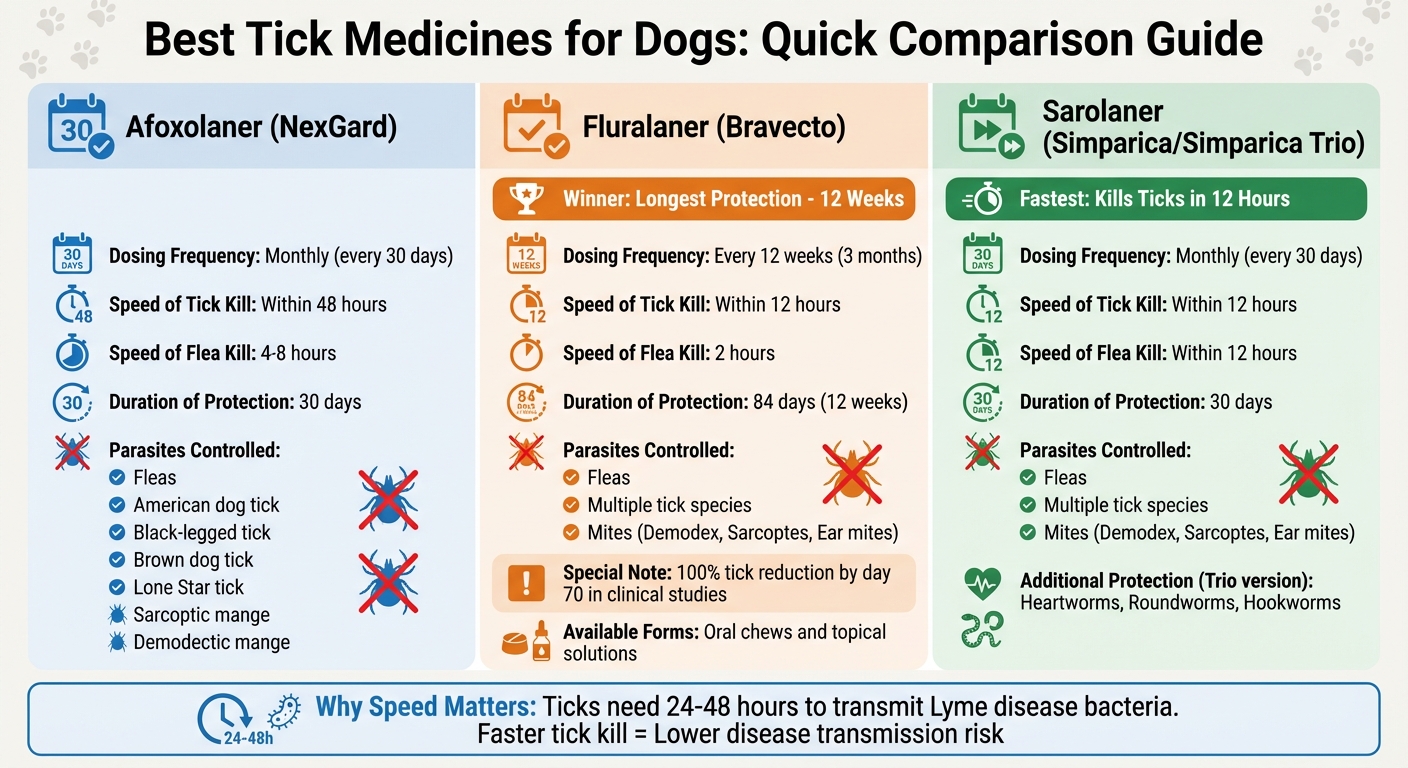
Comparison of Top Tick Medicines for Dogs: Dosing, Speed & Effectiveness
This section explores three well-known isoxazolines - afoxolaner, fluralaner, and sarolaner - that are highly effective in protecting dogs from ticks. Each compound is discussed below, focusing on dosing schedules, how quickly they eliminate ticks, and any additional advantages they offer.
Afoxolaner
Afoxolaner is a once-a-month oral treatment that tackles fleas and several tick species, including the American dog tick, black-legged tick, brown dog tick, and Lone Star tick. It’s also effective against sarcoptic and demodectic mange in dogs. Afoxolaner kills fleas within 4–8 hours and ticks within 48 hours. Although its tick-kill time is slightly longer compared to other isoxazolines, it remains a trusted option among veterinarians. The monthly dosing schedule is straightforward - just give it on the same day each month.
Fluralaner
Fluralaner is known for its extended duration of protection, with a single dose lasting up to 12 weeks. This makes it a great choice for those who might struggle to keep up with monthly treatments. It eliminates fleas in just 2 hours and ticks in 12 hours.
A study published in March 2024 by MSD Animal Health highlighted its effectiveness, showing that oral fluralaner achieved a 100% reduction in brown dog tick populations in infested kennels by day 70 and maintained this result through day 84.
"It's important to kill ticks as effectively as possible given that the longer a tick is able to feed uninterrupted, the greater the risk of a dog being infected with a tick-borne pathogen." - Jason Drake, DVM, DACVM-Parasitology, MSD Animal Health
Fluralaner is available in two forms: oral chews and topical solutions, offering flexibility based on what works best for your dog.
Sarolaner
Sarolaner is another monthly oral medication that acts quickly, starting to kill fleas and ticks within 12 hours. When included in combination products like Simparica Trio, it also provides protection against heartworms, roundworms, and hookworms. Its fast action is particularly helpful in areas where tick populations are high, as it reduces the time ticks have to transmit diseases. It’s worth noting that ticks generally need to remain attached for 1 to 2 days to transmit bacteria that cause Lyme disease.
Here’s a quick comparison of these three drugs, summarising their dosing schedules, the parasites they target, and how quickly they kill ticks:
| Drug Compound | Dosing Frequency | Key Parasites Controlled | Speed of Tick Kill |
|---|---|---|---|
| Afoxolaner | Monthly | Fleas, Ticks, Mites | Within 48 hours |
| Fluralaner | Every 12 Weeks | Fleas, Ticks, Mites | Within 12 hours |
| Sarolaner | Monthly | Fleas, Ticks, Mites, Heartworms* | Within 12 hours |
*When used in combination products like Simparica Trio.
Tick Tablets for Dogs: How Oral Medicines Work
Tick tablets have become a go-to choice for veterinarians when it comes to protecting dogs. Their systemic action sets them apart, offering dependable protection regardless of factors like bathing or swimming. This stems from their ability to work internally, unlike topical treatments.
How Tick Tablets Work After Your Dog Eats Them
Once your dog takes a tick tablet, the active ingredients are absorbed through the digestive system and enter the bloodstream. This ensures continuous protection that isn’t compromised by water exposure, such as swimming or bathing. Unlike topical solutions, these tablets rely on a systemic approach, meaning the medication circulates throughout your dog’s body. For the treatment to work, ticks need to bite and start feeding on your dog. When they do, they ingest the active compounds, which disrupt their nerve functions, effectively killing them. Meanwhile, your dog safely metabolises the medicine.
For better absorption, it’s recommended to give the tablet with food.
How Fast Do Tick Tablets Kill Ticks?
The speed at which tick tablets act depends on the active ingredient. For instance, fluralaner and sarolaner can eliminate ticks within 12 hours, while afoxolaner takes up to 48 hours. This rapid action drastically reduces the risk of disease transmission and interrupts the tick’s life cycle.
Dr. Jason Drake highlights that quick tick elimination is crucial for minimising the spread of pathogens. By killing ticks before they can lay eggs, these fast-acting tablets also help reduce environmental contamination. When used correctly, oral tick tablets prove to be an efficient way to manage tick infestations and protect your dog.
Tick Treatment Options: Tablets, Spot-Ons, and Injections
Choosing the right tick treatment depends on your dog's habits and environment. Each method has its own strengths and considerations.
Oral Chewable Tick Tablets
Oral chewable tablets work by entering your dog's bloodstream, making them a great choice for dogs that swim often or require frequent baths. Since water exposure doesn’t affect their performance, they’re especially convenient for active dogs. Another advantage is that they don’t leave any chemical residue on your dog’s fur, which is safer for households with small children or other pets.
However, ticks need to bite and start feeding before the medication can take effect, meaning these tablets don’t repel ticks. Some dogs might experience mild stomach upset, so it’s a good idea to monitor them after giving the tablet to ensure it stays down and gets absorbed properly. Depending on your dosing preference, you can opt for a monthly tick tablet or a 12-week tick protection tablet.
Topical Spot-On Treatments
Unlike oral tablets, spot-on treatments create a protective barrier on your dog’s skin. These are applied directly between the shoulder blades and often contain ingredients like permethrin, which repel ticks and prevent them from attaching - making them a good option in tick-heavy areas. Spot-ons are particularly helpful for dogs that are fussy eaters or have sensitive stomachs that might not tolerate oral medications.
That said, applying these treatments can be tricky. You’ll need to wait at least two days before allowing your dog to swim or bathe, as water can reduce their effectiveness. During this drying period, it’s best to keep children and other pets away from the application site. Important: Never use dog-specific spot-ons containing permethrin on cats, as these can be highly toxic to them. If this method suits your dog, a spot-on tick treatment can be a reliable choice when applied properly.
Long-Acting Tick Injections
Tick injections provide long-lasting protection, often covering several weeks or even months, with just one dose. They’re particularly useful for dogs that might miss monthly treatments or have difficulties with oral or topical options. Since these injections are administered by a veterinarian, you can trust the dosage and application are handled correctly. Speak with your vet to see if this option aligns with your dog’s needs.
How Effective Are Tick Medicines Against Different Parasites
Today's tick medicines are not just about handling ticks - they're designed to tackle a range of parasites, offering a more all-encompassing solution for pet protection.
Tick Control Effectiveness
Tick medicines work by killing ticks after they latch onto the host. The quicker they act, the shorter the tick's feeding time, which helps lower the chance of disease transmission. This is critical because many tick-borne illnesses require ticks to feed for 1–2 days to spread effectively.
A 2024 study by MSD Animal Health tested oral fluralaner (Bravecto) against imidacloprid/flumethrin collars in kennels infested with brown dog ticks. The results were telling: dogs treated with Bravecto achieved a 100% reduction in tick numbers by day 70 and stayed tick-free until the study concluded on day 84. Meanwhile, the collar group only managed a 75% reduction, and tick numbers began to rise again. This underscores the importance of rapid tick elimination in reducing the risk of tick-borne diseases. Such swift action plays a vital role in broader parasite management, as discussed below.
Flea Control Benefits
Tick medicines often double as effective flea treatments. Some start killing fleas within minutes, while others take 2 to 8 hours. This quick action is crucial because it prevents fleas from laying eggs, disrupting their life cycle and stopping infestations before they start.
Flea control isn't just about comfort; it also prevents health issues like allergic dermatitis, anaemia in puppies, and even tapeworm transmission. For dogs that spend time outdoors or in flea-prone areas, year-round protection is advisable, as fleas can thrive indoors even during winter months. Moreover, many of these medicines also target mites and mange, enhancing their overall parasite-fighting capabilities.
Mites and Mange Treatment
Isoxazolines like fluralaner, afoxolaner, and sarolaner are particularly effective against demodectic and sarcoptic mange, as well as ear mites.
However, these treatments are often used "extra-label", meaning they aren't the primary FDA-approved purpose listed on the packaging. Despite this, they are widely accepted in veterinary practice. This is why consulting your vet is crucial - they can confirm the diagnosis and ensure the medicine is safe for your dog's health and breed. If environmental tick problems are a concern alongside mite issues, products like tick sprays can help manage parasites in your dog's surroundings.
| Product | Ticks Killed | Fleas Killed | Mites Treated | Speed of Kill (Ticks) |
|---|---|---|---|---|
| Bravecto | Multiple species | Yes | Demodex, Sarcoptes, Ear mites | ~12 hours |
| NexGard | American dog, Black-legged, Brown dog, Lone Star | Yes | Sarcoptes, Demodex (extra-label) | ~48 hours |
| Simparica Trio | Multiple species | Yes | Demodex, Sarcoptes, Ear mites | ~12 hours |
| Advantage Multi | None | Yes | Sarcoptes | N/A |
How Long Do Tick Medicines Stay in a Dog's Body
How long tick medicines remain effective depends on two main factors: the active ingredient and how the treatment is delivered. Most tick medicines provide protection for around 30 days per dose. However, some products are designed to last longer, which can make your routine easier while minimising the risk of missed doses. This variation in duration often plays a role in deciding the best treatment for your dog.
For instance, fluralaner, the active ingredient in Bravecto, has a longer presence in the bloodstream, offering continuous protection for up to 12 weeks with just one dose. On the other hand, afoxolaner (found in NexGard) and sarolaner (used in Simparica) are processed and eliminated more quickly, requiring a monthly dose. Tick collars such as Seresto use slow-release technology to spread the active ingredients across the skin, providing up to 8 months of protection. However, frequent swimming - more than once a month - can shorten this to about 5 months. This makes it clear why sticking to a dosing schedule is so important.
If you miss a dose, give it as soon as you remember. But if the next dose is already due, skip the missed one and continue with the regular schedule - never double the dose. Missing doses can leave your dog unprotected, increasing the risk of tick-borne diseases.
Oral medications work through the bloodstream and are unaffected by bathing or swimming. Meanwhile, topical treatments generally last about 30 days but need a 48-hour window after application before your dog can bathe or swim. This allows the product to bond effectively to the skin.
Since ticks remain active even in temperatures as low as 4°C (40°F), it's a good idea to maintain protection throughout the year, regardless of the season. Consistent dosing not only keeps your dog safe but also avoids the hassle of reinfestation.
Side Effects of Tick Medicines in Dogs
When it comes to managing tick treatments for your furry friend, understanding potential side effects is just as important as knowing about their effectiveness. While tick medicines are generally safe, being aware of possible reactions can help you take quick and informed action if needed. This awareness also ensures you pick the treatment that aligns best with your dog's health needs.
Common Mild Side Effects
Most dogs handle tick medicines without any trouble, but a small number might experience mild side effects. For oral medications in the isoxazoline class - such as afoxolaner, fluralaner, and sarolaner - the most frequently reported issues are vomiting and diarrhoea. Other minor symptoms include lethargy, reduced appetite, excessive drooling, or signs of discomfort like restlessness, rolling on their back, or paw flicking.
Topical treatments, like spot-on applications, may cause skin-related reactions. These can include redness, itching, mild irritation, or even some hair loss at the application site. The reassuring part is that these mild symptoms often resolve on their own within hours or a few days, without requiring additional treatment.
"Adverse reactions such as excessive drooling, paw flicking/scratching, and ear twitching are often mild and can go away on their own." - Barri J. Morrison, DVM
If your dog experiences a mild skin reaction, you can bathe them with a gentle dish soap and rinse thoroughly. For households with multiple pets, it’s a good idea to keep them separated until the topical treatment has dried completely to prevent accidental ingestion through grooming.
While most side effects are minor, there is a rare chance of more serious reactions involving the nervous system.
Rare Neurological Side Effects
Though uncommon, neurological side effects are the most serious potential reactions to isoxazoline-based tick medicines. These can include muscle tremors, loss of coordination (ataxia), and seizures. The U.S. Food and Drug Administration (FDA) has even issued an alert about these risks, noting that they can occur in dogs without any prior history of neurological issues.
"Look for dizziness, wobbliness, incoordination, poor appetite, depression, vomiting, diarrhoea, or excessive salivation. Some animals have had seizures and/or died." - U.S. Food and Drug Administration
These reactions are extremely rare, occurring in less than 0.01% of treated dogs, particularly with medications like Simparica. If you notice any neurological symptoms, contact your vet immediately. In rare cases, genetic factors, such as a mutation affecting the blood-brain barrier, may make some dogs more sensitive to these side effects.
Dogs That Need Extra Caution
Certain dogs require extra care when it comes to tick treatments, making it essential to consult your veterinarian. Dogs with a history of seizures or neurological disorders should be monitored closely, as isoxazoline medications may make seizures more likely.
Pregnant and nursing dogs also need special attention. Many oral tick medications haven’t been thoroughly tested for safety in these groups, but fipronil-based topical products, like Frontline, are often considered safer under veterinary guidance.
Puppies and senior dogs are more vulnerable to side effects due to their developing or declining organ function. Always ensure the product matches your dog’s weight - never split a larger dose for a smaller dog, as this can lead to serious toxicity.
Certain breeds, such as Collies, Australian Shepherds, and Shetland Sheepdogs, may carry the MDR-1 gene mutation, which makes them more sensitive to various medications. While most modern tick medicines are safe for these breeds, it’s still crucial to discuss your dog’s breed and medical history with your vet.
"It's strongly recommended that you involve your veterinarian when choosing a flea and tick product, especially if your pet has any health conditions." - U.S. Food and Drug Administration
Are Tick Medicines Safe for All Dog Breeds
When it comes to tick medicines, most are considered safe when used correctly. However, some dog breeds require extra caution due to genetic differences. One major concern is the MDR1 gene mutation, which can affect how certain dogs process medications. This mutation makes it difficult for them to break down and eliminate specific drugs, potentially leading to harmful levels accumulating in the brain.
Herding breeds are particularly prone to carrying the MDR1 mutation. Breeds like Collies, Australian Shepherds, and Shetland Sheepdogs are among the most commonly affected. If your dog belongs to one of these breeds - or has herding ancestry - it’s a good idea to consult your veterinarian about genetic testing for the MDR1 mutation before starting any long-term tick prevention plan.
"Many veterinarians recommend testing dogs for the MDR-1 gene, especially affected breeds." - Lauren Jones, VMD
Interestingly, many modern tick medicines, especially those in the isoxazoline class (like afoxolaner, fluralaner, and sarolaner), have been tested on dogs with the MDR1 mutation and found to be safe when given at recommended doses. That said, if your dog has a history of seizures or other neurological issues, it’s still wise to discuss these concerns with your veterinarian before using these products.
For breeds at higher risk, genetic testing can help guide safer medication choices. Always share your dog’s breed, medical background, and any known sensitivities with your vet to ensure the best and safest tick treatment plan.
How to Choose the Right Tick Treatment for Your Dog
Selecting the right tick treatment for your dog means aligning it with their unique needs. Several factors come into play, and understanding these will help you make a well-informed decision. Let’s break down the key considerations to guide your choice.
Factors to Consider
Age and weight play a crucial role in determining the right treatment. Most tick preventatives are only suitable for puppies that are at least 8 weeks old, and proper dosing is essential to avoid under- or overtreatment. For instance, Simparica Trio is suitable for dogs weighing a minimum of 2.8 lbs, whereas Bravecto requires a weight of at least 4.4 lbs.
Lifestyle and environment are equally important. If your dog loves water or spends a lot of time outdoors, opt for a treatment that remains effective even after swimming or bathing. Oral tablets are a great choice here, as they work systemically and aren't affected by water. Similarly, dogs that frequent parks or tick-heavy areas need treatments that act quickly to kill ticks and reduce the risk of disease transmission.
Health history should never be overlooked. Dogs with a history of seizures or neurological conditions need extra caution with isoxazoline-based treatments. Herding breeds, especially those with the MDR-1 mutation, should only be treated under a vet's guidance.
Household environment is another factor. If you have cats, avoid using products with permethrin, as it is highly toxic to felines.
"Parasite protection is not 'one-size-fits-all.' Certain factors affect the type and dose of the product that can be used, including the age, species, breed, lifestyle, and health status of your pet." – American Veterinary Medical Association
By carefully considering these factors, you can narrow down your options. However, professional advice can ensure the treatment is perfectly tailored to your dog's needs.
Consulting Your Veterinarian
When it comes to your dog’s safety, consulting your veterinarian is a must. They will review your pet's medical history, check for potential drug interactions, and recommend the safest and most effective tick treatment.
Vets also have local knowledge about tick populations and the diseases they carry. They can guide you on whether year-round protection is necessary (ticks can be active even at temperatures as low as 4°C) and advise on additional precautions, like a Lyme disease vaccine. For puppies, senior dogs, pregnant or nursing pets, or those with liver or kidney conditions, professional guidance is especially critical.
"It's strongly recommended that you involve your veterinarian when choosing a flea and tick product, especially if your pet has any health conditions." – U.S. Food and Drug Administration
If you're exploring tick prevention products for dogs, make sure to consult your vet first. They’ll help you navigate the options and pick a treatment that effectively protects your dog while keeping them safe.
How Often Should You Give Tick Treatment to Dogs
How often you need to treat your dog for ticks depends on the product you use. Oral chewables like NexGard, Simparica, and Credelio are typically given once every 30 days. On the other hand, Bravecto offers a longer-lasting option, providing protection for up to 12 weeks (3 months) with a single dose. This extended duration can make it easier to maintain consistent protection.
For topical spot-on treatments such as Frontline or K9 Advantix II, monthly application is required. However, Bravecto also has a topical version that lasts for 12 weeks. Another alternative is tick collars, like Seresto, which can protect your dog for up to 8 months. Keep in mind, though, that frequent swimming or baths might reduce the collar's effectiveness to about 5 months.
Environmental factors also play a big role in determining how often you should treat your dog. In India’s warm and humid climate, ticks and fleas are active throughout the year. Unlike in colder regions, these pests don’t vanish during winter. Ticks can stay active even at temperatures as low as 4°C, and fleas can thrive indoors regardless of the season.
"Contrary to popular belief among pet parents, fleas and ticks are not only active in the spring and summer months, but they are a year-round risk." – MSD Animal Health
Consistency is key when it comes to tick prevention. Missing even a single dose can break the protection cycle, leaving your dog vulnerable to reinfestation. Longer-acting treatments, like Bravecto’s 12-week formula, can help reduce the number of doses you need to remember each year. If you’re using monthly treatments, setting up reminders can ensure you never miss a dose.
Key Takeaways: Complete Tick Protection Plan for Dogs
Keeping your dog safe from ticks requires consistent, year-round protection and regular tick checks. Pay special attention to common tick hotspots like the ears, between the toes, under the arms, and around the tail. Ticks can stay active even in temperatures as low as 4°C, making it necessary to maintain protection throughout the year, especially in India's climate.
Sticking to a regular dosing schedule - whether monthly or every 12 weeks - is crucial. Missing just one dose can disrupt the protection cycle, leaving your dog vulnerable to reinfestation. Consistent treatment also eliminates fleas and ticks before they can lay eggs, reducing the risk of an infestation in your home.
When it comes to choosing the right treatment, consulting your vet is key. They can assess factors like your dog’s age, weight, breed, lifestyle, and medical history to recommend the safest and most effective product. This is especially critical for dogs with seizure disorders, pregnant or nursing dogs, and breeds with MDR-1 gene sensitivity.
"Parasite protection is not 'one-size-fits-all'"
To ensure complete protection, treat all pets in your household at the same time and regularly clean their bedding. Pair medicinal prevention with environmental control - reducing tick habitats in your yard and steering clear of tall grass or wooded areas can dramatically lower your dog's exposure to ticks.
FAQs
How can I choose the most suitable tick medicine for my dog?
Choosing tick medicine for your dog involves weighing several factors like their age, weight, breed, lifestyle, and health requirements. First, determine your dog’s weight and life stage - puppies, senior dogs, and pregnant or lactating females often need milder formulations. If your dog spends a lot of time outdoors in grassy or wooded areas, a fast-acting option with extended protection, such as a 12-week oral tablet, might be a good fit. On the other hand, for dogs that primarily stay indoors or dislike oral medications, a spot-on treatment can be a practical choice.
Breed-specific sensitivities also come into play. For instance, breeds like Collies or Australian Shepherds may react to certain chemicals, so it’s crucial to consult your vet if your dog has breed-related sensitivities or a history of neurological concerns. You’ll also want to think about the application method - whether it’s oral tablets, spot-on treatments, sprays, or collars - and how long the protection lasts (monthly or up to 12 weeks). Always discuss your options with a veterinarian to ensure the treatment is safe and effective for your dog’s unique needs.
Can natural remedies help in preventing ticks on dogs?
Yes, natural remedies can work alongside veterinarian-approved tick prevention methods to help keep your dog safe. For instance, you can create a simple homemade spray by mixing water with a small amount of raw apple cider vinegar and adding a few drops of essential oils like lemongrass, citronella, or rosemary. Lightly mist this onto your dog's coat before heading out for walks, particularly in grassy or wooded areas. Diluted cedar oil or lavender oil are also known to repel ticks and can be applied sparingly to your dog's fur.
However, while these natural options can help as repellents, they are not a replacement for established tick prevention medications. Keep in mind that some essential oils might irritate your dog's skin, so it's a good idea to test a small patch first and consult your veterinarian. For the best protection - especially in India’s warm, humid climate - combine natural repellents with regular oral, spot-on, or injectable tick treatments.
What should I do if my dog experiences side effects from tick medication?
If your dog experiences side effects such as vomiting, diarrhoea, lethargy, loss of appetite, tremors, or seizures, stop the medication right away and ensure your dog is at ease. Reach out to your veterinarian immediately for advice on the next steps.
For milder symptoms like temporary lethargy or a reduced appetite, keep a close eye on your dog and follow your vet's instructions. But if you notice severe reactions like tremors or seizures, don't wait - get urgent veterinary care. Always let your vet know about any other medications your dog is taking to prevent harmful interactions.


