Skip to content


ANTI BIOTIC
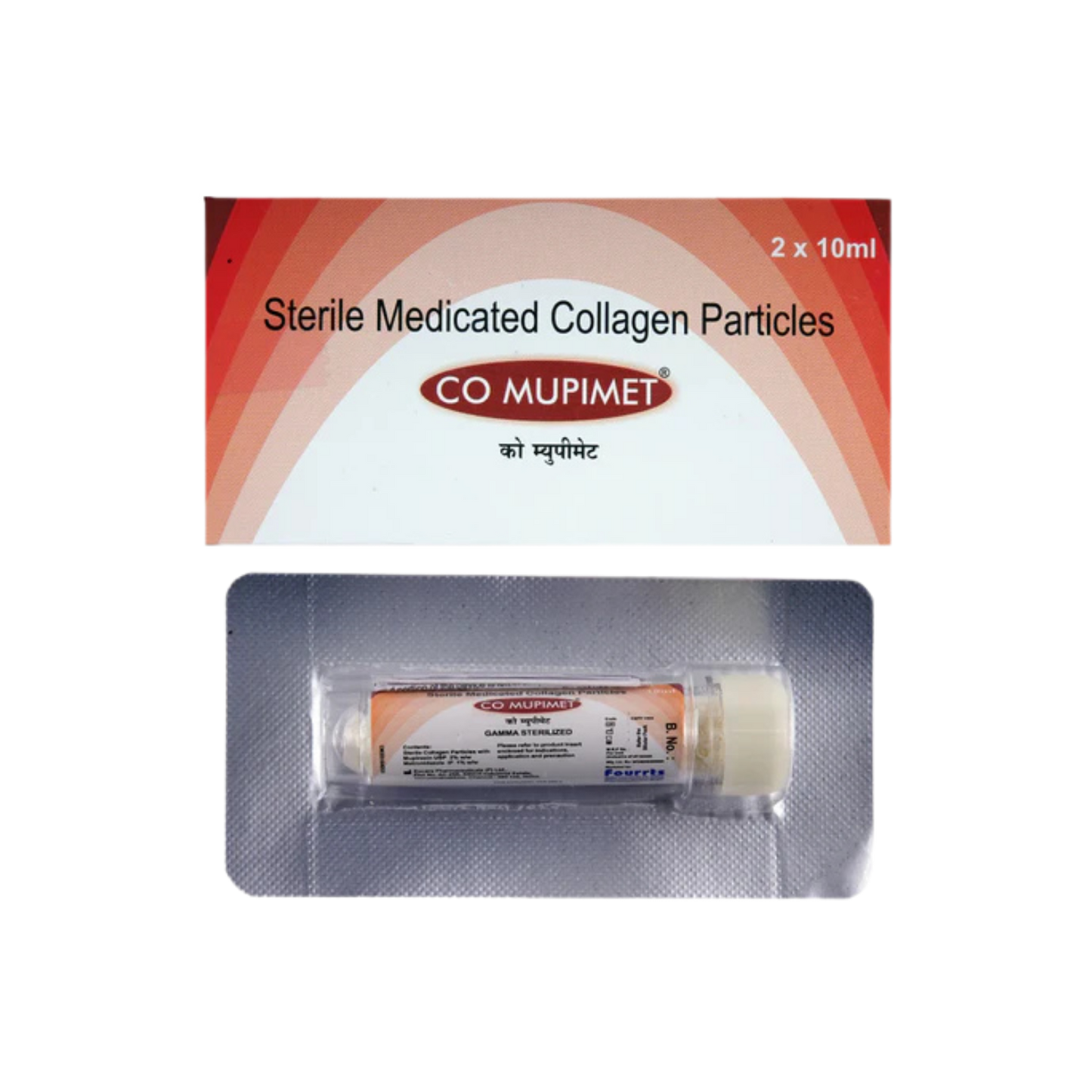
CO MUPIMET 10ML
CO MUPIMET 10ML
By FOURRTS
Out of Stock
Prescription Required
Check Availability
Rapid 3-4 Day Delivery,Tiny Extra Fee!
-
 Pet Safe
-
 Best Quality
-
 Fast Delivery
-
 Secure Payment


Co-Mupimet Collagen Particles is a standout product in our Veterinary Prescription Medicines Wound Care & Dermatology category. Crafted with utmost care and precision, this innovative triple-combination formula is used off-label under veterinary supervision for the comprehensive topical management of infected skin wounds, surgical site infections, pyoderma, pressure sores, chronic non-healing wounds, and bacterial dermatitis in dogs and cats. Unlike single-antibiotic topical preparations that address only one bacterial pathway, Co-Mupimet's three-component formula delivers simultaneous tissue scaffolding, gram-positive bacterial kill, and anaerobic bacterial eradication in a single application making it one of the most comprehensively effective topical wound care products available for companion animals. With Co-Mupimet Collagen Particles, you can trust that your beloved pet's wound is receiving the most complete, scientifically advanced topical care possible, every single application.
Composition:
- Sterile Collagen Particles (Type I NLT 90% Collagen Content): The tissue regeneration component sterile collagen particles help promote wound healing by providing a supportive framework for new tissue growth and helping to maintain a moist wound environment. Type I Collagen is the primary structural protein of mammalian skin and connective tissue when applied topically to a wound, collagen particles create a three-dimensional scaffold matrix that guides and accelerates fibroblast migration into the wound bed, stimulates collagen synthesis by resident skin cells, absorbs wound exudate to maintain the optimal moist healing environment, and physically fills wound cavities to support granulation tissue formation from the inside out. Collagen acts as a framework for new tissue growth making it the biological foundation upon which both antibiotics perform their infection-clearing work, so healed, healthy new tissue can form without disruption.
- Mupirocin IP 2% w/w: The gram-positive antibiotic component a naturally occurring, fermentation-derived antibiotic produced by Pseudomonas fluorescens. Mupirocin inhibits bacterial protein synthesis by reversibly and specifically binding to bacterial isoleucyl transfer-RNA synthetase. This unique mechanism of action targeting a bacterial enzyme not shared by mammalian cells means Mupirocin kills bacteria with exceptional selectivity while leaving the surrounding healthy tissue completely unaffected. Due to this mode of action, Mupirocin shows no cross-resistance with chloramphenicol, erythromycin, gentamicin, lincomycin, neomycin, novobiocin, penicillin, streptomycin, and tetracycline making it effective in cases where other antibiotics have failed. Bacteria susceptible to Mupirocin include Staphylococcus aureus (including methicillin-resistant MRSA strains and beta-lactamase-producing strains), Staphylococcus intermedius, Staphylococcus epidermidis, and both alpha and beta-haemolytic Streptococci the primary bacterial pathogens responsible for pyoderma, hot spots, surgical site infections, and wound infections in dogs and cats.
- Metronidazole IP 1% w/w: The anaerobic and protozoal antibiotic component a nitroimidazole antibiotic with potent activity specifically against anaerobic bacteria and certain protozoa. Metronidazole is a nitroimidazole antibiotic that enters bacterial cells and stops them from making proteins that they need for their survival, ultimately killing them. Metronidazole targets bacterial DNA, disrupting its structure and breaking strands to combat infections effectively. Anaerobic bacteria those that thrive in low-oxygen environments such as deep wounds, necrotic tissue, and the base of draining tracts are the most common cause of the foul odour, heavy purulent discharge, and tissue necrosis associated with chronic and complicated wound infections. Metronidazole's targeted anaerobic coverage perfectly complements Mupirocin's gram-positive aerobic action together delivering comprehensive dual-pathway antibacterial protection across the full spectrum of wound pathogens encountered in small animal practice.

CO MUPIMET 10ML
Out of Stock
Prescription Required
Co-Mupimet Collagen Particles is a standout product in our Veterinary Prescription Medicines Wound Care & Dermatology category. Crafted with utmost care and precision, this innovative triple-combination formula is used off-label under veterinary supervision for the comprehensive topical management of infected skin wounds, surgical site infections, pyoderma, pressure sores, chronic non-healing wounds, and bacterial dermatitis in dogs and cats. Unlike single-antibiotic topical preparations that address only one bacterial pathway, Co-Mupimet's three-component formula delivers simultaneous tissue scaffolding, gram-positive bacterial kill, and anaerobic bacterial eradication in a single application making it one of the most comprehensively effective topical wound care products available for companion animals. With Co-Mupimet Collagen Particles, you can trust that your beloved pet's wound is receiving the most complete, scientifically advanced topical care possible, every single application.
Composition:
- Sterile Collagen Particles (Type I NLT 90% Collagen Content): The tissue regeneration component sterile collagen particles help promote wound healing by providing a supportive framework for new tissue growth and helping to maintain a moist wound environment. Type I Collagen is the primary structural protein of mammalian skin and connective tissue when applied topically to a wound, collagen particles create a three-dimensional scaffold matrix that guides and accelerates fibroblast migration into the wound bed, stimulates collagen synthesis by resident skin cells, absorbs wound exudate to maintain the optimal moist healing environment, and physically fills wound cavities to support granulation tissue formation from the inside out. Collagen acts as a framework for new tissue growth making it the biological foundation upon which both antibiotics perform their infection-clearing work, so healed, healthy new tissue can form without disruption.
- Mupirocin IP 2% w/w: The gram-positive antibiotic component a naturally occurring, fermentation-derived antibiotic produced by Pseudomonas fluorescens. Mupirocin inhibits bacterial protein synthesis by reversibly and specifically binding to bacterial isoleucyl transfer-RNA synthetase. This unique mechanism of action targeting a bacterial enzyme not shared by mammalian cells means Mupirocin kills bacteria with exceptional selectivity while leaving the surrounding healthy tissue completely unaffected. Due to this mode of action, Mupirocin shows no cross-resistance with chloramphenicol, erythromycin, gentamicin, lincomycin, neomycin, novobiocin, penicillin, streptomycin, and tetracycline making it effective in cases where other antibiotics have failed. Bacteria susceptible to Mupirocin include Staphylococcus aureus (including methicillin-resistant MRSA strains and beta-lactamase-producing strains), Staphylococcus intermedius, Staphylococcus epidermidis, and both alpha and beta-haemolytic Streptococci the primary bacterial pathogens responsible for pyoderma, hot spots, surgical site infections, and wound infections in dogs and cats.
- Metronidazole IP 1% w/w: The anaerobic and protozoal antibiotic component a nitroimidazole antibiotic with potent activity specifically against anaerobic bacteria and certain protozoa. Metronidazole is a nitroimidazole antibiotic that enters bacterial cells and stops them from making proteins that they need for their survival, ultimately killing them. Metronidazole targets bacterial DNA, disrupting its structure and breaking strands to combat infections effectively. Anaerobic bacteria those that thrive in low-oxygen environments such as deep wounds, necrotic tissue, and the base of draining tracts are the most common cause of the foul odour, heavy purulent discharge, and tissue necrosis associated with chronic and complicated wound infections. Metronidazole's targeted anaerobic coverage perfectly complements Mupirocin's gram-positive aerobic action together delivering comprehensive dual-pathway antibacterial protection across the full spectrum of wound pathogens encountered in small animal practice.