


Coughing in cats can signal anything from minor irritations to severe health concerns like feline asthma, respiratory infections, or heartworm disease. Acting promptly is critical to avoid long-term damage. Here's what you need to know:
- Common Causes: Respiratory infections (like feline herpesvirus and calicivirus), allergens, irritants (dust, smoke, scented litter), or even physical obstructions.
- Prevention Tips: Reduce allergens with HEPA air purifiers, use dust-free litter, and maintain a clean, ventilated home. Regular grooming also helps prevent hairball-related issues.
- Vaccination and Care: Stick to vaccination schedules (like FVRCP) and ensure proper hydration and nutrition to boost immunity.
- When to See a Vet: Persistent coughing, open-mouth breathing, bluish gums, or severe symptoms require immediate veterinary attention.
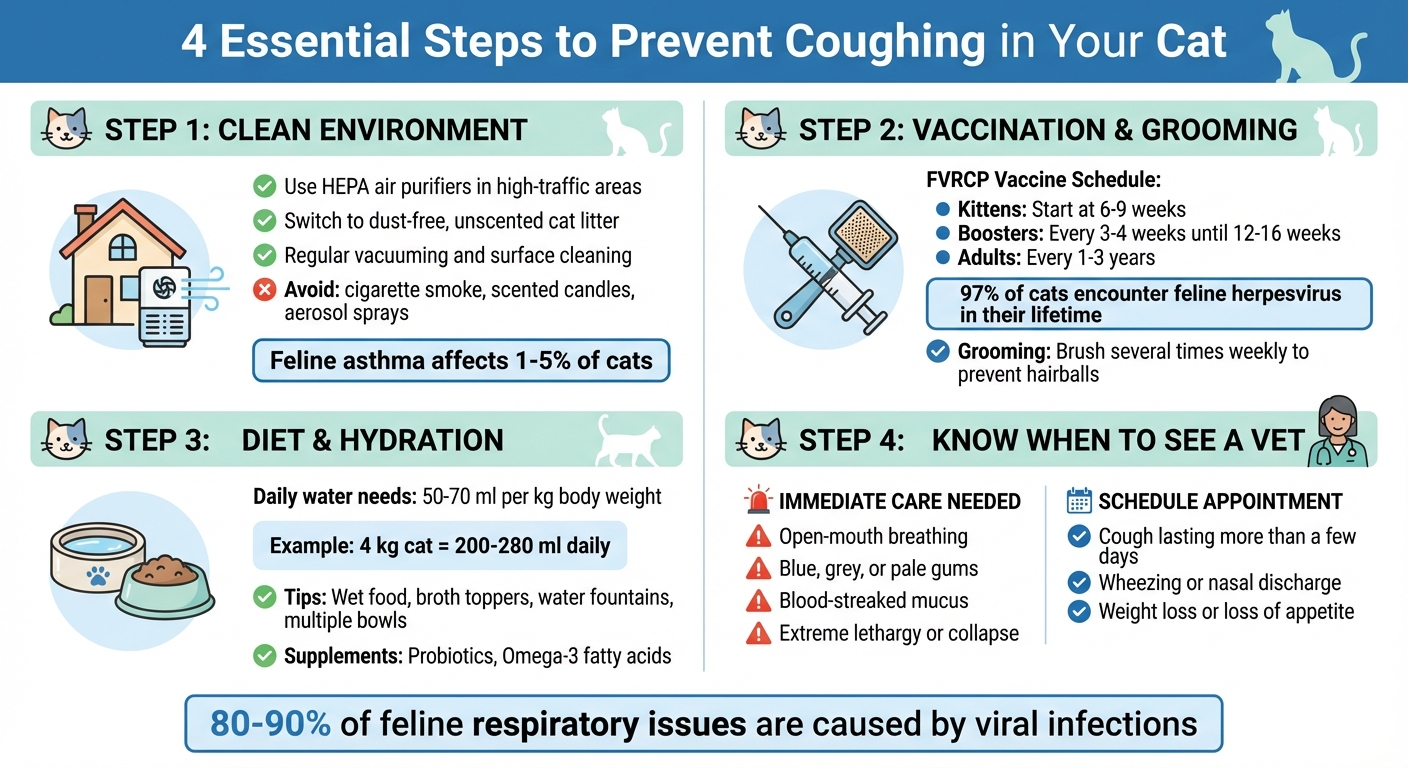
4-Step Guide to Preventing Cat Coughing: Environment, Vaccination, Diet & Warning Signs
Why is Your Cat Coughing? A Vet Explains How to Help
sbb-itb-5205b1e
What Causes Coughing in Cats
Figuring out why your cat is coughing is a crucial step in addressing the issue. Coughing in cats can stem from various causes, ranging from infections to irritants in their surroundings. Let’s break it down.
Respiratory Infections
Respiratory infections are a leading cause of coughing in cats. Viral infections are responsible for 80–90% of feline respiratory issues, with bacteria making up the rest. One of the most common culprits is feline herpesvirus, which up to 97% of cats encounter during their lifetime. This virus often results in upper respiratory symptoms, fever, and, in stressful situations, flare-ups that include persistent coughing.
Another major player is feline calicivirus, a highly contagious virus seen in roughly 10% of cats in smaller groups but affecting up to 90% of cats in crowded settings like shelters. This virus can cause severe respiratory issues, pneumonia, and even painful mouth ulcers. In densely populated areas, Bordetella bronchiseptica spreads quickly, causing symptoms that range from mild sneezing to severe pneumonia.
"While vaccines have greatly reduced the incidence of serious respiratory disease in cats, they have not eliminated the highly contagious pathogens that cause them." – Cornell Feline Health Centre
Parasitic infections also contribute to coughing. Heartworms, lungworms, and roundworms can invade a cat’s lungs, leading to inflammation and a dry, hacking cough. To identify the exact cause of an infection, vets often rely on tools like chest X-rays, PCR tests, and fecal screenings.
But infections aren’t the only factor - what’s in your cat’s environment also matters.
Allergies and Environmental Irritants
Allergies and irritants can significantly impact your cat’s respiratory health. When a cat’s immune system reacts to airborne particles, it can lead to allergic bronchitis or feline asthma. This results in airway inflammation and narrowing, causing a dry, persistent cough as the cat struggles to breathe.
"Feline asthma is caused by an allergic reaction to inhaled allergens, particles that stimulate a cat's immune system." – Cornell Feline Health Centre
Asthma affects about 1% to 5% of domestic cats, with most diagnoses occurring between the ages of 4 and 5 years. Common triggers include pollen, mould spores, dust mites, cigarette smoke, perfumes, aerosol sprays, dusty or scented cat litter, essential oils, and fumes from cleaning products. Certain breeds, like Siamese and Himalayan cats, are more prone to asthma.
Hairballs or Obstruction
Sometimes, coughing can be mistaken for hairball-related behaviour. However, coughing is a reflex aimed at clearing irritants or blockages from the airways, and it doesn’t always result in a hairball. Foreign objects like grass, dirt, or cat litter can also trigger coughing.
"It is often confused with 'bringing up a hairball,' but no hairball is produced." – VCA Animal Hospitals
When a cat is coughing, you might notice it crouching low with its neck extended, sometimes ending in a gag or retch without producing anything. Physical obstructions, such as polyps or pressure from a tight collar, can also cause ongoing coughing. Recording your cat’s coughing episodes can be helpful for your vet, as cats rarely cough during check-ups.
Keep Your Cat's Environment Clean and Healthy
Creating a clean, irritant-free space is essential for your cat's respiratory well-being. With feline asthma affecting 1% to 5% of cats, managing airborne allergens can significantly improve their quality of life. Here’s how you can help maintain a healthier environment for your furry friend.
Use Air Purifiers to Reduce Allergens
Environmental irritants are a common cause of coughing in cats, so cutting down on indoor allergens is crucial. HEPA-filtered air purifiers are particularly effective at removing pollen, mould spores, and dust mites - common triggers for respiratory issues. As Dr. Beth Turner, Veterinarian, puts it:
"Before the allergens have a chance to accumulate and spread through your home, an air purifier helps to remove them."
Place air purifiers in areas your cat frequents the most. However, avoid using the ioniser mode, as it can release ozone and other lung irritants that might worsen symptoms. For added support, consider pairing the air purifier with a cool-mist humidifier. This combination helps keep your cat’s airways hydrated, reducing irritation and promoting easier breathing.
Switch to Hypoallergenic Cat Litter
Dusty litter can be a hidden culprit behind your cat’s coughing. When cats dig in their litter box, dust particles can become airborne, irritating their respiratory system. Opt for unscented, dust-free litter and use open litter boxes to reduce the build-up of trapped particles. Chemical fragrances, often found in scented litters, can also aggravate sensitive airways.
Additionally, be mindful of smoke and strong odours near the litter area. Avoid smoking or burning agarbatti in the same room, as these can exacerbate respiratory issues. By switching to low-dust litter, you’ll minimise airway irritation and help your cat breathe more comfortably.
Clean and Ventilate Regularly
Beyond managing litter and allergens, maintaining overall air quality is key. Regular vacuuming and cleaning surfaces can prevent the build-up of dust mites, dander, and pollen. If possible, remove carpets and replace HVAC filters on a consistent schedule.
Limit exposure to aerosol irritants like cigarette smoke, scented candles, and cleaning sprays. When weather permits and pollen counts are low, open windows to allow fresh air circulation - just ensure window screens are secured. For a chemical-free way to combat odours, try placing bamboo charcoal bags in small rooms or cupboards. These simple steps can help keep your cat’s airways clear and reduce coughing episodes.
| Irritant Category | Common Examples | Recommended Control |
|---|---|---|
| Biological | Pollen, mould spores, dust mites, dander | HEPA air purifier and regular vacuuming |
| Chemical/Synthetic | Perfumes, scented candles, cleaning fumes | Adequate ventilation and avoiding aerosols |
| Particulate | Cigarette smoke, fireplace ash, litter dust | Dust-free litter, air purifiers, HVAC upkeep |
Follow Vaccination and Health Schedules
Once you've ensured a comfortable environment for your cat, the next step is sticking to its vaccination and grooming routines. These are key to maintaining long-term respiratory health. Vaccinations, in particular, play a major role in reducing the severity and spread of respiratory viruses.
Core Vaccinations for Respiratory Health
The FVRCP vaccine is essential for protecting cats against major respiratory illnesses like Feline Viral Rhinotracheitis (caused by herpesvirus-1), calicivirus, and panleukopenia. Since nearly 97% of cats encounter feline herpesvirus at some point in their lives, vaccination is crucial - even for cats that never venture outdoors.
Kittens should begin the FVRCP vaccine series between 6–9 weeks of age, with boosters every 3–4 weeks until they reach 12–16 weeks. For adult cats, revaccination is recommended every 1 to 3 years, depending on their living conditions and your vet's advice. As highlighted by the Cornell Feline Health Centre:
"Vaccination against feline herpes is recommended for all cats. Although current vaccines do not prevent infection in all cases, they significantly decrease the severity of disease and the shedding of virus".
If your cat lives in a multi-cat household or spends time in shelters, talk to your vet about additional vaccines for Chlamydia felis or Bordetella bronchiseptica. These non-core vaccines, combined with good environmental care, can further safeguard your cat's respiratory health.
Groom Regularly to Prevent Hairballs
Vaccines help protect against infections, but regular grooming is equally important for preventing respiratory issues caused by hairballs. Brushing your cat several times a week - especially if it has long fur - removes loose hair and reduces the amount your cat ingests. Start grooming when your cat is young, ideally at around 3 months, to make it a stress-free habit.
Support Respiratory Health Through Diet and Hydration
In addition to vaccinations and regular grooming, your cat's diet and hydration play a key role in maintaining respiratory health. A well-rounded diet and sufficient hydration not only strengthen your cat's immune system but also help it fight off respiratory infections more effectively. Since feline herpesvirus-1 and calicivirus account for over 90% of upper respiratory infections in cats, providing the right nutrition and hydration can make a noticeable difference.
Keep Your Cat Hydrated
Staying hydrated is essential for keeping your cat's mucous membranes moist, which helps ward off pathogens and clear mucus. Adult cats typically need about 50–70 ml of water per kg of body weight each day, so a 4 kg cat would require around 200–280 ml of water daily.
To encourage hydration, you can include wet food in their diet or add broth toppers for extra moisture. Make water easily accessible by placing several wide ceramic or stainless steel bowls around the house, and consider investing in a drinking fountain to entice your cat to drink more. As highlighted by the Cornell Feline Health Centre:
"In all cases, appropriate supportive care, such as maintaining adequate nutrition and hydration, is very important".
Immune-Boosting Supplements
Sometimes, supplements can provide additional support for your cat's respiratory health. Probiotics, for example, can enhance immune function, especially during recovery periods. L-lysine is often recommended for cats prone to herpesvirus flare-ups, although its effectiveness remains a topic of debate. Omega-3 fatty acids may also help reduce inflammation in cats with asthma.
Maintaining a healthy weight is equally important, as excess weight can make breathing more difficult. If your cat experiences respiratory flare-ups, consult your vet about calming supplements that may provide relief.
When to See a Veterinarian
Recognising when your cat's cough needs professional care can make a big difference. Some symptoms require immediate attention, while others suggest you should book an appointment soon. Acting quickly when these signs show up is key.
Persistent or Severe Coughing
If your cat's cough lasts more than a few days, it's time to visit the vet. A helpful tip: record a video of the coughing episode. This can assist your vet in identifying the problem. Pay attention to when the coughing occurs. For example, coughing at night might point to fluid in the lungs, while coughing after physical activity could hint at heart issues. If the cough is severe or brings up mucus, don't wait - seek professional help promptly.
Other Symptoms to Watch For
Certain symptoms combined with coughing demand urgent care. Dr Melissa Boldan, DVM, emphasises:
"If your cat is open-mouth breathing or appears to be struggling to get a breath, this is a medical emergency."
Take a look at your cat's gums. If they appear blue, grey, or pale, it’s a sign to head to the vet immediately. Other red flags include blood-streaked mucus, extreme tiredness, collapse, or a loss of appetite. Laboured or uneven breathing, or a noticeably faster breathing rate while resting, also calls for urgent attention. Even if your cat doesn't show these severe symptoms, keep an eye out for other issues like wheezing, nasal discharge, unexplained weight loss, or frequent gagging.
Conclusion
Preventing coughing in your cat boils down to three main steps: improving their environment, sticking to health routines, and acting quickly when needed. Removing irritants like dust, smoke, and strong odours can make a big difference in creating a space where your cat can breathe comfortably.
Beyond keeping the environment clean, regular vaccinations and grooming are essential. Vaccines help lessen the severity of illnesses and limit viral shedding, while routine grooming reduces the risk of hairballs. Although vaccinations don’t eliminate all infections, they play a crucial role in protecting your cat’s overall health.
Timely action is key to your cat’s well-being. Dr Brittany Kleszynski, DVM, emphasises:
"If your cat's cough is accompanied by bluish gums, abnormal breathing, blood-tinged mucus, or lethargy, seek emergency veterinary care".
Ignoring chronic coughing, especially if it lasts for one to two months, can lead to lasting damage to the lungs’ mucous membranes, leaving them more prone to recurring infections.
Your cat’s respiratory health should always be a priority. Keep their environment clean, stay consistent with preventive care, and consult your veterinarian at the first sign of trouble. Taking these steps now ensures a healthier, cough-free life for your feline friend.
FAQs
How can I tell if my cat is coughing or dealing with a hairball?
It can sometimes be tough to tell the difference between a cat coughing and dealing with a hairball, but paying close attention to their behaviour can give you clues. When it comes to hairballs, the process usually follows grooming sessions. Your cat may gag or retch as it tries to expel swallowed fur. This can resemble vomiting and often ends with your cat bringing up a clump of fur.
Coughing, on the other hand, is more of a sudden, noisy burst of air. Cats often crouch, stretch their necks forward, or show signs of discomfort in their throat or chest when coughing. It can happen in episodes, may last for a while, and sometimes comes with other symptoms like sneezing, nasal discharge, or even breathing difficulties.
If you're unsure whether your cat is coughing or dealing with a hairball, try recording the behaviour. Sharing this with your vet can help them identify the issue. Persistent or worsening coughing should always be evaluated by a vet, as it could point to conditions like asthma, respiratory infections, or other underlying health concerns.
What should I do if my cat is having a severe coughing episode?
If your cat is having a severe coughing episode, it’s important to stay calm and watch for any serious signs like trouble breathing, bluish gums, or ongoing, unproductive coughing. These could point to a serious issue that needs immediate veterinary care.
While waiting for the vet, keep your cat in a quiet and calm space. Don’t try to make them eat or drink, and avoid using any home remedies, as these might make things worse. Always rely on a veterinarian for the right diagnosis and treatment.
Are some cat breeds more likely to develop respiratory issues like asthma?
Certain cat breeds, like Siamese and Himalayan cats, are often thought to have a higher chance of developing respiratory problems, including asthma. That said, this tendency isn't conclusively proven and can differ from one cat to another.
Feline asthma is a long-term condition triggered by allergic reactions to airborne irritants such as dust, pollen, or smoke. While some breeds might seem more prone to it, factors like the environment and a cat's individual sensitivities play a big role in causing respiratory issues. To help manage or lower the risk of asthma, regular vet visits and keeping your cat's surroundings clean and free of allergens are essential.


