


If your cat seems unusually tired or uninterested in activities, it could be a sign of lethargy. Lethargy is not a condition itself but a symptom of underlying issues like illness, poor nutrition, dehydration, or stress. Here's how you can help:
- Spot the Signs Early: Look for reduced activity, hiding, dull coat, or changes in appetite or grooming. If lethargy persists for more than 24 hours or includes symptoms like vomiting or breathing issues, consult a vet immediately.
- Balanced Diet: Feed high-quality, protein-rich food with essential nutrients like taurine and Omega-3s. Avoid overfeeding and ensure portion control.
- Hydration: Encourage drinking with wet food, water fountains, or adding tuna juice to water. Cats need about 240 ml of water daily.
- Exercise & Play: Engage your cat with 10–15 minutes of daily play using toys or climbing structures. For older cats, start with shorter, low-intensity sessions.
- Routine Vet Visits: Regular check-ups can catch health issues early. Adults need annual visits; seniors (8+ years) should go every 6 months.
- Stress-Free Environment: Provide quiet spaces, vertical perches, and consistent routines to reduce anxiety.
Act early to keep your cat healthy and active. If your cat shows prolonged lethargy, consult your vet without delay.
Nutrition Strategies to Maintain Energy
Why a Balanced Diet Matters
What your cat eats has a direct impact on their energy levels and overall health. A well-rounded diet not only keeps them active but also strengthens their ability to fight off illnesses. Since cats are obligate carnivores, they rely on their food to supply about 40 essential nutrients that their bodies can’t produce on their own. High-quality animal-based proteins and fats are the backbone of a healthy feline diet, supporting everything from muscle health to metabolism.
Proteins, especially those containing amino acids like taurine, arginine, and lysine, are critical for maintaining lean muscles and energy. Fats, which provide 8.5 kcal per gram (compared to 3.5 kcal for proteins and carbs), are another key source of fuel. Essential fatty acids such as arachidonic acid and Omega-3s (including EPA and DHA) are vital for healthy cells and sustained energy.
Vitamins and minerals also play a big role in keeping your cat energised. B-complex vitamins, like thiamine (B1) and cobalamin (B12), are crucial for energy metabolism. A deficiency in these can lead to fatigue and appetite loss. Minerals like potassium, magnesium, and iron help with muscle function and prevent anaemia. The International Society of Feline Medicine (ISFM) highlights that malnutrition can slow recovery and worsen illnesses.
To ensure your cat’s diet is complete, opt for commercially formulated food with a nutritional adequacy statement from AAFCO or FEDIAF. Dr Nick Roman, DVM, MPH, advises, “Cats should be fed commercially formulated, nutritionally balanced food rather than homemade diets, which are often deficient in key essential vitamins and minerals”. Avoid feeding raw fish exclusively, as it contains thiaminase, an enzyme that destroys vitamin B1, potentially leading to neurological issues and fatigue.
After addressing diet quality, fine-tune meal portions and focus on hydration to keep your cat energised.
Portion Control and Hydration
Overfeeding can lead to obesity, which often reduces activity levels. Cats with lower activity burn fewer calories, so their portion sizes should match their energy needs.
Use the serving guide on your cat’s food packaging or consult your vet to determine precise calorie requirements. Treats should make up no more than 10% of daily caloric intake. To make mealtime more engaging, try interactive feeders or food-dispensing toys, which can also help ration food throughout the day.
Hydration is just as important as diet. Dehydration can limit blood flow to organs and tissues, causing fatigue. Dr Soheyl Simaei, Head Vet at Noble Veterinary Clinics, explains:
Dehydration reduces blood flow to tissues and organs, causing fatigue and lethargy.
Cats naturally have a low thirst drive, so it’s essential to encourage them to drink more. Adding wet food to their diet can help, as it contains 70% to 80% moisture, compared to just 6% to 10% in dry kibble. Cat water fountains are another great option since many cats prefer running water. Use wide, shallow bowls to avoid whisker fatigue, and always keep water fresh and cool. Ensure water sources are placed away from the litter box to make them more appealing.
Age-Appropriate Food and Supplements
As cats age, their nutritional needs change, requiring adjustments to their diet and sometimes supplements to maintain energy. Kittens, adults, and senior cats all have distinct dietary requirements.
Kittens need calorie-dense food with high protein and fatty acids, particularly DHA, which supports brain and eye development. Begin transitioning kittens to solid food at around 3–4 weeks by mixing wet kitten food with formula to create a slurry.
Adult cats (ages 1–10 years) should switch to adult maintenance formulas after their first year to avoid excess weight gain. Indoor cats, in particular, need careful portion control due to their lower energy expenditure.
Senior cats (11 years and older) often face challenges like reduced muscle mass and dental issues. Kirsten McCarthy from Cats.com notes, “Senior cats require more digestible protein to support lean muscle mass and stay healthy”. Wet food can help address dental problems and ensure proper hydration.
Supplements may also benefit some cats. Omega-3 fatty acids can help manage conditions like arthritis in older cats. Joint supplements might be helpful for those showing signs of stiffness or reduced mobility. Hydration supplements or water fountains can assist cats that are reluctant to drink, reducing the risk of dehydration-related fatigue. Always consult your vet before adding supplements, as a well-balanced commercial diet typically meets all nutritional requirements.
sbb-itb-5205b1e
Exercise and Mental Stimulation
Keeping your cat active - both physically and mentally - is just as important as feeding them the right diet. Regular activity helps sustain their energy and overall well-being.
Daily Playtime and Activity
Cats thrive on daily exercise, needing about 30 minutes of moderate activity. For overweight cats, even 15–20 minutes of vigorous play can make a difference. Playtime engages their natural hunting instincts - like stalking, pouncing, and running - which helps maintain muscle tone, supports joint health, and reduces the risk of obesity-related issues like lethargy and diabetes. Considering that 60% of cats in the United States are overweight or obese, regular exercise is a must.
To keep your cat engaged, try using feather wands, laser pointers, or mouse-shaped toys. Cats are naturally most active during dawn and dusk since they’re crepuscular animals. Short, intense sessions of 10 to 15 minutes work best, aligning with their bursts of energy. Dr Krista Seraydar, DVM, emphasises this approach:
While dogs are endurance animals, cats are not. So, play sessions with your cat should only be about 10–15 minutes long.
If you’re using a laser pointer, make sure to end the game by letting your cat "catch" a physical toy, so they don’t feel frustrated.
Creating an enriched environment can also keep your cat active and mentally stimulated.
Environmental Enrichment
Beyond playtime, a stimulating environment encourages ongoing activity. Add vertical spaces like cat trees, climbing towers, or window perches to promote jumping and stretching. Scratching posts wrapped in natural fibres not only help your cat maintain healthy claws but also tone their back and shoulder muscles.
Puzzle feeders and hiding treats around the house can turn mealtime into a fun hunting experience, combining mental and physical challenges. To keep things exciting, rotate your cat’s toys weekly - leaving out just one set at a time. Even simple items like cardboard boxes or paper bags can encourage exploration and pouncing behaviours.
For sensory enrichment, you might consider leash training with a secure harness for outdoor walks or building a "catio" for safe outdoor adventures.
Gradual Introduction of Exercise
If your cat is older, overweight, or generally inactive, start with short sessions - just 5 minutes at a time - and gradually increase the duration. Senior cats may benefit from two to three low-intensity sessions spread throughout the day.
Pay close attention to signs of overexertion, such as panting or heavy breathing. Dr Krista Seraydar, DVM, advises:
If your cat begins panting or breathing too heavily, let them rest before resuming play. Remember: Playtime is meant to be fun for cats!
You can also use food as motivation. Tossing kibble for your cat to chase during meals is a fun way to combine exercise with feeding.
Finally, always supervise play with wand or string toys to prevent accidental ingestion, which could lead to dangerous intestinal blockages.
Routine Health Check-ups and Parasite Control
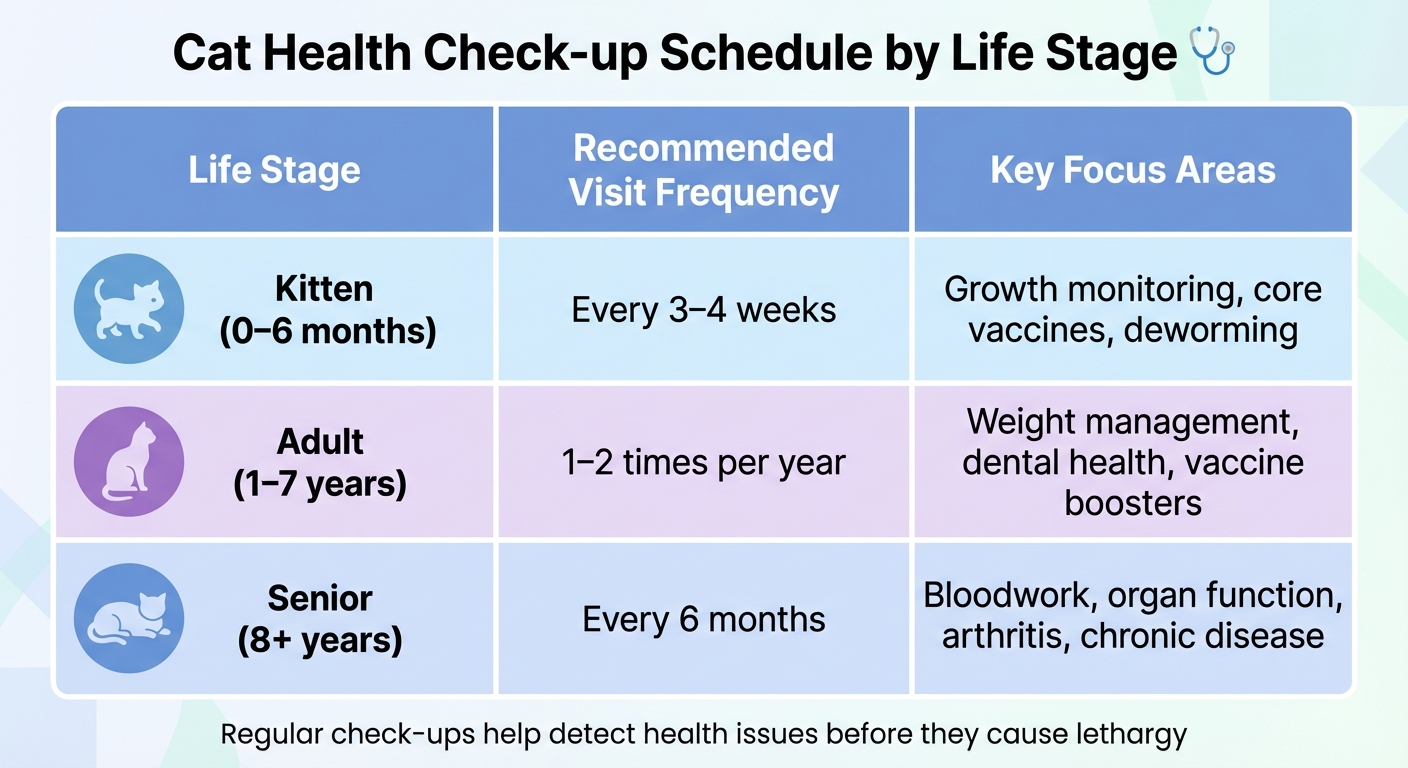
Cat Veterinary Visit Schedule by Life Stage
Keeping your cat active and healthy starts with regular vet visits and parasite prevention. Many health issues that lead to lethargy often develop without obvious signs, so early detection is key.
Annual Veterinary Visits
Cats, like humans, benefit from routine health check-ups. Adult cats generally need a wellness exam once a year, although some experts recommend going twice yearly to catch subtle health concerns that cats often hide. Kittens, on the other hand, require more frequent visits - every 3 to 4 weeks - until they reach 4 to 6 months of age. These visits help track their rapid growth, strengthen their immune systems, and ensure vaccinations are given on time.
Senior cats, those aged 8 and above, should see the vet every six months. As they age, they're more susceptible to chronic conditions like kidney disease, arthritis, and diabetes. For cats over 7 years old, routine bloodwork and urinalysis become essential to monitor organ function and identify metabolic changes early.
Dr Amanda Stevens, Medical Director at Veterinary Emergency Group, highlights the importance of regular visits:
Regular veterinary visits are the best way to catch problems before they cause severe lethargy.
| Life Stage | Recommended Visit Frequency | Key Focus Areas |
|---|---|---|
| Kitten (0–6 months) | Every 3–4 weeks | Growth monitoring, core vaccines, deworming |
| Adult (1–7 years) | 1–2 times per year | Weight management, dental health, vaccine boosters |
| Senior (8+ years) | Every 6 months | Bloodwork, organ function, arthritis, chronic disease |
In addition to these check-ups, staying proactive about parasite prevention is just as crucial.
Parasite Prevention
Parasites like fleas, ticks, and intestinal worms can sap your cat's energy and even transmit diseases. Fleas, for example, can lead to anaemia, while roundworms and hookworms interfere with nutrient absorption. To protect your cat, use a broad-spectrum monthly medication year-round - even if your cat stays indoors. Indoor cats are not entirely safe from parasites, as they can still be exposed through other pets or humans bringing pests inside.
Your veterinarian can also perform faecal exams during routine check-ups to detect intestinal parasites. Kittens, in particular, need frequent deworming to support their still-developing immune systems.
Dental Care for Overall Health
Dental health is often overlooked but plays a big role in your cat's overall well-being. Dental problems like gum disease, mouth ulcers, or jaw injuries can cause pain, leading to reduced activity and appetite. Cats suffering from dental issues might show signs like bad breath, drooling, or an unkempt coat due to decreased grooming.
To prevent these issues, regular brushing at home and professional dental cleanings are essential. Left untreated, dental infections can drain your cat's energy and lead to more serious health problems.
Dr Maggie Placer from EveryCat Health Foundation reminds cat owners:
With cats, you really have to pay attention to the little things - every clue matters.
Creating a Stress-Free Environment
When it comes to keeping your cat active and healthy, their environment plays a crucial role - just as much as their diet and exercise. Cats are experts at hiding stress, which means even small changes can lead to hidden signs of lethargy. A calm, predictable environment can go a long way in preventing stress-related inactivity.
Reducing Stress Triggers
Major household changes like moving, renovations, rearranging furniture, or introducing new family members can be unsettling for cats. Even social interactions, whether with other pets or visitors, can overwhelm sensitive felines.
To ease these stressors, stick to consistent routines for feeding and playtime, even during upheavals. If you're introducing a new pet or family member, take gradual steps like scent swapping - rubbing a cloth on the newcomer or playing recordings of baby sounds - before the actual introduction. For visitors, encourage them to let the cat approach on its own terms, offering treats from a distance to build positive associations.
Resource-related stress is another common issue. Placing food, water bowls, or litter trays in noisy, high-traffic areas can cause ongoing anxiety. If neighbourhood cats are entering your home through a standard cat flap, your cat may feel constantly on edge. Installing a microchip-operated cat flap can prevent these intrusions, helping your cat feel more secure.
Once stress triggers are under control, the next step is to create a safe, comforting space for your cat.
Providing a Safe and Calm Space
Cats thrive when they have access to elevated perches and secluded spots. High spaces like shelves or cat trees allow them to observe their surroundings, while enclosed areas like cardboard boxes or igloo beds provide a sense of safety. For older or less active cats, consider adding ramps or stairs to help them reach their favourite elevated spots without difficulty.
Familiar scents also play a big role in making cats feel secure. Cats mark their safe spaces with facial pheromones, so avoid over-cleaning these areas or washing all their bedding at once. If you're bringing in new furniture, cover it with a fabric throw that already carries your cat's scent to help it feel familiar. Synthetic pheromone diffusers, such as Feliway, can also create a calming atmosphere in the areas your cat frequents most.
In homes with multiple cats, use the "n+1" rule - provide one more set of resources (like food, water, or litter stations) than the number of cats in the household. Place these resources in separate, quiet locations to avoid competition. You can also use baby gates to create child-free zones, giving your cat peaceful areas to retreat to when needed.
A secure and peaceful environment can significantly reduce anxiety, setting the stage for better hydration and overall well-being.
Ensuring Easy Access to Fresh Water
Hydration is critical for your cat’s health, as dehydration can contribute to lethargy. Place water bowls in quiet, low-traffic spots like bedrooms or home offices to create a stress-free drinking environment.
Opt for wide, shallow bowls made of stainless steel, glass, or ceramic to prevent whisker fatigue, a common issue for cats. Many cats are drawn to running water, so investing in a pet fountain can encourage them to drink more by keeping the water fresh and oxygenated. A 4.5 kg (10-pound) cat typically needs about 1 cup (240 ml) of water daily.
In multi-cat households, ensure water bowls are placed in locations where one cat can’t block access for others. Clean the bowls daily with soap and water to prevent bacteria buildup, which might deter your cat from drinking. If your cat seems hesitant to drink, try adding a small amount of tuna juice (packed in water) or low-sodium, garlic-free chicken broth to make the water more appealing.
Conclusion
Key Takeaways
Keeping your cat energetic and healthy involves integrating a few practical habits into your daily routine. Start with the basics: a nutritious diet and proper hydration. Providing a balanced diet tailored to your cat's needs, along with access to fresh water - whether through a bowl, a fountain, or hydration supplements - can go a long way in preventing dehydration.
Exercise and mental engagement are just as crucial. Dedicate about 30 minutes each day to activities like interactive play, climbing structures, or food puzzles. These not only keep your cat physically active but also stimulate their natural hunting instincts, which is great for their mental health.
Don’t overlook routine veterinary care. Annual check-ups are vital for identifying potential health issues early. Conditions like heart disease, kidney problems, or diabetes can sap your cat's energy, but early detection can make a big difference. Staying up-to-date on vaccinations and parasite control also protects your cat from infections that can drain their vitality. By incorporating these steps into your routine, you can take a proactive approach to your cat’s overall well-being.
Taking Action for Your Cat's Health
Armed with these insights, it’s time to act. Keep an eye on your cat’s behaviour to spot early signs of trouble. Healthy cats usually sleep between 12 and 20 hours daily, but if your cat seems persistently lethargic even after resting, it could point to a deeper problem.
Pay attention to their usual activity levels and watch for any changes, like social withdrawal, neglecting grooming, or excessive hiding. If lethargy lasts more than 24 hours or is accompanied by symptoms like trouble breathing, vomiting, or loss of appetite, don’t wait - contact your veterinarian right away. Quick action can prevent small concerns from turning into major health issues.
FAQs
What should I do if my cat seems unusually tired or inactive?
If your cat seems more tired or less active than usual, pay close attention to any other signs, such as not eating, vomiting, showing weakness, or having trouble breathing. These could be warning signs of a health problem.
Make sure your cat has plenty of fresh water, a cosy place to rest, and a quiet environment to feel safe. If the lack of energy continues or gets worse, it's important to reach out to a veterinarian right away. Acting quickly can greatly impact your cat's overall health and recovery.
What can I do to make sure my cat gets a balanced diet and stays energetic?
To keep your cat lively and full of energy, it’s crucial to provide a well-balanced diet that meets their nutritional requirements. Make sure their meals include high-quality protein, along with essential vitamins and minerals. Be mindful not to overfeed or rely too heavily on treats, as excess weight can lead to sluggishness and other health issues.
Always ensure your cat has access to fresh, clean water. If you’re unsure about the right diet for your cat’s age, weight, or activity level, it’s a good idea to consult your veterinarian for tailored advice. Keeping an eye on their eating habits and weight regularly can help you spot any changes early, so you can address potential problems promptly.
What are the best ways to keep my cat active and full of energy?
Keeping your cat lively and full of energy is key to their happiness and health. One great way to do this is through interactive play. Toys like laser pointers or feather wands are perfect for mimicking hunting behaviours, which cats absolutely love.
Another idea is to provide vertical spaces - think cat trees or wall-mounted shelves. These give your cat a chance to climb, jump, and explore, satisfying their natural instincts while adding a bit of adventure to their day.
You can also try short training sessions to teach them simple tricks. This not only keeps their mind sharp but also strengthens your bond. When you're busy or away, battery-operated toys or puzzle feeders can step in to keep them engaged.
The trick is to figure out what your cat enjoys most and build regular playtime into their routine. This way, you’ll help them stay active, stimulated, and content.


