


Dogs can face serious breathing problems due to pollution, infections, or obesity. Protecting their respiratory health involves monitoring symptoms, creating a clean home, and regular vet visits.
Key Takeaways:
- Watch for signs like rapid or noisy breathing, gum discolouration, or laboured breathing.
- Keep your home clean with HEPA air purifiers, frequent vacuuming, and avoiding irritants like incense or harsh cleaners.
- Plan outdoor activities wisely, considering air quality and avoiding high-pollution times or areas.
- Maintain a healthy weight for your dog and ensure proper hydration and diet.
- Groom regularly to remove allergens and support airway health.
- Visit the vet regularly for respiratory check-ups, especially if your dog is a flat-faced breed.
Quick action and preventive care can help your dog breathe easier and avoid emergencies.
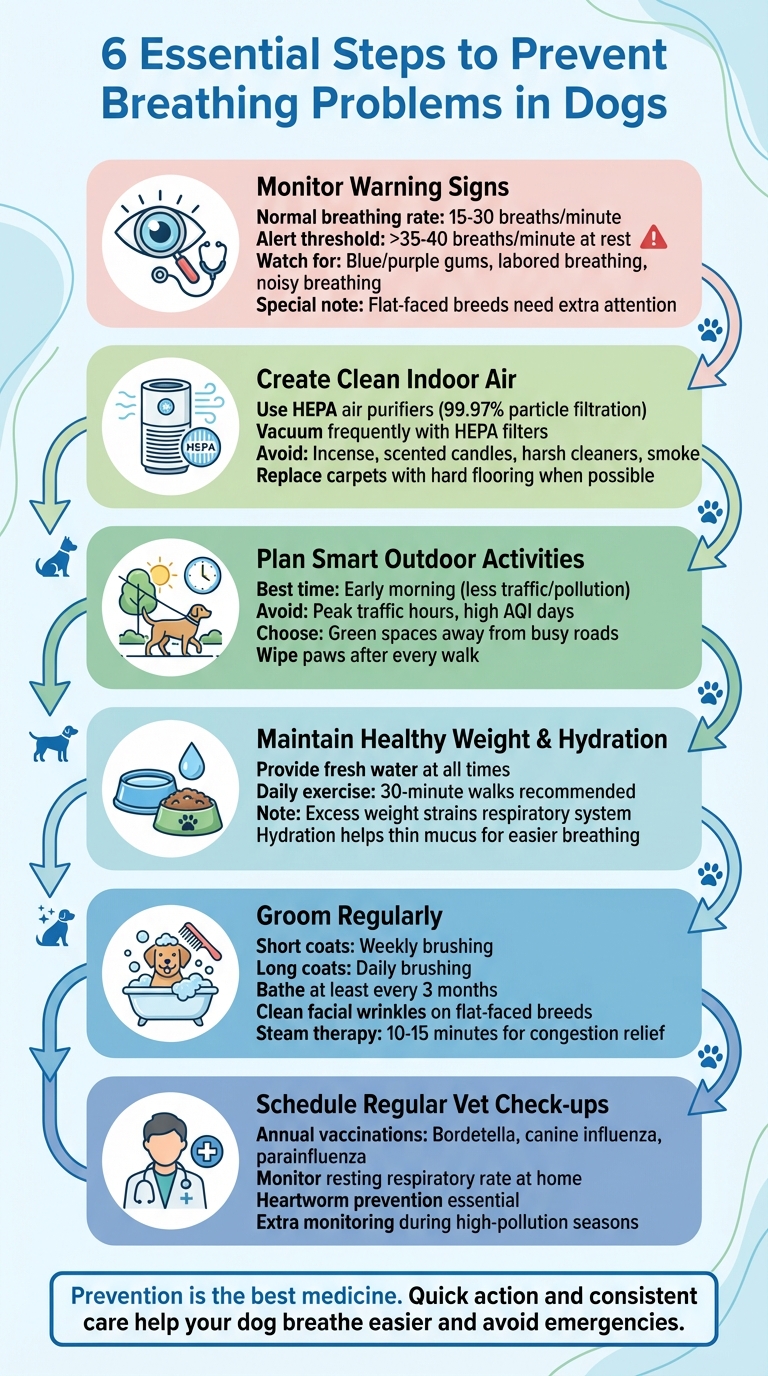
6 Essential Steps to Prevent Breathing Problems in Dogs
Identifying Early Warning Signs of Breathing Problems
Symptoms to Monitor
Pay close attention to your dog's breathing to catch early signs of trouble. One of the clearest indicators is laboured breathing (dyspnoeic). Dogs struggling to breathe may use their abdominal muscles or stand with their front legs apart and neck extended to open up their chest cavity for more air.
Another critical symptom is rapid breathing (tachypnoea) that doesn’t ease. A healthy dog typically breathes 15–30 times per minute. If your dog’s resting breathing rate regularly exceeds 35–40 breaths per minute, it’s a serious issue needing immediate veterinary attention. To check at home, observe your dog when they’re deeply asleep. Count how many times their chest rises in 30 seconds, then double that number.
Noisy breathing can also signal a problem. Be alert for wheezing, whistling (stridor), rasping, or a "goose-honk" cough. A dry, loud honk may point to tracheal collapse, particularly in smaller breeds, while a "wet" or bubbling cough could indicate fluid in the lungs. Additionally, examine your dog’s gums frequently. Healthy gums are bubblegum pink. If they turn blue, purple, grey, or stark white, it’s a sign your dog isn’t getting enough oxygen.
"A dog in true distress will stand with its neck extended and elbows flared out (abducted) to maximise the volume of the chest cavity. They will rarely lie down in this state because it makes breathing harder." - Rexvet
Flat-faced breeds like Pugs, Bulldogs, French Bulldogs, and Shih Tzus need special attention. Their anatomy makes them prone to Brachycephalic Airway Obstructive Syndrome, where even mild panting can cause throat swelling and dangerous obstructions. What might seem like "normal" snoring in these breeds could actually reflect ongoing breathing challenges. Any increase in these sounds is a red flag. Other concerning symptoms include persistent coughing (wet or dry), excessive drooling, nasal discharge (clear, yellow, or green), lethargy, and reluctance to exercise.
If these symptoms continue or worsen, prompt veterinary care is essential.
When to Visit the Vet
Certain signs demand immediate action. Persistent rapid breathing or changes in gum colour require urgent attention. If your dog is panting at rest despite being in a cool environment, it’s time to see the vet. Immediate care is also necessary if your dog assumes an "orthopnoeic position" - standing or sitting with their neck stretched out, nostrils flared, and elbows pointed outward. Dogs in respiratory distress often avoid lying down because it makes breathing even harder.
"Heavy breathing in dogs is often a medical emergency. If your dog is breathing heavily for no apparent reason... consult a vet immediately." - Dr. Katie Grzyb, DVM, PetMD
Seek veterinary help if you notice gum discolouration, abdominal heaving, or if your dog becomes restless and struggles to find a comfortable position. During the trip to the vet, keep your car cool with air conditioning, as heat can worsen breathing issues. If your dog can’t stand, lay them on their stomach with a pillow under their chin and their neck extended. Speak softly and move calmly to avoid adding stress and increasing their oxygen demand.
Quick action and regular vet check-ups are key to protecting your dog’s respiratory health.
What to Do If Your Dog Has Trouble Breathing
Creating a Healthy Indoor Environment
The air quality inside your home plays a crucial role in your dog's respiratory health. A clean indoor environment, combined with regular health checks and attentive care, can help reduce respiratory risks. Since dogs spend most of their time close to the floor where dust and particulate matter tend to settle, they are particularly vulnerable to these irritants. This is especially true for brachycephalic breeds, which often require extra precautions to maintain their respiratory well-being.
Improving Indoor Air Quality
Using a HEPA air purifier is one of the most effective ways to improve indoor air quality. Choose a purifier with a Clean Air Delivery Rate (CADR) that covers at least two-thirds of the room’s square footage. Place it centrally, at least 15 cm away from walls, and run it continuously. HEPA filters are designed to trap 99.97% of airborne particles as small as 0.3 microns, including pet dander, dust mites, and pollen.
"An air purifier is a necessity for pets, not a luxury." – Dr. Nameeta Nadkarni, Veterinary Soft Tissue Surgeon
Minimise irritants that can worsen your dog's respiratory issues. Avoid incense, scented candles, perfumes, essential oil diffusers, and harsh chemical cleaners, as they release volatile organic compounds (VOCs) that can cause respiratory distress. Opt for pet-safe, fragrance-free cleaning products instead. If someone in your household smokes, ensure that all tobacco use occurs outdoors, as smoke can aggravate respiratory problems and increase the risk of infections and even cancer.
Regular cleaning is key to reducing allergens in your home. Vacuum frequently using a vacuum cleaner equipped with a HEPA filter to prevent pet dander and dust from recirculating. Wash your dog’s bedding often and replace HVAC filters on schedule to limit trapped pollutants. If possible, replace wall-to-wall carpeting with hard flooring like wood or tile, which doesn’t trap allergens as easily.
Once your indoor environment is optimised, consider adjusting your habits during certain seasons to provide extra protection for your dog’s respiratory health.
Managing Seasonal and Environmental Allergies
Pay close attention to air quality levels, particularly during high-pollution seasons. For example, in late 2025, Delhi’s Air Quality Index (AQI) often ranged between 300 and 400 - nearly 20 times the acceptable limit - with PM2.5 levels far exceeding safe thresholds in urban areas. During such times, keep windows and doors closed to block polluted air from entering your home.
"Keep an eye on the AQI level while taking your dog out, keep your house doors and windows closed, vacuum your home frequently, and make sure you change your HVAC filter often." – Dr. Gautam Anand, Senior Veterinary Consultant, Dr. Anand's Pet Clinic
On days with high pollen levels or smog, limit your dog’s outdoor activities. After short walks, rinse their paws, eyes, and nose with saline water to remove trapped irritants. A hypoallergenic bath can also help clear pollutants from their coat. When outdoor air quality improves, briefly open windows to ventilate your home and release any trapped indoor chemical residues - but be sure to close them again as pollution levels rise.
Planning Outdoor Activities for Better Breathing
When planning outdoor time for your dog, it’s important to balance exercise needs with air quality concerns. Instead of sticking to a rigid schedule, adjust your dog’s walks based on the day’s air quality and environmental conditions.
Best Times for Dog Walks
Choose the time of day when pollution levels are at their lowest for your dog’s walks. If pollution is severe, keep outdoor trips short and focused on essential breaks.
"The best time to take your pet out in severe air quality is early in the morning. There is less traffic, almost no factory pollution, and considerably less noise pollution to discomfort the animals at that hour." – Dr. Gautam Anand, Senior Veterinary Consultant
However, during winter, early mornings and late evenings can be tricky due to temperature inversions that trap pollutants near the ground. In such cases, mid-morning or afternoon walks are often safer. Avoid taking your dog out during peak traffic hours or engaging in high-intensity activities when air quality is poor, as faster breathing can cause more toxins to enter their lungs.
"Opt for normal walks at a time when smog is less. Don't make the pets run as that will further increase their chances of breathing toxic air." – Dr. Vinod Sharma, Veterinarian
By adjusting your dog’s walking schedule, you can minimise exposure to harmful pollutants.
Choosing Safe Walking Locations
The location of your dog’s walk is just as important as the timing. Opt for green spaces or quiet residential areas away from busy roads, construction zones, and places where waste is burned. Since dogs breathe closer to the ground, they are more exposed to heavy particles that settle there. After each walk, wipe your dog’s paws to remove dust and allergens - this also supports indoor allergen reduction efforts.
On days when the AQI reaches the "severe" range, consider moving extended outdoor activities indoors. Puzzle feeders and similar toys can keep your dog mentally engaged while staying safe from harmful air.
sbb-itb-5205b1e
Diet and Hydration for Respiratory Health
Diet and hydration play a crucial role in supporting your dog's respiratory health. A well-balanced diet can strengthen their immune system, while staying hydrated helps thin mucus, making it easier for your dog to breathe. Together with environmental adjustments, proper nutrition and hydration help protect lung function and overall respiratory well-being.
Foods That Support Respiratory Health
Feeding your dog a balanced diet is essential for boosting their immunity and supporting lung function. However, avoid introducing herbal remedies without consulting your veterinarian, as some could do more harm than good. For breeds prone to breathing difficulties, such as Pugs or French Bulldogs, it's especially important to seek professional advice before adding any respiratory supplements to their diet.
"Excess weight puts strain on a dog's respiratory system, making it harder for them to breathe." – Truss Vet
Keeping Your Dog Hydrated
Proper hydration is just as important as a good diet when it comes to respiratory health. Always ensure your dog has access to fresh, clean water, as it helps thin mucus and makes breathing easier. According to the Merck Veterinary Manual, adequate water intake is vital for thinning secretions. This becomes particularly important during hot weather or after physical activity, as panting increases your dog's need for hydration.
Weight Management for Overweight Dogs
Excess weight can significantly strain a dog's respiratory system, making breathing more difficult. For dogs with conditions like tracheal collapse - often seen in breeds like Yorkshire Terriers, which make up 50% to 66% of reported cases - maintaining a healthy weight is critical. A combination of a balanced diet and regular exercise, such as a 30-minute daily walk, can help your dog achieve and maintain a healthier weight. Even a small amount of weight loss can make a noticeable difference in their breathing comfort. These dietary and hydration practices, paired with regular grooming, contribute to better respiratory health and overall well-being.
Grooming and Hygiene for Respiratory Health
Keeping your dog well-groomed isn't just about appearance - it plays a key role in maintaining their respiratory health. Regular grooming helps clear away dust, allergens, and loose hair that can irritate their airways, especially in areas with high pollution levels.
In addition to routine grooming, there are specific practices that focus on nasal and airway care, which can further support your dog’s ability to breathe comfortably.
Bathing and Brushing Routines
How often you groom your dog depends on their coat type. For dogs with short, smooth coats, weekly brushing with a rubber brush followed by a bristle brush works best. Dogs with short, dense fur benefit from weekly sessions using a slicker brush to remove tangles. If your dog has a long or silky coat, daily brushing is essential to prevent mats and clear out allergens that may collect in their fur.
Bathing is another important step. Aim to bathe your dog at least once every three months, though dogs that spend more time outdoors or have sensitive skin may need baths more frequently. Before bathing, brush your dog thoroughly to remove loose hair and mats. Use shampoos made specifically for pets, as human shampoos often contain fragrances or chemicals that can irritate your dog’s respiratory system.
"Dogs' skin and coat shed off the largest amounts of particulate matter while being blown dry."
Professional groomer Jodi Murphy recommends thorough de-shedding during baths to trap excess particulate matter.
Don’t forget to clean your dog's paws after walks to reduce allergen exposure. For breeds with facial wrinkles, such as Pugs or Shar Peis, it’s important to clean between the folds with a damp cotton pad and dry thoroughly to prevent bacterial growth that could impact breathing.
Nasal and Airway Care
Caring for your dog’s nasal passages and airways can make a noticeable difference in their respiratory comfort.
Steam therapy is a simple way to ease congestion. Let your dog sit in a steamy bathroom for 10–15 minutes by running a hot shower. This helps clear their nasal passages and soothes irritation.
"Adding moisture to the air can help soothe your dog's irritated throat and nasal passages."
Using a cool-mist humidifier is another option, but ensure it’s cleaned regularly to avoid mould growth, which could worsen respiratory problems. If your dog is wheezing, you can gently inspect their throat with a flashlight for any visible obstructions - but don’t attempt to remove anything yourself.
Hygiene at home is just as important. Wash your dog’s bedding, toys, and food bowls frequently to minimise allergens and germs. When cleaning your home, opt for a vacuum with a HEPA filter. Unlike sweeping, which can stir up particles, HEPA filters effectively trap allergens and keep the air cleaner.
Regular Veterinary Check-ups
Routine veterinary visits are essential for catching health issues before they escalate. Dr Stacy D. Meola highlights how pets often hide discomfort until it becomes severe:
"Dogs and cats are very good at compensating and hiding problems until they can't anymore. Most of the time, the process has been going on for a little while, but they will acutely go from fine to not fine in a very short time."
During these check-ups, vets perform several key assessments. They use a stethoscope to listen for irregular lung and heart sounds, check the respiratory rate, and examine gum colour to detect oxygen deficiencies. These visits also help track overall health, including weight management. This proactive care ensures that your dog receives personalised attention, especially during challenging conditions.
Check-ups During High-Pollution Seasons
In regions prone to seasonal pollution or pollen surges, regular check-ups become even more vital. If your dog has allergies or sensitivities to dust, smoke, or other irritants, scheduling a vet visit during these periods is a smart move. Your vet can adjust care plans and closely monitor respiratory health during these times.
Between visits, keep an eye on your dog's resting respiratory rate. If it consistently exceeds 30 to 40 breaths per minute, consult your vet immediately. By combining routine exams with at-home monitoring, you can stay ahead of potential issues and maintain your dog's well-being.
Additionally, ensuring your dog’s vaccinations are up to date plays a key role in protecting respiratory health.
Vaccinations and Preventive Care
Vaccinations are critical for preventing respiratory infections. Make sure your dog receives annual vaccines for Bordetella (kennel cough), canine influenza, and parainfluenza, especially if they visit dog parks or boarding facilities. Heartworm prevention is equally important, as heartworms can obstruct blood flow between the heart and lungs, causing severe respiratory problems.
For brachycephalic breeds like Pugs and Bulldogs, respiratory risks are higher due to their narrowed nostrils and elongated soft palates. Regular monitoring and using a harness instead of a collar can help reduce airway strain.
Conclusion
Taking care of your dog's respiratory health involves consistent, thoughtful attention to their environment and lifestyle. Simple steps like ensuring clean air at home, opting for walks during times when pollen levels are low, maintaining a healthy weight, grooming frequently, and using equipment that minimises airway pressure can make a big difference.
As Camille Arneberg from Pet Honesty aptly puts it:
"While medicine may save your dog's life, the best long-term solution is prevention."
This highlights the importance of staying proactive. Regular vet visits are key to catching potential problems early and avoiding emergencies. Keeping up with vaccinations and heartworm prevention also plays a crucial role in safeguarding your dog's lung health.
FAQs
What are the signs that my dog might be having trouble breathing?
If your dog seems to be struggling to breathe, watch out for signs like fast or shallow breaths, panting with an open mouth, or gums and tongue that appear bluish. You might also notice symptoms such as wheezing, snorting, or other abnormal breathing noises. Additionally, your dog’s abdomen might move more noticeably with each breath, and they could stretch their head and neck forward to make breathing easier. Weakness or even collapsing can also occur.
If you spot any of these warning signs, reach out to your veterinarian right away. Acting quickly can help address the problem before it becomes more serious.
How can I improve the air quality at home to support my dog’s breathing?
Improving the air quality inside your home isn’t just good for you - it’s essential for your dog too. Creating a clean, allergen-free space can make a big difference in their respiratory health and overall comfort.
Start with proper ventilation. Let fresh air circulate to cut down on indoor pollutants. Adding an air purifier with a HEPA filter can also work wonders by trapping pet dander, dust, and other allergens. This is especially helpful if your dog has a sensitive respiratory system.
Regular grooming is another must. Brushing and bathing your dog can significantly reduce shedding and dander. Also, avoid smoking indoors and stick to non-toxic cleaning products to keep harmful chemicals out of the air. Managing humidity levels is equally important - too much moisture can lead to mould and dust mites, both of which can trigger breathing issues.
In short, a clean, well-ventilated, and allergen-free home can help your dog breathe easier and stay healthier.
How does regular grooming help improve my dog's breathing?
Taking care of your dog's coat isn't just about keeping them looking their best - it plays a crucial role in their respiratory health too. Regular grooming helps clear away dust, dirt, and allergens that can settle in their fur. Left unchecked, these particles can irritate their airways or even lead to breathing problems. Grooming also gives you a chance to notice early warning signs, like wheezing or coughing, so you can address any potential health concerns quickly.
Beyond respiratory benefits, keeping your dog's coat clean and tidy can prevent skin infections and cut down on excessive shedding. This not only keeps your pet comfortable but also contributes to a healthier living space for both of you. Simple steps like brushing regularly, using mild shampoos during baths, and trimming overgrown fur can go a long way in ensuring your dog's overall health and happiness.


