


Seeing your dog vomit yellow or white foam in the morning can be alarming, but it’s often linked to a condition called Bilious Vomiting Syndrome (BVS). This happens when bile irritates an empty stomach, causing vomiting. Dogs with BVS usually act normal afterward, showing no signs of illness.
Here’s what you need to know:
- What it looks like: Yellow or white foamy vomit, usually in the early morning.
- Why it happens: Long gaps between meals allow bile to irritate the stomach lining.
- How to manage it: Feed smaller, more frequent meals, including a late-night snack to reduce fasting time.
- When to see a vet: If vomiting is persistent, includes blood, or if your dog shows signs of lethargy, dehydration, or abdominal pain.
While BVS is not dangerous when managed properly, it’s important to rule out more serious issues like blockages or pancreatitis with your vet. Adjusting meal timing and, if needed, medications can help keep your dog symptom-free.
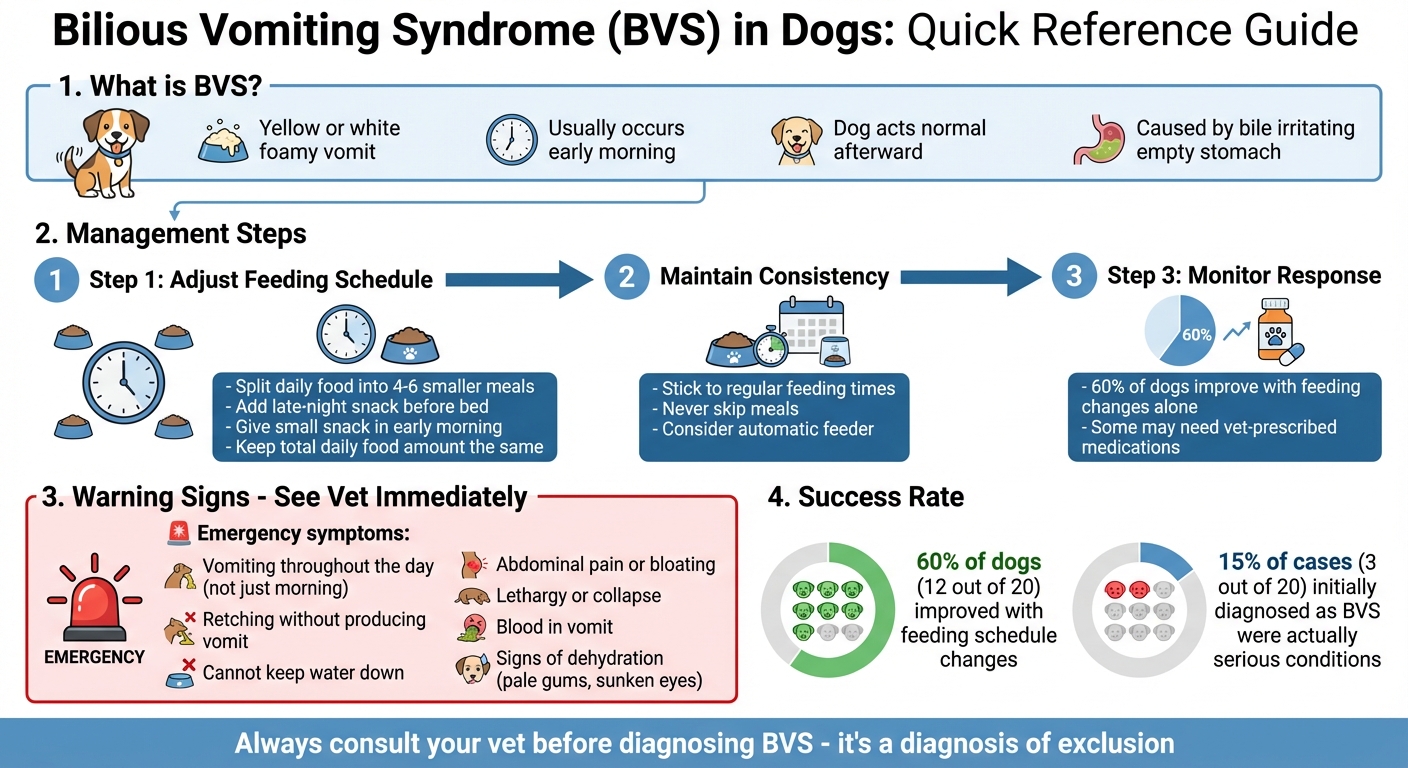
How to Manage Bilious Vomiting Syndrome in Dogs: Feeding Schedule and Warning Signs
What Is Bilious Vomiting Syndrome In Dogs? - Ask A Pet Vet
sbb-itb-5205b1e
What Is Bilious Vomiting Syndrome?
Bilious Vomiting Syndrome (BVS), also called reflux gastritis or duodenal‐gastric reflux, occurs when a dog vomits bile due to irritation caused by an empty stomach. This happens when bile from the duodenum - the first section of the small intestine - flows backward through the pyloric sphincter into the stomach.
The vomit in BVS is typically foodless, appearing as yellow or white foam or froth. What sets BVS apart from other types of vomiting is that affected dogs generally remain healthy, with normal appetite and energy levels. A diagnosis of BVS is made only after ruling out more serious issues like intestinal blockages, pancreatitis, or parasitic infections. With this understanding, we can dive into the role bile plays in your dog’s body and why it leads to these symptoms.
What Bile Does in Your Dog's Body
Bile, a yellow-green fluid produced by the liver and stored in the gallbladder, plays a key role in digestion. Its main function is to break down fats into fatty acids for absorption. Bile contains water, bile acids, cholesterol, fatty acids, and electrolytes. While crucial for digestion, bile is highly alkaline and can irritate the stomach lining if no food is present to neutralise it. Dr. Sara Jablonski, Assistant Professor in Small Animal Clinical Sciences at Michigan State University, explains:
"The bile that comes from the small intestine is damaging to the stomach when it's empty."
Without food, bile salts can disrupt the protective gastric lining, leading to inflammation, or gastritis. This irritation triggers the vomiting reflex seen in BVS.
What the Vomit Looks Like and When It Happens
BVS-related vomit is typically bright yellow liquid, white foam, or clear frothy fluid. The yellow or green colour comes directly from bile. Since the stomach is empty, no food particles are present. These episodes usually occur early in the morning or late at night after long periods of fasting, aligning with the stomach’s natural activity during extended food-free intervals. Before vomiting, dogs may show signs of nausea, such as lip-smacking, drooling, or stomach gurgling (borborygmi).
Why Your Dog Acts Normal Afterward
One puzzling aspect of BVS is how quickly dogs bounce back after an episode. Your dog may vomit yellow foam but then act completely fine - wagging their tail, eager for breakfast, and showing no other signs of illness. This quick recovery happens because vomiting "resets" the stomach’s motility to its normal daytime function. As Dr. Craig Webb, Professor in the Clinical Sciences Department at Colorado State University Veterinary Teaching Hospital, notes:
"The dog will usually feel fine after vomiting."
Once the bile is expelled, the irritation subsides, and nausea disappears. Eating a meal further soothes the stomach, helping your dog feel better almost immediately. While this reset provides temporary relief, managing the condition appropriately is crucial to prevent future episodes.
What Causes Bilious Vomiting Syndrome?
Bilious Vomiting Syndrome (BVS) arises from a combination of prolonged fasting, bile reflux, and disrupted stomach contractions. While veterinarians have a solid grasp of the processes involved, the exact reason why certain dogs develop BVS remains uncertain.
How Gaps Between Meals Lead to Vomiting
Going too long without food is a major factor in triggering BVS. When a dog fasts for an extended period, there’s no food in the stomach to counteract digestive fluids. This allows bile that refluxes into the stomach to irritate its lining. These episodes often occur in the early morning because the overnight fast is the longest stretch without food.
Prolonged fasting also affects the stomach’s natural contractions, which are responsible for clearing digestive fluids. When this motility is disrupted, bile and other duodenal fluids can flow back into the stomach. A study involving 20 dogs with BVS revealed that 60% (12 out of 20) showed improvement when they were fed more frequently, including a late-night snack. This highlights how meal timing plays a direct role in managing the condition.
Bile Reflux and Stomach Acid
BVS is linked to a malfunction of the pyloric sphincter, the muscular valve that separates the stomach from the duodenum. When this valve doesn’t function properly, intestinal contents, including bile, can flow back into the stomach. Dr. Sara Jablonski from Michigan State University explains:
"What is potentially happening is that, at certain times, pressure in the stomach (called intragastric pressure) isn't high enough to prevent the backflow of material from the duodenum into the stomach. The bile that comes from the small intestine is damaging to the stomach when it's empty."
Bile salts can damage the stomach’s protective lining, leaving it vulnerable to irritation from gastric acid. This combination of bile irritation and weakened mucosal defences leads to inflammation, a condition known as reflux gastritis. This inflammation can trigger vomiting, somewhat similar to acid reflux in humans, although it occurs one valve lower in the digestive system.
Why the Underlying Cause Remains Unclear
Even with an understanding of how bile reflux causes vomiting, veterinarians often struggle to determine why some dogs develop BVS while others do not. The root cause remains elusive.
BVS is considered a functional disorder, meaning it results from abnormal stomach contractions rather than an infection or structural issue. Because there’s no specific pathogen or injury to identify, the condition is diagnosed only after ruling out other potential causes - a process known as a diagnosis of exclusion. This step is critical, as failure to respond to meal timing adjustments could indicate a more serious underlying condition. In the same study, 15% (3 out of 20) of dogs initially diagnosed with BVS were later found to have severe issues like gastric adenocarcinoma or liver disease instead.
How Veterinarians Diagnose BVS
Diagnosing Bilious Vomiting Syndrome (BVS) involves a thorough and structured process. Vets rely on a combination of your pet's medical history, a physical examination, and targeted tests to rule out other potential causes before confirming BVS.
What Your Vet Needs to Know About Symptoms
Your vet will start by gathering detailed information about your dog's vomiting episodes. Timing is a key factor since BVS often occurs early in the morning or after long periods without food. You'll need to describe the vomit - whether it appears as yellowish fluid, clear liquid, or frothy foam. Your vet will also ask about your dog’s behaviour after vomiting and any signs leading up to it, such as lip-smacking, drooling, or gagging. Additionally, they’ll want to know about your dog’s diet and whether they chew on non-food items.
Tests Your Vet May Perform
Once the history is reviewed, your vet will carry out a full physical exam. This includes checking vital signs, gently palpating the abdomen for signs of discomfort or masses, and assessing hydration through skin elasticity and gum colour.
To dig deeper, blood tests are often conducted. A complete blood count can reveal infections or anaemia, while a chemistry panel evaluates liver and kidney functions to rule out metabolic issues. Urinalysis and faecal tests are also useful in identifying potential systemic problems or parasites.
Imaging techniques like X-rays and ultrasounds are used to exclude conditions such as blockages, pancreatitis, inflammatory bowel disease, or tumours. If symptoms persist despite treatment, your vet may recommend advanced procedures like endoscopy or biopsies to investigate for cancer or severe inflammation. This step-by-step process ensures that all serious conditions are ruled out.
Why BVS Is Diagnosed by Ruling Out Other Diseases
BVS is a diagnosis of exclusion, meaning it’s confirmed only after eliminating other potential causes of chronic vomiting. There’s no single test for BVS, so vets rely on this methodical approach. Dr. Sara Jablonski, Assistant Professor in Small Animal Clinical Sciences at Michigan State University, explains:
"BVS is a clinical diagnosis of exclusion, as you have to make sure that it's not something more serious that requires a different treatment approach."
This careful process is essential because BVS symptoms can mimic those of more severe conditions like pancreatitis, Addison’s disease, food allergies, or even gastric cancer. For instance, a study at Colorado State University Veterinary Teaching Hospital evaluated 20 dogs suspected of having BVS. While 12 dogs responded well to treatment, further testing revealed that three cases were actually due to gastric adenocarcinoma and liver disease. This systematic approach helps ensure that serious conditions are not overlooked.
How to Manage Bilious Vomiting Syndrome
Once your vet has diagnosed Bilious Vomiting Syndrome (BVS), the focus shifts to preventing long periods of an empty stomach. This typically involves tweaking your dog's feeding routine and, if needed, introducing vet-prescribed medications. Most dogs respond well to these steps, but success hinges on sticking to a consistent daily schedule. This approach builds on the diagnostic process discussed earlier.
Adjusting Your Dog's Feeding Schedule
After confirming BVS, one of the first changes involves meal timings. The aim is to reduce the overnight fasting period that allows bile and stomach acid to build up. Instead of feeding your dog once or twice a day, split their daily food portion into four to six smaller meals. This way, your dog’s stomach isn’t empty for long stretches.
A late-night snack can be particularly effective. Dr. Craig Webb from Colorado State University Veterinary Teaching Hospital explains:
"The best first attempt at treatment is to feed the dog a portion of dinner as a 'late-night snack,' hopefully reducing the length of the overnight fast".
Some dogs might also benefit from a small snack first thing in the morning, followed by their full breakfast shortly after. High-protein foods may be helpful, as they tend to stay in the stomach longer.
In a study conducted at Colorado State University, 60% of dogs (12 out of 20) showed improvement with frequent feedings, late-night snacks, and supportive medications. Dr. Deborah E. Linder, DVM, MS, DACVIM (Nutrition), adds:
"More frequent feedings should not mean additional food, but spreading out what she currently receives into more feedings".
Medications That May Help
If dietary changes alone aren’t enough, your vet might prescribe medications to support your dog’s digestive health. These medications generally fall into three categories:
- Prokinetics: Improve stomach motility and reduce bile reflux.
- Gastric acid reducers: Lower stomach acidity to minimise irritation.
- Gastroprotectants: Coat and protect the stomach lining.
These medications are prescribed based on your dog’s specific needs and must be used under veterinary supervision. They are often paired with dietary adjustments to maximise their effectiveness.
The Importance of Consistency
Consistency is crucial in managing BVS. A strict feeding schedule prevents bile from accumulating and stops the cycle of vomiting. Missing even one meal can trigger a return of symptoms, as an empty stomach leads to vomiting, which can then cause nausea and meal refusal, worsening the problem.
Dr. Callum Turner, DVM, highlights the importance of routine:
"These cases can be difficult to manage and it is very easy to throw the whole gastrointestinal tract off by missing a feeding time or something different being consumed".
Sticking to a regular schedule of small, frequent meals is often the most effective solution. While medications can help, they won’t work well if the root cause - fasting - isn’t addressed. By keeping your dog’s stomach from being empty for long periods, you can significantly reduce the chances of future episodes.
When Vomiting Means Something More Serious
Vomiting in dogs isn’t always harmless. While Bilious Vomiting Syndrome (BVS) often involves dogs throwing up yellow foam in the morning and quickly returning to normal, there are certain warning signs that signal it’s time to take action.
Warning Signs That Need Immediate Attention
If your dog shows any of these symptoms, it’s no longer just BVS, and you should contact your vet right away:
-
Vomiting throughout the day: Persistent vomiting is a red flag. Dr. Sara Jablonski, Assistant Professor in Small Animal Clinical Sciences at Michigan State University, notes:
"If they are also experiencing things like diarrhoea, vomiting at other times of the day, or a prolonged decrease or change in appetite, this can be a red flag that there's something else going on".
- Retching without results or inability to hold down water: If your dog is dry-heaving or can’t even keep water down, it could signal a blockage or bloat. This is an emergency.
- Abdominal pain: Symptoms like pacing, hunching, or visible bloating are not typical of BVS and could point to pancreatitis or an obstruction.
- Lethargy or collapse: Unlike BVS, where dogs bounce back quickly, prolonged weakness, depression, or collapse is cause for concern.
- Blood in vomit: Any amount of blood in vomit warrants immediate veterinary attention.
- Signs of dehydration: Look out for pale gums, sunken eyes, or skin that doesn’t snap back when pinched - these can develop quickly, especially in puppies.
Other Conditions That Can Cause Vomiting
BVS is diagnosed only after ruling out more serious health issues. According to veterinary experts:
"Intestinal blockages and acute pancreatitis are two of the most common reasons why dogs would throw up yellow foam".
Here are some conditions that can mimic BVS:
-
Intestinal obstructions: Foreign objects in the digestive tract can initially cause morning vomiting. Dr. Jablonski explains:
"With an intestinal blockage, for example, initially, your dog could just be vomiting in the early morning and feeling okay. But after a short period of time, they will probably not be eating and not acting well at all".
- Acute pancreatitis: This condition involves severe inflammation of the pancreas, leading to persistent vomiting, abdominal pain, and lethargy.
- Addison’s disease: A hormonal imbalance that can cause ongoing vomiting and weakness.
- Liver or kidney disease: Vomiting can also signal organ dysfunction, often accompanied by other systemic symptoms.
- Gastric cancer: A study of 20 dogs initially thought to have BVS revealed that some were later diagnosed with gastric adenocarcinoma, a type of stomach cancer.
- Poisoning: Ingesting toxic substances requires immediate medical attention.
Recognising these possibilities helps pet owners act quickly when something more serious is at play.
When to Visit the Vet Immediately
If your dog’s vomiting doesn’t follow the typical BVS pattern - early morning, yellow foam, and a quick recovery - consult your vet without delay. Emergency care is essential if your dog:
- Cannot keep water down
- Is retching without producing vomit
- Shows signs of bloating or abdominal pain
- Appears lethargic or collapses
- Vomits blood
- Develops a fever
These symptoms can indicate serious conditions that worsen quickly without treatment. Prompt action can make all the difference.
What to Expect Long-Term
Why BVS Can Be Controlled Successfully
Once you've adjusted your dog's feeding schedule, the long-term focus shifts to maintaining these improvements. Bilious Vomiting Syndrome (BVS) is rarely a severe condition and can be managed effectively with consistent feeding routines and, if necessary, veterinary-prescribed medications. Importantly, BVS does not cause lasting harm to your dog's digestive system or lead to serious complications.
Most dogs experience significant relief from symptoms when their feeding schedule is adjusted. Research highlights that sticking to a regular meal routine can lead to noticeable improvements. It's essential to understand that BVS is more about management than a progressive disease. While some dogs might require lifelong medication to regulate gastric motility or acidity, their overall outlook remains excellent.
How to Keep Symptoms from Coming Back
Long-term success depends on unwavering dedication to your dog's feeding routine. Consistency is the backbone of symptom management. If the routine is disrupted, even briefly, BVS symptoms are likely to return. Once you've identified a schedule that works - whether it's a late-night snack, an early-morning meal, or dividing portions throughout the day - sticking to it becomes a non-negotiable part of your dog's care.
Dr. Craig Webb, a professor at Colorado State University Veterinary Teaching Hospital, advises:
"The best first attempt at treatment is to feed the dog a portion of dinner as a 'late-night snack,' hopefully reducing the length of the overnight fast".
For added convenience, tools like automatic feeders can help maintain this routine. Dr. Jennifer Coates, DVM, suggests:
"Even when dogs with bilious vomiting syndrome are treated with medications, they should continue to eat a late evening and early morning meal. If this is inconvenient, an automatic feeder is a worthwhile investment".
Ensuring your dog's stomach isn’t left empty for long periods is the key to keeping symptoms at bay. Medications, if prescribed, should also be continued as directed. The goal of long-term management is preventing symptoms from recurring, rather than just addressing them when they arise. With consistency and care, most dogs with BVS can lead symptom-free lives.
Conclusion: What Dog Parents Should Remember
How to Recognize and Manage BVS
BVS, or Bilious Vomiting Syndrome, is a harmless condition when managed properly. The tell-tale signs include yellow or white foamy vomit, usually in the early morning, with your dog otherwise acting completely normal. If this sounds familiar, the solution often lies in tweaking your dog's feeding routine to avoid long overnight gaps between meals. A small snack before bedtime and an early breakfast can work wonders in keeping symptoms at bay.
It's important to let your vet rule out more serious conditions before settling on a BVS diagnosis. Self-diagnosing isn't safe - consult your vet, who may recommend blood tests, imaging, and a thorough symptom history to confirm the condition.
Once diagnosed, routine is key. Stick to the feeding schedule that works for your dog. If your vet prescribes medication, follow their instructions carefully. In a study of 20 BVS cases, 60% of dogs showed improvement with treatment. With consistent care, many dogs can live without symptoms. Stay alert, but also trust that with the right steps, your dog can thrive.
When to Seek Help Immediately
Although BVS symptoms are usually mild, some warning signs call for urgent veterinary attention. If your dog shows signs like retching without producing fluid, a bloated abdomen, collapse, or extreme lethargy, visit your vet immediately. These could point to serious conditions like bloat or intestinal blockages. Dr. Sara Jablonski advises:
"If they are also experiencing things like diarrhoea, vomiting at other times of the day, or a prolonged decrease or change in appetite, this can be a red flag that there's something else going on".
Other red flags include persistent vomiting, inability to keep food or water down, signs of dehydration (like pale gums or sunken eyes), or any unusual behaviour. Puppies, in particular, are at higher risk due to rapid dehydration and should be seen by a vet without delay. Any symptoms that deviate from the typical brief morning episode of BVS warrant immediate veterinary care.
FAQs
What are the key signs that my dog might have Bilious Vomiting Syndrome (BVS)?
One of the key indicators of Bilious Vomiting Syndrome (BVS) is when a dog vomits a yellowish or white, foamy fluid. This typically happens early in the morning or late at night, times when the dog's stomach is empty. The yellow colour and frothy texture come from bile, which irritates the stomach lining after long periods without food.
Before the vomiting occurs, dogs may display signs of nausea, such as excessive drooling, licking their lips, or hesitating to eat. Interestingly, their appetite often bounces back soon after they vomit, and they usually return to their normal behaviour. If these episodes happen frequently and follow this specific pattern, it might point to BVS.
How can I adjust my dog's feeding schedule to prevent yellow or white foam vomiting in the morning?
Bilious Vomiting Syndrome (BVS) in dogs happens when their stomach stays empty for too long, causing bile to irritate the stomach lining. Tweaking your dog's feeding routine can often help manage this condition.
- Offer a bedtime snack: Give your dog a small portion of their regular food about 30 minutes before bedtime. This helps prevent an empty stomach overnight.
- Serve breakfast promptly: Feed your dog as soon as you wake up to minimise the fasting period.
- Divide meals into smaller portions: Spread your dog's daily food into 2–3 smaller meals, such as breakfast, an evening meal, and a late-night snack. This reduces the time between feedings.
Stick to your dog’s regular diet while adjusting meal timings to see if there’s any improvement. If the vomiting continues even after these adjustments, consult your veterinarian to explore other possible causes.
When should I worry that my dog's vomiting might be more serious than Bilious Vomiting Syndrome (BVS)?
If your dog is vomiting frequently (more than once a day), if you notice blood in the vomit, or if other concerning symptoms like lethargy, weakness, abdominal pain, fever, dehydration, or vomiting after every meal are present, it's crucial to seek veterinary care immediately. These could be signs of a serious issue such as pancreatitis, a blockage caused by a foreign object, or even problems with internal organs - not just a simple case of BVS.
Pay close attention to these warning signs and contact your vet without delay. When it comes to your dog's health, acting quickly can make all the difference.


