


Watching your cat vomit can be alarming, but not all vomiting is a cause for concern. Occasional episodes, like hairballs or mild stomach upset, are common. However, frequent vomiting or certain types of vomit (e.g., blood, bile, or worms) may signal serious health issues. Here's what you should know:
- Vomiting vs Regurgitation: Vomiting is active (with retching), while regurgitation is passive (undigested food comes up without effort).
-
Types of Vomit:
- Yellow liquid: Usually bile; may indicate an empty stomach or liver issues.
- White foam: Stomach acid and mucus; often linked to irritation.
- Clear liquid: Excess water or mild stomach upset.
- Hairballs: Normal weekly, but frequent occurrences may suggest digestive issues.
- Red or bloody vomit: Fresh bleeding or ulcers; requires immediate vet care.
- Worms: Sign of parasitic infection needing treatment.
- When to Worry: Vomiting more than once a week, signs of lethargy, weight loss, or blood in vomit need urgent veterinary attention.
Key Takeaway: Occasional vomiting is normal, but persistent or unusual patterns demand a vet visit. Keep a log of episodes (frequency, type, and symptoms) to help with diagnosis. Early action can prevent complications.
😿 Why Is My Cat Throwing Up? Signs It’s Not Just a Hairball🆘
sbb-itb-5205b1e
Vomiting vs Regurgitation vs Coughing: Key Differences
Understanding the differences between vomiting, regurgitation, and coughing is crucial when interpreting your cat's symptoms. These behaviours may look alike at first glance, but they involve distinct processes and can indicate different underlying issues. Before deciding whether your cat's condition is worrisome, ensure you correctly identify the behaviour as true vomiting.
Vomiting is an active and forceful process where your cat expels contents from the stomach or upper small intestine. It’s often accompanied by noticeable abdominal contractions, retching, and heaving. Cats usually show signs of nausea beforehand, like drooling, restlessness, frequent swallowing, or lip-licking. The expelled material often includes digested or partially digested food, yellow bile, or foam.
Regurgitation, on the other hand, is a passive process. It happens suddenly when undigested food or fluid comes back up from the oesophagus before it reaches the stomach. The material is typically tube-shaped or cylindrical, reflecting the shape of the oesophagus, and is covered in mucus rather than stomach fluids.
"Vomiting differs from regurgitation, which is a passive motion that does not require effort or contraction of the abdominal muscles."
- Craig B. Webb, PhD, DVM, DACVIM, Colorado State University
Coughing can sometimes be mistaken for vomiting because it may also involve abdominal movements. However, a coughing cat usually adopts a crouched posture with its neck extended. Cats might produce a small amount of white froth or foam during coughing, which they often swallow quickly.
"Cats usually crouch down on all four legs when coughing with the neck stretched out. It is helpful if you can show a video to your veterinarian of your cat exhibiting the behaviour so they can help you distinguish coughing versus vomiting."
- Krista Williams, BSc, DVM; Ernest Ward, DVM
If you're unsure, recording a video of the episode can make a world of difference. This allows your veterinarian to clearly distinguish between these behaviours, especially when descriptions alone may not suffice. Additionally, examining the expelled material - whether it’s undigested and tube-shaped or contains bile or partially digested food - can provide valuable clues. These observations are essential for accurately documenting your cat's symptoms and ensuring your vet can provide the best care.
Cat Vomit Types: What Colour and Texture Tell You
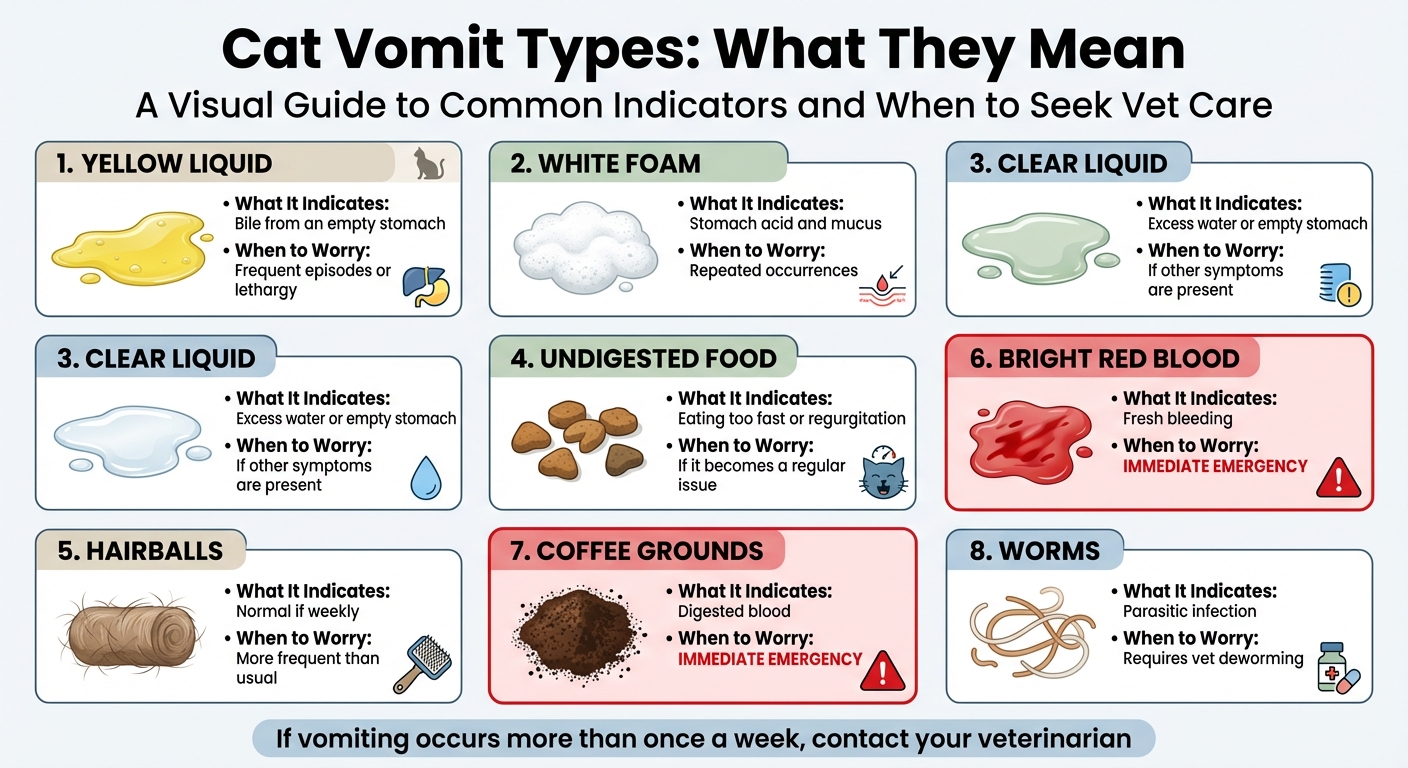
Cat Vomit Types Guide: What Colors and Textures Mean for Your Cat's Health
The appearance of your cat's vomit can reveal a lot about their internal health. While occasional vomiting isn't unusual in cats, paying attention to its colour, texture, and frequency can help you distinguish between minor issues and serious conditions that may need a vet's attention. Here's a quick guide to what different types of vomit might mean.
Yellow liquid often points to bile, which is a digestive fluid made by the liver. This happens when the stomach is empty, allowing bile and acid to irritate its lining. If your cat frequently vomits yellow liquid, it could indicate liver problems or hormonal imbalances, and a vet visit is recommended.
White foam is usually a mixture of stomach acid and mucus. It can occur when your cat's stomach is empty or if the lining is irritated (gastritis). While an occasional bout isn't alarming, frequent episodes should be checked out by a vet.
Clear liquid is typically linked to excessive water intake or an empty stomach. This type of vomit is often seen with regurgitation from the esophagus rather than actual vomiting.
Undigested food that appears as intact kibble or chunks shortly after eating is usually a sign of regurgitation, not active vomiting. This "scarf and barf" behaviour often happens when cats eat too quickly, but it can also point to esophageal issues or a blockage in the digestive tract.
Hairballs are damp, cylindrical clumps of matted fur, sometimes mixed with a little yellow or clear fluid. While it's normal for cats to expel hairballs weekly, an increase in frequency could indicate underlying digestive problems.
Red or bloody vomit (hematemesis) with bright red blood or pink streaks signals fresh bleeding, while a coffee-ground appearance suggests digested blood. Both require immediate veterinary care.
Green vomit suggests that the contents of the small intestine, mixed with bile, are being expelled. If this happens often or is accompanied by other symptoms, consult your vet.
If you see worm-like structures in the vomit resembling spaghetti or angel hair pasta, it could indicate a roundworm infestation. This requires specific deworming treatment, so a vet visit is essential.
| Vomit Appearance | What It Indicates | When to Worry |
|---|---|---|
| Yellow Liquid | Bile from an empty stomach | Frequent episodes or lethargy |
| White Foam | Stomach acid and mucus | Repeated occurrences |
| Clear Liquid | Excess water or empty stomach | If other symptoms are present |
| Undigested Food | Eating too fast or regurgitation | If it becomes a regular issue |
| Hairballs | Normal if weekly | More frequent than usual |
| Bright Red Blood | Fresh bleeding | Immediate emergency |
| Coffee Grounds | Digested blood | Immediate emergency |
| Worms | Parasitic infection | Requires vet deworming |
What Causes Cats to Vomit
When your cat vomits, it’s often a sign that something isn’t quite right. As Dr. Krista Williams explains, vomiting is a symptom, not a diagnosis. Figuring out the cause is crucial to deciding whether your cat needs immediate veterinary care or just some close observation. While the appearance of vomit can offer hints, understanding the root cause is the only way to respond appropriately. Let’s dive into both digestive and non-digestive reasons behind these episodes.
Digestive causes are usually the first to consider. Hairballs, especially in long-haired cats, are a common culprit. However, frequent vomiting of hairballs might indicate deeper grooming or digestive issues. Other triggers include eating spoiled food, nibbling on toxic plants like lilies, or swallowing non-food items such as string or rubber bands. Food sensitivities, inflammatory bowel disease (IBD), gastrointestinal parasites like roundworms, and blockages caused by foreign objects or tumours can also lead to vomiting. Even something as simple as eating too quickly can cause a cat to regurgitate undigested food, as they may gulp down air along with their meal.
But vomiting isn’t always tied to the digestive system. Non-digestive causes can include conditions like kidney disease, liver disease, hyperthyroidism, diabetes, and pancreatitis. Cats may also vomit after ingesting toxins, such as antifreeze or certain human medications, or due to stress.
"A veterinarian would much rather see a vomiting cat and determine that the cat is otherwise healthy than have an owner delay a visit because they think that it's normal for a cat to vomit, and it turns out the problem is very serious."
- Dr. Lori Teller, Texas A&M University
In some cases, additional symptoms can point to more serious issues. For example, vomiting paired with weight loss or jaundice might suggest underlying organ problems. Increased thirst or urination alongside vomiting could indicate kidney disease, diabetes, or hyperthyroidism, while symptoms like jaundice, foul-smelling breath, or lethargy might point to liver or kidney trouble. Acute vomiting - especially when accompanied by fever, dehydration, or abdominal pain - or chronic vomiting lasting over three weeks are important patterns to note. Observing the frequency, appearance, and any related symptoms can provide critical clues for your veterinarian to diagnose the issue accurately.
1. Hairballs: How Often Is Normal?
Hairballs - technically called trichobezoars - are damp, cylindrical clumps of undigested fur mixed with bile and digestive fluids. Cats ingest hair while grooming, and because keratin (the protein in hair) can't be digested, it can collect in their stomachs. When this mass becomes irritating, cats vomit it up to avoid a potentially dangerous blockage.
"It is not uncommon for a cat to expel a hairball once every week or two without any enduring problems."
Veterinarians have differing views on what’s "normal." Some suggest that expelling a hairball every 7–14 days is fine, while others lean towards once every 30–45 days. If your cat is vomiting hairballs more often than once a week (or even more than once a month, depending on the standard), it's time to consult a vet. Cats with long fur, like Persians or Maine Coons, are more prone to frequent hairballs, especially during shedding seasons like spring and autumn. An increase in hairball frequency, combined with other symptoms, could hint at more serious health problems.
Frequent hairball vomiting might mean your cat is struggling to pass ingested hair. It could also signal underlying issues like inflammatory bowel disease, allergies, or stress-related overgrooming. Watch for warning signs such as unproductive retching, lethargy, reduced appetite, or constipation - these can indicate a blockage that needs immediate veterinary attention.
To help reduce hairballs and catch potential problems early, focus on daily grooming and dietary adjustments. Regular brushing, especially for long-haired cats, can remove loose fur before it’s swallowed. A high-fibre "hairball control" diet can aid in moving hair through the digestive system so it’s expelled in the faeces. Your vet might also suggest mild lubricants or hairball pastes, but these should only be used under professional guidance. If your cat is frequently vomiting hairballs, don’t shrug it off as "normal cat behaviour." A timely vet visit can prevent complications and reveal any hidden health concerns.
2. Yellow Liquid (Bile): Why Cats Vomit on Empty Stomachs
When your cat throws up a yellow, foamy liquid, it’s usually bile - a digestive fluid that helps break down fats. This often happens when their stomach has been empty for too long. Without food, stomach acid and bile can build up, irritating the stomach lining and causing what’s known as hunger-induced vomiting.
"As cats get hungrier, their stomach acid builds. If they don't eat, they may vomit yellow, foamy bile."
- Pet Expert Team, Purina
To prevent this, try feeding your cat smaller, more frequent meals throughout the day. Leaving out a small amount of kibble can also help keep their stomach from being completely empty. If your cat is otherwise healthy and only vomits yellow bile occasionally - less than once a month - these adjustments should work well.
However, if the vomiting happens more often - say, more than twice a month - or is paired with symptoms like lethargy, weight loss, loss of appetite, or jaundice, it could be a sign of something more serious, such as liver or kidney disease, pancreatitis, or inflammatory bowel disease (IBD). In such cases, it’s important to consult your vet right away.
Yellow bile can also show up when your cat is expelling hairballs, as the bile helps moisten the hair mass during vomiting. If you’re switching your cat’s food, do so gradually over 7–10 days to avoid upsetting their stomach, and keep a log of vomiting episodes to share with your vet for better diagnosis and treatment.
3. White Foam: Stomach Acid and When to Worry
When a cat vomits white foam, it typically consists of stomach fluids and mucus, often appearing when the stomach is empty. This happens because the stomach starts producing acid in anticipation of food, and without anything to digest, the acid can irritate the stomach lining, leading to foamy vomit . Unlike yellow bile or hairball-related vomit, white foam is usually a sign of irritation caused by acid buildup.
However, acid isn’t the only culprit. White foam vomiting can also be linked to gastritis, which is an inflammation of the stomach lining. Cats experiencing gastritis may also show signs of sluggishness or a reduced appetite . Other potential triggers include hairball irritation, minor digestive issues from dietary changes, or consuming grass, plants, or spoiled food .
For most healthy cats, occasional bouts of white foam vomiting - less than once a month - aren’t usually a cause for concern. But frequency is key. According to Dr. Lori Teller, Associate Professor at Texas A&M College of Veterinary Medicine & Biomedical Sciences:
"If a cat vomits more than a couple of times per month or if the cat displays other symptoms of illness, it needs to be seen by a veterinarian".
Pay close attention to additional symptoms like lethargy, fever, diarrhoea, weight loss, or difficulty keeping water down. Persistent retching without producing vomit could indicate a dangerous obstruction and requires immediate veterinary care . To minimise hunger-related vomiting and hairball irritation, stick to a consistent feeding routine and groom your cat regularly . Keeping an eye on these behaviours will help you determine when it’s time to consult a vet.
4. Clear Liquid: Water Intake and Mild Stomach Upset
When a cat vomits clear liquid, it’s usually a mix of water, gastric juices, and mucus from the esophagus. This often happens when a cat drinks water too quickly, causing hydrochloric acid to irritate the stomach lining. Cats may also gulp water or chew on grass to help with hairball removal, and this clear liquid can show up before or after a hairball is expelled.
It’s important to distinguish between vomiting and regurgitation here. Unlike vomiting, regurgitation doesn’t involve strong abdominal contractions. Instead, the liquid is passively expelled from the esophagus, often right after drinking.
If your cat vomits clear liquid occasionally - less than once a month - and seems otherwise healthy, there’s usually no need to worry. However, frequent vomiting of clear liquid (more than once a week) or multiple episodes within a day (three or more times in 24 hours) could indicate something more serious. Conditions like kidney disease, diabetes, hyperthyroidism, or gastrointestinal parasites might be at play. If your cat can’t even keep water down, it’s time to consult a vet immediately to avoid dehydration.
To prevent “scarf and barf” incidents, where cats drink too quickly, try offering small amounts of water - around 1–2 teaspoons - every 30 minutes or use a slow-feeder bowl. If you notice thin, spaghetti-like strands in the vomit, this could point to a roundworm infection, which requires prompt deworming. Keep an eye out for other warning signs like increased thirst, lethargy, weight loss, or changes in urination, as these could indicate broader health concerns.
Understanding these details about clear liquid vomit helps round out our discussion of the different types of vomit before moving on to treatment options.
5. Red or Bloody Vomit: Emergency Warning Signs
When it comes to red or bloody vomit, it’s a clear signal that something is seriously wrong and demands immediate veterinary attention. Bright red blood usually indicates active bleeding from areas like the mouth, oesophagus, or upper stomach. On the other hand, if the vomit has a coffee-ground appearance, it suggests that stomach acid has already partially digested the blood - pointing to bleeding from deeper in the upper digestive tract.
"If your cat is throwing up bright red or dark brown/black bloody vomit, seek immediate veterinary care."
– Pet Expert Team, Purina
While a few specks of fresh blood might occasionally show up due to minor issues like gingivitis, anything more severe or persistent is a red flag. Bloody vomit could be linked to life-threatening conditions such as gastrointestinal ulcers, ingestion of rat poison, haemophilia, heartworms, tumours, or inflammatory bowel disease. Additionally, ongoing vomiting with blood can lead to rapid dehydration, serious electrolyte imbalances, and even systemic shock.
Keep an eye out for other warning signs like lethargy, pale gums, abdominal pain, a loss of appetite, or black, tarry stools. It’s also crucial to avoid giving your cat any human medications unless specifically advised by a vet. If you notice bloody vomit, don’t wait - take your cat to an emergency veterinarian right away. Acting quickly in these situations can make all the difference as we move forward to discuss preventative care and treatment options.
How to Prevent and Manage Hairballs
Keeping hairballs at bay starts with proactive grooming. Daily brushing is your best bet, especially for breeds with long fur like Persians and Maine Coons. Regular brushing helps remove loose hair before your cat can swallow it during their grooming routine.
"Frequent brushing removes loose fur and reduces hair ingestion."
– Craig B. Webb, PhD, DVM, DACVIM, Colorado State University
Diet also plays a key role. High-fibre 'hairball control' diets and slow-feeder bowls can help regulate your cat's digestion and reduce the chances of rapid eating. Look for commercial diets enriched with insoluble fibre, such as psyllium, to aid in managing hairballs. You can also try offering fresh cat grass - many cats enjoy it, and it may support digestion.
For additional help, consider vet-approved lubricants or gels like mineral oil. These products, when used under veterinary guidance, can assist in moving hair through your cat's digestive system. Another important factor is flea control, as it reduces excessive grooming and, consequently, hair ingestion.
"If your cat is vomiting hairballs more than once a month, contact your veterinarian."
– Krista Williams, BSc, DVM and Ernest Ward, DVM
If your cat is experiencing hairballs more than once or twice a month or shows symptoms like lethargy or loss of appetite, it's time to consult a veterinarian. Frequent hairball vomiting shouldn't be ignored - it could point to underlying issues like gastrointestinal or skin conditions that need attention. While these strategies can reduce hairball occurrences, persistent problems warrant close observation and professional advice.
When to Contact Your Veterinarian
Now that we've covered the different types of vomit, let’s dive into when it’s time to pick up the phone and call your vet. If your cat vomits more than once a week or shows other worrying symptoms, it’s time to get professional advice. While the occasional hairball or upset stomach might not seem like a big deal, frequent vomiting can point to serious issues like kidney disease, diabetes, or gastrointestinal problems - even if your cat appears fine otherwise.
Spotting blood in your cat’s vomit - whether bright red, streaky, or resembling coffee grounds - is a red flag that requires immediate veterinary attention. Other concerning signs include lethargy, weakness, loss of appetite lasting more than 24 hours, sudden weight loss, or signs of dehydration like sunken eyes, dry gums, or slack skin.
"If you think your cat suffers from chronic vomiting, seek the advice of your veterinarian immediately."
– Michael Kearley, DVM
To help your vet diagnose the issue, keep track of vomiting episodes - note the frequency, appearance, and timing, and capture photos or videos if possible. This information can be invaluable during your vet's assessment, as we’ll discuss in the next section. And if you suspect your cat has swallowed something toxic or a foreign object, don’t wait - head to the emergency clinic right away.
How Vets Diagnose and Treat Vomiting in Cats
Once you've noticed the warning signs and decided to visit the vet, diagnosing the cause of your cat's vomiting becomes a step-by-step process. The first priority for the vet is to determine if your cat needs immediate care, like intravenous fluids to address dehydration or electrolyte imbalances, before moving on to a detailed diagnostic evaluation. During the physical examination, the vet will carefully palpate your cat’s abdomen to check for masses, thickened intestines, or signs of pain. They’ll also inspect the mouth for any foreign objects, such as string or thread, that might be caught under the tongue.
After the physical exam, the vet will turn to specific tests to uncover the root cause. Blood tests can reveal issues like kidney disease, liver problems, diabetes, thyroid imbalances, or infections. For suspected pancreatitis, a specialised test like fPLI might be used. Imaging studies, such as X-rays, can help detect foreign objects, tumours, or blockages, while ultrasound provides a closer look at organ structures and can pick up on inflammation or other abnormalities that X-rays might miss. If these methods don’t provide clear answers, endoscopy allows the vet to examine the stomach lining directly and collect tissue samples for further analysis. In more challenging cases, exploratory surgery (laparotomy) may be required to gather full-thickness biopsies or remove obstructions.
"In many cases, endoscopic evaluation and biopsy of the stomach and small intestine are the only tests that can determine the cause of the vomiting."
– Craig B. Webb, PhD, DVM, DACVIM
Once the cause is identified, the vet will create a treatment plan tailored to your cat’s needs. Depending on the diagnosis, this could include anti-nausea medications like maropitant citrate, acid reducers such as famotidine, appetite stimulants like mirtazapine, or IV fluids to combat dehydration. In severe cases, temporary feeding tubes might be necessary. Dietary changes are often a key part of treatment - your vet may suggest switching to an easily digestible prescription diet or trying novel protein formulas if food allergies or sensitivities are suspected.
It’s essential to remember that vomiting is a symptom, not a condition in itself. Treating the vomiting alone without addressing the underlying issue can hide serious problems like organ failure or toxicity. That’s why self-medicating or delaying a visit to the vet can put your cat’s health at risk.
What Cat Parents Should Remember
Occasional vomiting in healthy cats isn't unusual - it generally happens less than once a month. However, if your cat is vomiting more than once a week or if hairball-related vomiting occurs more frequently than once every week or two, it's time to contact your veterinarian.
Pay attention to your cat's overall behaviour. Changes in appetite, activity levels, or bathroom habits alongside vomiting should raise concerns. While vomiting might simply point to dietary issues, it could also indicate more serious problems like kidney disease, pancreatitis, or intestinal blockages.
Keep a record of vomiting episodes. Note the timing, appearance of the vomit, and its connection to meals. This information can be invaluable for your vet when diagnosing the issue. If you notice blood, worms, or persistent vomiting of water, treat it as an emergency and seek veterinary care immediately.
Acting early can make a big difference. Many serious conditions are manageable when identified early, but waiting too long could lead to complications like dehydration, electrolyte imbalances, or worsening illness. When you're unsure, it's always better to consult your vet promptly rather than waiting to see if the problem resolves on its own.
FAQs
How can I tell the difference between vomiting and regurgitation in my cat?
Vomiting in cats is an active process that requires noticeable effort. You might observe signs like drooling, repeated swallowing, or abdominal contractions before your cat expels partially digested food or liquid. This often involves retching and is typically triggered by issues in the stomach or upper small intestine.
In contrast, regurgitation is a passive process. It occurs suddenly, without effort or warning, as undigested food is expelled directly from the esophagus. The expelled material is usually tube-shaped and lacks the muscle contractions or nausea that accompany vomiting.
Knowing the difference between vomiting and regurgitation is crucial, as they often stem from different causes. Identifying which one your cat is experiencing can help your veterinarian determine the best course of treatment.
How often is it normal for my cat to vomit hairballs, and when should I worry?
Hairballs are a natural byproduct of your cat's grooming habits. When your cat grooms itself, it swallows loose fur, which can sometimes clump together in the stomach and get expelled as a hairball. For most healthy adult cats, bringing up a hairball about once every 1–2 weeks is considered normal. However, if your cat starts vomiting hairballs more than once a week or exhibits other signs like a loss of appetite, sluggishness, weight loss, or persistent dry-heaving, it’s a clear signal to visit your veterinarian.
Although occasional hairballs are expected, frequent occurrences might suggest that the fur isn't moving smoothly through the digestive system. This can be especially concerning for kittens, older cats, or those with existing health conditions, as they may be more prone to complications. Spotting these signs early and consulting a vet can help address potential issues before they escalate, ensuring your cat stays healthy and at ease.
What should I do if my cat vomits blood?
If your cat is vomiting blood, it’s a situation that needs immediate attention. Reach out to your veterinarian or the closest animal hospital right away to get expert guidance. Meanwhile, try to keep your cat calm and in a confined space to minimise stress or the risk of further harm.
Do not give your cat any food or water until you’ve spoken to a vet, as this might make things worse. Blood in vomit could be a sign of serious problems like internal bleeding, ulcers, or trauma. Quick action is essential to protect your cat’s health.


