


Pets can’t tell you when they’re unwell, so it’s up to you to notice changes in their behaviour, appetite, or energy. Early detection of illness ensures timely treatment and can prevent minor issues from becoming emergencies.
Here are key signs to watch for:
- Appetite & Weight Changes: Sudden loss of appetite, overeating, or unexplained weight changes.
- Digestive Problems: Vomiting, diarrhoea, or blood in stool/vomit.
- Thirst Patterns: Excessive drinking or refusal to drink water.
- Behavioural Shifts: Lethargy, hiding, aggression, or wobbliness.
- Emergency Symptoms: Difficulty breathing, seizures, or inability to urinate/defecate.
If symptoms persist for over 24 hours or seem severe, consult the right veterinarian immediately. Regular check-ups and tracking your pet’s habits can also help in identifying issues early.
7 Subtle Signs Your Pet Is Sick (Vet Explains!)
sbb-itb-5205b1e
Common Early Signs of Illness in Pets
Pets often hide discomfort, making it tricky to spot early signs of illness. However, catching these subtle clues early can make a big difference in their recovery. Here's what to keep an eye on, grouped by specific categories.
Changes in Appetite and Weight
One of the first signs something might be wrong is a noticeable change in your pet's eating or drinking habits. If your dog or cat suddenly stops eating, ignores their favourite treats, or eats far less than usual, it could signal issues like dental pain, gastrointestinal problems, or even kidney disease. On the flip side, an increase in appetite or constant begging might also point to underlying medical conditions.
Weight changes are another red flag. If your pet loses 10% or more of their body weight unintentionally, it’s time to consult your vet. As Dr. Sandra C. Mitchell, DVM, DABVP, emphasises:
Any pet that is losing weight, whether eating well or not, should also be examined by their vet unless you are intentionally restricting their food.
For older pets, weight gain might suggest hormonal problems, tumours, or diabetes.
Thirst patterns are equally telling. Drinking excessive amounts of water for more than a day might indicate kidney disease or diabetes. On the other hand, refusing to drink water for 24 hours or more is a serious emergency. Cats are particularly sensitive - if they stop eating for even a single day, they risk developing liver complications.
You can check for dehydration at home by lifting the skin between your pet's shoulders. If it doesn’t snap back quickly, your pet could be dehydrated. Also, take note of urine colour: dark urine suggests dehydration, while light or clear urine might point to diabetes or kidney issues.
Digestive issues often go hand-in-hand with these symptoms.
Digestive Issues: Vomiting and Diarrhoea
Digestive troubles, like vomiting or diarrhoea, are common indicators of illness. While a single episode might not be urgent, multiple or severe episodes need immediate attention. If your pet vomits or has diarrhoea more than twice in 24 hours, it’s time to call the vet. Blood in vomit (which can look like coffee grounds) or stool (bright red or dark and tarry) is a serious warning sign of internal problems.
Dr. Jerry Klein, Chief Veterinarian at AKC, explains the importance of frequency patterns:
Typically, it's less concerning for a dog to vomit two or three times in ten minutes and then be fine, rather than a dog that vomits three times over eight hours.
However, persistent dry heaving or vomiting blood could indicate gastric bloat (GDV), a life-threatening condition that needs emergency care.
Other symptoms like lethargy, fever, abdominal pain, or refusal to eat or drink often signal a medical emergency. Puppies and kittens are especially vulnerable to dehydration from digestive issues.
To check your pet’s condition at home, lift their lip to examine gum colour. Healthy gums should be pink - pale, white, bluish, or grey gums are a sign of trouble. Also, observe stool consistency and colour. Dark, tarry stools may suggest digested blood from the upper gastrointestinal tract, while fresh red blood points to lower GI issues.
Beyond physical symptoms, changes in how your pet behaves can also reveal health problems.
Behavioural and Energy Level Changes
If your pet’s behaviour or energy levels suddenly shift, it’s time to pay attention. Lethargy - when your pet seems unusually inactive, slow-moving, or uninterested in normal activities - is a strong indicator of illness. Unlike simple tiredness, lethargy persists even when you try to engage your pet with treats or a walk. Dr. Stephanie Lantry, DVM, explains:
Lethargic dogs sleep more, don't participate in normal activities, move slower, and hide.
To differentiate between tiredness and lethargy, try the "treat test." If your pet doesn’t respond to the sound of a treat bag or leash, it’s likely lethargy rather than fatigue. Any lethargy lasting more than 24 hours warrants a vet visit.
Other behavioural changes to watch for include hiding (especially in cats), sudden aggression or irritability, excessive vocalisation like whining or whimpering, pacing, heavy panting, trembling, obsessive licking of a specific area, reluctance to climb stairs or jump, and wobbliness - often linked to joint pain, arthritis, or neurological issues.
If lethargy is paired with symptoms like pale gums, a swollen abdomen, laboured breathing, seizures, or difficulty standing, seek emergency care immediately. As the Economic Times notes:
A pet in pain may not cry or whimper, especially cats, who instinctively hide discomfort.
Spotting these early warning signs ensures your pet gets timely care, preventing minor issues from escalating into major health crises.
When to Schedule a Routine Visit vs. Seeking Emergency Care
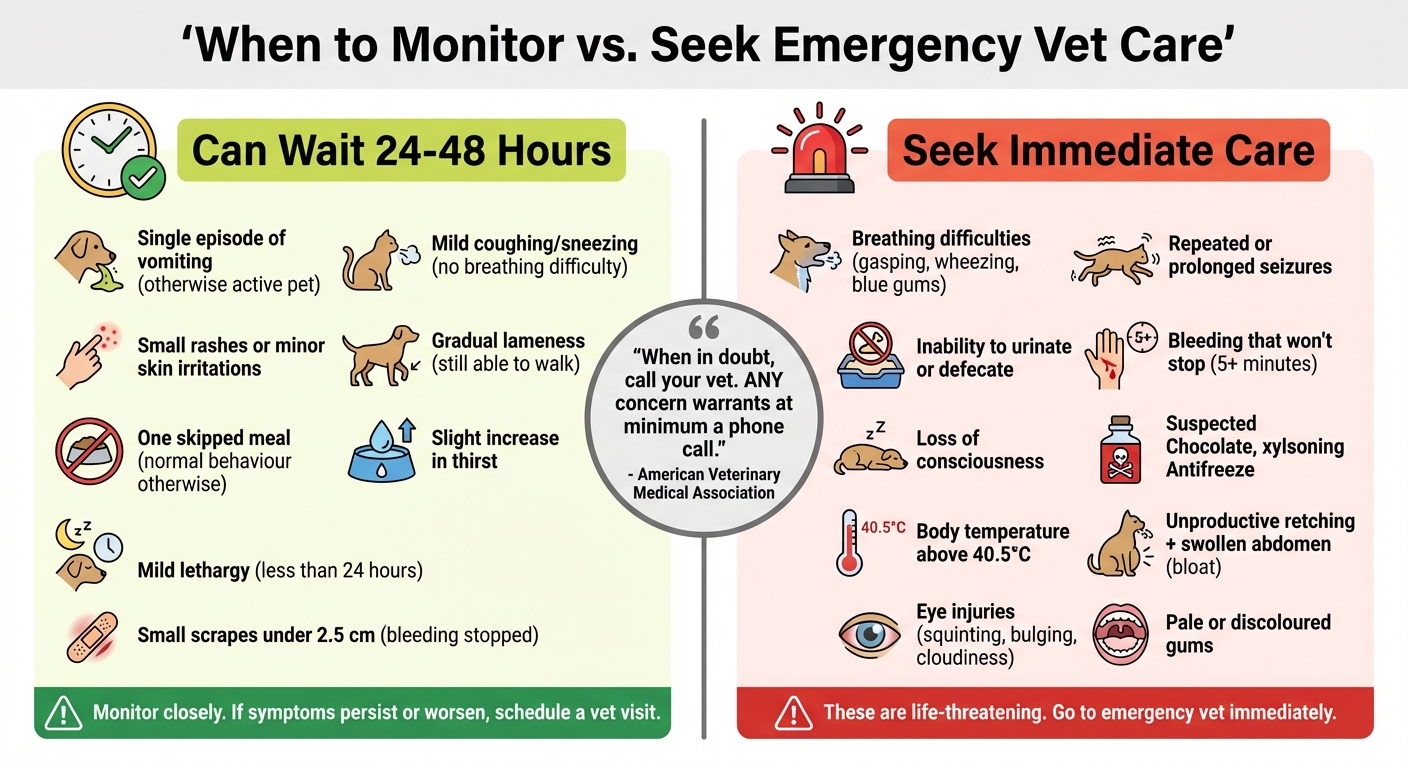
When to Monitor vs. Seek Emergency Vet Care for Pets
Understanding when to take action can make all the difference when it comes to your pet's health. Not every symptom requires a rush to the emergency clinic, but ignoring serious signs could be risky. The American Veterinary Medical Association offers this simple advice:
"The bottom line is that ANY concern about your pet's health warrants, at minimum, a call to your veterinarian."
Here’s a breakdown of when to monitor symptoms and schedule a routine visit versus when to seek immediate veterinary care. If you’re ever unsure, a quick call to your vet can help clarify your next steps.
Symptoms That Can Wait 24–48 Hours
Some symptoms, while uncomfortable, don’t pose an immediate threat to your pet’s life. For instance, a single episode of vomiting in an otherwise active and healthy pet can usually be observed at home for 24 hours. Other symptoms that can typically wait include:
- Mild coughing or sneezing without difficulty in breathing.
- Small rashes or minor skin irritations.
- Gradual lameness that doesn’t prevent walking.
- A skipped meal, as long as your pet is otherwise behaving normally.
- Slight increases in thirst or mild lethargy lasting less than 24 hours.
- Small scrapes (under 2.5 cm) that stop bleeding quickly.
The general rule is to monitor these symptoms for 24 to 48 hours. If they persist or worsen, it’s time to schedule a routine visit. In the meantime, keep your pet comfortable, provide fresh water, and take note of any changes in their behaviour or condition.
Symptoms That Need Immediate Veterinary Attention
Some signs indicate a medical emergency and require urgent care. Breathing difficulties - such as gasping, wheezing, or gums turning blue - should never be ignored. Dr. Sandra C. Mitchell, DVM, DABVP, stresses:
"Difficulty breathing is always a medical emergency - take your pup to the vet immediately if this occurs."
Other symptoms that demand immediate action include:
- Repeated or prolonged seizures.
- Inability to urinate or defecate.
- Bleeding that doesn’t stop within five minutes.
- Loss of consciousness.
- Suspected poisoning from substances like chocolate, xylitol, or antifreeze.
- A body temperature above 40.5°C.
Be especially cautious of unproductive retching paired with a swollen abdomen, as this could signal bloat (gastric dilatation-volvulus or GDV), a life-threatening condition that requires immediate intervention. Eye injuries, including squinting, bulging, or cloudiness, also need urgent attention to prevent permanent vision damage.
Dr. Jeff Grognet offers a practical guideline:
"If your two-year-old child had the same symptoms, would you be on your way to the hospital? If the answer is 'yes,' your dog should be seen immediately."
Additionally, pale or discoloured gums are a sign of potential shock or blood loss, which calls for emergency care. If your pet is injured, transport them carefully using a blanket to minimise further harm.
How to Monitor and Document Your Pet's Symptoms
Keeping track of your pet's eating, drinking, and activity patterns can help you quickly identify any unusual changes.
Tracking Eating, Drinking, and Elimination Patterns
Feeding your pet at set times rather than leaving food out all day makes it easier to notice how much and how quickly they eat. If your dog skips meals for more than two days or your cat refuses to eat for over 24 hours, it’s time to call your veterinarian.
Pay attention to your pet’s water consumption too. If you’re refilling their water bowl much more often than usual or they refuse to drink for 24 hours, these could be warning signs. Elimination patterns are equally important. Healthy stool should be firm and moist, so look out for changes like dryness, mucus, blood, or black, tarry stools, which might signal internal bleeding. Dogs typically defecate at least once a day; if your dog hasn’t passed stool in 48 hours, it’s a concern.
When it comes to urine, Dr. Sandra C. Mitchell, DVM, DABVP, suggests:
One easy trick is to keep an eye on your dog's urine. If possible, catch some in a white container, such as a clean yogurt cup.
Normal urine is light yellow. Dark yellow may mean dehydration, while very pale urine could point to kidney problems.
In addition to these patterns, make note of any behavioural or physical changes to keep a complete health record.
Recording Behavioural and Physical Changes
Be specific when documenting your pet’s behaviour. Instead of vague descriptions like "acting weird", note actions such as pacing, repetitive licking, hiding, or snapping near certain areas like the hips. Record when symptoms start and how long they last. For example, write down, "sluggish for 36 hours" or "vomited three times between 2 PM and 4 PM".
Monthly body checks during grooming can help you spot new lumps, bumps, or tender areas. A sudden weight loss of 10% or more is a red flag that should be reported immediately. Also, check your pet’s gums regularly - healthy gums are pink and moist. Pale, white, bluish, or bright red gums could indicate illness. Photos or videos of unusual behaviours or physical changes can be incredibly helpful for your veterinarian, offering clear evidence beyond verbal descriptions.
The Role of Preventive Care and Regular Check-Ups
Keeping an eye on your pet’s daily behaviour is important, but regular check-ups are where the real magic happens. These visits can uncover health issues before they spiral out of control. Since pets often hide signs of illness, routine vet visits are key for catching problems early. They also help establish a baseline for your pet’s health, making it easier to spot changes like unexpected weight loss or shifts in organ function.
Routine Screenings and Diagnostic Tests
Preventive screenings can uncover hidden conditions such as kidney disease, diabetes, or heart issues before they become severe. Blood tests, for example, can identify infections, anaemia, or organ problems, while urine tests can flag dehydration, diabetes, or bladder concerns. A faecal analysis can reveal intestinal parasites or digestive issues. And if you ever notice a new lump during grooming, a fine needle aspiration (FNA) can determine whether it’s cancerous.
For younger pets, vets usually recommend annual check-ups. Senior pets, typically those over 8 years old, may need to visit twice a year. Dr. Aishwarya R, Veterinary Officer at Wiggles, highlights the importance of early detection:
Early diagnosis can be the best thing to help pets live a quality life with the help of proper treatment.
Building a Relationship with Your Veterinarian
Developing a strong relationship with your vet is just as important as the check-ups themselves. A vet who knows your pet’s history can provide more accurate care. For example, a 10-year-old diabetic pet skipping a meal needs immediate attention, while the same behaviour in a young, healthy pet might not be as alarming. Your vet can also offer breed-specific advice and create a customised checklist of warning signs based on your pet’s age and health.
Having a trusted local clinic can also make a big difference during emergencies, sparing you the stress of rushing to an unfamiliar 24/7 facility. Dr. Jerry Klein, Chief Veterinarian at AKC, advises:
Discuss this list with your veterinarian as there may be further additions or clarification that is particular to your dog and breed.
Preventive care goes hand-in-hand with daily monitoring, forming a solid defence against illness and ensuring your pet stays healthy and happy.
Conclusion
Keeping an eye out for subtle signs of illness is essential to safeguarding your pet's health by creating a pet-friendly home. Animals instinctively hide symptoms to avoid appearing vulnerable, which makes it all the more important to notice small changes in their behaviour or appetite. As Gaurav Ajmera, Founder of Vetic, explains:
It's usually tough to identify the early symptoms of diseases among pets majorly because pets can't speak or express themselves, and survival instinct makes them hide their uneasiness.
Understanding this, it's crucial to act on the advice shared earlier - monitoring for warning signs and taking preventive measures. For instance, a body temperature above 40.5°C signals a medical emergency, while a missed meal or mild lethargy might warrant close observation for 24–48 hours before consulting a vet. Keep track of your pet's behaviour, appetite, and physical changes. Simple practices like checking their gums during grooming, noting water intake, and observing stool or urine can help you catch issues like kidney disease or diabetes early.
Daily attention combined with regular vet visits can uncover hidden health problems before they escalate. As Dr. Sandra C. Mitchell wisely points out:
If your instinct says there's a problem, it's better to be safe. Call your vet and have your pup checked out!
FAQs
What early signs of illness in pets should I look out for?
Recognising the early signs of illness in pets is crucial for their well-being. Keep an eye out for changes in eating patterns, such as a lack of appetite that lasts more than a day. Also, note any unusual behaviour - this could include lethargy, sleeping more than usual, or avoiding activities they typically enjoy.
Other red flags to watch for include vomiting, diarrhoea, persistent coughing or sneezing, breathing difficulties, or the presence of unusual lumps.
If you notice any of these symptoms, don’t hesitate to reach out to a veterinarian. Being proactive about your pet’s health can significantly impact their recovery and overall quality of life.
When should I take my pet to the vet if they have vomiting or diarrhoea?
If your pet has been experiencing vomiting or diarrhoea for more than 24 hours, it’s crucial to consult a vet. You should also seek immediate medical attention if your pet seems lethargic, weak, or in pain, or if you notice blood in their vomit or stool, signs of dehydration like dry gums or sunken eyes, or a refusal to eat for more than a day.
These symptoms could signal underlying health problems that need prompt care. Keep a close eye on your pet and trust your instincts - if something feels off, it’s always better to be cautious and get them checked by a vet.
What behavioural changes in pets should prompt a visit to the vet?
Sudden shifts in your pet's behaviour might be a sign of underlying health problems. Be alert to signs like lethargy, a lack of interest in their favourite activities, noticeable changes in eating or drinking habits, or indications of discomfort such as whining, limping, or restlessness. These warning signs shouldn't be overlooked, as they may need prompt veterinary care.
If you're uncertain about the seriousness of your pet's behaviour, consulting a veterinarian is always a wise choice. Acting early can stop small problems from escalating into serious health issues. For essential pet care items like prescription medications or supplements, services like Animeal provide a convenient option with quick delivery across India.


