


If your dog is scratching non-stop, it's not a quirk — it's a cry for help. Something is irritating their skin, and ignoring it almost always makes things worse. The good news? Most scratching traces back to one of three culprits: parasites, allergies, or skin infections. The trick is figuring out which one — because treating the wrong cause is just as bad as treating nothing at all.
After helping thousands of pet parents navigate this exact problem, we've seen the same mistakes repeated over and over: months of diet changes when the real issue was dust mites, coconut oil rubbed on skin that actually needed antifungal medication, or flea treatments skipped because "my dog never goes
outside." This guide is built from those real cases, real missteps, and real solutions — so you can skip the trial-and-error and get your dog comfortable faster.
Here's what you need to know.
Why Is My Pet So Itchy? | Vet Explains Common Causes & Relief
sbb-itb-5205b1e
The 3 Main Causes of Dog Scratching
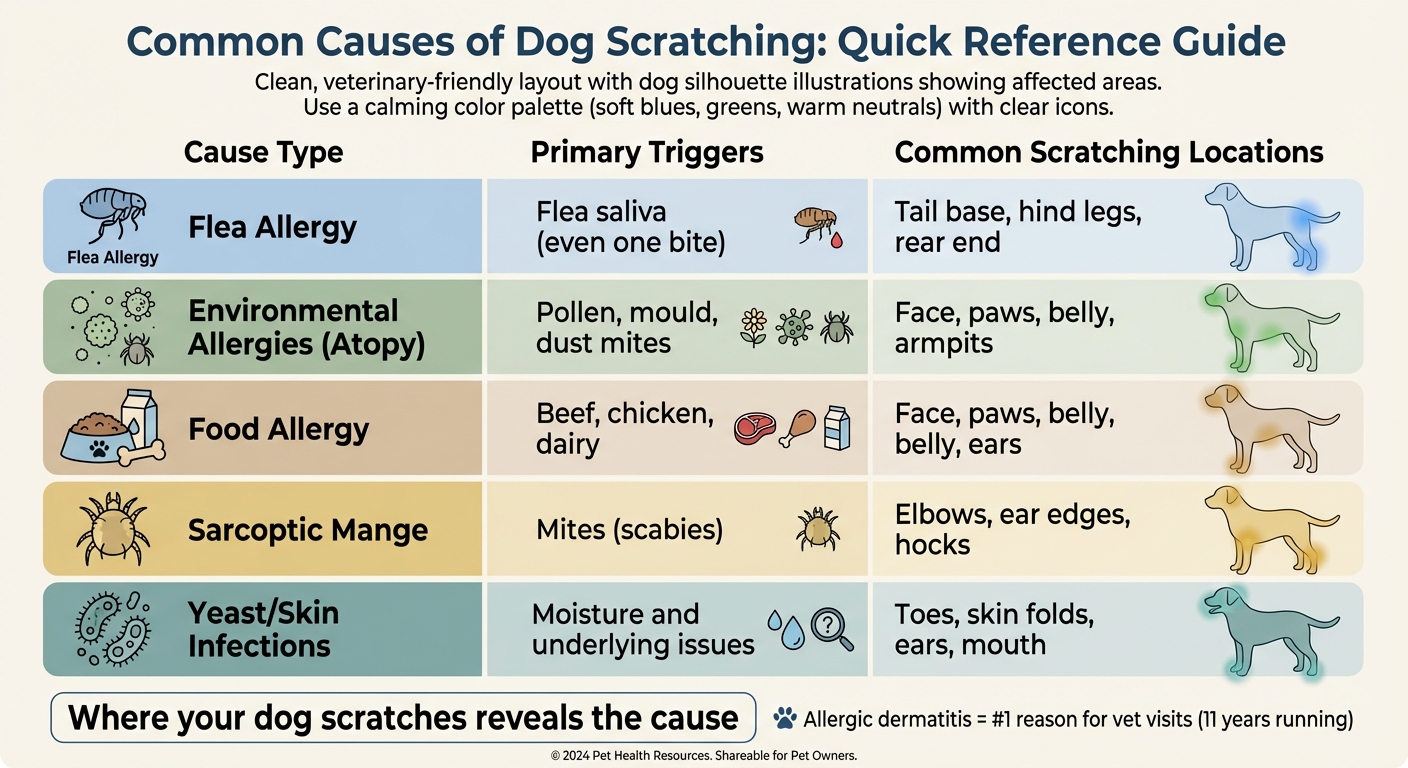
Common Causes of Dog Scratching: Symptoms and Affected Areas Guide
When a dog scratches relentlessly, the underlying issue almost always falls into one of three categories: environmental allergies (the most common, accounting for roughly 40–60% of cases), parasites like fleas, ticks, and mites (20–30%), or skin infections caused by bacteria and yeast (15–25%). Each one looks a
little different, behaves differently across seasons, and — most importantly — requires a completely different treatment approach.
Let's break them down.
Environmental Allergies (Atopic Dermatitis)
Environmental allergies, clinically known as atopic dermatitis, are the single biggest reason dogs end up scratching themselves raw. This condition occurs when your dog's immune system overreacts to everyday substances — pollen, mould spores, dust mites, or even household chemicals like floor cleaners and air fresheners. Instead of sneezing the way humans do, dogs itch. They lick their paws, rub their faces on furniture, and scratch at their bellies and armpits until the skin turns red and inflamed.
Most dogs develop atopic dermatitis between 1 and 3 years of age. Once it starts, it doesn't go away — it's a lifelong condition that needs to be managed. The severity, however, depends heavily on where you live and what your dog is exposed to.
India's climate makes this especially challenging. Dust mites thrive in warm, humid apartments. Monsoon dampness encourages mould growth in bedding and carpets. Cities with high pollution levels — Delhi, Bangalore, Mumbai — add another layer of irritation that most dogs' skin simply isn't built to handle.
Most popular breeds in India, including Golden Retrievers, Labradors, German Shepherds, French Bulldogs, and Pugs, aren't native to this climate and are genetically predisposed to allergic reactions.
How to spot it: Your dog scratches or licks their paws, face, belly, and armpits. The scratching may be seasonal (worse in spring or monsoon when pollen and mould spike) or year-round (pointing to indoor
allergens like dust mites). Red, irritated skin in these areas — especially between the toes — is a hallmark sign.
A case we see often: A Labrador in Bangalore named Bruno was scratching everywhere — face, belly, paws, back — especially after lying on the living room carpet. His eyes were red, and he'd rub his face against furniture constantly. The itching got worse at night with the AC running. His owner tried switching his food multiple times, assuming it was a diet issue. When they finally visited a vet, a skin test confirmed dust mite allergy — canine atopic dermatitis. The vet prescribed a JAK inhibitor (oclacitinib) for immediate relief, and the owner introduced an air purifier, started vacuuming daily with a HEPA-filter vacuum, and began washing Bruno's bedding weekly in hot water. Combined with omega-3 fatty acid
supplements to strengthen the skin barrier, Bruno's scratching dropped by about 70% within a month. Flare-ups still happen occasionally, but they're manageable now.
The key takeaway? Allergies can't be cured, but they can be controlled. Reducing allergen exposure — vacuuming regularly, using air purifiers, rinsing paws after walks, and adding omega-3 and omega-6 fatty acids to the diet — goes a long way.
Parasites: Fleas, Mites, and Ticks
Parasites are the second most common cause of chronic scratching, and they're more prevalent than most Indian pet parents realise. Fleas, ticks, and mites don't just cause surface irritation — they can trigger
severe allergic reactions that persist long after the parasite itself is gone.
Flea Allergy Dermatitis (FAD) is one of the most common allergic skin conditions in dogs worldwide. Here's what makes it tricky: it's not the flea itself that causes the problem — it's the flea's saliva. When a flea bites to feed on blood, it injects saliva into the skin. Most dogs experience mild irritation. But dogs
with FAD have an extreme immune response to that saliva. A single flea bite can trigger days of relentless itching, even after the flea is gone. This means you might never see a live flea on your dog and still have a full-blown flea problem.
India's warm, humid climate allows fleas to thrive year-round. They hitch rides indoors on shoes, clothing, guests, or through open windows. Once inside, they multiply fast — a single female flea can lay up to 50 eggs a day, and an infestation can take hold within weeks.
Beyond fleas, mites are another major culprit. Sarcoptic mange (caused by scabies mites) leads to intense itching, hair loss, and crusty skin — particularly around the elbows, ear edges, and hocks. Cheyletiella, often called "walking dandruff," leaves behind small white specks that move along the spine. Ear mites
cause severe itching deep inside the ear canal, producing brown or black "coffee ground" discharge.
How to check: Run a flea comb through your dog's fur, focusing on the tail base, hind legs, and rear end
— where fleas prefer to hide. Wipe the comb on a damp white paper towel. Tiny black specks that
dissolve into a reddish-brown stain? That's flea dirt — digested blood — confirming the presence of fleas.
A case that surprised the owner: Coco, a 2-year-old Shih Tzu in Pune, lived entirely indoors. She started scratching intensely near her tail and lower back, developing raw patches within days. Her owner was certain it was a reaction to a new shampoo and tried coconut oil, neem baths, and a diet change.
Nothing worked. A vet visit revealed flea dirt during examination. The culprit? Fleas brought inside on
the owner's clothing from a shared apartment stairwell. The vet treated Coco with a fipronil-based topical flea treatment and prescribed a short course of corticosteroids to calm the allergic reaction. The owner
deep-cleaned the home — washed all bedding and soft toys in hot water, vacuumed daily for two weeks. Coco's scratching stopped within a week. She's now on year-round flea prevention, because in India's climate, "flea season" is every season.
One of the biggest mistakes we see? Pet parents discontinuing flea and tick treatments during certain months, assuming the pests are inactive. They aren't. Consistent monthly preventive treatments — whether spot-on solutions, oral chewables, or fipronil-based sprays — are essential.
Skin Infections: Bacterial, Fungal, and Yeast
Skin infections account for 15–25% of scratching cases, but here's the important distinction: they're almost always secondary. They don't start the itch — they make it dramatically worse. When your dog scratches relentlessly, it creates tiny wounds in the skin. Bacteria (causing a condition called pyoderma) and yeast (particularly Malassezia) invade through those breaks, setting up shop in the damaged tissue.
This triggers more inflammation, which triggers more itching, which triggers more scratching. It's a vicious cycle that won't break on its own.
Yeast infections love warm, moist environments — between the toes, inside skin folds, around the mouth, and inside the ears. A telltale sign is a greasy, scaly texture on the skin accompanied by a distinctive musty or "corn chip" smell. Bacterial infections (pyoderma) often present as red bumps, pus-filled lesions, scabs, or "hot spots" — those raw, bleeding, or oozing patches that seem to appear overnight and spread fast, especially in humid climates.
How to spot it: Look for redness, greasy or flaky patches, hair loss, foul odour, or discharge. If your
dog's ears smell bad or their paws have that unmistakable yeasty odour, infection is very likely at play. If the skin between their toes is red and swollen, or if skin folds (common in breeds like Bulldogs) look inflamed, bacteria or yeast are almost certainly involved.
A case that escalated because of delay: Rocky, a 6-year-old Bulldog in Hyderabad, had been scratching his belly and armpits for over four months. His owner — understandably wanting to avoid unnecessary vet bills — tried home remedies: turmeric paste, diluted apple cider vinegar rinses, coconut oil. The scratching didn't stop. It got worse. Rocky's skin turned dark, thickened, greasy, and began to smell foul. By the time the owner finally saw a vet, Rocky had developed a severe secondary bacterial infection — pyoderma — caused by months of a broken skin barrier. A skin culture identified the specific bacteria strain. The vet prescribed a targeted antibiotic course (lasting nearly eight weeks) along with a chlorhexidine-based medicated shampoo used twice weekly. Recovery took almost two months. Had the owner sought help in the first two weeks, the infection likely could have been resolved in under three
weeks with a standard antibiotic course of 21–30 days. Rocky's owner now consults a vet at the first sign of persistent scratching.
The lesson here is clear: skin infections need prescription treatment. Antibiotics for bacterial issues, antifungals (like ketoconazole-based medications) for yeast. Home remedies cannot penetrate deep enough to clear these infections, and delaying treatment only gives them time to worsen and spread.
Quick Comparison Table
| Cause Type | Primary Triggers | Common Scratching Locations |
|---|---|---|
| Flea Allergy | Flea saliva (even one bite) | Tail base, hind legs, rear end |
| Environmental (Atopy) | Pollen, mould, dust mites | Face, paws, belly, armpits |
| Food Allergy | Beef, chicken, dairy | Face, paws, belly, ears |
| Sarcoptic Mange | Mites (scabies) | Elbows, ear edges, hocks |
| Yeast/Skin Infections | Moisture and underlying issues | Toes, skin folds, ears, mouth |
Understanding where your dog scratches can provide valuable clues about the underlying issue.
Where Your Dog Scratches Reveals the Cause
Veterinarians don't just ask if your dog is scratching — they ask where. The location of the itch is one of
the most reliable clues to the underlying cause. Different conditions target different parts of the body, and learning to read these patterns can save you weeks of guesswork.
Head and Ears
Frequent head shaking, ear scratching, or face rubbing typically points to ear infections (otitis), ear mites, or allergies. Allergies — whether environmental or food-related — cause intense itching around the face and ears because allergens like pollen and dust collect on these areas during outdoor activity.
Look inside the ears. Brown or black "coffee ground" material suggests ear mites. Yellow or bloody discharge indicates a bacterial infection. A strong, yeasty smell points to fungal overgrowth — extremely common during Mumbai's humid monsoons, when moisture gets trapped in floppy-eared breeds and
creates a perfect environment for yeast. If the scratching happens seasonally during monsoon or spring
environmental allergens are the likely trigger. Year-round ear problems, especially when accompanied by digestive issues, could indicate food allergies.
Paws
Obsessive paw licking and chewing is one of the most common complaints we hear, and it's almost
always allergies or yeast. As dogs walk through grass, streets, and parks, pollen, mould spores, dust, and chemical residues from fertilisers or stagnant water stick to their paws and trigger an immune reaction.
A classic sign of yeast infection between the toes is a distinctive "corn chip" or musty smell combined with reddish-brown staining on the fur from constant licking. Food allergies can also cause paw itching, but they typically affect multiple areas simultaneously face, belly, and armpits along with the paws.
A common misconception we encounter: Many pet parents assume paw licking always means a food allergy and spend months switching proteins. In most cases we see, the real problem is environmental — dust mites from an unvacuumed carpet, pollen from park walks, or fungal spores during monsoon. One pet parent in Bangalore spent three months cycling through different protein sources before discovering
the issue was simply an unvacuumed sofa where the dog slept — a haven for dust mites. Regular cleaning and rinsing the dog's paws after every walk resolved the problem in two weeks.
Belly and Armpits
Redness and irritation on the belly and armpits often point to contact dermatitis — a reaction to something your dog physically touches. In Indian homes, this is frequently caused by strong chemical floor cleaners containing phenol or ammonia, synthetic fabrics, or laundry detergents used on bedding. The belly and armpit skin is thinner and more sensitive, making it the first area to react.
Environmental allergies also show up here, and flea allergy dermatitis can appear as small red bumps on
the belly. If the skin looks greasy and smells bad, a secondary yeast infection from excessive scratching is likely.
A case that was simpler than it seemed: A Labrador in Pune scratched his belly constantly. His owner assumed it was a food allergy and started an expensive elimination diet. Weeks passed with no improvement. When we discussed his daily routine, a pattern emerged — the scratching worsened on
days the floors were mopped with a particular phenol-based cleaner. Switching to a pH-balanced, pet-safe cleaning product resolved the scratching within days. No medication needed.
Back and Tail Base
Scratching and biting near the lower back, tail base, and hindquarters is the most reliable indicator of fleas. This is where fleas prefer to feed, and dogs with Flea Allergy Dermatitis concentrate almost all their scratching in this area. Even a single flea bite can trigger intense itching and hair loss here.
Use a flea comb in this area and check for flea dirt. If you find it, that's your answer. Cheyletiella mites ("walking dandruff") can also cause itching along the back, leaving behind small white specks that move along the spine.
When the Scratching Is All Over
If your dog is scratching everywhere — ears, paws, belly, and back — it usually signals a systemic issue. Food allergies are a leading cause of generalised, year-round itching, often accompanied by chronic ear infections, vomiting, or diarrhoea. Diagnosing food allergies requires a strict elimination diet over 8–12 weeks under veterinary supervision — there's no shortcut blood test that reliably identifies food allergens in dogs.
Hormonal imbalances like hypothyroidism or Cushing's disease can also cause widespread itching, often accompanied by symmetrical hair loss, weight changes, or lethargy. Severe environmental allergies during seasonal transitions and stress-related compulsive behaviours (common during loud festivals like Diwali) round out the list of causes for whole-body scratching.
Understanding the stages of scratching progression helps you know when to act — and when you're running out of time to act.
Stage 1 Occasional scratching. Your dog briefly scratches behind an ear or nibbles a paw. This is normal grooming behaviour. The skin looks healthy, and the scratching isn't focused on any one area.
Stage 2 Persistent scratching. The scratching becomes more frequent and targeted. Your dog returns to the same spot repeatedly throughout the day licking, biting, or rubbing. This is clinical pruritus
(chronic itching), and it's your first real warning sign.
Stage 3 Visible inflammation. The skin begins showing redness (dermatitis) or raised hives. The immune system is now actively reacting to whatever is triggering the itch.
Stage 4 Self-trauma. Intense scratching leads to hair loss (alopecia) and broken skin from your dog's claws or teeth. At this point, the skin barrier is compromised.
Stage 5 Secondary infections. Once the skin barrier is broken, bacteria and yeast invade. You'll notice foul odour, greasy patches, discharge, or scaly skin. Treatment now requires prescription antibiotics or
antifungals typically a 21-to-30-day course.
Stage 6 Chronic damage. Your dog develops "hot spots" (acute moist dermatitis) raw, bleeding, or oozing patches that create a painful cycle of scratching and worsening damage. At this stage, some skin
changes (darkening, thickening) may become permanent.
"The act of scratching itself may stimulate these inflammatory reactions in the skin and make the condition worse." – PetPlace Staff
The critical thing to understand is the itch-scratch cycle. Scratching releases inflammatory chemicals in
the skin, which makes the itch worse, which leads to more scratching. Dogs also have an itch threshold — a tolerance level where multiple smaller irritants (say, a flea bite combined with dust exposure) compound to push them past the point of uncontrollable scratching. Breaking this cycle early is far easier and cheaper than treating it once it's fully established.
Next, we’ll walk you through diagnosing these issues at home, step by step.
How to Diagnose the Cause at Home: Step-by-Step
Before heading to the vet, a systematic check at home can help you narrow down the problem and
provide your vet with useful information. Start with the most likely culprit and work your way through.
Step 1: Check for Fleas
Even indoor dogs can pick up fleas from clothing, visitors, shared stairwells, or open windows. Start here because it's the easiest problem to confirm and one of the most common causes of intense scratching.
Run a flea comb through the fur around the tail base, hind legs, neck, and thighs — fleas' favourite hiding spots. Wipe the comb on a damp white paper towel. If tiny black specks dissolve into reddish-brown stains, that's flea dirt (digested blood), confirming fleas are present or have been recently.
Also look for red, inflamed skin, scabs, bumps, or patches of hair loss — particularly around the rear end. If you find evidence of fleas, start treatment immediately and move on to cleaning the environment (hot water wash all bedding, vacuum daily, treat soft furnishings).
If you don't find fleas, move to the next step.
Step 2: Inspect Paws, Ears, Belly, and Skin Folds
Focus on the areas where allergies and infections tend to show up. Part the fur and check between the toes, armpits, belly, chest, skin folds, and inside the ears.
Look for redness, swelling, greasy or scaly texture, brown stains from licking, or any noticeable smell. A greasy, smelly patch often indicates yeast. Brown or black discharge in the ears suggests mites. Yellow or bloody ear discharge points to bacterial infection. Redness and swelling between the toes could be allergies, yeast, or both.
If your dog obsessively licks their paws or rubs their face on furniture, environmental or food allergies are more likely than parasites.
Step 3: Track Timing and Seasonal Patterns
When the scratching happens can be as revealing as where it happens.
If scratching is seasonal worse during summer/spring (March–May) when pollen levels peak, or during monsoon (June–September) when humidity encourages fungal growth environmental allergens are the likely cause. Winter scratching (December–February) in drier climates often points to dry skin and loss of natural oils, especially if you're bathing your dog too frequently.
If the itching is year-round with no seasonal variation, food allergies or indoor allergens (dust mites) are more likely suspects.
Keep a simple trigger log: note when scratching happens, what your dog was doing beforehand, and any changes in the environment (new detergent, floor cleaner, seasonal shift). This information is invaluable when you eventually visit the vet.
A pattern that cracked the case: A Beagle owner in Chennai couldn't figure out why her dog scratched every evening. After keeping a log for two weeks, she noticed the scratching always followed floor mopping. The phenol-based floor cleaner was the trigger. Switching to a pet-safe alternative solved the problem completely no vet visit needed.
Step 4: Test for Food Triggers
If environmental causes have been ruled out and the scratching is year-round, food allergies become the prime suspect. Common triggers in Indian diets include wheat (roti), dairy (milk, curd, paneer), chicken, and certain spices or additives in commercial dog food.
Diagnosing food allergies requires an elimination diet under your vet's guidance. Feed your dog a novel protein they've never eaten before (like duck, rabbit, or a hydrolysed protein diet) along with a single
carbohydrate for 8–12 weeks. During this period, strictly avoid all treats, table scraps, and flavoured medications. If scratching improves significantly, reintroduce old foods one at a time to identify the specific allergen.
There's no reliable blood test for food allergies in dogs. The elimination diet is the gold standard it's slow, but it's the only method that actually works.
When to Stop Home Treatment and See a Vet
Home observation is useful for gathering clues. But there's a clear line between "monitoring" and "delaying necessary care." Crossing that line costs your dog comfort and costs you money — because mild problems treated early are always cheaper and faster to resolve than chronic conditions treated late.
"Don't try treating an itchy dog at home if their scratching and biting are severe enough that they have patches of hair loss, very red skin, or open wounds." – Dr. Jennifer Coates, DVM
Red Flags That Demand a Vet Visit
Visible skin damage: Open wounds, bleeding, oozing sores, scabs, raw patches, or bald spots. These mean the skin barrier is broken and infection is either present or imminent. Home remedies cannot fix this.
Signs of infection: A foul smell from the skin or ears, greasy or excessively dry patches, discharge (especially from ears), or darkened, thickened skin. These require prescription medication — antibiotics for bacterial infections, antifungals for yeast — and no amount of coconut oil or neem will substitute.
Hot spots: Red, moist, rapidly spreading inflamed patches. These are especially common in humid cities during monsoon and can go from a small spot to a large painful lesion within hours.
Behavioural distress: Whimpering, restlessness, inability to sleep, loss of appetite, or constant head shaking. If scratching is disrupting your dog's quality of life, they need professional help.
Persistence beyond a week: If your dog is still scratching despite your best home efforts after 7 days, something deeper is going on.
What Happens When You Wait Too Long
We see this scenario too often. A Golden Retriever in Pune developed dry, itchy skin. The owner treated it with coconut oil for three months, assuming it would resolve. By the time they sought veterinary help, the dog had developed a severe bacterial infection that required six weeks of antibiotics, twice-weekly medicated baths, and multiple follow-up visits — far more expensive and stressful than the simple treatment that would have worked in the first two weeks.
Persistent scratching damages the skin's protective barrier, creating entry points for bacteria and yeast. Untreated parasite infestations can cause anaemia, particularly in puppies and smaller breeds. Chronic scratching can lead to irreversible skin changes — darkening, thickening, and scarring — that become a lifelong management challenge.
The cost of a vet consultation in India is around ₹400–800. The cost of treating a chronic infection that's been left to fester for months? Easily ten to twenty times that, spread over weeks of treatment. Early action isn't just better for your dog — it's better for your wallet.
Natural Remedies: What Actually Works
When your dog is scratching, reaching for a home remedy feels intuitive. Some of them genuinely help
"Treatments like coconut oil and itch-relief shampoos only provide temporary relief. Your dog's itch may come back because the root cause has not been addressed." – Harriet Meyers, American Kennel Club
for mild cases. But it's critical to understand their limitations, because relying on them for anything beyond surface-level irritation can delay real treatment and let the underlying problem worsen.
Oatmeal Baths — Moderate Effectiveness for Mild Itching
Colloidal oatmeal (finely ground oats) has genuine anti-inflammatory properties. It forms a protective barrier on the skin and helps wash away surface allergens like pollen and dust. An oatmeal-based,
fragrance-free shampoo followed by a cool-water rinse can provide temporary relief for mild seasonal itching or irritation after outdoor walks.
When it helps: Mild, occasional itching. Soothing skin after walks in high-pollen areas. As a supportive measure alongside actual treatment.
When it's useless: If there's an active infection, hair loss, open sores, or the itching is chronic and persistent. The relief is temporary — the itch will return because the root cause hasn't been addressed.
Coconut Oil — Low Effectiveness
Coconut oil can moisturise small patches of dry, flaky skin and may add shine to the coat. That's about it. It has no meaningful antibacterial or antifungal properties at the concentrations you'd apply topically, and it absolutely cannot treat yeast overgrowth, bacterial infections, or allergic reactions.
When it helps: Minor dry patches in low-humidity environments (like Delhi winters), applied sparingly to intact skin.
When it's harmful: On infected, red, greasy, or damaged skin. Coconut oil can trap moisture and actually worsen yeast infections. If your dog's skin smells bad or looks inflamed, coconut oil will make things worse, not better.
Apple Cider Vinegar — Very Low Effectiveness
Diluted apple cider vinegar is one of the most commonly recommended home remedies online and one of the least effective. Evidence for its antibacterial or pH-balancing benefits on dog skin is minimal.
Critical warning: Never apply apple cider vinegar — even diluted — to broken skin, open wounds, or raw areas. It will sting, cause pain, and worsen irritation.
When it might help: Arguably, for very mild surface irritation on completely intact skin. Even then, there are better options.
Omega-3 Fatty Acid Supplements — Genuinely Helpful as a Long-Term Support
Unlike the topical remedies above, omega-3 and omega-6 fatty acid supplements (from fish oil or flaxseed oil) actually strengthen the skin barrier from the inside. They won't cure an active allergy or infection, but they meaningfully reduce the severity and frequency of allergic flare-ups over time. Most veterinary
dermatologists recommend them as part of a long-term allergy management plan.
The Bottom Line on Home Remedies
Natural remedies occupy a narrow lane: temporary relief for mild, occasional irritation while you monitor symptoms. They are not treatments. They do not address root causes. If scratching persists beyond a few days, worsens, or is accompanied by any visible skin changes, stop the home experiments and see a vet.
Veterinary Treatments for Chronic Scratching
When home care isn't enough — and for chronic scratching, it usually isn't — veterinary medicine offers targeted treatments that address root causes rather than just masking symptoms. Advances in the last
decade have transformed how we manage allergic itching, with options that are safer and more effective than the steroids that used to be the only game in town.
JAK Inhibitors and Monoclonal Antibodies
These represent the modern gold standard for managing allergic itch in dogs.
JAK inhibitors (like oclacitinib and the newer ilunocitinib) are oral medications that block the specific pathways responsible for itch signals and inflammation. They work fast — often within hours — and are designed for daily long-term use with fewer side effects than steroids.
Monoclonal antibody injections (lokivetmab) take a different approach, targeting and neutralising the specific protein (interleukin-31) that triggers itching. A single injection provides relief lasting 4–8 weeks, making it an excellent option for dogs whose owners prefer not to give daily pills.
When they're used: For dogs with persistent environmental allergies (atopic dermatitis) that don't respond to environmental management alone. These are the go-to treatments for chronic, recurring itch.
Why they replaced steroids: While corticosteroids (like prednisolone) can provide rapid itch relief, long-term use carries significant risks — adrenal suppression, increased thirst and urination, weight gain, muscle weakness, and even behavioural changes. JAK inhibitors and monoclonal antibodies deliver
comparable or better itch control without these systemic side effects.
A case where modern treatment changed everything: A Golden Retriever named Simba in Mumbai had been licking his paws raw every monsoon for three years. His paw pads were perpetually red and emitted a musty smell. Diet changes hadn't helped. The vet diagnosed monsoon-triggered atopic
dermatitis with a secondary fungal infection between the toes. Simba was started on a JAK inhibitor for the allergic itch and a ketoconazole-based antifungal shampoo for the yeast infection. The owner also began a strict paw-drying routine after every walk — towel first, then a cool-setting blow dryer, paying extra attention between the toes. The redness subsided within 10 days. The infection cleared in a month. Now, Simba's owner starts the JAK inhibitor proactively at the beginning of each monsoon season and maintains the paw-drying routine, preventing the cycle from restarting.
Medicated Shampoos and Topicals
Medicated shampoos containing active ingredients like chlorhexidine (antiseptic), miconazole or
ketoconazole (antifungal), or benzoyl peroxide (for deep-cleaning infected follicles) are prescribed to treat active skin infections and remove allergens from the coat.
When they're used: For bacterial or yeast skin infections, or as maintenance therapy for allergy-prone dogs after outdoor exposure. Typically used 2–3 times per week during active infections and weekly for maintenance.
Limitations: They treat surface infections and remove allergens but can't address deeper immune dysfunction. For chronic conditions, they're used alongside systemic treatments like JAK inhibitors or antibody injections — not as standalone solutions.
Antibiotics and Antifungals
When scratching has damaged the skin barrier and secondary infections have set in, prescription antimicrobials become necessary.
Bacterial infections (pyoderma): Treated with oral antibiotics, typically for 21–30 days. The full course must be completed even if symptoms improve earlier — stopping early risks recurrence and contributes to antibiotic resistance. In severe cases, a skin culture identifies the specific bacteria strain so the vet can prescribe the most targeted antibiotic.
Yeast infections (Malassezia): Treated with oral antifungals (like ketoconazole or itraconazole) and/or antifungal shampoos. Treatment duration varies but typically runs 3–6 weeks.
Critical point: Using steroids to suppress itching when an active infection is present can actually worsen the infection by suppressing the immune response. This is why accurate diagnosis — often involving skin scrapings, cytology, or culture — matters so much before treatment begins.
| Treatment Type | Typical Use Case | Common Signs It's Needed |
|---|---|---|
| Apoquel / Cytopoint | Chronic environmental allergies (Atopy) | Year-round or seasonal scratching, licking paws, face rubbing |
| Medicated Shampoos | Skin infections or acute inflammation | Red, scaly, greasy skin; allergens on coat |
| Antibiotics | Secondary bacterial infections (Pyoderma) | Hair loss, scabs, fluid discharge, or "hot spots" |
| Antifungals | Yeast overgrowth | Redness in skin folds, between toes, or ear odour |
A Note on Antihistamines
Antihistamines (like cetirizine or chlorpheniramine) are sometimes suggested for allergic dogs, but the evidence shows they're effective in only a small percentage of cases. They're generally considered a
supplementary option at best, not a primary treatment. If your vet recommends trying them, it's usually as a low-cost first step before moving to more targeted therapies.
Why Certain Breeds Scratch More
Genetics play a significant role in which dogs are most vulnerable to skin problems. If you own one of these breeds, being proactive about skin care isn't optional — it's essential.
Golden Retrievers and Labradors
These breeds are genetically predisposed to atopic dermatitis. Their immune systems are wired to overreact to environmental allergens like pollen, mould, and dust mites. Allergies in Retrievers typically manifest as constant paw licking, face scratching, and ear rubbing. The problem often worsens during humid months and can deteriorate into secondary bacterial or yeast infections if the scratching isn't managed.
Regular inspection of paws, face, and ears for early signs of redness is the single best preventive measure for these breeds. Omega-3 supplementation, HEPA air filtration, and post-walk paw cleaning should be
routine — not reactive.
Bulldogs and Pugs
Brachycephalic breeds with deep skin folds face a fundamentally different challenge. Their anatomy traps moisture, heat, and debris in folds around the face, between the toes, and along the body. This creates an ideal environment for yeast and bacterial growth. The result: red, greasy, smelly skin that gets worse without daily maintenance.
"Common areas for skin yeast infections are around dog mouths, between their toes, and tucked into skin creases that may trap yeast-friendly moisture." – Banfield Pet Hospital
For these breeds, cleaning and thoroughly drying skin folds daily is non-negotiable. Using a gentle, pH- balanced wipe on folds and between toes — followed by ensuring the area is completely dry — prevents the warm, damp conditions that microbes thrive in.
| Breed Type | Primary Risk Factor | Common Symptoms | Prevention Strategy |
|---|---|---|---|
| Golden Retrievers & Labradors | Genetic predisposition to atopy (allergies) | Paw licking, face scratching, ear rubbing | Wipe paws after walks; use HEPA filters indoors |
| Bulldogs | Deep skin folds trapping moisture | Red, greasy patches in folds; odour; toe infections | Clean and dry skin folds daily; regular grooming |
These breed-specific tendencies highlight the need for customised care. By understanding these risks, you can take proactive steps to manage your pet's health and keep them comfortable.
A case that illustrates the breed factor: Bella, a 4-year-old Cocker Spaniel in Chennai, developed red, inflamed skin between her toes and a persistent yeast-like odour. Her owner tried various home remedies
— neem baths, coconut oil — but the smell and redness persisted. A vet identified a secondary yeast infection driven by underlying atopic dermatitis. The combination of an oral antifungal (itraconazole- based), a chlorhexidine-miconazole medicated shampoo twice weekly, and starting a JAK inhibitor for the underlying allergy cleared Bella's symptoms in three weeks. The owner now maintains a routine of drying Bella's ears and paw gaps after every bath and walk — a small habit that prevents the cycle from repeating.
How to Control Your Dog's Environment to Reduce Itching
Environmental management won't cure allergies, but it can dramatically reduce the allergen load your dog encounters — keeping them below their itch threshold and reducing the frequency and severity of flare- ups.
Humidity Control and HEPA Filters
India's diverse climate demands different approaches depending on where you live. In humid cities like Mumbai, Chennai, and Kolkata — especially during monsoon (June–September) — use a dehumidifier in your dog's sleeping area. High humidity fuels fungal infections and dust mite proliferation. In drier
"Dogs with year-round allergic itching may have an environmental allergy (such as dust mite allergies) and/or a food allergy." – Dr. Karen A. Moriello, DVM, DACVD, University of Wisconsin-Madison
climates like Delhi and Rajasthan — particularly in winter — a humidifier prevents skin from drying out and cracking, which leads to itching and dandruff.
The sweet spot is 40–60% indoor humidity. Below that, skin dries out. Above that, moulds and mites flourish.
During monsoons, one non-negotiable rule: dry your dog thoroughly after every walk in the rain.
Moisture trapped under fur — especially between paw pads, in the underbelly, and in ear flaps — creates the exact conditions fungal infections need to take hold. Towel dry first, then use a blow dryer on a cool setting, paying particular attention to skin folds and between toes.
Air Quality and Filtration
HEPA air purifiers make a measurable difference for dogs with environmental allergies, particularly in polluted cities. They trap pollen, dust, mould spores, and fine particulate matter that would otherwise
settle on your dog's coat and skin. Pet parents in Delhi who introduced air purifiers during high-pollution periods consistently report noticeable improvements in their dogs' scratching.
Cleaning Routines
Dust mites living in bedding, carpets, and upholstery are one of the most common year-round allergy triggers. A structured cleaning routine can significantly reduce exposure. Wash your dog's bedding, collars, and fabric toys in hot water weekly. Vacuum living spaces frequently with a HEPA-filter vacuum. Switch to pet-safe, pH-balanced floor cleaners — many conventional Indian household cleaners contain phenol, ammonia, or strong fragrances that irritate sensitive skin.
Post-Walk Paw and Belly Cleaning
After every walk, rinse your dog's paws with plain water and dry them thoroughly. This simple habit
removes pollen, dust, street grime, lawn chemicals, and stagnant-water bacteria before they can trigger a reaction. During monsoon, also wipe down the belly and legs. On days when a full rinse isn't practical, a gentle, fragrance-free pet wipe works well.
Avoid walking through stagnant water, heavy slush, or overgrown grass during monsoon — these harbour bacteria, fungi, and parasites.
Seasonal Adjustments
In summer and spring, when pollen counts peak, keep windows closed during morning and evening hours. In winter, avoid wool blankets on your dog's bed (they trap dust mites and cause friction); opt for cotton or synthetic pet-safe materials instead. Reduce bathing frequency in winter — over-bathing strips natural oils and worsens dry skin. Once every three weeks is usually sufficient, using a gentle, moisturising shampoo.
Conclusion: What to Do Right Now
If your dog is scratching, here's your action plan.
First, check for fleas. Grab a flea comb, brush the tail base and hind legs, and do the damp paper towel test. Finding flea dirt is finding your answer — start a vet-recommended flea treatment immediately and deep-clean your home.
Second, map the scratching. Note where your dog scratches most. Tail base points to fleas. Paws, face, and ears point to allergies. Greasy, smelly skin points to infection. Everywhere at once could mean food allergies or a systemic issue.
Third, inspect the skin. Part the fur and look for redness, swelling, discharge, hair loss, or odour. Check between the toes, inside the ears, and in any skin folds.
Fourth, track the timing. Seasonal? Environmental allergies. Year-round? Food allergies or dust mites. After mopping? Contact dermatitis from cleaning products.
Fifth, know your line. Mild itching with no skin changes? Try an oatmeal bath, clean the environment, wipe paws after walks, and monitor for a few days. But the moment you see hair loss, open wounds, persistent redness, foul smell, or behavioural distress — or if the scratching hasn't improved within a week — stop experimenting and see a vet.
Itching is a symptom, not a diagnosis. The scratch itself tells you something is wrong; finding out what is wrong is what leads to real, lasting relief. Most dogs respond well to appropriate treatment once the cause is identified. Chronic conditions like atopic dermatitis may need ongoing management, but with the right combination of environmental control, targeted medication, and consistent care, your dog can live comfortably.
Don't wait for it to get worse. Your dog is uncomfortable right now, and the sooner you act, the sooner that itch-scratch cycle breaks for good.
Related Blog Posts
- How to Prevent Itching in Your Dog
- How to Prevent Itching in Your CAT
- How to Prevent Excessive scratching in Your Dog
- How to Prevent Excessive scratching in Your CAT


