


Itching in dogs is a common problem that can stem from allergies, parasites, infections, or even diet. Left untreated, it can lead to infections, sores, and discomfort, impacting your dog's overall health and happiness. Here's how you can help prevent itching:
- Identify the Cause: Common triggers include fleas, ticks, food allergens, or environmental irritants like pollen or dust.
- Regular Grooming: Brush your dog’s coat to remove dirt and allergens. Use hypoallergenic or medicated shampoos for sensitive skin.
- Parasite Control: Use vet-approved flea and tick preventatives, such as spot-on treatments, oral medications, or collars.
- Balanced Diet: Add omega-3 fatty acids to reduce inflammation and improve skin health. Conduct elimination trials to identify food allergies.
- Clean Environment: Wash bedding weekly, vacuum regularly, and keep outdoor areas tidy to reduce parasites.
- Vet Visits: If symptoms persist or worsen, consult a vet for diagnostics and tailored treatment.
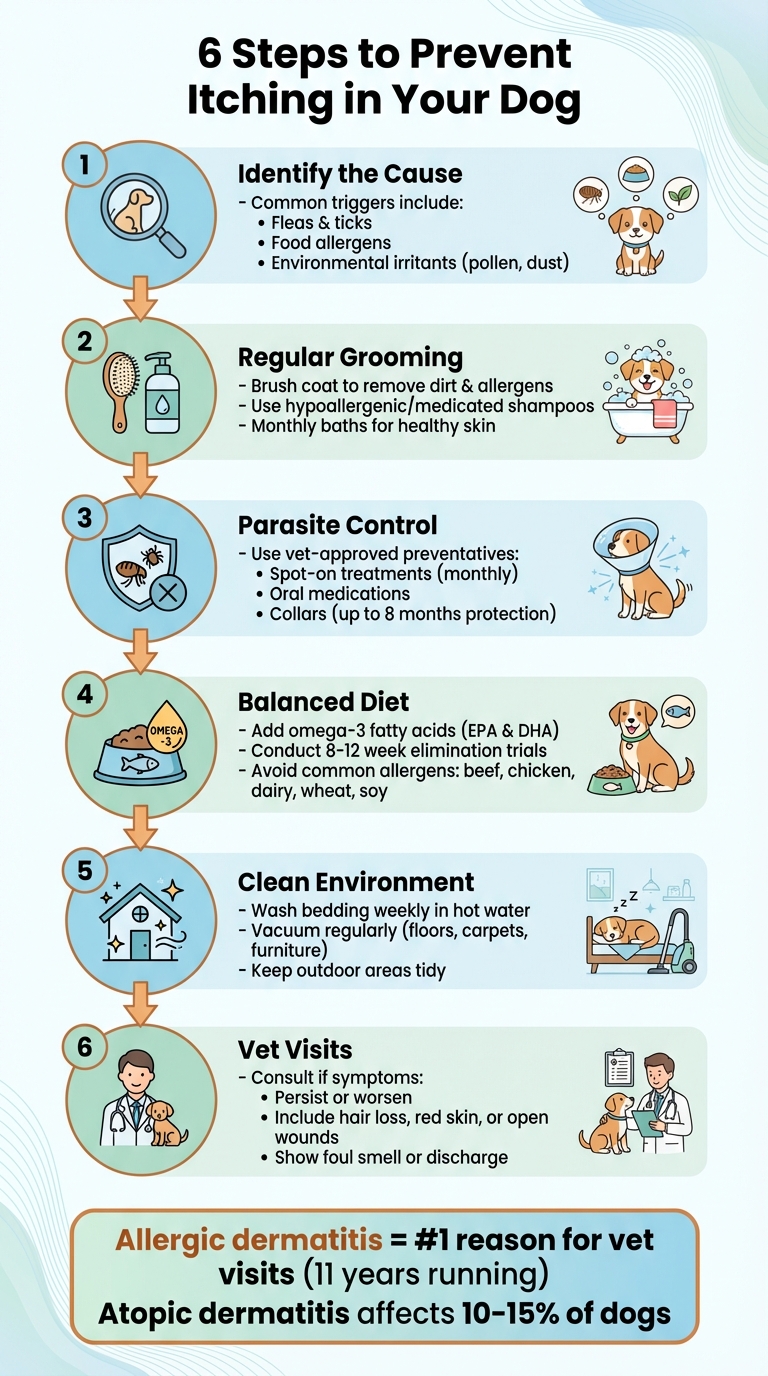
6-Step Guide to Prevent Dog Itching: From Identification to Treatment
How To Stop your Dog Itching from Skin Allergies
Grooming and Hygiene: First Steps to Prevention
Keeping your dog well-groomed is a key step in preventing itching. A clean, well-maintained coat acts as a shield against irritants. Regular grooming helps remove dirt, loose hair, and allergens like pollen or dust mites that cling to fur and trigger skin irritation. By eliminating these potential irritants, you reduce the chances of itching. Since your dog’s skin is a major organ that requires a significant amount of protein for maintenance, consistent grooming plays a vital role in their overall health. These simple routines form the foundation for more focused care like bathing and brushing.
Bathing with Hypoallergenic Shampoos
For dogs with healthy skin, a monthly bath is generally sufficient. However, if your dog has allergies or skin infections, you may need to bathe them more frequently using medicated or antimicrobial shampoos. These shampoos help eliminate bacteria, yeast, and allergens from the skin. Avoid using human shampoos, as they are not designed for a dog’s unique skin pH and can cause irritation.
If your dog has sensitive skin, opt for oatmeal-based shampoos or hypoallergenic formulas. Colloidal oatmeal is known for its antioxidant and anti-inflammatory properties, which aid in repairing the skin barrier. For yeast infections, shampoos with ingredients like chlorhexidine, miconazole, or ketoconazole are effective. Be sure to rinse thoroughly, as any leftover residue can lead to dryness and further irritation. After bathing, make sure to dry your dog completely, especially in areas with skin folds, as dampness can encourage bacterial and fungal growth.
Brushing and Coat Maintenance
While bathing cleans and soothes your dog’s skin, regular brushing is essential for maintaining coat health. Brushing doesn’t just detangle fur - it also stimulates hair follicles and distributes natural oils, keeping the skin hydrated. For fluffy coats, brushing twice a week helps prevent matting, which can trap moisture and lead to irritation. If matting becomes severe and shaving is necessary, your dog may experience "razor burn", which can worsen itching.
Choose the right brush for your dog’s coat type. For smooth, short coats like those of Boxers, use a rubber brush followed by a bristle brush. Dogs with long, silky coats, such as Yorkies, require daily brushing with a slicker brush. For double-coated breeds, an undercoat rake is ideal for reaching the dense secondary layer. Grooming sessions are also a great opportunity to inspect your dog’s skin closely. Part the fur at the roots to check for fleas, ticks, redness, or unusual discolouration.
Dietary Changes for Healthier Skin
Your dog's diet plays a huge role in its skin and coat health. Nutritional deficiencies can lead to dryness, flaking, and itching, while a well-balanced diet helps strengthen the skin's natural barrier against irritants and promotes overall healing from within. The right nutrients can also help reduce inflammation and support healthier skin.
Adding Omega-3 Fatty Acids
Omega-3 fatty acids, particularly EPA and DHA, are known to reduce inflammation and improve the skin's barrier function. Unlike omega-6 fatty acids - which are commonly found in most commercial dog foods - omega-3s are often missing, making supplementation an important consideration.
"Omega-3s modulate the production of chemicals in the body that contribute to inflammation and itching in the skin, thus having an anti-inflammatory effect." - Canadian Academy of Veterinary Nutrition (CAVN)
The best sources of omega-3s are fish oils derived from wild-caught cold-water fish like anchovies or sardines. When choosing a supplement, look for products that clearly list the EPA and DHA content instead of just stating "fish oil". Another option is offering freeze-dried whole sardines as a natural treat, especially for dogs with sensitive skin. Always consult your veterinarian to determine the correct dosage, as excessive amounts of omega-3s can lead to issues like gastrointestinal upset or even pancreatitis.
In addition to adding omega-3s, it's equally important to identify and eliminate problematic food ingredients that may contribute to skin issues.
Finding and Avoiding Food Allergens
Pinpointing and removing food allergens from your dog's diet is another crucial step toward healthier skin. Food allergies often cause persistent itching, especially around the paws, face, armpits, belly, and rump. Common allergens include beef, chicken, dairy, eggs, corn, wheat, and soy.
An elimination diet trial, lasting 8 to 12 weeks, is the gold standard for identifying food allergies. During this time, your dog must eat only the prescribed diet, which either contains a novel protein (like kangaroo, venison, or fish your dog hasn't tried before) or uses hydrolysed proteins that are broken down to avoid triggering an immune response. This means strictly avoiding table scraps, treats, flavoured medications, and even flavoured toothpaste.
"The key point in any food elimination diet trial is that only novel food ingredients can be fed. This also includes treats and anything the dog eats besides its regular food (including table food, flavoured medications, and toothpaste)." - Stephen D. White, DVM, DACVD, Merck Veterinary Manual
If your dog’s symptoms improve during the trial, you can reintroduce individual ingredients from the old diet one at a time over a period of up to 14 days. This process helps identify the specific trigger. However, it's important to note that blood, hair, and saliva tests are unreliable for diagnosing food allergies - only an elimination diet trial provides accurate results. Before starting, have your vet rule out other conditions like parasites or infections that might mimic allergy symptoms.
For long-term management, consider switching to a limited ingredient diet (LID) that focuses on a single protein source and minimal carbohydrates, such as sweet potatoes or peas. This approach makes it easier to pinpoint and avoid potential triggers.
sbb-itb-5205b1e
Parasite Prevention and Environmental Care
Beyond grooming and diet, taking steps to prevent parasites and maintain a clean environment plays a key role in protecting your dog's skin. Parasites like fleas and ticks are notorious for causing itching and discomfort. In fact, a single flea bite can trigger intense irritation, especially in dogs with allergies. The tricky part? Most of a flea's life cycle happens off your dog - in places like carpets, bedding, or outdoor areas - making it essential to treat both your pet and their surroundings. By combining effective treatments with thorough cleaning, you can break the cycle of these pesky parasites.
Using Flea and Tick Preventatives
Vet-approved preventatives are a must-have in your fight against fleas and ticks. These treatments come in various forms, including spot-ons, oral medications, and collars, and are designed to kill adult parasites and stop eggs from developing.
- Spot-on treatments: Applied directly to the skin (not just the fur), these are typically placed between the shoulder blades to prevent your dog from licking it off. They need to be reapplied monthly.
- Oral medications: A mess-free option that remains effective even after bathing or swimming, offering convenience and reliability.
- Collars: Products like the Seresto collar provide up to eight months of protection and cost between Rs. 1,000 and Rs. 1,500. Ensure the collar fits snugly - two fingers should fit between the collar and your dog's neck to allow proper transfer of active ingredients.
"A single female flea can produce up to 50 eggs a day!" - American Veterinary Medical Association
For immediate relief, shampoos and sprays are effective at killing parasites on contact. However, they don't offer long-term protection like spot-ons or oral treatments. When using sprays, hold the bottle 20–25 centimetres from your dog's body, avoid sensitive areas like the eyes and mouth, and ensure even application for best results. If you're travelling, a flea and tick spray can be handy for quick applications before entering grassy or wooded areas.
Important: Never use dog flea or tick products on cats. Ingredients such as permethrin can be fatal to felines.
Keeping Your Dog's Living Space Clean
Using parasite preventatives is just the first step. To truly disrupt the flea and tick life cycle, it's essential to keep your home and yard clean. Since fleas spend most of their life as eggs, larvae, or pupae in the environment, a clean living space is critical.
- Vacuum regularly: Focus on floors, carpets, and furniture, especially in areas where your dog sleeps or plays. This removes flea eggs and larvae while also encouraging dormant pupae to emerge, making them easier to eliminate with insecticides.
- Wash bedding weekly: Use hot, soapy water to clean your dog's bedding, which helps remove parasites and allergens.
- Clean other items: Regularly wash grooming tools, food bowls, and water bowls to minimise the risk of parasite spread. If your dog is sensitive to dust mites, consider using specialised dust mite covers for their bedding.
"Because much of the flea's life cycle is spent somewhere other than on a pet, treating just your pet will provide only temporary relief." - American Veterinary Medical Association
Don't overlook outdoor spaces. Keep your lawn trimmed, bushes cut back, and clear any leaf litter to reduce habitats where fleas and ticks thrive. After walks in grassy or wooded areas, do a quick "tick check" on your dog - and yourself - to catch any unwanted hitchhikers before they attach. If you spot a tick, use tweezers to grab it as close to the skin as possible and pull upward with steady pressure. Avoid twisting or crushing the tick during removal.
When to Consult a Veterinarian
Even with diligent home care and preventative steps, there are times when your furry friend needs professional attention. While many itching issues can be managed at home, some situations call for a veterinarian's expertise.
"Don't try treating an itchy dog at home if their scratching and biting are severe enough that they have patches of hair loss, very red skin, or open wounds." - Jennifer Coates, DVM
If your dog's condition doesn’t improve with home remedies, it’s time to visit the vet.
Signs of Serious Skin Problems
Be on the lookout for signs that could indicate a more serious problem. These include:
- A foul smell or discharge
- Scabs, rashes, or discoloured fur from excessive licking
- Persistent behaviours like head shaking, scooting, or obsessive licking
Such symptoms might point to secondary infections or conditions like ear infections or atopic dermatitis. In fact, allergic dermatitis has consistently been the top reason for vet visits for 11 years straight, according to 2023 insurance data. Atopic dermatitis alone may affect 10–15% of dogs. If the itching doesn’t subside with soothing shampoos or omega-3 supplements, it’s best to consult your vet rather than continuing with treatments that aren’t working.
Diagnostic Tests and Treatment Options
Veterinarians use a step-by-step approach to pinpoint the cause of your dog’s itching. Here’s what they might do:
- Parasite check: Skin scrapings are used to identify mites.
- Infection testing: Skin cytology helps detect bacterial or yeast infections.
- Fungal culture: For suspected ringworm cases.
- Skin biopsy: In more complex cases, this can rule out autoimmune diseases or skin cancer.
If allergies are suspected, your vet might suggest an elimination diet trial lasting 8–12 weeks. This involves feeding your dog novel or hydrolysed proteins while avoiding all other treats or table scraps - just a small amount of the wrong food could ruin the trial. For environmental allergies, intradermal or blood testing can help identify triggers. Allergen-specific immunotherapy (ASIT) is an option, with a success rate of about 60%.
Modern treatments also offer promising solutions. Monoclonal antibody injections, such as Cytopoint, provide relief for 4–8 weeks, while daily JAK inhibitors like Apoquel or Zenrelia can be combined with topical therapies for a customised treatment plan.
Conclusion: Keeping Your Dog Comfortable and Healthy
Preventing itching in dogs involves a well-rounded approach: consistent parasite control, a balanced AAFCO-compliant diet, and Omega‑3 supplements to strengthen the skin barrier and help minimise inflammation.
Regular grooming and maintaining a clean environment are just as important. Routine skin checks and hypoallergenic baths can help catch early signs of irritation and remove allergens, while keeping your dog's living area clean reduces the chances of flare-ups. These combined efforts create a strong shield against recurring skin problems.
"An ounce of prevention is worth a pound of cure... This proves true when it comes to skin conditions in dogs." - Anna Burke
This quote highlights the importance of consistent daily care. From proper grooming to a well-thought-out diet, these habits form the backbone of itch prevention.
FAQs
When should I take my dog to the vet for itching?
If your dog’s itching becomes intense or doesn't go away, it’s crucial to see a vet. Look out for warning signs like hives, swelling around the face, eyes, or lips, red or oozing skin, excessive hair loss, or a strong odour coming from the skin. Also, if your dog is panting abnormally or home remedies fail to provide relief, a vet can help diagnose and address the root cause.
What is the safest way to add omega-3 supplements to my dog’s diet?
To safely include omega-3 supplements in your dog’s diet, it’s essential to start by consulting your veterinarian. They’ll help determine the right type and dosage based on factors like your dog’s size, age, and specific health requirements. Omega-3 supplements, such as fish oil, can benefit your dog by supporting healthier skin, a shinier coat, and improved joint and brain function.
Once you’ve got the vet’s recommendations, introduce the supplement slowly into your dog’s meals to ensure they adjust well. Stick to the prescribed dosage to avoid side effects and keep an eye out for any unusual changes in behaviour or health. If something seems off, don’t hesitate to contact your vet right away.
How can I find out if my dog's itching is caused by a food allergy?
To figure out if your dog's itching is caused by a food allergy, the best approach is a systematic elimination diet. This involves giving your dog a diet with limited ingredients - usually a protein and carbohydrate they haven't had before. Over time, you can slowly reintroduce other foods to identify what might be triggering the reaction.
Another option is to consult your vet for allergy testing, which can help identify specific allergens. It's important to follow these steps under your vet's supervision to keep your dog safe and healthy during the process.


