


If your cat is constantly scratching, it’s not just an annoyance - it could signal an underlying issue like fleas, allergies, or infections. Persistent itching can lead to skin damage, hair loss, and even serious health problems like infections or anaemia in severe cases. Here's how you can help your cat stay itch-free and comfortable:
- Identify the cause: Common culprits include fleas, mites, allergies (like pollen or dust), and skin infections.
- Home remedies: Oatmeal baths, chamomile sprays, and proper grooming can provide relief for mild itching.
- Dietary adjustments: Adding omega-3 fatty acids or switching to hypoallergenic diets can improve skin health.
- Maintain hygiene: Regular brushing, using vet-approved shampoos, and keeping your cat’s environment clean are key.
- Consult a vet: If itching persists, worsens, or leads to wounds, professional care is necessary.
Start by addressing the root cause and combining grooming, diet, and preventive care to break the itch-scratch cycle. For severe or prolonged symptoms, always seek veterinary advice.
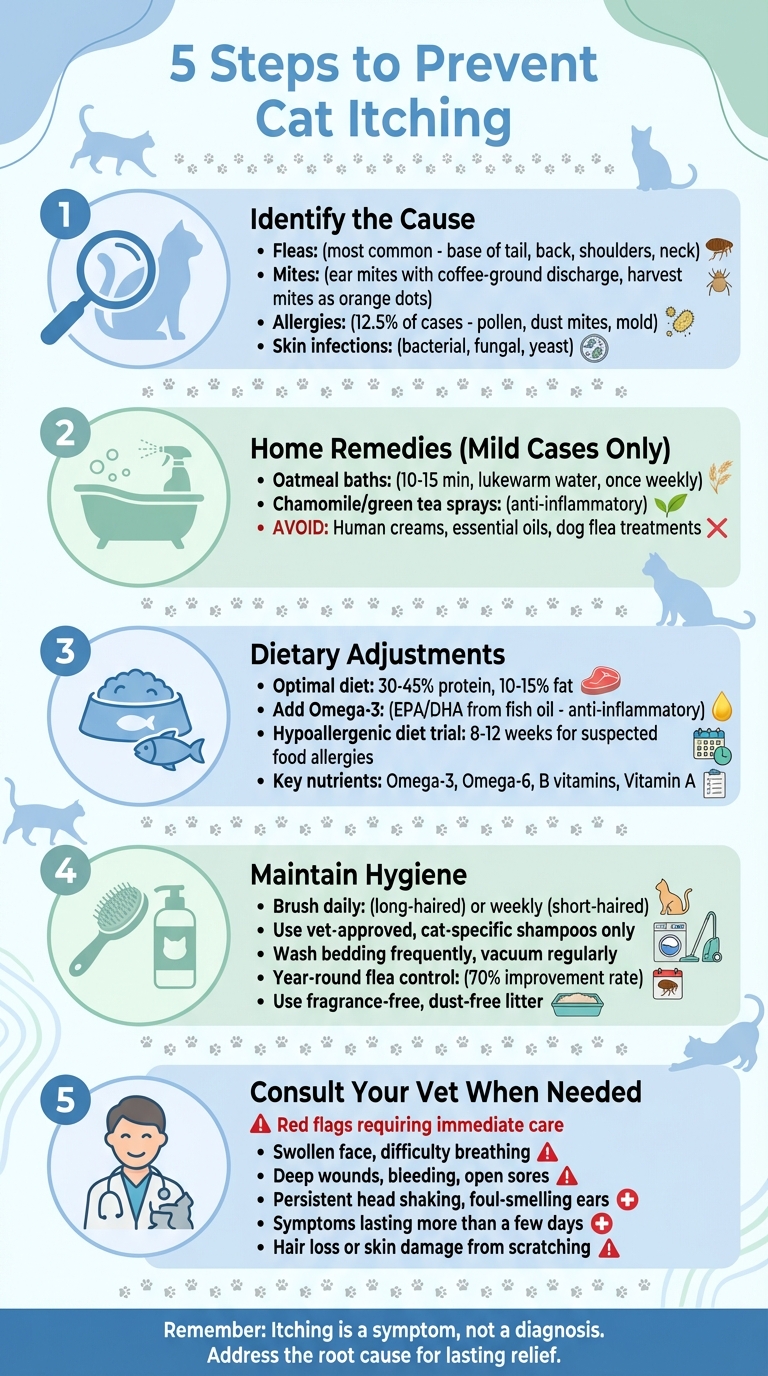
5-Step Guide to Prevent and Treat Cat Itching
My CAT Is SCRATCHING Themselves RAW 🐱 (7 Causes and Solutions)
sbb-itb-5205b1e
Common Causes of Itching in Cats
Figuring out what’s making your cat itch is a big deal. Skin problems are a frequent reason cats visit the vet, with a large number of cases linked to this issue. Dr Karen A. Moriello from the University of Wisconsin–Madison puts it best: "Itching is a sign, not a diagnosis or a specific disease. The most common causes of itching are parasites, infections, and allergies". Let’s break down the usual culprits.
Fleas and External Parasites
Fleas are hands down the most common cause of itchy skin in cats. They tend to hang around the base of the tail, back, shoulders, and neck. Even one flea bite can set off itching that lasts for up to two weeks. If you don’t spot fleas, look for flea dirt - tiny black specks that turn red when wet. That’s a tell-tale sign of their presence.
Other parasites can also be troublemakers. Ear mites (Otodectes cynotis) often leave a coffee-ground-like discharge in the ears and cause frequent head shaking. Harvest mites, noticeable as orange dots, show up between the toes or in ear flap pockets, especially in late summer and autumn. Lice, although rare, attach their nits to hair shafts, often in cats that don’t groom well. Another clue to parasite-related irritation is miliary dermatitis - small, crusty bumps that feel like millet seeds. But parasites aren’t the only triggers; environmental factors can also play a role.
Allergies and Environmental Triggers
Environmental allergies, or atopy, affect about 12.5% of cats with itching issues. These allergies are often caused by inhaled particles like pollen, dust mites, or mould. If your cat scratches more during spring or summer, pollen might be the culprit. On the other hand, year-round itching is more likely tied to indoor allergens such as dust mites.
Contact dermatitis happens when a cat’s skin reacts to something it touches. Purina’s Pet Expert Team explains, "cats can become itchy after coming in contact with an irritant or allergen. The reactions can be caused by litter, fabrics, dyes, cleaning materials, plastics, and plants". Fragranced cat litter, detergent residue on bedding, or certain cleaning products can also trigger these reactions. Common signs include miliary dermatitis, bald patches from over-grooming, and redness - especially on the face, ears, and paws. Beyond external irritants, infections can make things worse.
Skin Conditions and Infections
Skin infections, both bacterial and fungal, often follow damage caused by allergies or parasites. These infections occur when the skin barrier is compromised, allowing bacteria or yeast to thrive. Symptoms to watch for include redness, swelling, hair loss, crusting, oozing, or warmth in the affected areas. Yeast infections (Malassezia) are common in areas like the ears, face, groin, and paws, often accompanied by a brown discharge.
Ringworm, despite its name, is a fungal infection - not a worm. It causes circular bald spots with scaling and crusting. Though ringworm is highly contagious to humans, it’s not always very itchy, which can help distinguish it from other issues. Vets sometimes use trial treatments to figure out the cause: if itching improves after a few weeks of antibiotics or antifungals, it’s likely an infection. If not, an allergy might be to blame. Tackling these causes is essential to keeping your cat comfortable.
Home Remedies to Relieve Itching
For mild cases of itching, some home remedies can offer relief. However, if the symptoms persist for more than a few days or your cat's scratching leads to fur loss or skin damage, it's crucial to contact a veterinarian right away. As noted by Westerville Veterinary Clinic:
"Home remedies work best for mild irritation. For ongoing or severe symptoms, a veterinary exam ensures your pet gets the right treatment and long-term relief".
Here are a few simple remedies to help ease your cat's itching.
Oatmeal Baths or Pastes
Colloidal oatmeal is known for its soothing properties, particularly for calming irritated skin and hydrating dry areas. To prepare an oatmeal bath, grind unsweetened oatmeal into a fine powder and mix it into lukewarm water. Let your cat soak in this mixture for 10–15 minutes. Make sure the water is lukewarm, as hot water can worsen irritation. Oatmeal baths are generally safe once a week, but your veterinarian might recommend a different schedule based on your cat's specific needs. Alternatively, you can use shampoos labelled "colloidal oatmeal", which are designed for cats and help maintain skin hydration.
Chamomile or Green Tea Sprays
Chamomile and green tea are both known for their anti-inflammatory properties and can provide relief when applied topically. To create a soothing spray, brew chamomile tea bags in water, let the liquid cool completely, and transfer it to a spray bottle. Lightly spray the affected areas. Since cats groom themselves frequently, it’s essential to ensure any spray used is safe for ingestion. Purina’s Pet Expert Team advises:
"Because cats are always grooming themselves, you want to make sure whatever you apply is okay to be ingested by your cat".
For cats with sensitive skin, ensure the preparation is free from fragrances to prevent additional irritation.
Avoiding Harmful Remedies
While natural remedies can help, it’s important to avoid treatments that might harm your cat. Human anti-itch creams should never be used, as they often contain ingredients that are toxic to cats. Similarly, undiluted essential oils pose serious risks. Dr Chris Reeder, a Board Certified Veterinary Dermatologist, explains:
"Essential oils can get tricky if a cat ingests them, so be on the lookout for that".
Also, never use flea treatments designed for dogs, as ingredients like permethrin can be fatal to cats. If your cat’s scratching becomes severe enough to cause skin damage, consider using a recovery collar to protect the area and allow it to heal.
Dietary Changes for Healthy Skin
What your cat eats has a direct impact on its skin and coat health. Protein plays a key role in hair renewal, making proper nutrition essential to prevent itching and other skin issues. With many cats experiencing skin diseases, dietary management becomes an important part of their care.
For optimal skin health, a cat's diet should include 30%–45% protein and 10%–15% fat on a dry matter basis. Look for cat food that adheres to AAFCO (Association of American Feed Control Officials) guidelines and provides key nutrients like omega-3, omega-6, B vitamins, and vitamin A. These nutrients help strengthen the skin barrier and reduce inflammation. Dr Jennifer Larsen, Associate Professor of Clinical Nutrition at UC-Davis School of Veterinary Medicine, highlights:
"Skin problems in cats are often a sign that something significant is going on".
Below, we explore how omega-3 fatty acids and hypoallergenic diets can further improve your cat's skin health.
Adding Omega-3 Fatty Acids
Omega-3 fatty acids, especially EPA (eicosapentaenoic acid) and DHA (docosahexaenoic acid) from cold-water fish oils, offer strong anti-inflammatory benefits. Dr Sherry Sanderson, Associate Professor at The University of Georgia College of Veterinary Medicine, explains:
"EPA supports normal cell membrane fluidity and reduces inflammation".
These fatty acids help regulate the production of chemicals that cause inflammation and itching. Additionally, alpha-linolenic acid (ALA), found in flaxseeds, supports the skin's ability to retain moisture, preventing dryness. Omega-6 fatty acids, found in vegetable oils and animal fats, are equally important. Linoleic acid, a type of omega-6, should make up at least 0.5% of the diet on a dry matter basis to maintain healthy skin.
For cats with chronic allergies, omega-3 supplementation can sometimes reduce the need for antihistamines or other anti-itch medications. Marine-based omega-3 sources are more easily absorbed by cats compared to plant-based options, so they should be prioritised. Always consult your veterinarian for the correct dosage.
Switching to a Hypoallergenic Diet
If your cat experiences persistent itching throughout the year, food allergies might be the cause. Proteins like chicken, beef, or fish are common allergens for sensitive cats. Hypoallergenic diets use hydrolyzed proteins, which are broken down into smaller components that the immune system doesn’t recognise as allergens. This prevents the inflammatory response that leads to itching.
To confirm food allergies, conduct a dietary trial for 8 to 12 weeks with either a prescription hydrolyzed diet or a novel protein - such as lamb - that your cat hasn’t eaten before. During this time, avoid giving treats, flavoured medications, or human food, as even small amounts of the allergen can trigger symptoms. Many specialised diets also include vitamin A and probiotics to support cats with sensitive skin and digestive systems.
These dietary changes can work alongside other preventive measures to help keep your cat itch-free and comfortable.
Grooming and Hygiene Practices
Maintaining proper grooming habits and a clean environment plays a crucial role in preventing skin irritation and breaking the itch-scratch cycle in cats. These simple yet effective steps can complement earlier preventive measures to keep your feline comfortable and healthy.
Regular Brushing
Brushing your cat regularly helps remove loose hair, dead skin cells, dirt, and debris that might irritate their skin. It also spreads natural oils along the coat, keeping it hydrated and improving circulation. For long-haired cats, daily brushing is recommended, while short-haired cats can be brushed once or twice a week. Use tools suited to your cat's coat type - stiff bristle brushes for short-haired cats and long-toothed combs for medium to long-haired coats are ideal for reaching the undercoat effectively.
As Ryan Llera, BSc, DVM, and colleagues explain:
"Daily brushing will reduce the amount of hair a cat swallows during self-grooming with her tongue, therefore helping to reduce the number of hairballs your cat may develop."
Before bathing your cat, always remove tangles. Mats can tighten when wet, making them harder to manage.
Using Vet-Approved Shampoos
When it comes to bathing, stick to shampoos designed specifically for cats. Human shampoos, including baby products, can harm feline skin due to differences in pH levels and skin thickness. For regular cleaning, hypoallergenic shampoos without added fragrances are a safe choice. If your cat struggles with allergies or skin infections, your vet may recommend medicated shampoos that need to stay on the skin for 5–10 minutes before rinsing.
Thorough rinsing is critical, as any leftover shampoo can be toxic when ingested during self-grooming. Ryan Llera, BSc, DVM, and colleagues emphasise:
"Since your cat WILL groom itself vigorously after the bath, it is important to rinse out all traces of shampoo or other products... to avoid any risk of toxicity to your cat."
For thick-coated cats, diluting shampoo in water can simplify application and rinsing. A conditioning rinse afterward can restore moisture and reduce dandruff, keeping their coat and skin in top condition.
Keeping Living Spaces Clean
Just as grooming protects your cat’s coat, maintaining a clean environment helps reduce irritants that can trigger itching. A clean home minimises exposure to allergens and parasites, which are often culprits behind skin issues. Studies show that about 70% of itchy cats referred to specialists improve significantly with consistent flea control, even if fleas aren’t immediately visible.
Here’s how to create a supportive environment for your cat:
- Wash bedding frequently and vacuum regularly to remove fur, dander, and flea eggs.
- Address common allergens like house dust mites and pollen, which contribute to atopy in about 12.5% of itchy cats.
- Use a humidifier during winter to combat dry, flaky skin caused by indoor heating.
- Opt for fragrance-free, dust-free cat litter to minimise paw irritation from contact allergies.
These grooming and hygiene practices are essential for maintaining your cat's skin health and overall comfort.
When to Consult a Veterinarian
While home remedies and preventive care can help with mild itching, there are situations where a veterinarian's expertise becomes essential.
Persistent or Worsening Symptoms
Home remedies might work for minor issues, but certain symptoms demand immediate veterinary attention. For instance, if your cat experiences severe allergic reactions - like a swollen face, sneezing, or difficulty breathing - it's critical to seek help right away. Similarly, intense scratching that leads to deep wounds, bleeding, or signs of infection such as open sores or pus should not be ignored. Dr Brittany Kleszynski, DVM, highlights:
"Itching due to an allergic reaction ends within minutes of a veterinarian giving the right medication".
She further emphasises:
"If a cat is extremely itchy and is damaging his fur and skin, leading to deep scratches and bleeding, he should be brought to a veterinarian quickly for relief and to prevent infection".
Ear-related issues are another red flag. Persistent head shaking, painful or foul-smelling ears, or brownish discharge often indicate infections that require professional treatment. Any prolonged or uncomfortable scratching should prompt a veterinary visit. Before the appointment, document details like when the symptoms began, whether they follow seasonal patterns, or any recent changes in the cat's environment. To prevent further skin damage while waiting, consider using an Elizabethan collar (cone).
Preventive Veterinary Care
Beyond addressing acute symptoms, regular check-ups play a key role in preventing chronic skin problems. These wellness visits allow veterinarians to spot potential skin issues early, reducing the risk of serious infections. Interestingly, around 70% of itchy cats referred to specialists show improvement simply by following a comprehensive flea control programme, even when no fleas are visible.
Year-round parasite control, tailored to your cat's needs, is equally important. Regular check-ups also help rule out serious underlying conditions like endocrine disorders, autoimmune diseases, or cancer, as itching is often a symptom of a deeper issue rather than a diagnosis itself.
Conclusion
To manage and prevent cat itching, it's essential to have a well-rounded care plan. The first step is figuring out the root cause - whether it's parasites like fleas, environmental triggers, or food-related sensitivities. Since itching is a symptom, not a diagnosis, addressing the source is key. Regular grooming helps maintain a healthy coat and gives you the chance to catch early signs of trouble, such as scabs, bumps, or fleas, before they turn into bigger issues.
Tackling the problem from multiple angles is important for long-term relief. Year-round parasite prevention is a must, even for indoor cats, as they aren't completely safe from fleas or ticks. Pair this with dietary changes, like incorporating omega-3 fatty acids or switching to a hypoallergenic diet if food allergies are suspected, to support your cat’s skin health. Keeping their environment clean is equally important - wash bedding weekly in hot water and use ceramic or stainless steel bowls to avoid problems like chin acne.
For mild itching, oatmeal baths or chamomile sprays can provide temporary relief, but steer clear of human products, as they can be harmful to cats.
If the itching doesn’t improve or gets worse, it’s time to visit the vet. Your cat’s skin plays a crucial role in their overall health, and professional diagnostics like skin scrapes, fungal cultures, or blood tests can help identify the underlying issue and guide effective treatment.
FAQs
How do I know if my cat's itching is caused by allergies or parasites?
To determine whether your cat's itching stems from allergies or parasites, start by paying close attention to their behaviour and skin condition. Allergies often present as constant itching, redness, hair thinning, or irritated skin. Common triggers include food, environmental allergens, or flea bites. For instance, flea allergy dermatitis frequently appears as red bumps or hair loss around areas like the head, chin, or base of the tail. Similarly, food allergies might cause itching, often linked to recent changes in your cat's diet.
Parasites such as fleas, mites, or lice are another common cause of itching. Check for signs like fleas in the fur, flea dirt (tiny black specks resembling pepper), or irritation in specific spots. Flea bites typically lead to intense scratching, particularly around the tail, neck, or belly. If you notice these symptoms, parasites are likely to blame.
If you're unsure or the itching continues despite finding no visible signs of parasites, it’s best to consult a veterinarian. They can provide a proper diagnosis and suggest an effective treatment plan to ease your cat’s discomfort and restore their skin health.
What dietary changes can help prevent itching in my cat?
What your cat eats plays a major role in addressing itching, especially if food allergies or sensitivities are the culprits. Switching to a hypoallergenic diet or one with limited ingredients can make a big difference. These diets typically feature novel protein sources like duck or rabbit, or hydrolysed proteins, which are less likely to cause allergic reactions. It's also wise to avoid common allergens such as beef, chicken, dairy, and grains, as these can often lead to skin irritation.
Incorporating foods rich in omega-3 and omega-6 fatty acids, such as fish oil, can also support healthy skin by reducing dryness and inflammation. However, it’s crucial to consult your veterinarian to identify potential triggers and select the most suitable diet for your cat. This ensures not only relief from itching but also long-term skin and coat health.
When should I take my cat to the vet if it keeps scratching or itching?
If your cat keeps scratching or itching persistently, it’s a good idea to consult a vet - especially if the behaviour is intense enough to cause skin damage, hair loss, or wounds. Constant itching can point to underlying problems like allergies, parasites, or skin infections, which need proper diagnosis and treatment from a professional.
If basic care measures like regular grooming, flea treatments, or hypoallergenic shampoos don’t seem to help, it’s even more crucial to seek veterinary advice. Addressing the issue early can save your cat from unnecessary discomfort and help maintain their skin and coat health.


