


Choosing between dry and wet pet food depends on your pet's health, preferences, and your budget. Here's a quick breakdown to help you decide:
- Dry Food (Kibble): Affordable, easy to store, and supports dental health due to its crunchy texture. However, it has low moisture content (6–12%) and may not suit pets needing extra hydration.
- Wet Food (Canned/Pouch): High in moisture (70–85%), ideal for hydration and pets with dental or urinary issues. It’s softer and more palatable but costs more and requires refrigeration after opening.
Quick Comparison
| Feature | Dry Food (Kibble) | Wet Food (Canned/Pouch) |
|---|---|---|
| Moisture Content | 6–12% | 70–85% |
| Protein (Dry Basis) | ~27% | ~44% |
| Daily Cost (Small Dog) | ₹30–₹50 | ₹150–₹250 |
| Shelf Life (Opened) | Weeks (airtight) | 2–3 days (refrigerated) |
| Dental Benefit | Helps scrape plaque | Minimal |
| Storage Needs | Cool, dry place | Requires refrigeration |
Tip: Mixing both types can balance hydration, cost, and dental care. Consult your vet to tailor the diet to your pet’s needs.
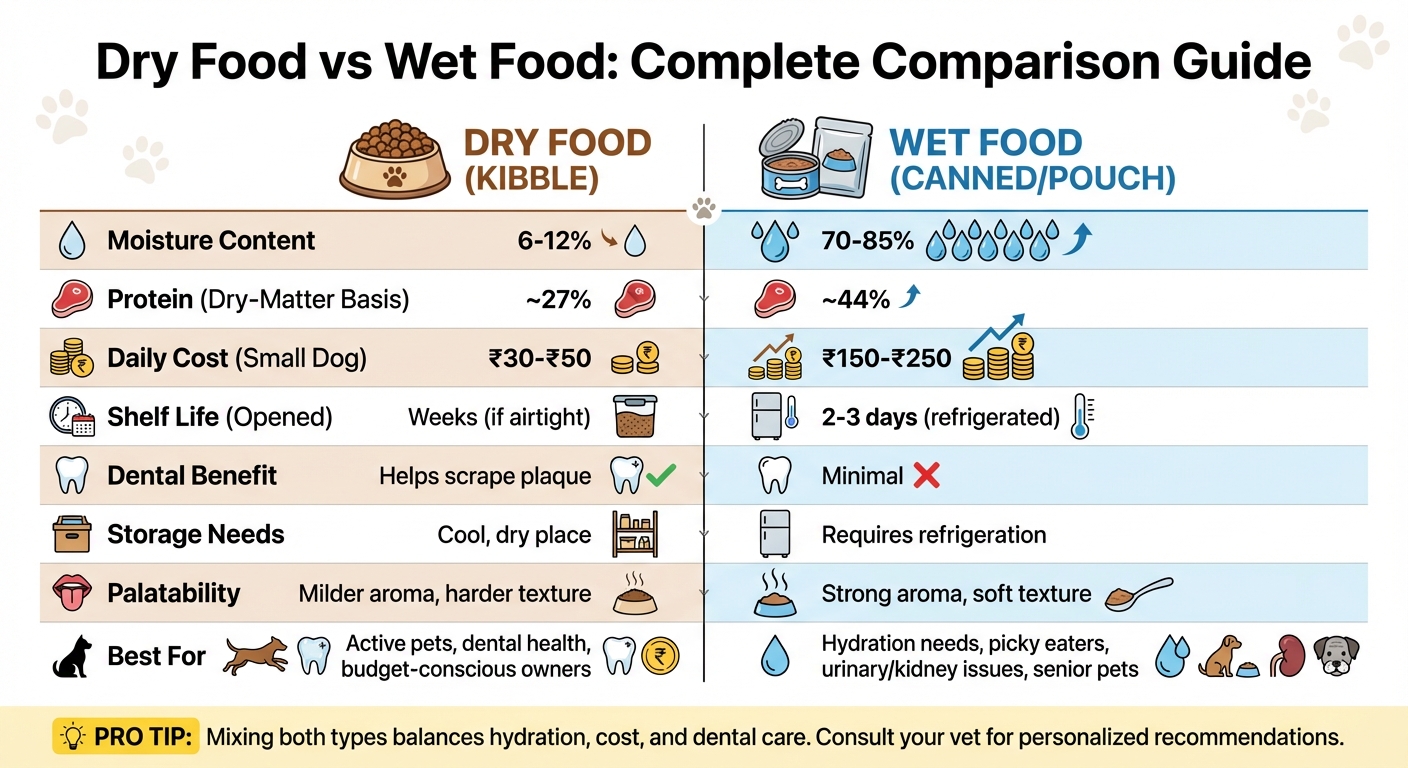
Dry Food vs Wet Food Comparison Chart for Pets
Dry Food: Features and Considerations
What Dry Food Contains
Dry food, often referred to as kibble, is made through an extrusion process at temperatures exceeding 180°C. This method produces crunchy pellets with a moisture content ranging between 6% and 12%, making them shelf-stable without the need for refrigeration. Each piece of kibble is designed to be "complete and balanced", containing around 37 essential nutrients. Common ingredients include named meat sources like chicken, lamb, or salmon, paired with whole grains such as brown rice, oats, and barley. Higher-end products may also include extras like probiotics for better digestion and omega-3 fatty acids to support a healthy coat.
In India, pet food standards are regulated under IS 11968:2019 by the Bureau of Indian Standards, ensuring nutritional adequacy and safety. Unopened bags of dry food typically have a shelf life of 18–24 months. Buying larger bags can significantly reduce the cost per kilogram, making it a practical choice for budget-conscious owners or those feeding community animals. These aspects highlight why dry food is a popular option for many pet owners.
Advantages of Dry Food
One of the biggest draws of dry food is its affordability. It generally costs less per calorie than wet food, and purchasing in bulk further reduces expenses. Storage is simple since kibble doesn’t need refrigeration as long as it’s kept in a cool, dry, and airtight container. Its long shelf life also makes it ideal for "free choice" feeding, where food is left out for pets to eat as they please. Additionally, dry food is compatible with automatic feeders or puzzle toys, offering convenience for busy pet owners.
"Dry dog food also tends to come in larger packets than wet food, meaning it's easier to keep a large stock." – Purina India
The crunchy texture of kibble provides an added dental benefit by helping to scrape away plaque and tartar as pets chew. Individual kibble pieces can also double as training treats, making it easier to manage portions while rewarding good behaviour. These factors combine to make dry food a cost-effective and practical choice, but it’s not without its downsides.
Drawbacks of Dry Food
One notable downside of dry food is its low moisture content, which ranges from 6% to 12%. This can be problematic, especially for cats, who naturally have a low thirst drive. Insufficient hydration may lead to urinary tract issues or the formation of crystals.
Another concern is the high-temperature extrusion process, which can degrade heat-sensitive nutrients like B-complex vitamins and Vitamin C. Manufacturers often reintroduce these vitamins, but their bioavailability may not match that of nutrients found in fresh or wet food.
Palatability can also be an issue. The milder aroma and harder texture of kibble may not appeal to picky eaters or older pets with diminished senses. Pets with dental problems or missing teeth might struggle to chew the hard pieces comfortably. To address the lack of moisture, some owners add water or gravy to the kibble, though this requires extra effort and preparation.
While dry food has its advantages, these limitations should be carefully weighed to determine if it’s the right choice for your pet.
Wet Food: Features and Considerations
What Wet Food Contains
Wet food, typically sold in cans or pouches, boasts a high moisture content of 70% to 85%, a stark contrast to the 6% to 12% found in kibble. To produce it, fresh or frozen meats like chicken, beef, lamb, or fish are combined with water, sealed, and heated at temperatures between 120°C and 130°C. This process, known as retorting, ensures the food is safe to store without refrigeration until opened.
The formulation includes high-quality protein sources such as chicken, organ meats (like chicken liver), and fish, along with broth for moisture. Stabilizers like carrageenan or guar gum, essential vitamins (A, D₃, E, and B-complex), minerals (calcium carbonate, potassium chloride), and taurine - a vital nutrient for cats' heart and vision health - are added to meet nutritional standards. Carbohydrates like brown rice, peas, and sweet potatoes provide energy and fibre for digestion. Premium brands, such as Royal Canin and Hill's Prescription Diet, start at around ₹1,900 per pack, while prescription options can range anywhere from ₹1,200 to ₹4,500, depending on specific medical needs.
Advantages of Wet Food
One of the standout benefits of wet food is its ability to enhance hydration. With a water content of 70% to 85%, it significantly boosts daily water intake, which is especially helpful for cats that naturally have a low thirst drive. This extra hydration helps dilute urine, potentially reducing the risk of urinary crystals, stones, and feline idiopathic cystitis. Studies show that diets with approximately 73% moisture can lower urine specific gravity and reduce the concentration of calcium oxalate, a common urinary issue in cats.
"The strongest indication for wet food is for the patient with urinary disease in general, where urine dilution is required." – Jess L. P. Benson and Megan L. Shepherd, DVMs
Wet food's strong aroma, soft texture, and richer protein and fat content make it particularly appealing to picky eaters and older pets. It’s also easier to chew, making it a good choice for pets with dental problems or missing teeth. For pets on a weight management plan, wet food offers an added advantage: they can eat a larger portion while consuming fewer calories. However, it’s important to refrigerate any opened portions and use them within 24 to 72 hours. Serving it at room temperature enhances its appeal.
Drawbacks of Wet Food
Despite its many benefits, wet food does come with some challenges. The most notable is the cost. Wet food is significantly more expensive per serving and calorie compared to kibble, making it a less economical option for households with large dogs or multiple pets. Its higher price can be attributed to the cost of packaging and its lower caloric density.
Storage and spoilage are other concerns. In India’s warm climate, wet food spoils quickly if left out for more than two hours. Any leftovers need to be covered and refrigerated immediately. Additionally, since wet food is sold in individual cans or pouches rather than in bulk, it requires more storage space. It can also be messier to serve and may leave behind lingering odours.
"Wet food could cause dental issues. Unlike dry food it sticks to the teeth increasing plaque buildup." – Bayshore Veterinary Clinic
Dental health is another drawback. The soft texture of wet food doesn’t provide the mechanical cleaning action that dry food does, potentially leading to plaque and tartar buildup. Pet owners who rely on wet food exclusively should consider regular dental check-ups or adding dental treats to their pet’s routine.
Dry Food vs Wet Food: Direct Comparison
Nutrition and Hydration
When it comes to nutritional content, wet food may appear to have lower protein levels at first glance - around 8% as-fed. However, when recalculated on a dry-matter basis, it actually provides about 44.4% protein compared to dry food's 27.3% protein. Similarly, the fat content in wet food, listed as 3%, translates to approximately 16.7% on a dry-matter basis, surpassing the 11.4% found in kibble.
Another key distinction lies in hydration. Dry food contains only about 10% water, whereas wet food boasts a moisture content of 70–80%. This makes wet food a better option for pets that don't drink enough water on their own, helping to support their hydration needs.
These nutritional and hydration differences also influence other aspects of pet health, like dental care and digestion.
Dental and Digestive Effects
Dry kibble has a crunchy texture that can help scrape plaque and tartar off your pet's teeth as they chew, offering some dental benefits. However, this doesn't replace the need for professional dental care. Wet food, on the other hand, lacks this abrasive quality and may even contribute to bad breath, as its softer texture can leave food particles sticking to teeth.
Wet food is often easier to chew and digest, making it an excellent choice for kittens, senior pets, or animals recovering from illness. Additionally, wet food's high water content allows pets to eat larger portions with fewer calories, which can help them feel fuller - an advantage for pets on weight management plans. While some studies suggest dry food may lead to slower gastric emptying in cats, the connection to hairball formation remains unclear.
Cost and Convenience
Practical considerations like cost and convenience also play a significant role in choosing between dry and wet food. Dry food is far more economical, costing around ₹30–₹50 per day for a small dog, compared to ₹150–₹250 for wet food. For larger dogs or households with multiple pets, this price gap becomes even more noticeable.
Dry food is also easier to store and manage. It often comes in bulk packs with a shelf life of 18–24 months, requiring only an airtight container to keep it fresh and pest-free. Wet food, however, needs refrigeration once opened and must be consumed within 24 to 72 hours. In India's warm climate, wet food left at room temperature for more than two hours can spoil quickly, increasing the risk of bacterial growth.
Dry food offers additional convenience. It can be left out for free-feeding, used in automatic feeders, or even incorporated into puzzle toys for mental stimulation. Wet food, by contrast, requires more effort in terms of preparation and storage, and its packaging generates more waste.
These practical differences, combined with nutritional factors, help pet owners weigh their options based on their pet's specific needs and lifestyle.
| Feature | Dry Food (Kibble) | Wet Food (Canned/Pouch) |
|---|---|---|
| Moisture Content | 6%–12% | 70–80% |
| Protein (Dry‐Matter Basis) | ~27% | ~44% |
| Daily Cost (Small Dog) | ₹30–₹50 | ₹150–₹250 |
| Shelf Life (Opened) | Weeks (if sealed) | 2–3 days (refrigerated) |
| Dental Benefit | Mechanical plaque scraping | Minimal |
| Storage Needs | Cool, dry place | Requires refrigeration |
sbb-itb-5205b1e
Combining Both Types and Switching Foods
Benefits of Feeding Both Types
Feeding your pet a mix of dry and wet food offers the best of both worlds. Wet food, with its high moisture content (70–85%), supports kidney and urinary health, while dry kibble helps reduce plaque and gingivitis, promoting better dental hygiene. This combination is particularly helpful for pets with sensitive teeth or gums.
A mixed diet can also work wonders for picky eaters. Older pets, whose senses of smell and taste may have weakened, often find the stronger aroma of wet food more appealing when paired with the crunch of kibble. This approach can stimulate their appetite effectively. Additionally, combining the two types of food strikes a balance between cost and nutrition. Dry food is roughly five times less expensive per calorie, making it a budget-friendly staple to complement with the added nutrition of wet food.
"By either mixing them together or giving canned at one feeding time and dry at the other, you may be able to get the benefits of both diets." - Cathy Meeks, MS, DVM, DACVIM
With these advantages in mind, understanding how to transition between food types is essential.
How to Switch Between Food Types
Switching foods should be done gradually over 7–10 days. Start by mixing a small amount of the new food into your pet's current meals, slowly increasing the proportion each day. Alternatively, you can serve wet food at one meal and dry kibble at another. Keep in mind that wet food should not be left out for more than 30 to 60 minutes, especially in India's warm climate, to avoid bacterial growth. Once a can is opened, refrigerate any unused portion and use it within 24 hours.
Adjusting Diet Based on Your Pet's Needs
Once your pet has adjusted to the new diet, you can fine-tune the dry-to-wet ratio based on their specific needs. For example, younger pets often benefit from the softer texture of wet food, while senior pets with dental challenges may find it easier to chew. Pets with kidney or urinary issues require the added moisture that wet food provides.
If weight management is a concern, wet food's lower caloric density (0.8–1.5 kcal/g) allows you to serve larger portions without increasing calorie intake. On the other hand, active or underweight pets may benefit from the higher energy content of dry food. For precise calorie requirements, consult your veterinarian, and remember to keep treats limited to 10–15% of your pet's daily caloric intake.
Dry Cat Food vs. Wet Cat Food: Which One Actually Keeps Cats Healthier?
Conclusion
To wrap things up, deciding between dry and wet food isn’t about picking a "one-size-fits-all" solution. Instead, it’s about finding what works best for your pet based on their unique needs. Factors like nutritional adequacy, your pet’s health conditions, lifestyle, and even your budget play a crucial role. Both dry and wet food meet AAFCO standards for complete nutrition, so the choice often comes down to your pet’s age, health, dental needs, and activity levels.
For pets dealing with kidney disease, diabetes, or urinary tract issues, the high moisture content of wet food (70–85%) can be particularly beneficial. On the other hand, pets that require dental support might benefit from the plaque-reducing properties of dry kibble. Additionally, highly active pets may thrive on the higher caloric density offered by dry food.
"The best cat food for your cat will be unique to their lifestyle and nutritional needs." - Cathy Meeks, MS, DVM, DACVIM, PetMD
A mixed feeding plan can be a great option, combining the hydration benefits of wet food with the convenience and dental perks of dry kibble. This approach often works well for pets with specific nutritional needs or picky eaters.
For the best results, consult your veterinarian to determine the right caloric intake and portion sizes tailored to your pet’s health, age, and lifestyle.
FAQs
Is it okay to feed my pet a mix of dry and wet food?
Yes, you can safely feed your pet a mix of dry and wet food, as most commercial pet foods available in India are designed to meet their nutritional needs. Combining both types offers the advantages of wet food's high moisture content (around 70–80%), which helps with hydration and is easier for older pets or those with dental issues to eat. At the same time, dry kibble is convenient, promotes dental health, and is easier to store.
When introducing this combination, do it gradually. Start by adding a small portion of wet food - about 10% - to your pet's dry meal. Over a week, slowly increase this amount to help your pet adjust without upsetting their stomach. Keep an eye on calorie intake, as wet food tends to have fewer calories than kibble, and adjust portion sizes to maintain a healthy weight. Serve wet food in portions that your pet can finish within a few hours, and store any leftovers in the refrigerator to prevent spoilage.
A mixed diet can be customised based on your pet's age, breed, activity level, and specific health requirements. For the best results, consult your veterinarian to determine the right balance, especially if your pet has any medical conditions.
How does the water content in pet food impact my pet's health?
The amount of water in your pet's food significantly affects their hydration and overall well-being. Wet food typically contains 70–80% water, while dry food has only about 10% water. For pets that don't drink enough water - especially cats, who naturally have a lower thirst drive - wet food can help maintain proper hydration, supporting urinary health and lowering the risk of kidney problems.
Dry food, meanwhile, is more calorie-packed and can contribute to dental health. Its crunchy texture helps reduce plaque buildup. However, pets on a dry-only diet need constant access to fresh water to ensure they stay adequately hydrated.
Choosing between wet and dry food depends on factors like your pet's age, health conditions, and personal preferences. Wet food is a better fit for pets with kidney or urinary concerns, while dry food is practical and supports dental care. Always check with your veterinarian before making any dietary adjustments to ensure your pet's unique needs are taken into account.
Is wet food more expensive than dry food for pets?
Yes, wet food does tend to cost more than dry food. This is because wet food is typically sold in smaller, pre-packaged portions like cans or pouches, which makes it more expensive per gram compared to the larger, bulk bags of dry kibble. If you have a larger dog that eats more, this can quickly add up and significantly increase your monthly spending.
In India, the monthly cost of feeding a dog generally falls between ₹500 and ₹2,000 for small- to medium-sized breeds, while larger breeds may require ₹1,500 to ₹4,000 worth of food. Opting for wet food often pushes pet owners toward the higher end of these price ranges - or even beyond - due to its premium pricing and lower calorie density. Dry food, on the other hand, is a more budget-conscious option, especially for households with multiple pets or for larger dogs that need more calories.
While wet food has its advantages, it usually results in higher monthly costs, making dry food the more economical option for most pet owners.


