


If your dog has itchy skin, digestive issues, or constant scratching, their diet might be to blame. But here's the catch: only 10–20% of dog allergies are food-related - most come from things like pollen, dust mites, or fleas. So, jumping to a specialised diet without a vet's input could waste time and money.
There are three common specialised diets for dogs with food sensitivities or allergies:
- Hydrolysed Diets: Proteins are broken into tiny pieces so the immune system doesn’t react. Ideal for diagnosing food allergies and managing conditions like inflammatory bowel disease.
- Limited Ingredient Diets: Focus on simplicity with just one protein and one carbohydrate source, often using novel proteins like rabbit or duck. Helps pinpoint triggers.
- Grain-Free Diets: Skip grains like wheat and corn, replacing them with alternatives like potatoes or lentils. Rarely necessary, as true grain allergies affect only 0.2% of dogs.
Each diet serves a specific purpose, but choosing the wrong one can delay results. Consult your vet first - they’ll guide you through elimination trials, lasting 6–10 weeks, to identify the root cause of your dog’s symptoms.
Want a quick comparison? Check the table below for clarity.
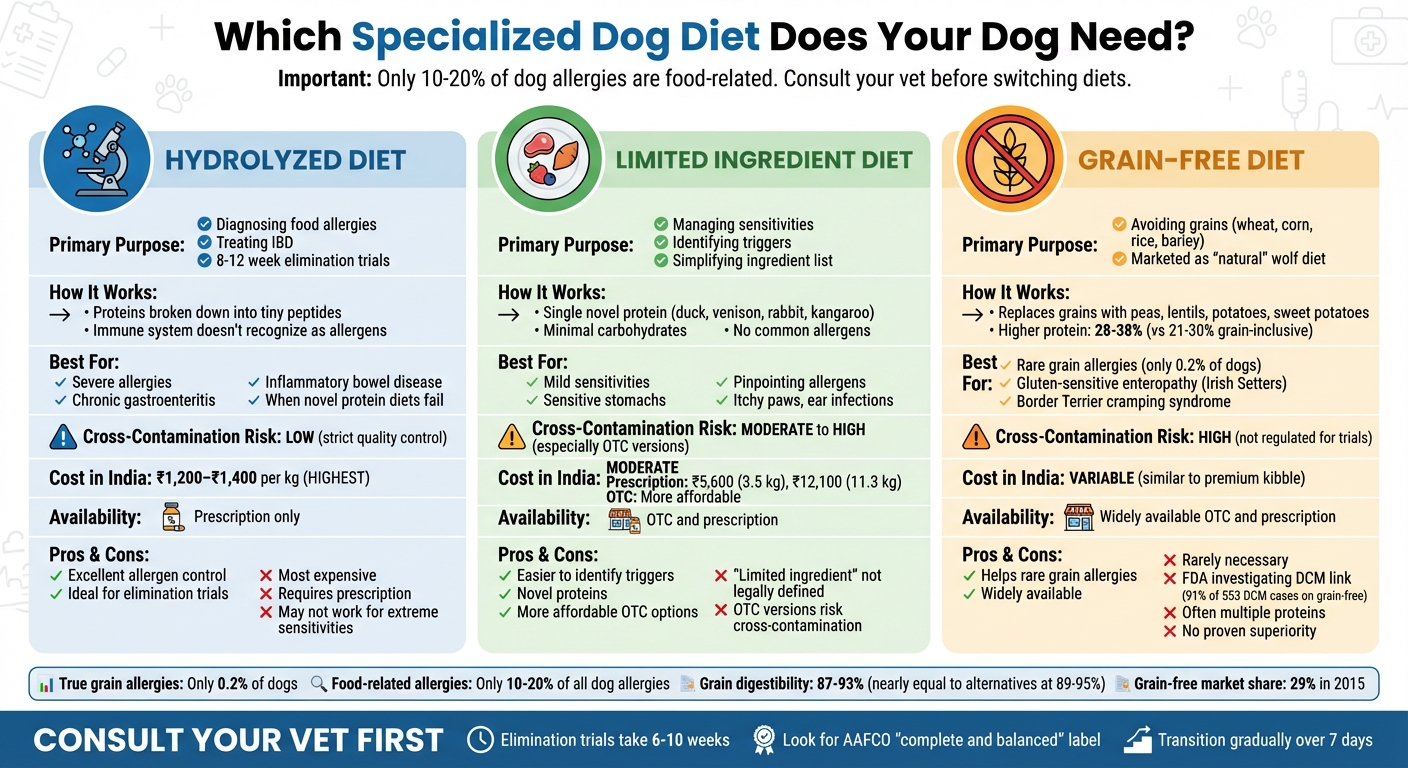
Comparison of Hydrolyzed, Limited Ingredient, and Grain-Free Dog Diets
1. Hydrolysed Diet
Primary Purpose
Hydrolysed diets are often the go-to choice for diagnosing food allergies in dogs. These diets are commonly used during 8–12 week elimination trials to pinpoint problematic proteins and manage conditions like inflammatory bowel disease (IBD) and chronic gastroenteritis.
Protein Processing/Ingredients
In these diets, proteins such as chicken or soy are broken down enzymatically into tiny peptides. These peptides are so small that they don’t trigger immune responses. Dr. Jennifer Coates, DVM, explains that this process prevents the immune system from recognising the proteins as allergens. This "pre-digestion" also makes the food gentler on your dog's digestive system.
Suitability for Health Conditions
Hydrolysed diets are particularly helpful for dogs with suspected or confirmed food allergies. Symptoms like itchy paws, recurring ear infections, or chronic diarrhoea often signal the need for such a diet. If novel protein diets fail or there’s a risk of cross-contamination, hydrolysed diets are highly recommended. Prescription versions are carefully formulated to exclude common allergens, but even a single non-hydrolysed treat can disrupt the trial and skew results.
Cost and Availability
The specialised enzymatic processing involved makes these diets more expensive and available only through prescription. While the upfront cost may seem high, the precision they offer in diagnosing food allergies can save both time and money in the long run.
Up next, we’ll look at how limited ingredient diets take a different route to address your dog’s sensitivities.
sbb-itb-5205b1e
Food Allergy Elimination: A Vet's Comprehensive Guide
2. Limited Ingredient Diet
Limited ingredient diets take a different approach from hydrolysed diets by simplifying the ingredient list rather than pre-digesting proteins. The idea is to reduce the risk of allergens by limiting potential triggers in your dog's food.
Primary Purpose
The goal of limited ingredient diets is to cut down on the variety of ingredients, making it easier to pinpoint and avoid allergens. Dr. Sarah Dodd, a veterinary nutritionist, explains:
"Typically, diets labelled as having limited ingredients will tend to have only a single protein source and limited carbohydrates, which reduces the number of ingredients in the diet that the dog is likely to have an adverse reaction to."
Protein Processing and Ingredients
These diets stick to intact proteins rather than breaking them down. Often, they feature "novel" proteins - uncommon meat sources like venison, kangaroo, rabbit, or duck. By excluding typical allergens such as chicken, beef, or dairy, and avoiding fillers like corn, wheat, and soy, these diets aim to minimise potential irritants. Additionally, they steer clear of artificial additives and vague components like "poultry meal."
Suitability for Health Conditions
Limited ingredient diets are particularly helpful for dogs showing signs of food allergies. Symptoms might include itchy paws, recurring ear infections, or digestive issues like vomiting and diarrhoea. However, it's essential to consult a vet before switching to this type of diet. Food allergies account for only 10% to 20% of allergy cases in dogs, so professional guidance is key. If you're using a limited ingredient diet as part of an elimination trial, sticking to it strictly is crucial - even one treat with a different ingredient can disrupt the process.
Cost and Availability
You can find limited ingredient diets both over the counter and through veterinary prescriptions. Prescription options are pricier, costing around ₹5,600 for 3.5 kg and ₹12,100 for 11.3 kg. The higher price reflects the strict manufacturing standards that help prevent cross-contamination with other proteins. Over-the-counter options tend to be more budget-friendly.
When choosing a limited ingredient diet, learn to read pet food labels and look for the AAFCO "complete and balanced" label to ensure it meets your dog's nutritional requirements. Transition your dog gradually over seven days to avoid stomach upset. Start with 75% of their current food mixed with 25% of the new food, and adjust the ratio every two days.
Next, we’ll explore grain-free diets to broaden your understanding of dietary options.
3. Grain-Free Diet
Grain-free diets made up 29% of pet specialty market sales in 2015. These diets skip traditional grains like wheat, corn, rice, and barley, replacing them with alternatives like peas, lentils, chickpeas, potatoes, sweet potatoes, and tapioca. They are often marketed as a natural choice, aiming to replicate the diet of wild wolves.
Primary Purpose
The main goal of grain-free diets is to reduce allergens and align with the dietary habits of wild canines. Dr. Jing Zhang explains:
"A grain-free diet is only intended to help specific individuals (such as those who are sensitive to grains/gluten) avoid allergens."
However, true grain allergies in dogs are extremely rare, affecting only about 0.2% of the population. Most dogs can digest grains well, with processed whole grains achieving a digestibility rate of 87–93%, nearly matching the 89–95% digestibility of alternative carbohydrate sources used in grain-free formulations.
Protein Processing and Ingredients
Grain-free diets typically have higher protein levels, ranging from 28–38%, compared to 21–30% in grain-inclusive diets. The difference lies in the carbohydrate sources - grains like rice or wheat are replaced with legumes or tubers to provide energy. These diets also tend to include more animal-based fats, giving them a distinct nutritional profile. This formulation is often evaluated for its role in managing specific health conditions.
Suitability for Health Conditions
Grain-free diets are sometimes recommended for specific conditions, such as gluten-sensitive enteropathy in Irish Setters or gluten-responsive epileptoid cramping syndrome in Border Terriers. However, caution is advised. The FDA has investigated a potential connection between grain-free diets - particularly those high in peas and lentils - and Dilated Cardiomyopathy (DCM), a severe heart condition. In a study of 553 DCM cases, 91% of affected dogs were on grain-free diets, and 93% of these diets contained peas or lentils.
Dr. Caroline Coile of the American Kennel Club notes:
"No study has ever shown grain-free to be superior to grain-inclusive diets."
In many cases, issues like itchy skin or digestive problems may stem from the protein source, not the grains. A proper elimination diet, conducted under veterinary supervision, is the most reliable way to identify food allergies. Factors like cost and availability also play a role in deciding whether a grain-free diet is suitable.
Cost and Availability
Grain-free diets focus on alternative carbohydrate sources rather than addressing protein-related allergies, offering a different approach for suspected adverse reactions. These diets are generally more expensive than grain-inclusive options and are widely available, both over the counter and through veterinary channels.
When selecting a grain-free food, check for the AAFCO "complete and balanced" label to ensure all nutritional requirements are met. Transitioning gradually to a new diet is crucial to prevent gastrointestinal upset.
Next, we'll take a closer look at the pros and cons of all three diet types to help you make an informed decision.
Advantages and Disadvantages
Here's a comparison of different diets to help you make the best choice for your dog, keeping their specific needs in mind.
Each diet comes with its own set of benefits and challenges. Understanding these can help you make an informed decision, ideally with guidance from your veterinarian.
Hydrolysed diets are designed to provide excellent allergen control by breaking down proteins into smaller components. These diets are produced under strict quality controls to avoid cross-contamination, making them ideal for elimination trials. However, they tend to be the most expensive option, require a veterinary prescription, and may not work for dogs with extreme sensitivities if the hydrolysis process isn't thorough enough for their condition.
Limited ingredient diets focus on simplifying the ingredient list, often using a single novel protein like duck or venison alongside minimal carbohydrates. However, the term "limited ingredient" isn't legally defined, so the number of ingredients can vary by brand. Over-the-counter (OTC) options may carry a higher risk of cross-contamination, which can compromise their effectiveness for elimination trials.
Grain-free diets exclude grains such as wheat, corn, and rice, which can benefit dogs with rare grain allergies (affecting about 0.2% of dogs). However, for most dogs, this diet isn't necessary. A bigger concern is the FDA's ongoing investigation into a possible link between grain-free diets - especially those high in peas and lentils - and dilated cardiomyopathy (DCM), a serious heart condition. In one study, 91% of 553 DCM cases involved dogs on grain-free diets. Additionally, these diets often include multiple protein sources, which can trigger allergies.
| Feature | Hydrolysed Diet | Limited Ingredient Diet | Grain-Free Diet |
|---|---|---|---|
| Primary Purpose | Diagnosing food allergies; treating IBD | Managing sensitivities; identifying triggers | Avoiding grains (wheat, corn, rice) |
| Protein Source | Chemically broken down | Single novel source (e.g., duck) | Varies |
| Health Application | Severe allergies, IBD, elimination trials | Mild sensitivities, sensitive stomachs | Rare grain allergies |
| Cross-Contamination Risk | Low (strict quality control) | Moderate to High (especially OTC) | High (not regulated for trials) |
| Cost in India | Highest (₹1,200–₹1,400 per kg) | Moderate (varies by protein) | Variable (similar to premium kibble) |
Before making any dietary changes, consult your veterinarian. Symptoms like itchy skin or digestive issues could stem from non-food causes like fleas, mould, or hormonal imbalances. Also, ensure the diet you select carries an AAFCO "complete and balanced" label to avoid nutritional gaps. When transitioning to a new diet, do so gradually over seven days to minimise digestive upset.
Discuss these options with your vet to determine the best diet for your dog's health and lifestyle.
Conclusion
Choosing the best diet for your dog depends entirely on their specific health needs. Hydrolysed diets break down proteins into smaller components to minimise immune reactions, making them an excellent choice for diagnosing food allergies and managing conditions like inflammatory bowel disease (IBD). On the other hand, limited ingredient diets focus on a single protein source and a shorter ingredient list, making it easier to identify and manage sensitivities. Grain-free diets, which exclude grains like wheat and corn, are only necessary for dogs with a true grain allergy - a rare condition. However, these diets have sparked concerns due to potential links to heart disease.
Before making any dietary changes, always consult your veterinarian. Symptoms like itchy skin or digestive upset are often caused by factors such as fleas, environmental allergens, or hormonal issues rather than food. In fact, only 10–20% of canine allergy cases are food-related. A vet can help rule out other causes and guide you through an elimination trial if needed.
"The choice between a novel protein diet and a hydrolysed diet should be individualised for the patient and owner, in coordination with their veterinarian." – Dr. Sherry Lynn Sanderson, University of Georgia
When selecting a diet, ensure it carries an AAFCO "complete and balanced" statement to meet your dog's nutritional needs. Also, transition to a new diet gradually over seven days to avoid digestive issues. Veterinary input is crucial to avoid misdiagnosis and to ensure your dog’s diet doesn’t lack essential nutrients.
With thoughtful choices and expert guidance, the right diet can greatly enhance your dog’s quality of life. A well-informed decision, supported by your veterinarian, ensures your dog gets the nutrition they need to thrive.
FAQs
How do I know if my dog’s problem is food allergy or something else?
Food allergies in dogs occur when their immune system reacts to certain ingredients, leading to symptoms such as skin irritation or digestive troubles after repeated exposure. On the other hand, food intolerance is different - it triggers immediate reactions like vomiting or diarrhoea but doesn't involve the immune system. To pinpoint food allergies, an elimination diet lasting eight weeks is often recommended. However, because these symptoms can resemble other health issues, it's essential to seek a vet's advice for a proper diagnosis and tailored guidance.
Can I do an elimination trial at home, and what mistakes ruin it?
Yes, you can try an elimination trial at home, but it’s crucial to stick to the protocol carefully to get reliable results. For at least 8–12 weeks, feed your dog a specific, limited-ingredient diet and keep a close eye on their symptoms.
Be mindful of common pitfalls - offering treats, snacks, or flavoured medications outside the prescribed diet can disrupt the trial and lead to inaccurate outcomes. Always consult your veterinarian for advice and support during the process.
Is grain-free safe for long-term feeding in dogs?
Grain-free diets for dogs might not be the best choice for long-term feeding. Research has pointed to possible health concerns, such as heart problems, which could be associated with ingredients like legumes that are often used as substitutes for grains in these diets. It's always a good idea to discuss your dog's dietary requirements with your veterinarian to figure out if a grain-free diet is the right option for your pet.


