


Did you know that pavements in Indian summers can reach temperatures as high as 57°C (135°F) when the air is just 30°C (86°F)? That’s hot enough to burn your pet’s paws within 60 seconds. Protecting your furry friend’s paws during these scorching months is not just about comfort - it’s about preventing serious injuries like burns, infections, and heat stress.
Key Takeaways:
- Risks: Hot pavements, dry/cracked paw pads, and increased body temperature can lead to burns, infections, and heatstroke.
- Prevention: Use the 7-second test to check surface heat, walk during cooler hours (before 9 AM or after 6 PM), and stick to grass or shaded paths.
- Protection: Dog booties, paw balms, and daily paw cleaning help shield paws from heat and rough surfaces.
- Signs of Damage: Limping, excessive licking, redness, blisters, or peeling skin indicate paw injuries.
- Treatment: Cool burnt paws with water, clean with antibacterial soap, apply soothing ointments, and consult a vet for severe burns.
Quick Tips:
- Walk on grass instead of asphalt.
- Regularly moisturise paw pads with natural balms.
- Keep walks short during peak heat hours.
- Always inspect paws after outdoor activities.
By following these steps, you can ensure your pet stays safe, healthy, and comfortable even during India’s harsh summer season.
5 TIPS to Protect Your Dog’s Paws this Summer
sbb-itb-5205b1e
Summer Paw Risks in India
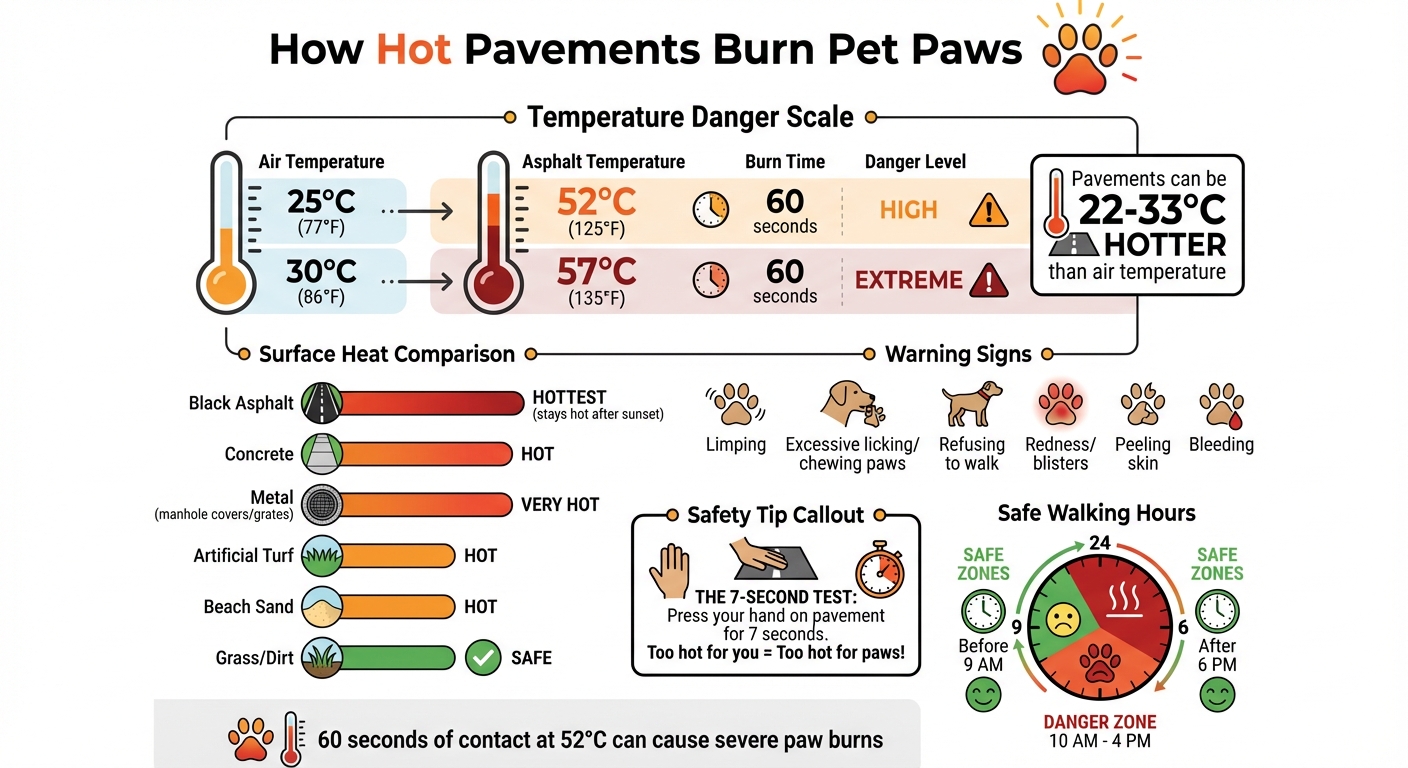
Summer Pavement Temperature Guide for Pet Safety
How Hot Pavements Damage Pet Paws
India's scorching summers can turn pavements into dangerous surfaces for your pet's paws. The ground temperature often far exceeds the air temperature - by as much as 22°C to 33°C more.
For instance, when the air temperature is a seemingly moderate 25°C (77°F), asphalt can heat up to a blistering 52°C (125°F). At 30°C (86°F), it gets even worse, climbing to 57°C (135°F). Just 60 seconds of contact with pavement at 52°C can cause severe burns to your pet’s paw pads.
Darker surfaces are especially dangerous. Black asphalt absorbs and traps heat far more than lighter materials like concrete, staying hot long after the sun has set. Other surfaces such as metal manhole covers, storm drain grates, artificial turf, and beach sand can also become perilously hot during summer.
Being aware of these risks can help you protect your pet from serious paw injuries.
Signs Your Pet Has Paw Damage
Look out for signs of paw discomfort or injury in your pet. Common indicators include limping, seeking shade frequently, refusing to walk, favouring one paw, or excessive licking, chewing, or biting of their paws. These behaviours often point to irritation, pain, or even heat-related injuries.
In more severe cases, check for redness, blisters, peeling skin, missing or burnt pad tissue, swelling, foul odour, or bleeding. These could signal serious burns, cuts, or infections. Additionally, India’s rugged terrain - filled with pebbles, thorns, glass shards, and burrs - can lead to cracked pads or bleeding when debris gets stuck between their toes.
Regularly inspecting your pet’s paws can prevent minor issues from escalating into painful injuries.
How to Prevent Paw Injuries
The 7-Second Surface Test
Before stepping out with your pet, check the pavement's heat by pressing the back of your hand against it for 7 seconds. If it feels too hot to keep your hand there, it’s definitely too hot for your pet’s paws and could cause burns. To keep your furry friend safe, plan walks during cooler parts of the day - early mornings before 9 AM or evenings after 6 PM - when surfaces are less heated. Avoid walking between 10 AM and 4 PM, as this is when pavement temperatures peak. If the pavement doesn’t pass this test, opt for grass, dirt paths, or shaded areas instead.
Paw Protection Products
Once you’ve ensured a safe surface for walking, consider using dog booties. These act as a solid barrier against hot surfaces and rough terrain. Look for booties made with breathable materials, non-slip soles, and adjustable straps to ensure they fit snugly and comfortably. To help your dog adjust, let them wear the booties indoors first, using treats to make the experience positive.
Paw waxes and balms are another great option. They create a protective layer on the pads, shielding them from heat and irritants while keeping them moisturised to prevent cracking. Apply these products before heading out to form a barrier and again after walks to soothe any irritation. Choose balms with natural ingredients like shea butter, coconut oil, or vitamin E for added nourishment. Platforms like Animeal offer paw care products tailored for India's hot summers.
Daily Paw Cleaning Routine
After every outing, rinse your pet’s paws with cool water to remove dirt and soothe any heat-related discomfort. Trim the fur between their paw pads to prevent debris and heat from accumulating, and use pet nail trimming techniques to keep their nails short to ensure proper weight distribution and better grip.
If you notice damp paw prints indoors, it could mean your dog is overheated, as they sweat through their paws. This is a signal that they need to cool down. Regularly applying pet-safe balms will help keep their paw pads soft, resilient, and less prone to burns or cracks.
Treating Paw Burns and Injuries
Even with the best preventive measures, burns can still happen, and when they do, quick and proper care is essential.
Cooling and Cleaning Injured Paws
If your pet’s paws get burnt, the first step is to move them to a cool, shaded spot. Then, gently flush the affected paws with cool (not ice-cold) running water for about 5–15 minutes to help reduce inflammation. Avoid using ice directly on the burn, as it can cause additional tissue damage.
Once cooled, clean the paws using a pet-safe antibacterial soap and room-temperature water to remove dirt and debris. Be sure to pat the area dry instead of rubbing, as rubbing can irritate the already-damaged skin. A first-degree burn usually makes the paw look red and feel warm to the touch.
Using Antiseptics and Bandages
After cleaning, apply a thin layer of a vet-approved antibiotic ointment or a soothing paw balm containing aloe vera or coconut oil. Stay away from hydrogen peroxide or alcohol - they can slow down the healing process. For minor burns, you can find effective antiseptic solutions and healing balms at Animeal.
If the injury needs extra protection, cover it with a non-stick gauze pad and loosely wrap it with gauze or Vetwrap. Make sure the bandage is snug but not too tight - you should be able to slip two fingers underneath to ensure proper blood flow. Replace the bandage daily, reapplying the ointment each time. To prevent your pet from licking the wound, consider using an Elizabethan collar or even a clean sock.
If at-home care doesn’t show improvement, it’s time to consult a veterinarian.
When to See a Veterinarian
For burns that go beyond mild irritation, it’s crucial to seek veterinary care immediately. Signs like blisters, oozing fluid, peeling skin, or charred tissue indicate a more severe injury. Other red flags include swelling, pus, a foul smell, or if your pet refuses to put weight on the injured paw.
"Anything more than a mild first-degree burn likely warrants veterinarian attention." - Dr. Jo Myers, DVM, Vetster
If the burn affects more than 10% of the footpad or exposes the underlying tissue, treat it as an emergency. In such cases, avoid walking your pet to the clinic. Instead, drive or carry them to minimise further pain and injury.
More Summer Safety Tips for Pets
Protecting your pet's paws is just one step in ensuring their safety during India's scorching summers. With temperatures often soaring past 40°C, keeping your furry companion cool and hydrated is crucial. While paw care prevents burns from hot surfaces, managing their overall heat exposure and hydration is just as important for their health and comfort.
Keeping Pets Cool with Shade and Water
Plan your pet's walks or exercise sessions for the cooler parts of the day - before 8:00 AM or after 7:00 PM. During the sweltering afternoons, keep them indoors and create a comfortable space with proper ventilation. Using fans for cross-ventilation or cooling mats can make a big difference. If you have a balcony, installing bamboo blinds can cut down radiant heat by as much as 45%.
Make sure your pet always has access to fresh, cool water. Place stainless steel bowls in shaded areas, as they help keep the water cooler and discourage bacterial growth. When heading outdoors, carry a collapsible bowl and enough water - about 500 ml for every 30 minutes outside. You can even add ice cubes to the water or use a pet fountain to encourage your pet to drink more.
Adjusting their diet is another way to keep them hydrated. Wet food, which contains around 78% moisture, is a great option. You can also include low-sodium bone broth, frozen treats like plain curd with cucumber, or diluted broth ice cubes to boost their fluid intake. If giving mangoes, always remove the kernel to avoid any risk of intestinal blockages.
Preventing Dehydration and Heatstroke
Beyond creating a cooler environment, it’s important to watch for signs of dehydration. A simple way to check is the skin-tenting test - gently lift the skin on your pet’s neck. If it doesn’t return to place within a second, dehydration could be an issue. Other signs include sticky gums, sunken eyes, and heavy, glazed panting. While a pet's normal body temperature ranges between 38–39°C, heatstroke can push it up to a dangerous 41°C.
"Panting, and sweating through the paws are two ways they regulate their body temperature."
– Dr. Nameeta Nadkarni, Veterinary Soft Tissue Surgeon
Certain breeds, like Pugs, Shih Tzus, and Persian cats, are particularly at risk due to their inability to pant efficiently. If your pet shows symptoms of overheating - such as excessive drooling, vomiting, dizziness, or dark red gums - act quickly. Move them to a cooler spot and pour cool (not ice-cold) water on their neck, belly, and inner thighs to help them cool down. If their condition doesn’t improve, contact your veterinarian immediately.
Conclusion
India's scorching summer heat can turn ordinary pavements into dangerous hotspots for your pet's paws. When air temperatures hit 30°C, pavements can become hot enough to cause burns within just 60 seconds. The good news? Most paw injuries are completely avoidable with some thoughtful care.
Simple steps can go a long way in preventing painful paw injuries. Use the 7-second test to check if a surface is too hot for your pet. Plan your walks for cooler times - early mornings or late evenings - and stick to grassy paths instead of concrete. Consider protective gear like breathable boots or pet-safe paw balms made with natural ingredients such as shea butter or coconut oil. Regularly cleaning your pet's paws and trimming the hair between their pads can also help keep infections and allergens at bay.
Stay alert for signs of paw trouble, like limping, excessive licking, or pads that look discoloured. If your pet does get a burn, rinse the area with cool water and contact your veterinarian if the issue persists .
For reliable paw care solutions, check out Animeal. They deliver across India and stock a range of summer essentials, including medicated shampoos, antiseptic sprays, skin and coat supplements, and other hygiene products tailored for your pet's well-being.
FAQs
How can I check if the pavement is too hot for my pet's paws during summer?
To keep your pet’s paws safe during the sweltering heat, try the back-of-hand test. Simply place the back of your hand - or the flat of your palm - on the pavement and hold it there for 7–10 seconds. If it feels too hot for you to touch comfortably, it’s definitely too hot for your pet’s paws.
In India’s intense summer afternoons, this test is especially important as temperatures soar. If the pavement proves too hot, plan walks during the cooler hours of early morning or evening. You can also choose grassy areas for walks or use protective booties to prevent burns on your pet’s delicate paws.
How can I keep my pet's paws safe during summer walks?
To keep your pet’s paws safe during the scorching summer months, take them out for walks during the cooler parts of the day - early mornings or late evenings are ideal. Before heading out, try the 5-second hand test: place your hand on the pavement for five seconds. If it feels too hot for your hand, it’s definitely too hot for your furry friend’s paws. Whenever possible, stick to grassy areas or shaded trails to avoid the heat.
You can also use a paw balm with SPF or breathable booties to protect their paws from hot surfaces and rough terrain. After each walk, rinse their paws with cool water to clear away dirt, debris, or anything that might irritate their skin. Keeping their nails trimmed and the fur between their paw pads neatly groomed can also go a long way in preventing injuries and keeping them comfortable.
When should I take my pet to the vet for paw injuries?
If your pet’s paw shows any worrying signs, it’s time to consult a vet. Watch out for severe burns or blisters, especially if they appear dark, red, or swollen. Open cuts exposing tissue or bleeding that doesn’t stop within a few minutes are also red flags. Additionally, persistent limping, excessive licking or chewing of the paw, or symptoms of infection like pus, foul odour, swelling, or redness need immediate medical attention.
In India’s hot weather, surfaces like roads and pavements can become extremely hot, often reaching temperatures of 40–60°C above the air temperature. Even a small burn can escalate quickly. If a foreign object like a thorn or piece of glass is lodged in the paw and can’t be safely removed at home, or if the paw doesn’t show improvement within 24–48 hours of care, it’s wise to visit a vet. This helps avoid infections or long-term complications.
Related Blog Posts
- Common Pet Health Questions Answered
- How to Keep Pets Safe on City Walks
- Pet Health Symptom Checker Online
- Early Illness Signs: When to Call the Vet


