


Your dog's skin issues - like itching, redness, or flaky patches - can be frustrating. While some home remedies can offer relief for mild cases, others are ineffective or even harmful. Here's what you need to know:
Remedies That Work:
- Oatmeal Baths: Soothes itching and inflammation.
- Coconut Oil: Moisturises and protects dry skin.
- Aloe Vera Gel: Calms irritation and promotes healing (if not ingested).
Remedies to Avoid:
- Apple Cider Vinegar: Can irritate or burn the skin.
- Garlic: Toxic to dogs.
- Essential Oils: High risk of poisoning or irritation.
Practices to Avoid:
- Using human shampoos, medications, or toxic substances like motor oil or zinc oxide creams can worsen your dog's condition.
For serious issues - redness, sores, hair loss, or foul odour - always consult a vet. Home remedies are best for mild symptoms or as preventive care, not for treating infections or severe conditions.
Itchy Dog? 5 Home Remedies by GNP Sir for Common Skin Problems!
sbb-itb-5205b1e
Home Remedies That Work for Dog Skin Problems
If your dog has mild skin irritation or dryness, some simple home remedies can provide relief. These treatments can help soothe itchiness and support your dog's skin, but they aren't a replacement for professional care in more severe cases. Here are three effective remedies to manage mild skin issues.
Oatmeal Baths
Oatmeal is known for its natural anti-inflammatory and anti-itch properties, thanks to compounds called avenanthramides. To prepare an oatmeal bath, grind 1 cup of plain rolled oats into a fine powder using a blender or coffee grinder. This ensures the oats dissolve fully in water, creating a soothing milky solution. Fill a tub with lukewarm water (not hot, as hot water can worsen itching), mix in the ground oats, and let your dog soak for 10–15 minutes. Gently rinse the affected areas during the bath. Afterward, you can lightly rinse or skip rinsing to allow the oatmeal's protective layer to remain on the skin.
"Oatmeal contains compounds (like avenanthramides) that have natural anti-inflammatory and anti-itch properties." - Jeff Judkins, DVM
Oatmeal baths can be done 1–3 times a week during flare-ups. For smaller irritated areas, you can cook plain oatmeal, cool it, and apply it to the affected spot for about 10 minutes before rinsing. Keep an eye on your dog to ensure they don’t drink too much of the bath water.
Coconut Oil Application
After an oatmeal bath, coconut oil can provide additional relief by moisturising and protecting your dog's skin. Coconut oil has natural antibacterial, antifungal, and anti-inflammatory properties, making it a great option for dry or itchy patches. Warm a small amount of coconut oil between your hands and gently massage it onto the affected areas. It’s safe if your dog licks it, and you can even mix a small amount into their food to promote a healthy coat. However, avoid using coconut oil in your dog's ears, as it might worsen inflammation or cause other issues.
Aloe Vera Gel
Aloe vera gel is another excellent option for calming irritated skin and promoting healing for minor abrasions. Make sure to use 100% pure aloe vera gel from the inner fillet. Steer clear of products containing alcohol, lidocaine, fragrances, or xylitol, as these can be harmful to dogs. Before applying, perform a patch test on a small area, like the inner thigh, and wait 12–24 hours to check for any adverse reactions. If no irritation occurs, apply a thin layer of aloe vera gel to the affected area 1–3 times daily. Since aloe vera is toxic if ingested, supervise your dog until the gel dries or use a recovery cone to prevent licking.
"Aloe cools and soothes inflamed skin and may support healing." - Jeff Judkins, DVM
Remedies That Don't Work
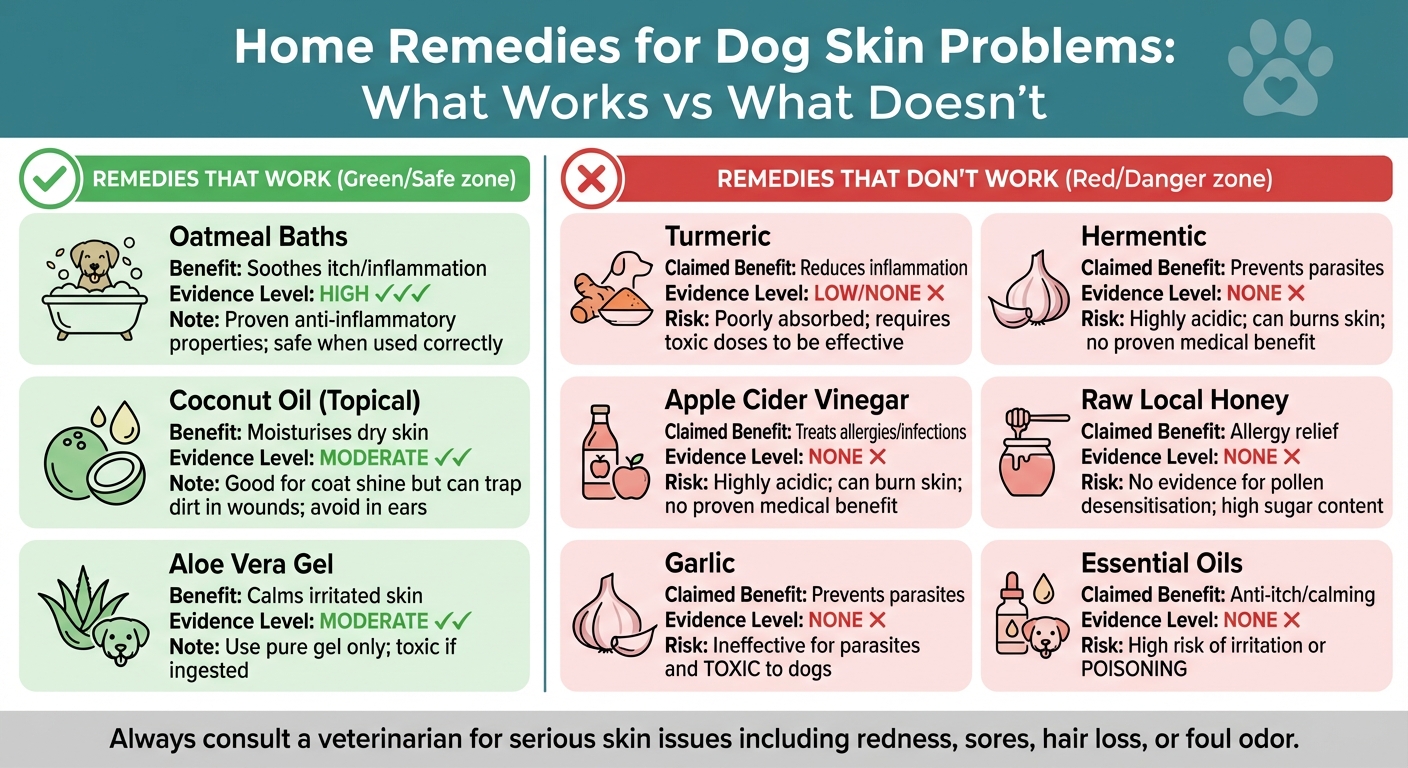
Dog Skin Remedies Comparison: What Works vs What Doesn't
After exploring effective home remedies, it’s equally important to highlight treatments that either don’t work or could harm your dog. Many popular remedies lack scientific support, and some might even worsen your pet’s condition. By understanding these, you can save time, avoid unnecessary risks, and focus on what truly helps.
Take turmeric, for example. While it’s often touted for its anti-inflammatory and anti-cancer properties, its actual impact is minimal. Turmeric contains only 1–4% curcumin - the compound believed to be active - and studies have shown poor absorption in dogs. In fact, achieving therapeutic levels would require doses so high they’d be toxic to your pet.
Similarly, apple cider vinegar (ACV) is frequently suggested as a cure-all, but there’s no scientific evidence to back these claims. Its acidity can irritate or even burn your dog’s skin, especially if applied to open wounds. Janet Miller, a dog trainer and former AKC judge, critiques its use sharply:
"To recommend [Apple Cider Vinegar] as a dog medicine is irresponsible, as there is little evidence that apple cider vinegar does anything medically useful in any animal."
- Janet Miller, Dog Trainer and Former AKC Judge
Garlic, often suggested for parasite prevention, is another remedy to avoid. Not only is it ineffective, but it’s also toxic in moderate to high doses (15–30g per kg). Similarly, raw local honey, despite claims of allergy relief, lacks evidence for desensitising dogs to pollen. Its high sugar content could even exacerbate symptoms. Lastly, essential oils pose a significant risk of irritation or poisoning, making them unsuitable for use on dogs.
Janet Miller sums up the issue with these kinds of remedies:
"The answer thread [on social media] is usually a mire of pseudoscience and anecdotes that are as well-intentioned as they are dangerous."
- Janet Miller, Dog Trainer and Former AKC Judge
Here’s a quick comparison of remedies that work versus those that don’t:
Comparison of Remedies That Work vs. Remedies That Don't
| Remedy Name | Claimed Benefit | Evidence Level | Usage Notes |
|---|---|---|---|
| Oatmeal Baths | Soothes itch/inflammation | High | Proven anti-inflammatory properties; safe when used correctly. |
| Coconut Oil (Topical) | Moisturises dry skin | Moderate | Good for coat shine but can trap dirt in wounds; avoid in ears. |
| Aloe Vera Gel | Calms irritated skin | Moderate | Use pure gel only; toxic if ingested. |
| Turmeric | Reduces inflammation | Low/None | Poorly absorbed; requires toxic doses to be effective. |
| Apple Cider Vinegar | Treats allergies/infections | None | Highly acidic; can burn skin; no proven medical benefit. |
| Garlic | Prevents parasites | None | Ineffective for parasites and toxic to dogs. |
| Raw Local Honey | Allergy relief | None | No evidence for pollen desensitisation; high sugar content. |
| Essential Oils | Anti-itch/calming | None | High risk of irritation or poisoning. |
This table highlights the stark contrast between remedies backed by solid evidence and those that fall short, helping you make informed decisions for your dog’s well-being.
Practices That Make Dog Skin Problems Worse
Some remedies not only fail to help but can actually make your dog's skin issues worse. From mild irritation to severe poisoning, certain approaches can turn a manageable situation into a serious health crisis. Avoid these common mistakes to keep your furry friend safe.
Common Harmful Remedies and Their Risks
One of the biggest culprits is human medications. For example, topical creams containing fluorouracil (5-FU), used for treating skin cancers in humans, are extremely toxic to dogs. Ingesting this compound can be fatal, with symptoms of poisoning appearing in as little as 30 minutes.
Another danger is zinc oxide, a common ingredient in human sunscreens and nappy rash creams. If ingested, it can cause severe anaemia and gastrointestinal damage. Dr. Jennifer Quammen from Grants Lick Veterinary Hospital explains:
"Zinc oxide - an inorganic compound commonly found in both [nappy ointment and human sunblock] - is toxic to dogs and can cause severe anaemia or red blood cell damage when consumed."
Undiluted essential oils, especially tea tree oil, are another hazard. As few as seven drops can lead to poisoning in dogs, causing symptoms like tremors, weakness, and lack of coordination. Even something as seemingly harmless as human shampoo can cause problems. These shampoos often contain detergents that dry out a dog's skin due to pH differences, stripping away the natural oils that protect their coat.
Misguided home remedies also pose risks. For instance, using motor oil or kerosene to treat mange can result in skin irritation, corneal ulcers, and systemic toxicity if the dog licks the treated area. Even applying coconut oil to hot spots can backfire by trapping moisture, which worsens infections.
Dogs with autoimmune conditions face unique challenges. Even bathing can be harmful. Dr. William H. Miller Jr., Professor Emeritus at Cornell University College of Veterinary Medicine, warns:
"Shampoos have several problems... they can make things worse by the mechanical action needed to apply them and rinse them off. Autoimmune skin is more fragile than normal, and rubbing and rinsing can make it worse."
The table below highlights these harmful practices and suggests safer alternatives.
Table: Harmful Remedies and Safe Alternatives
| Practice | Specific Risks | Safer Options |
|---|---|---|
| Human Sunscreen | Zinc oxide toxicity, gastrointestinal damage, severe anaemia | Use pet-specific sunscreens; avoid midday sun exposure |
| Motor Oil for Mange | Skin irritation, vomiting, corneal ulcers, toxicity | Opt for vet-prescribed flea, tick, and mite treatments |
| Undiluted Essential Oils | Systemic toxicity; severe skin irritation | Use veterinary-approved topical balms or fish oil |
| Human Shampoo | Skin irritation; pH imbalance; strips natural oils | Choose fragrance-free, oatmeal-based dog shampoos |
| Hydrogen Peroxide | Hearing damage (if used in ears); tissue irritation | Use veterinary-approved ear cleaners or saline solutions |
| Coconut Oil on Hot Spots | Worsens infection by trapping moisture | Try medicated hot spot sprays or E-collars |
| Human Antihistamines | Risk of toxicity from additives; incorrect dosing | Consult your vet for prescription options like Apoquel or Cytopoint |
To minimise risks, keep human medications securely out of reach. After applying medicated creams to your own skin, wash your hands thoroughly and cover the treated area to prevent your dog from licking it. When in doubt, always stick to products specifically designed for dogs. They’re safer and tailored to their unique needs.
Prevention and When to See a Vet
Taking proactive steps like proper grooming, bathing, and ensuring good nutrition can help sidestep the risks of ineffective or harmful remedies. Regular brushing is a great starting point - it not only removes loose hair and debris but also stimulates hair follicles to release sebum, a natural oil that keeps your dog's skin hydrated and healthy. Fun fact: a dog's skin makes up 12–24% of their body weight, and maintaining it uses up to 35% of their daily protein intake. Clearly, consistent care is crucial.
While bathing is important, too much of it can backfire. Over-bathing strips away the skin's natural microbiome, leaving it more prone to bacterial infections and environmental irritants. Stick to lukewarm water - hot water can aggravate the skin further - and rinse thoroughly to avoid leaving shampoo residues, which often cause dryness and flakiness. For breeds with skin folds, like Pugs or Shar Peis, pay extra attention to cleaning and drying those areas to prevent bacterial buildup. And don’t forget year-round flea and tick prevention. As Dr. Jamie Lovejoy, DVM, explains:
"Fleas and mites prefer clean, healthy haircoats, so grooming is not adequate prevention!"
Nutrition plays a huge role in skin health as well. Feeding your dog an AAFCO-approved diet, incorporating omega-3 supplements, or conducting an 8–12 week food trial for suspected allergies can make a noticeable difference. If you live in a dry region or during colder months, placing a humidifier near your dog's sleeping area can help keep their skin from drying out.
Sometimes, though, home care isn’t enough. Dr. Jamie Lovejoy advises:
"In cases where your dog's skin is already red, scabby, smelly, or painful, see your veterinarian as soon as possible."
Hot spots - those painful, oozing areas of inflamed skin - can spread quickly and need immediate attention from a vet. Keep an eye out for more serious signs, like increased thirst, appetite changes, or lethargy, which could point to conditions like Cushing's disease or hypothyroidism. Non-healing wounds, new lumps, or unusual lesions on the face are other red flags that warrant a professional evaluation. Skin and coat issues are incredibly common - around 25% of vet visits involve these concerns - so rest assured, you're not alone in seeking help.
If your dog's condition doesn’t improve with home remedies, don’t wait. A quick visit to the vet can prevent minor issues from becoming major problems.
Conclusion
Taking care of your dog's skin doesn't have to be complicated, but it does call for a thoughtful and informed approach. Simple remedies like colloidal oatmeal baths can provide relief from mild itching and dryness. However, these solutions are best used as temporary measures or preventive care while you arrange a visit to the vet. They are not substitutes for professional treatment.
Your dog's skin plays a vital role in their overall well-being, making its protection a priority. It's important to view home remedies as supportive rather than curative. Always conduct a patch test before trying new treatments, and steer clear of harmful practices like bandaging hot spots or using medications meant for humans.
As discussed earlier, not all remedies are safe or effective. Dr. Amy Fox underscores this point:
"It's important to emphasize that any dog with a skin condition should be examined by a veterinarian prior to starting a home remedy since many conditions require prescription treatment protocols."
If your dog shows signs such as redness, scabs, foul odour, painful sores, hair loss, or excessive licking, stop any home treatments immediately and consult a veterinarian. Many skin issues can look similar but need entirely different treatments, from antibiotics for infections to immunotherapy for allergies.
FAQs
How can I tell if my dog’s skin issue is mild or serious?
To figure out whether your dog’s skin problem is minor or more serious, start by observing the symptoms. Mild issues might show up as slight itching, a bit of redness, or a few small bumps. On the other hand, serious conditions often include significant hair loss, inflamed or oozing skin, crusting, or noticeable discomfort. If the symptoms persist, the skin changes colour, there’s a bad odour, or signs of infection appear, it’s time to see a vet. Always consult a veterinarian if the symptoms get worse or don’t improve after a few days.
Can I use oatmeal, coconut oil, and aloe together safely?
Yes, oatmeal, coconut oil, and aloe can be safely used together to help with dog skin issues. These remedies are often suggested for soothing irritated skin, but it's important to apply them properly. If your dog's condition doesn't improve or gets worse, it's best to consult a veterinarian. Also, steer clear of using human medications or treatments that haven't been approved for pets.
What should I do if my dog licks a home remedy off their skin?
If your dog ends up licking a home remedy off their skin, gently rinse the area using mild soap and water to clear away any residue. Keep an eye on your dog for any signs of discomfort, such as vomiting, diarrhoea, or irritation. Should these symptoms persist or get worse, reach out to a veterinarian without delay. It's always a good idea to consult a professional before reapplying the treatment or if your dog exhibits any unusual behaviour after licking the remedy.


