


When your cat starts trembling, it could signal a serious issue like poisoning, neurological problems, or stress. Quick action is key to ensure safety. Here’s what you need to know:
- Causes: Trembling can result from toxins (e.g., permethrin in dog flea meds), illnesses like FIP, or stress from loud noises or new environments.
- Symptoms: Watch for shaking, loss of balance, lethargy, vomiting, or unusual behaviours. Severe signs like seizures or breathing trouble need immediate vet attention.
-
Prevention:
- Maintain a toxin-free home (avoid lilies, chocolate, or dog flea products).
- Provide a stable diet to prevent low blood sugar.
- Reduce stress with routines, safe spaces, and calming pheromones.
- Action Plan: Record trembling episodes, check for toxin exposure, and consult your vet promptly. For emergencies, like permethrin poisoning, wash your cat with warm water and soap before heading to the clinic.
Early detection and preventive care can help keep your cat safe and healthy.
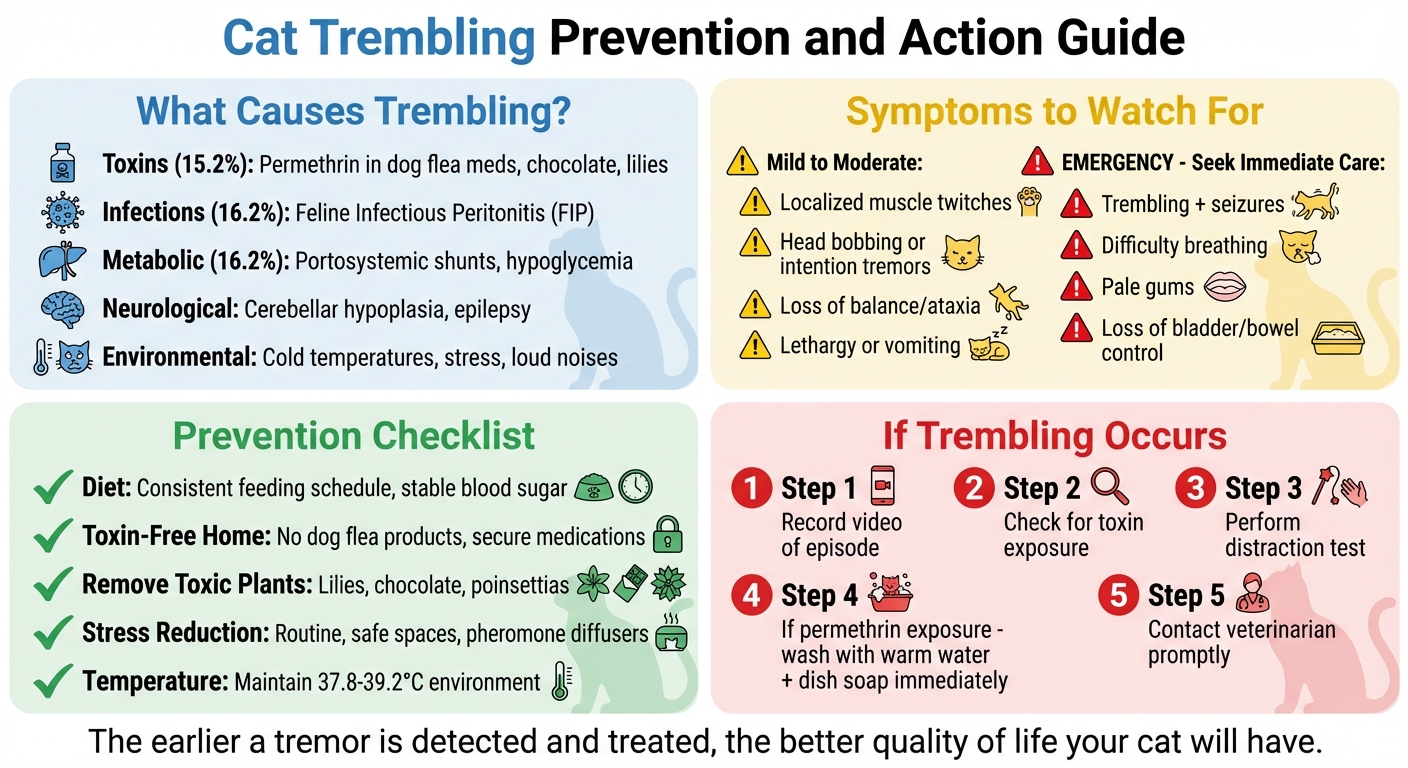
Cat Trembling Prevention and Action Guide: Causes, Symptoms, and Emergency Response Steps
My CAT SHAKES While SLEEPING 🐱💤 (6 Reasons)
sbb-itb-5205b1e
What Causes Trembling in Cats
Trembling in cats can stem from a mix of medical, environmental, and stress-related factors. Understanding these triggers is crucial for ensuring timely veterinary care.
Health Conditions That Cause Trembling
Certain medical conditions, particularly neurological disorders, are known to cause trembling in cats. For instance, feline cerebellar hypoplasia - caused by exposure to panleukopenia in the womb - leads to intention tremors that worsen during focused activities. Other neurological issues like vestibular disease and epilepsy can also result in tremors, often accompanied by balance problems.
Toxins are another major concern. Exposure to substances like permethrin (found in some dog flea treatments) can cause severe, even life-threatening, tremors in cats. Other harmful substances include metaldehyde (used in slug bait), lilies, chocolate, and amphetamines. A study of 105 feline tremor cases found that intoxication accounted for 15.2% of diagnoses, with Feline Infectious Peritonitis (FIP) and congenital portosystemic shunts each making up 16.2% of cases.
"Adult onset muscle tremors are commonly a sign of pyrethroid toxicosis which is potentially life-threatening and requires immediate medical attention." - Dr. Jo Myers, DVM
Metabolic issues can also lead to trembling. Conditions like kidney and liver disease may cause toxin build-up, while hypoglycaemia can affect diabetic cats and young kittens. Nursing mothers may experience hypocalcaemia after eclampsia, leading to muscle twitching. Additionally, infectious diseases such as FIP, toxoplasmosis, and tetanus can result in neurological tremors. Physical conditions like high fever (above 39.2°C), severe pain, or shock are also known triggers.
But medical issues aren't the only culprits - external factors can also play a big role in causing trembling.
Environmental and Stress Factors
External factors, both environmental and emotional, often contribute to a cat's trembling. Temperature changes are a common cause; shivering is a natural response to cold as the body works to generate heat. Cats with short hair, hairless breeds, and kittens are particularly vulnerable to temperature fluctuations. A cat’s normal body temperature ranges from 38.1 to 39.2°C, and anything above 39.2°C signals a fever, which can also lead to shaking.
Stress and emotional upheaval are other key triggers. Events like moving to a new home, loud construction noises, or the arrival of new family members or pets can make a cat tense and shaky. Territorial disputes with unfamiliar cats or noise-related fears - such as fireworks or thunderstorms - can provoke trembling as part of a stress response. These behavioural issues often emerge as cats reach social maturity, typically between 12 and 36 months of age.
"In response to the perceived fear, the autonomic nervous system prepares the body for the fight or flight response and this can include shaking and or trembling." - Byron de la Navarre, DVM, Chief of Staff at Animal House of Chicago
Warning Signs and When to Take Action
Symptoms to Watch For
Trembling in cats can vary in intensity and provide clues about its seriousness. It might appear as localised muscle twitches, head bobbing, shaking in the pelvic limbs, or even full-body tremors [5, 8, 10]. A key symptom to note is intention tremors - shaking that starts or worsens when your cat is focused on a task, like eating or reaching for a toy. This is often associated with cerebellar hypoplasia [10, 6].
Other signs to monitor include ataxia (loss of coordination), a wobbly gait, or general poor balance [10, 4, 6]. Systemic distress symptoms, such as lethargy, vomiting, loss of appetite, excessive drooling, or unusual vocalisations, may point to deeper issues [10, 4, 6]. Behavioural shifts - like increased agitation, hypersensitivity to touch or sound, or ignoring verbal cues - could indicate severe neurological or toxicological problems [10, 4, 6].
Some symptoms demand immediate attention. These include trembling combined with seizures, difficulty breathing, pale gums, disorientation, or loss of bladder or bowel control. Such signs are emergencies and require urgent care [7, 6]. Knowing what to look for can make all the difference.
When to Contact Your Veterinarian
If your cat's trembling persists, it’s essential to seek professional help without delay.
"If you notice your cat shaking, either mildly or severely, contact your veterinarian immediately." - Melissa Boldan, DVM
A simple distraction test can help gauge the situation: a healthy cat should stop trembling when diverted by activities like playing or hunting. If the shaking doesn’t stop after a few moments, it’s time to consult a vet.
Before heading to the clinic, try to capture a video of the episode on your phone. This can help your vet identify the type of tremor [1, 5]. Additionally, check if your cat might have been exposed to toxins such as dog flea or tick medications (permethrin), ADHD medications, lilies, chocolate, or rodenticides [5, 7]. Be ready to share information about the frequency and duration of the episodes, along with any changes in your cat’s eating, drinking, or litter box habits.
If your cat has come into contact with dog flea medication, wash it off immediately using warm water and dish soap before heading to an emergency clinic [5, 6]. These steps can assist your vet in providing the best care possible.
How to Prevent Trembling in Your Cat
To help prevent trembling in cats, it’s important to address common triggers like unstable blood sugar, stress, and exposure to toxins.
Diet and Nutrition Guidelines
Keeping your cat's blood sugar stable is a key step, as low blood sugar (hypoglycaemia) is a frequent cause of trembling - particularly in kittens and diabetic cats. Byron de la Navarre, DVM, from Animal House of Chicago, explains:
"Hypoglycaemia, a decreased sugar level in the blood, is one of the more common causes of shaking or tremors in cats."
To maintain steady glucose levels, establish a consistent feeding routine with meals spaced evenly throughout the day. If your cat shows signs of low blood sugar and can’t eat, apply a thin layer of honey or maple syrup to their gums for a quick energy boost while you arrange a visit to the vet.
For trembling caused by anxiety, consider adding stress-reducing nutrients like α-casozepine, L-tryptophan, and L-theanine to their diet. Research shows that α-casozepine (at 15 mg/kg) can help ease stress, while L-tryptophan (12.5 mg/kg over eight weeks) has been linked to reduced stress behaviours like excessive vocalising or inappropriate elimination. If joint discomfort is the issue, omega-3 fatty acids, glucosamine, and chondroitin can help ease pain and improve mobility.
Hydration is also essential. Wet food can help increase water intake, which is particularly useful for conditions like feline idiopathic cystitis. Avoid feeding your cat spicy, salty, or oily human foods, and skip the milk - it often leads to digestive upset. Work with your vet to ensure your cat's diet meets their nutritional needs, and transition gradually to therapeutic diets to avoid stomach issues. Food puzzles can also provide mental stimulation and reduce stress-related trembling.
While proper nutrition is important, creating a stress-free environment is just as crucial.
Reducing Stress and Creating Comfort
A predictable daily routine - including regular feeding, playtime, and interaction - can significantly lower stress levels. Battersea Dogs & Cats Home highlights the importance of giving cats control over their environment:
"As cats have evolved as an independent solitary species, being able to make their own decisions is important to cats so giving them choice and control over what they do, how, when, and with who is key to reducing stress."
Provide your cat with safe spaces, such as high perches or quiet corners, and place essentials like food, water, and litter trays in low-traffic areas. For cats with balance-related trembling, carpet runners or rugs can improve traction, and a large litter box with a low entry point can make toileting easier. If your cat has access to a garden, arrange it to minimise encounters with other cats.
To create a calming environment indoors, consider using synthetic feline facial pheromone diffusers, which release soothing scents. A microchip-operated cat flap can prevent unfamiliar cats from entering and causing territorial stress. When introducing new furniture, covering it with familiar fabrics can help your cat adjust, and soft classical music can create a relaxing atmosphere. Baby gates can also be used to establish quiet, pet-free zones where your cat can retreat when feeling overwhelmed.
Once stress is addressed, it’s essential to safeguard your home against toxins.
Avoiding Toxins and Making Your Home Safe
Permethrin, found in many dog flea and tick treatments, is highly toxic to cats and a common cause of tremors. The ASPCA Poison Control advises:
"For cats, the most common toxic cause of tremors is, and will be for the foreseeable future, permethrin."
Avoid using dog flea and tick products on cats, as they often contain this harmful chemical.
Additionally, keep human medications - such as ADHD drugs, certain antidepressants like mirtazapine, and sleep aids - securely out of reach. Be cautious with household chemicals containing DEET, essential oils, or rodenticides (like bromethalin or metaldehyde slug bait), as these can be extremely dangerous. Toxic plants and foods, such as lilies, chocolate, coffee, and poinsettias, should also be kept far from your cat’s reach.
Finally, maintain a comfortable indoor temperature for your cat. Their normal body temperature ranges from 37.8 to 39.2°C. Extremes outside this range can lead to shivering. For cats with chronic tremors, restrict access to risky areas like stairs or pools to prevent accidents.
Ongoing Monitoring and Care
Building on earlier preventive measures, keeping a close eye on your cat's health is essential for their overall well-being. Make it a habit to track daily details like appetite, water intake, weight, and any instances of tremors. For tremors specifically, note the affected body parts and the duration of episodes to help identify patterns. This consistent monitoring works hand-in-hand with the earlier steps you've taken.
Daily Checks and Veterinary Visits
Pay attention to changes in your cat's grooming habits, activity levels, and balance. For instance, a sudden drop in grooming or hesitation to jump could indicate discomfort. If your cat experiences trembling episodes, document them thoroughly and share these records with your veterinarian. These details can be key in determining the type and cause of tremors.
Veterinary visits should be scheduled based on your cat's life stage. Kittens typically need check-ups every 3 to 4 weeks until they are 6 months old. Adult cats benefit from annual examinations, while senior cats (8–9 years and older) may require check-ups twice a year or more frequently. Dr. Laci Schaible, a veterinarian, highlights the importance of these visits:
"Adult cats generally benefit from annual check-ups, while senior or special-needs cats might require more frequent visits."
For cats in India, regular deworming every three months is crucial, along with strict flea and tick prevention. The humid climate increases the risk of parasite infestations, making these steps especially important. By combining regular observations with veterinary care, you can address any changes early and maintain your cat's health.
Helpful Products and Tools
Certain tools can make monitoring and care more effective. Stainless steel or ceramic non-tip bowls (₹350–₹900) are ideal for preventing spills, especially for cats with balance issues. Orthopaedic or plush bedding (₹1,200–₹3,500) provides joint support, while anti-skid carpet runners (₹400–₹1,200/m) improve traction on slippery surfaces.
To help manage anxiety-related trembling, pheromone diffusers like the Feliway Calming Diffuser (₹2,800–₹3,500) can be useful. Smart collars equipped with motion sensors can track activity and sleep patterns, alerting you to any sudden changes. For digestive support, probiotics such as Purina Pro Plan FortiFlora (₹2,500–₹3,200) may be beneficial, but always consult your veterinarian before introducing new supplements. These tools and products can complement your efforts to ensure your cat stays healthy and comfortable.
Conclusion
Understanding the difference between harmless shivers and potential health concerns is the first step in addressing trembling in your cat. Trembling can sometimes signal issues like toxicity, metabolic disorders, neurological problems, or chronic pain, making close observation essential.
Taking proactive measures can greatly reduce the chances of tremors. Limiting exposure to harmful substances, ensuring stable blood sugar levels, and creating a low-stress environment are key strategies to protect your cat's well-being.
"The earlier a tremor is detected and treated, the better quality of life your cat will have."
Cats are known for hiding discomfort until conditions worsen, so early intervention is critical. If you notice sudden trembling accompanied by symptoms like lethargy, vomiting, or disorientation, consult a vet immediately.
Incorporating daily check-ups and regular vet visits into your routine can make a significant difference. Keeping a log of your cat’s eating habits, water intake, and any trembling episodes helps identify subtle changes early on. Your attentiveness plays a vital role in catching potential issues early and ensuring your cat stays comfortable and healthy at every stage of life. By adopting these practices, you provide a strong foundation for your cat’s health and reduce the likelihood of future problems.
FAQs
How do I tell fear shaking from illness?
Cats often tremble when they’re scared or stressed. This could be triggered by things like loud noises, a new environment, or even meeting unfamiliar people. Usually, this kind of trembling is short-lived and might come with behaviours like hiding or grooming excessively.
On the other hand, trembling caused by illness is different. It doesn’t have a clear trigger and might be accompanied by worrying signs like lethargy, vomiting, or a lack of appetite. If your cat’s trembling continues or seems severe, it’s important to visit a veterinarian to check for any underlying health problems.
What should I do before reaching a vet?
Observe your cat carefully for any other signs or triggers. These could include stress, fear, excitement, exposure to cold drafts, or sudden drops in temperature. Look out for potential health concerns like low blood sugar, kidney problems, poisoning, or even shock. Make sure your cat is in a warm and cosy space, and pay attention to any recent changes in their behaviour. If the trembling continues, gets worse, or is accompanied by other worrisome symptoms, it's important to contact a veterinarian without delay.
Which common home items cause tremors?
Cats can sometimes experience tremors due to exposure to everyday household items that contain harmful substances. These include toxins like permethrin (commonly found in some dog flea treatments), avermectins, certain essential oils, human medications, and chemicals like DEET. Additionally, contact with toxic plants or specific cleaning products can also lead to shaking. If your cat starts trembling without an obvious reason, it's crucial to consult a vet right away to pinpoint the cause and prevent further harm.


