


Fever in cats indicates an underlying health issue. A cat's normal body temperature is 38°C to 39.1°C. If it rises above 39.2°C, it’s a fever. Left unchecked, temperatures exceeding 41°C can cause severe complications like organ damage. Cats often hide illness, so prevention is key.
Here’s how you can help your cat stay fever-free:
- Vaccinate on schedule to shield against diseases like Feline Herpesvirus and Panleukopenia.
- Control parasites like fleas and worms, which can carry harmful pathogens.
- Maintain hygiene: Clean litter boxes, food bowls, and bedding regularly.
- Spot early symptoms: Lethargy, reduced appetite, or warm ears may indicate fever.
- Ensure stress-free living: Provide separate resources for each cat in multi-cat homes.
If your cat’s temperature exceeds 39.2°C or symptoms persist for over 24 hours, consult a vet immediately. Never use human medications like paracetamol, as they are toxic to cats.
Pet health: How to keep your cat from getting sick
sbb-itb-5205b1e
What Causes Fever in Cats
Understanding what triggers a fever in cats is crucial for early intervention. The main causes typically fall into three groups: infections, parasites and environmental stress, and reactions to vaccinations. Let’s break these down further.
Infections and Illnesses
Infections are the most common reason for fever in cats. Viral infections can range from "cat flu" viruses like Feline Herpesvirus and Calicivirus to more serious conditions such as Feline Leukemia Virus (FeLV), Feline Immunodeficiency Virus (FIV), and Feline Infectious Peritonitis (FIP). Alarmingly, about 90–97% of cats that test positive for FeLV remain infected for life.
Bacterial infections are also frequent culprits, often stemming from bite wounds (leading to abscesses), urinary tract infections (like pyelonephritis), or reproductive issues such as pyometra. Less frequently, protozoal infections like Toxoplasma gondii - often acquired from hunting infected prey - or fungal infections like Cryptococcus or Histoplasma may be to blame.
"In cats, infectious causes of fever are much more common than primary immune diseases or neoplasia." - Michael R. Lappin, DVM, PhD, DACVIM
Parasites and Environmental Factors
While fleas and worms don’t usually cause fever directly, they can carry pathogens such as Bartonella or Mycoplasma haemofelis, which may lead to fever. Environmental factors also play a role. Extreme temperatures, prolonged stress, or exposure to toxins can weaken a cat’s immune system, making infections more likely. It’s important to distinguish fever from hyperthermia - fever is the body’s intentional response to fight illness, while hyperthermia is accidental overheating, often caused by heatstroke or seizures.
Vaccination Reactions
A mild fever after vaccination is fairly common and usually nothing to worry about. For instance, kittens vaccinated with the attenuated Chlamydophila felis vaccine or those treated with certain medications like tetracycline may temporarily develop fever and stiffness. These reactions typically resolve within 24–48 hours. However, if your cat seems unusually unwell or the fever lingers, it’s best to consult your veterinarian.
How to Spot Early Signs of Fever
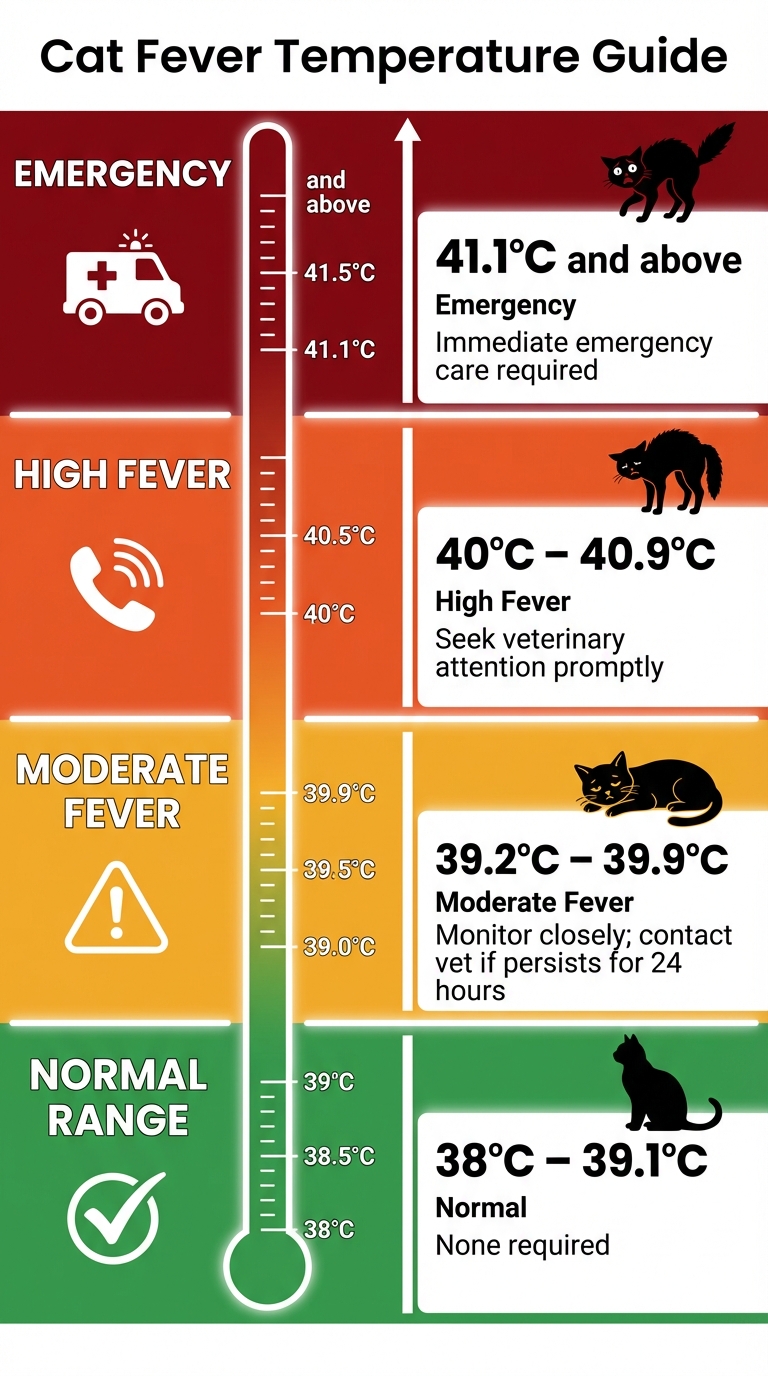
Cat Fever Temperature Guide: Normal to Emergency Ranges
Noticing a fever early can make a big difference in how quickly your cat recovers. Cats are experts at hiding illness, so it’s important to watch for subtle changes in their behaviour and physical condition.
Physical Symptoms to Watch For
One of the first things you might notice is lethargy. If your usually energetic cat suddenly loses interest in their favourite toys or doesn’t greet you at the door, it’s worth paying attention. Cats may also hide in closets or under furniture when they’re feeling unwell, seeking a quiet, safe place to rest.
A drop in appetite or reduced water intake can also be a red flag. Other physical signs to look out for include shivering or trembling (as their body tries to raise its temperature), rapid breathing or panting, and warm ears or paws. Some cats might stop grooming themselves, leading to a messy, unkempt coat. Additional symptoms can include sneezing, vomiting, or moist paw pads.
"Fever itself is not an illness. It's a sign of an underlying illness or disorder." - Dr. Heather Berst, Medical Lead, Zoetis
If you notice these signs, it’s time to confirm your suspicions with a proper temperature check.
How to Check Your Cat's Temperature
Once you spot these symptoms, the next step is to confirm if your cat has a fever by taking their temperature accurately. The most reliable method is using a digital rectal thermometer, preferably a paediatric one. You’ll also need a water-based lubricant or petroleum jelly, alcohol for cleaning, and a few treats to help soothe your cat afterward.
Before you begin, let your cat rest for 15–20 minutes, especially if they’ve been active or stressed, as this can temporarily raise their body temperature. Enlist someone to help hold your cat gently, or wrap them in a towel to prevent scratches.
Apply a generous amount of lubricant to the thermometer tip, and carefully insert it about 2.5 cm (one inch) into the rectum. Do not force it. Twisting the thermometer slightly can make insertion easier. Wait for the beep (usually 60–120 seconds), then remove the thermometer and clean it with alcohol.
Avoid using glass mercury thermometers due to safety concerns. If a rectal reading isn’t possible, you can use a paediatric ear thermometer as an alternative, though it may not be as precise. Compare your reading with standard temperature ranges to determine the next steps. If your cat’s temperature exceeds 39.2°C, it’s time to consult a vet.
| Temperature Range | Status | Action Required |
|---|---|---|
| 38°C – 39.1°C | Normal | None |
| 39.2°C – 39.9°C | Moderate Fever | Monitor closely; contact your vet if it persists for 24 hours |
| 40°C – 40.9°C | High Fever | Seek veterinary attention promptly |
| 41.1°C and above | Emergency | Immediate emergency care required |
Spotting these signs early ensures you can act quickly to protect your cat’s health.
How to Prevent Fever in Your Cat
Keeping your cat healthy and free from fever involves a mix of simple yet effective practices. Prioritising vaccinations, maintaining hygiene, and managing stress can go a long way in reducing the risk of infections and illnesses that lead to fever. These proactive steps not only address potential causes but also help bolster your cat’s immune system.
Vaccinations and Parasite Control
Vaccinations are your cat’s first line of defence against several fever-causing diseases. Core vaccines like FVRCP protect against Feline Panleukopenia, Feline Herpesvirus, and Feline Calicivirus. Ideally, kittens should begin their vaccinations at 8–9 weeks of age, with boosters given every 3–4 weeks until they are 16–20 weeks old. After that, follow your vet’s advice on booster schedules, which typically range from every 1 to 3 years, depending on your cat’s lifestyle and risk factors.
"Vaccinating your cat helps to protect them against serious and life-threatening diseases - it's an integral part of any preventative healthcare programme." - International Cat Care
Parasite control is equally important. Fleas, ticks, and internal parasites like roundworms or hookworms can weaken your cat’s immune system, leaving them more vulnerable to infections. Use vet-approved flea and tick preventatives throughout the year and schedule annual faecal tests to check for internal parasites.
In addition to vaccinations and parasite prevention, maintaining proper hygiene is a critical part of your cat’s overall care.
Maintaining Hygiene
A clean environment is key to keeping your cat healthy. Scoop the litter box daily and sanitise it weekly with pet-safe disinfectants. If you have multiple cats, follow the "one plus one" rule - provide one litter box per cat, plus an additional one - to minimise the risk of infections spreading through shared spaces.
Wash your cat’s food and water bowls every day, and ensure they always have access to fresh, clean water. Dehydration can worsen fever symptoms, so if your cat isn’t drinking enough, try using a water fountain or adding wet food to their diet. Regularly clean bedding, vacuum your home to eliminate allergens and parasites, and disinfect surfaces your cat frequently touches. Don’t overlook dental hygiene, as poor oral care can lead to systemic infections.
Stress Management and Indoor Safety
Stress can weaken your cat’s immune system, making them more prone to infections and inflammation, which could lead to fever. Establish a predictable routine for feeding and playtime, and let your cat decide when to interact with you rather than forcing contact.
"Stress can compromise your cat's immunity, increasing its vulnerability to feline fever." - Sheba
In households with multiple cats, competition for resources can be a significant source of stress. Ensure each cat has its own food bowl, water station, bed, and scratching post, with at least one extra of each. Distribute these resources in separate areas to reduce tension. High perches and climbing structures can also provide your cat with a sense of security and enrichment.
Although indoor cats are safer from many risks, they are still susceptible to fever-causing pathogens. Viruses like feline parvovirus can hitch a ride into your home on shoes, clothing, or shopping bags. Keep your indoor temperature comfortable - around 21°C–22°C - and provide cool, shaded spots during hotter months. If you want to offer outdoor experiences, consider a secure "catio" or an enclosed garden area. This allows your cat to enjoy fresh air without the dangers of free-roaming, such as injuries or exposure to infected stray animals.
When to See a Veterinarian
While taking care of your cat at home is helpful, there are moments when only professional care can address the situation. Even with the best preventive measures, recognising the signs that demand veterinary attention can mean the difference between a smooth recovery and serious health issues.
Prolonged or High Fever
If your cat has a fever that lasts longer than 24–48 hours, it's time to consult a veterinarian. A persistent fever is often a sign of an underlying issue that your cat's body is struggling to manage.
"A persistent high fever (one that lasts for more than 48 hours) is considered serious and potentially life threatening." - Tammy Hunter, DVM
Temperatures reaching 40°C or higher should be treated as emergencies. If the temperature exceeds 41.1°C, it could lead to severe consequences like organ damage, brain swelling, bone marrow suppression, or clotting disorders. Immediate veterinary care is crucial in such cases.
In addition to monitoring fever, keep an eye out for other concerning physical symptoms that might indicate an urgent need for professional care.
Severe Symptoms
Certain symptoms go beyond the threshold of home care and require immediate veterinary attention. If your cat is experiencing difficulty breathing, excessive panting, seizures, collapse, or extreme lethargy, it’s time to act quickly.
"If your cat has a seizure, is panting excessively, collapses or has a body temperature above 104° F (40°C), this is an emergency and your cat should be seen by a veterinarian immediately." - Heather Berst, MA, VMD
Gastrointestinal issues, such as severe or ongoing vomiting and diarrhoea, combined with fever, also need urgent evaluation. Additionally, if your cat refuses to eat or drink for more than 24 hours, seek help without delay, as dehydration can progress rapidly, leading to muscle breakdown and organ strain within 48 hours.
Lastly, never attempt to treat your cat's fever with human medications like paracetamol, ibuprofen, or aspirin. These drugs are extremely toxic and can be fatal for cats. Instead, rely on professional veterinary care to ensure your pet’s safety and well-being.
Conclusion
Keeping your cat fever-free starts with consistent, attentive care. Regular veterinary visits - annually or twice a year for older cats - help catch potential health concerns early. Staying on top of vaccinations, parasite treatments, and dental care can shield your feline friend from many infections that could lead to fever.
"Routine health care is the regular care your cat needs to stay healthy throughout its life." - Nick Roman, DVM, MPH
At home, a clean environment is key. Regularly sanitising litter boxes, food and water bowls, and bedding reduces exposure to harmful germs. A steady supply of fresh water, a well-balanced diet, and a calm, predictable routine can naturally boost your cat's immune system. Keep an eye out for unusual behaviour or signs of discomfort.
If, despite your efforts, your cat develops a fever, avoid giving human medications like paracetamol or aspirin - these are toxic to cats. Instead, consult your vet immediately if your cat's temperature hits 40°C or higher, or if symptoms last more than 24–48 hours. By following these steps, you can help ensure your cat stays healthy, comfortable, and fever-free.
FAQs
What is the safest way to take my cat’s temperature at home?
The best way to check your cat’s temperature at home is by using a digital rectal thermometer, as it provides the most precise reading. Start by applying a lubricant, like petrolatum or a water-based gel, to the thermometer's tip. Then, gently insert it into your cat’s rectum and wait for the temperature to register. Be sure to handle the thermometer with care to avoid any harm, and only proceed if you feel completely comfortable and ready to do so.
How can I tell fever from heatstroke in cats?
Fever in cats happens when their body temperature goes above 39.2°C (102.5°F). It’s typically triggered by infection or inflammation. On the other hand, heatstroke occurs when a cat is exposed to high environmental temperatures for too long. Signs of heatstroke include excessive panting, drooling, weakness, or even collapse. The main distinction? Fever is an internal reaction, while heatstroke stems from external heat exposure.
What should I do while waiting to see a vet for a cat’s fever?
While waiting to consult a vet, keep an eye on your cat’s temperature and ensure it remains comfortable and well-hydrated. Avoid administering any medications unless specifically directed by a veterinarian. Create a calm environment for your cat and carefully observe any changes in behaviour or symptoms, so you can provide detailed information to the vet.


