


If your cat is limping, it’s a clear sign something is wrong. Cats are skilled at hiding pain, so noticeable limping often points to advanced issues. Causes include injuries, paw problems, or joint conditions like arthritis. To prevent limping:
- Minimise Risks: Keep your cat indoors or use a secure outdoor space. Spay/neuter to reduce fights.
- Inspect Paws: Check for foreign objects, cuts, or torn nails.
- Maintain Joint Health: Feed a balanced diet with omega-3s and supplements like glucosamine.
- Create a Safe Home: Add anti-slip mats, secure heavy furniture, and remove hazards.
- Encourage Gentle Exercise: Use interactive toys and ramps to keep your cat active without strain.
Regular care, a safe environment, and proper nutrition can help your cat stay healthy and comfortable.
6 Surprising Reasons Why Cats May Limp & How to HELP Them
sbb-itb-5205b1e
Why Cats Limp: Main Causes
Understanding why your cat might limp can help you take steps to prevent it. Limping can result from sudden injuries or long-term joint issues. Let’s dive into the most common reasons.
Injuries and Physical Trauma
Physical trauma is one of the leading causes of limping. Cats can experience fractures, dislocated joints, or torn ligaments due to accidents . Even activities like running too fast or awkwardly twisting a leg can lead to sprains, muscle strains, or bruising . More serious incidents, such as being hit by a vehicle or falling from a height, can cause severe injuries . Overweight cats are particularly vulnerable, as their joints endure extra pressure during sudden movements or falls . Additionally, bite wounds from fights can lead to abscesses, which may make walking painful .
"Cats who are not spayed or neutered that go outdoors are more likely to engage in activities such as mating and fighting that can lead to bite wounds and other injuries."
- Dr. Jo Myers, Veterinarian, Vetster
Minimising risks often comes down to lifestyle choices. Keeping your cat indoors can significantly reduce exposure to hazardous situations . If outdoor time is essential, consider using a secure catio or taking your cat on supervised walks with a harness. Spaying or neutering your cat can also reduce territorial behaviour that often leads to fights . Maintaining a healthy weight is another crucial step in protecting your cat’s joints from unnecessary strain .
Now, let’s explore how problems with your cat’s paws might cause limping.
Paw Problems and Foreign Objects
A cat’s paws are constantly exposed to potential hazards. Foreign objects like thorns, glass, stones, or grass seeds can get lodged in their paw pads, leading to discomfort or injury . Cuts, abrasions, and even chemical burns can also damage the sensitive paw pads .
Claw issues are another common source of limping. Torn nails, nail bed infections, or ingrown claws can cause significant pain . Signs to watch for include excessive licking of the paw, holding the foot off the ground, or vocalising when the paw is touched .
"Regular nail trims help decrease nail injury, thus lowering the chance of the nails getting stuck and broken."
- Jennifer Coates, DVM
Routine paw checks are essential. Inspect between the pads for foreign objects, redness, or swelling . If you spot something like a thorn, carefully remove it and clean the area with antibacterial soap.
But limping isn’t always about external injuries - sometimes, it’s linked to internal joint problems.
Arthritis and Bone Conditions
Arthritis, or osteoarthritis, occurs when joint cartilage wears down, causing painful bone-on-bone contact. This condition often limits a cat’s mobility . Other bone-related issues, such as hip dysplasia (improper joint development) and patellar luxation (kneecap dislocation), can also lead to instability and limping . While these problems are more common in older cats, some breeds may be genetically predisposed to them. Limping usually starts subtly - your cat might avoid jumping or climbing stairs - before becoming more noticeable . Early detection is key to managing these conditions effectively.
Keeping Paws and Joints Healthy
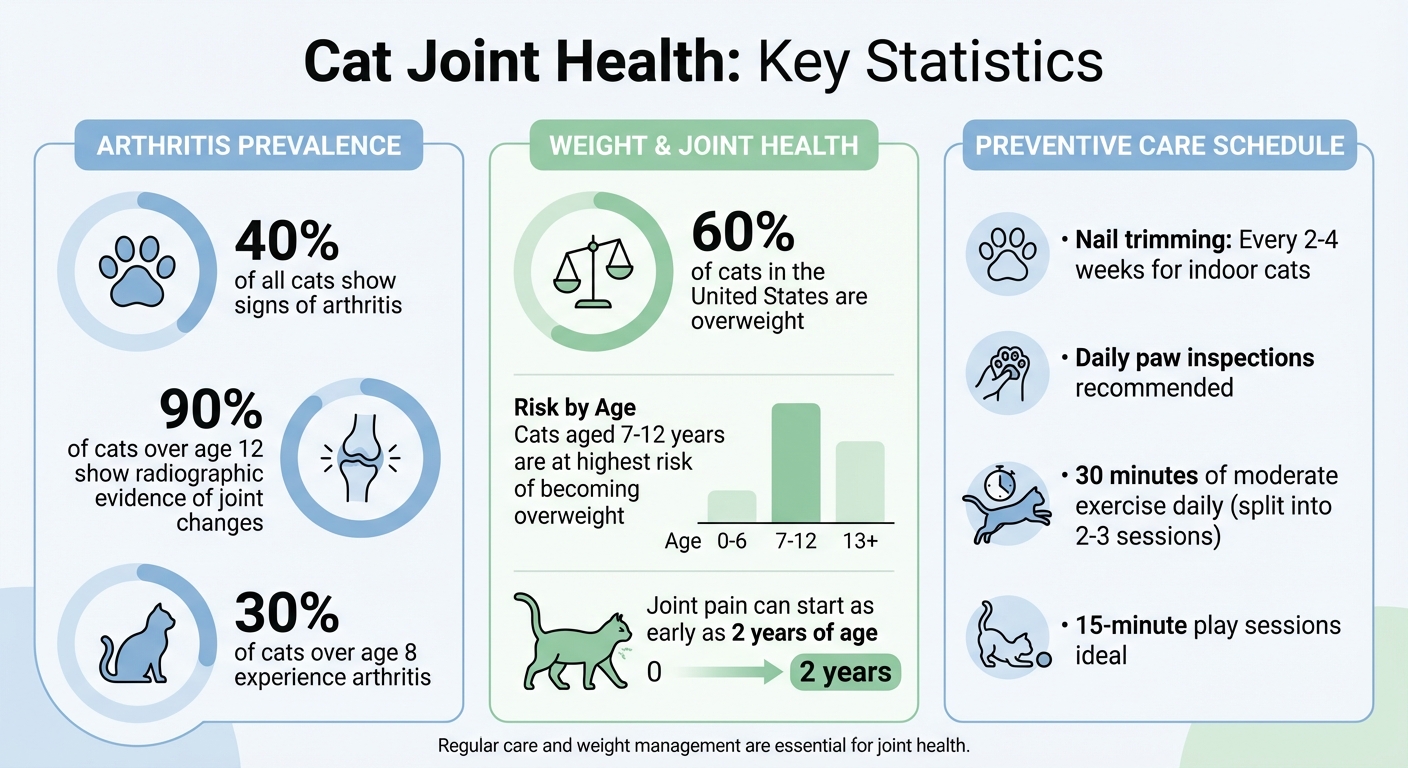
Cat Arthritis Statistics and Joint Health Facts
Preventing limping in cats starts with maintaining their paws and joints in good condition through regular checks and proper nutrition.
Check Paws Regularly and Trim Nails
Make it a habit to check your cat's paws daily. Use a damp cloth to wipe away dirt or debris and inspect for any lodged objects or signs of inflammation. Pay attention to the paw pads - if they feel unusually warm, it could indicate an infection.
For indoor cats, nail trimming is essential every 2–4 weeks. Use cat-specific nail trimmers and carefully cut only the translucent tip, steering clear of the pink quick. Sharp, high-quality trimmers are a must to avoid crushing the nail during the process.
"In severe cases, a cat's nails can become so long that they curve around and grow into the paw pads, causing an infection."
- Courtney Barnes, BSc, DVM; Catherine Barnette, DVM
Overgrown nails can lead to serious problems, including infections caused by nails growing into the paw pads. If your cat resists nail trimming, try doing just one or two nails at a time while they're relaxed, perhaps while sitting on your lap. Reward them with treats to make the experience positive. Keep styptic powder or cornstarch handy in case you accidentally nick the quick and need to stop any bleeding.
The next step to preventing joint issues is ensuring your cat gets the right nutrients.
Feed Your Cat the Right Nutrients
A balanced diet plays a key role in maintaining joint health. Include nutrients like omega-3 fatty acids, glucosamine, and chondroitin sulfate, which help protect cartilage and reduce inflammation. Omega-3s, in particular, are known for their anti-inflammatory properties, while green-lipped mussel extract from New Zealand has been shown to improve mobility in arthritic cats.
Weight management is equally important. Cats aged 7 to 12 years are at a higher risk of becoming overweight, which can put extra stress on their joints. For senior cats over 12 years old, ensure they get enough high-quality protein to support their muscles and joints. You might also consider slightly elevating their food and water bowls to make eating more comfortable.
Use Joint Support Supplements
If diet alone isn't enough, supplements can provide additional support for joint mobility. These are especially helpful for senior cats, who are more prone to arthritis. Studies show that about 40% of all cats exhibit signs of arthritis, and 90% of cats over the age of 12 show radiographic evidence of joint changes. Look for supplements containing glucosamine, chondroitin, omega-3 fatty acids, or green-lipped mussel extract for the best results.
Before starting any supplements, consult your veterinarian. Limping can sometimes stem from other health issues, such as infections or diabetes, so it's crucial to rule out these conditions first. Additionally, some therapeutic diets already include optimal levels of joint-support nutrients, which might make separate supplements unnecessary.
Make Your Home Safer for Your Cat
Preventing your cat from limping often starts with making your home a safer space. A few thoughtful adjustments can go a long way in reducing the risk of injuries. One of the first areas to focus on is slippery floors.
Install Anti-Slip Mats on Floors
Slippery floors can be a serious hazard for cats, especially older ones. Did you know that around 30% of cats over the age of 8 experience arthritis? Surfaces like hardwood, tile, or linoleum can cause cats to lose their footing, splay their legs, or land awkwardly after a jump. These slips not only strain their joints but can also lead to fractures, particularly in cats with existing health problems.
To reduce these risks, consider placing non-slip mats or rugs in areas where your cat tends to jump down, such as near beds, sofas, or windowsills. Yoga mats can be a budget-friendly option for creating high-traction zones. For staircases, non-slip stair treads are a practical addition to help your cat move safely between levels. Make sure rugs and runners are securely fixed with double-sided tape to prevent them from sliding.
"Lay out area rugs or carpet runners (don't forget the non-slip rug pads that go underneath!), or even yoga mats. Add these rugs, runners, and mats throughout your home, and be sure to also put them on the floor surfaces around your bed, couches, and any windowsills."
- Dr. Beth Turner, Veterinarian
Once you've tackled floor safety, it's time to address other potential dangers around the house.
Remove Dangers Around the House
Heavy furniture can pose a significant risk if it’s not properly secured. Cats love to climb, and unsecured items like bookshelves, TVs, or wardrobes can topple over. Use L-brackets or wall anchors to firmly attach these pieces to the wall.
"Secure bookshelves and other tall pieces to the wall. That way you prevent it from tipping over."
- Joey Lusvardi, CCBC, Owner of Class Act Cats
Windows and balconies are other common danger zones. Ensure window screens are sturdy, and consider adding specialised mesh or netting to balconies to prevent falls. Keep small, sharp items - like needles, rubber bands, and hair ties - stored safely in containers. Cats are naturally curious, and even household appliances can pose a risk. Always close the doors to washing machines and dryers, as cats are often drawn to these warm, dark spots. To keep them out of cabinets containing cleaning supplies or sharp objects, install childproof latches.
For older cats, declining vision can make navigating the house trickier, especially at night. Installing night lights in key areas can help them avoid bumping into obstacles or getting disoriented. These small changes can make a big difference in creating a safer environment for your feline friend.
Exercise Your Cat Safely
Ensuring your cat stays active is just as important as providing a secure home and good care. Regular, gentle exercise keeps their muscles and joints healthy, reducing the risk of stiffness and limping. Cats thrive on short bursts of activity, so aim for 15-minute sessions. Experts suggest about 30 minutes of moderate exercise daily, ideally split into two or three shorter playtimes.
The timing of these sessions matters too. Cats are naturally more energetic during dawn and dusk, making these the best times for play. Choose non-slip surfaces for added safety.
Play Games That Keep Cats Moving
Interactive toys are a fantastic way to get your cat moving without putting too much strain on their joints. Toys that mimic hunting, like feather wands or "fishing pole" toys, are especially effective. Move them slowly and predictably so your cat can follow without making sudden, sharp movements. Soft balls are another great option - they encourage gentle batting and chasing. If you’re using a laser pointer, keep the movements gradual, and always end the session by directing the light to a physical toy. This gives your cat a sense of accomplishment.
Food puzzles are another fun way to combine mental and physical activity. A simple option is a plastic container with holes, or you can use a commercial roller that dispenses kibble as your cat nudges it. These puzzles encourage low-impact, continuous movement.
These activities not only keep your cat engaged but also provide a safe and enjoyable way to stay active.
Try Gentle Movement Activities
For cats with joint problems, low-impact activities are a better choice than jumping. Consider adding steps or ramps near their favourite high spots to make climbing easier. Tall scratching posts are another excellent option, as they encourage full-body stretching, which helps maintain flexibility. This is especially important since about 60% of cats in the United States are overweight, and joint pain can start as early as 2 years of age.
"Exercise is widely recognised as one of the most important factors in helping patients with arthritis stay mobile."
- Zoetis Pets
Avoid activities that involve sharp turns or high-impact jumps. Instead, focus on predictable, controlled movements to keep your cat active without overloading their joints. Even hiding small amounts of kibble around the house can inspire your cat to explore and "hunt", offering a gentle, natural form of exercise.
Final Thoughts
Taking steps to prevent limping in your cat means committing to a consistent care routine that addresses their overall well-being. When a cat starts limping, it’s often a sign of significant discomfort, as cats are masters at hiding pain until it becomes severe.
To minimise the risk of limping, focus on a balanced approach that includes regular care, a safe living environment, and proper nutrition. Obesity, the most common nutritional disorder in small animals, can contribute to or worsen lameness. Maintaining a healthy weight for your cat eases joint strain, and supplements like omega-3 fatty acids can support joint health over the long term.
FAQs
What are the early signs that your cat might have arthritis?
Cats suffering from arthritis often exhibit signs that might not be immediately obvious. Look out for things like trouble jumping or climbing, stiffness or limping, and a hesitation to move around as they used to. Behavioural changes can also be a clue - your cat might become irritable, groom less frequently, or stop engaging in the playful activities they once loved.
If you spot any of these signs, it’s a good idea to consult your vet. Addressing the issue early can make a big difference in improving your cat’s quality of life and keeping them comfortable.
What is the safest way to trim my cat's nails and avoid injuries?
Trimming your cat's nails doesn’t have to be a stressful experience - for you or your furry friend. The key is preparation, patience, and the right tools. Start by selecting clippers that work best for you, such as scissors-style or guillotine-style clippers.
Before you begin, make sure your cat feels calm and at ease. Spend some time gently handling their paws in advance to help them get used to the sensation. Pair this with treats to create a positive association.
When trimming, carefully locate the quick - the pink area inside the nail that contains blood vessels. Be cautious not to cut into it, as this can cause pain and bleeding. Focus on trimming just the sharp tips of the nails. Hold your cat’s paw gently but firmly to keep them steady.
For best results, aim to trim their nails every 2–4 weeks. This regular upkeep prevents overgrowth and keeps your cat comfortable. Keep the experience stress-free by staying patient and rewarding your cat with treats and praise throughout the process.
What are some gentle exercises for senior cats with joint problems?
For senior cats dealing with joint problems, gentle activities can help them stay mobile and reduce stiffness without causing discomfort. Interactive play, using soft toys or feather wands, is a fun way to encourage movement in a safe environment. Puzzle feeders are another great option - they keep your cat mentally stimulated while promoting light physical activity.
You can also try simple exercises like slow stretching or short, relaxed walks within the house. The key is to let your cat set the pace and avoid anything that might cause pain. Hiding treats or toys in easy-to-reach places can inspire gentle exploration, supporting both their physical and mental well-being. Stick to low-impact activities that your cat enjoys and feels comfortable with.
Related Blog Posts
- Common Pet Health Questions Answered
- How to Prevent Lethargy in Your CAT
- How to Prevent Itching in Your CAT
- How to Prevent Limping in Your Dog


