


Trembling in dogs can signal anything from harmless excitement to serious health issues. To keep your dog safe and comfortable, focus on these key points:
- Common Causes: Dogs may tremble due to cold, fear, anxiety, pain, or medical conditions like low blood sugar, distemper, or toxin exposure.
- Warning Signs: Persistent trembling with symptoms like vomiting, lethargy, or confusion needs immediate veterinary attention.
-
Prevention Tips:
- Keep them warm with sweaters or blankets.
- Reduce stress by maintaining routines and using calming tools like pressure wraps or pheromone diffusers.
- Provide a balanced diet and regular exercise to avoid health issues like hypoglycaemia or joint pain.
- Training: Use desensitisation and counterconditioning to help them manage fear triggers.
If trembling persists or worsens, consult a vet without delay. Spotting early signs and taking preventive steps ensures your dog’s health and comfort.
Why Is My Dog Shaking? Should I Call My Vet? | Dr. Nancy Reese Deep Dive
sbb-itb-5205b1e
Why Dogs Tremble: Main Causes
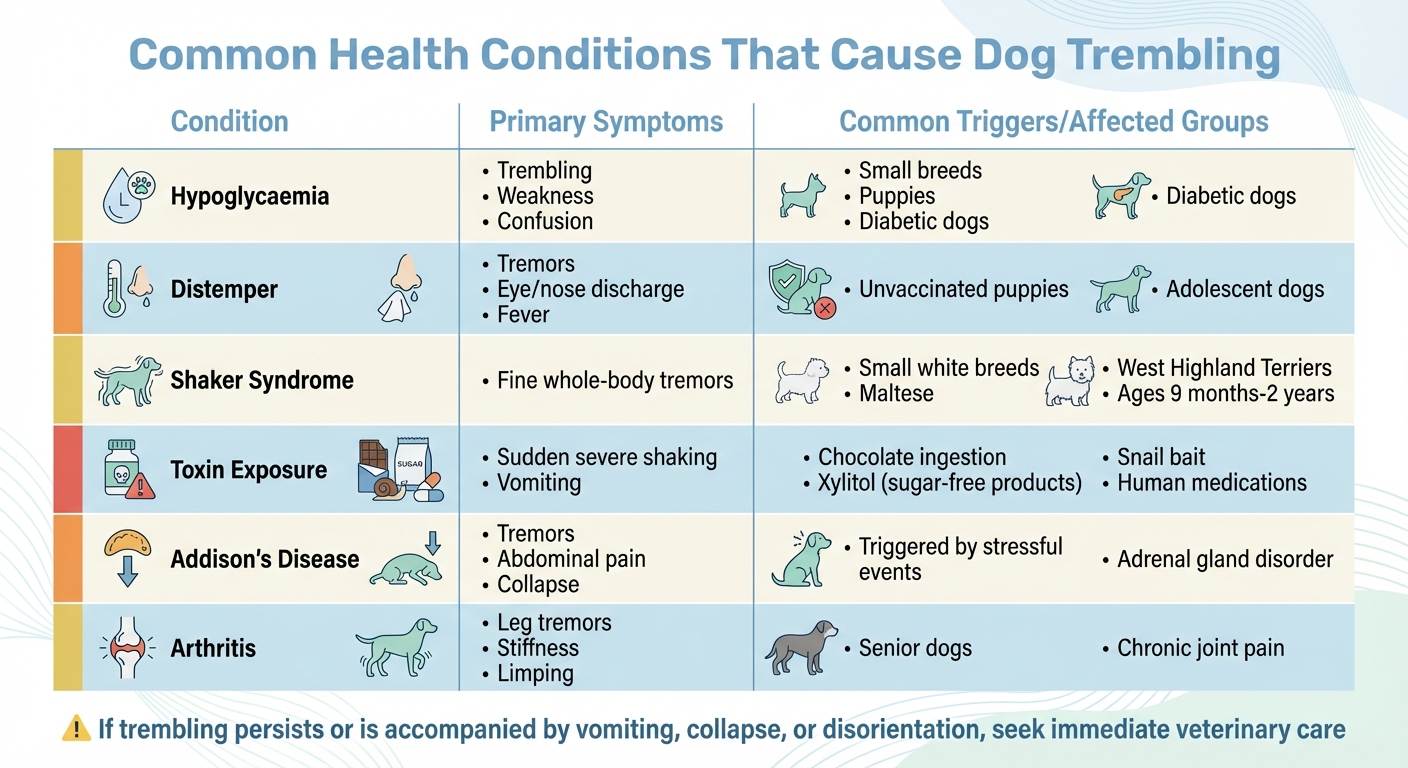
Common Health Conditions Causing Dog Trembling: Symptoms and Risk Groups
Understanding why dogs tremble is essential to address their needs effectively. The reasons can range from simple discomfort to more serious medical issues requiring immediate care.
Environmental Triggers
Extreme temperatures often cause trembling in dogs. For instance, when temperatures drop below 15°C (59°F), smaller breeds are prone to shivering as their bodies try to generate warmth through muscle activity. Dogs with thin coats, older dogs, and smaller breeds are particularly vulnerable to cold-induced shaking. Similarly, after a bath or exposure to monsoon rains, dogs may shake to dry off and warm themselves.
Loud noises are another common trigger for trembling. Fireworks during Diwali, thunderstorms, or nearby construction can create fear and stress in dogs. Even minor changes, like moving to a new home, introducing a new pet, or altering daily routines, can lead to stress-induced shaking. Encounters with strangers or unfamiliar animals can also provoke anxiety-related trembling.
While physical factors contribute significantly, emotional responses also play a major role in causing dogs to tremble.
Emotional Factors
Strong emotions - both positive and negative - can make dogs tremble. For example, excitement-induced shaking is common when dogs eagerly await a treat, a walk, or your return home. This type of trembling is usually harmless and stops once the dog calms down. Unlike excitement tremors, anxiety-based shaking is more persistent and often accompanied by other stress signals.
Anxiety and fear can produce more worrisome trembling patterns. Dr. Jo Myers, a veterinarian, advises:
Start by trying to determine if the shaking is voluntary or not. If your dog can stop shaking when they are distracted with a toy, treat, or other activity, it's more likely to be voluntary.
Anxiety-related trembling is often paired with signs like whining, pacing, panting, lip licking, or a tucked tail. Dogs with separation anxiety may even start trembling when they sense pre-departure cues.
Health-Related Causes
When environmental and emotional triggers are ruled out, medical issues should be considered. One common cause is hypoglycaemia (low blood sugar), which affects toy breeds and puppies struggling to regulate glucose levels. Distemper, a viral infection common in unvaccinated puppies, can result in permanent muscle tremors. Another condition, Generalized Tremor Syndrome (also known as "Shaker Syndrome"), affects dogs between 9 months and 2 years old and causes full-body tremors due to brain inflammation.
Trembling can also result from toxin exposure. Substances like chocolate, xylitol (found in sugar-free products), snail bait, or human medications such as ibuprofen can cause sudden and severe shaking. Senior dogs may experience leg tremors due to arthritis or chronic joint pain. Other serious health conditions include Addison's disease (an adrenal gland disorder), kidney or liver failure (where toxin build-up affects the nervous system), and seizure disorders.
| Condition | Primary Symptoms | Common Triggers/Affected Groups |
|---|---|---|
| Hypoglycaemia | Trembling, weakness, confusion | Small breeds, puppies, diabetic dogs |
| Distemper | Tremors, eye/nose discharge, fever | Unvaccinated puppies and adolescents |
| Shaker Syndrome | Fine whole-body tremors | Small white breeds (Maltese, Westies) |
| Toxin Exposure | Sudden severe shaking, vomiting | Ingestion of chocolate, xylitol, snail bait |
| Addison's Disease | Tremors, abdominal pain, collapse | Stressful events |
| Arthritis | Leg tremors, stiffness, limping | Senior dogs |
Recognising these triggers is the first step towards addressing and managing the underlying causes effectively.
How to Spot Trembling Symptoms
Catching the signs of trembling early can help prevent serious issues. Figuring out whether your dog's trembling is harmless or a sign of something more concerning means paying close attention to both physical and behavioural changes.
Physical Signs to Watch For
One way to assess trembling is by checking if it stops with distraction. Dr. Jo Myers, a veterinarian, explains:
If your dog can stop shaking when they are distracted with a toy, treat, or other activity, it's more likely to be voluntary.
If the shaking doesn’t ease up even with distractions, it’s time to consider a medical evaluation.
Dogs in pain may show other signs like limping, stiffness, whining, or hunching. Pale gums along with trembling could point to an emergency. Dr. Jamie Richardson, Head of Veterinary Medicine at Small Door Vet, highlights:
Dogs in pain may shake in response to discomfort... they might also limp, whine, avoid your touch, or show changes in their usual posture.
Neurological tremors might show up as head tilting, circling, lack of coordination, facial twitching, or rhythmic jerking of a limb. Metabolic problems could bring trembling along with symptoms like vomiting, diarrhoea, drooling, lethargy, or loss of appetite. If your dog is shivering in cold weather (below 15°C or 59°F), that’s normal. But if it continues after warming up or occurs alongside heatstroke signs like excessive panting and bright red gums, it’s a red flag.
Beyond physical symptoms, your dog’s behaviour can also provide important clues.
Behavioural Changes
Behavioural shifts can help you figure out if trembling is emotional or medical. Anxiety-related shaking often comes with behaviours like lip licking, yawning, or pacing. On the other hand, trembling caused by medical issues might leave your dog looking lethargic, disoriented, or withdrawn. They may even hide or appear "spaced out."
If these physical and behavioural signs worsen, it’s essential to act quickly.
When to Consult a Veterinarian
You should contact a vet immediately if trembling is accompanied by symptoms like vomiting, diarrhoea, seizures, breathing trouble, pale gums, or collapse. Trembling that lasts more than 30 minutes or happens frequently without an obvious cause also needs medical attention. Dr. Lauren Witter from URvet Care explains:
Fluctuations in electrolytes or blood sugar levels can disrupt nerve function and lead to tremors or shaking in dogs.
If there’s a chance your dog ingested something toxic - like chocolate, xylitol (common in sugar-free products), snail bait, or human medications - don’t wait for symptoms to worsen; seek emergency care immediately. For senior dogs, new trembling episodes might indicate arthritis, muscle weakness, or neurological problems, and should also be checked out. Keeping a record of each episode, including its duration, severity, and any other symptoms, can help your vet diagnose the issue more effectively.
How to Prevent Trembling in Dogs
Once you've identified the warning signs, the next step is to take preventive measures. This includes creating a secure environment, minimising stress, and ensuring your dog's overall well-being.
Creating a Comfortable Environment
A cosy and safe home can make a big difference for your dog. In colder months, keep your dog warm with sweaters, blankets, or orthopaedic beds. If your floors are slippery, use non-slip runners or try traction socks and toe grips to avoid falls that might strain your dog physically. For dogs prone to anxiety, set up a "safe room" instead of using a crate. This space should include windows, toys, and comforting items like a piece of your clothing with your scent. Dr. Nellie Goetz, a veterinarian, highlights the importance of sticking to routines:
Leave at the same time, come home at the same time. Eventually they develop a level of comfort with [the idea that] you've come back before, so you're going to come back again.
During events like Diwali or thunderstorms, play soothing music - reggae has been found to work well - to mask loud noises. To prevent physical strain, use ramps instead of stairs and block access to high furniture.
Reducing Emotional Stress
Tackling emotional triggers is as important as making environmental changes. A consistent daily routine for meals, walks, and playtime can help your dog feel more secure. Learn to spot early signs of stress, such as yawning, lip licking, or pacing, so you can intervene before trembling starts . Chewing and licking are natural ways for dogs to calm themselves, so provide long-lasting chew toys or puzzle feeders . Interactive toys can also help tire your dog mentally before you leave them alone .
For specific fears, gradual desensitisation under professional guidance can be effective . Additionally, calming aids like pheromone diffusers, anxiety wraps, or even dog food enriched with calming herbs like Ashwagandha may help . Encourage your dog to "earn" rewards like meals or outings by performing simple tasks, such as sitting.
Diet and Exercise Management
A proper diet and regular exercise play a crucial role in preventing trembling caused by issues like hypoglycaemia or joint strain. Dr. Jerry Klein, Chief Veterinary Officer of the AKC, explains:
Low blood sugar or hypoglycemia can cause shaking... Keeping your dog on a well-balanced diet and feeding on a routine schedule can help prevent hypoglycemia.
For small dogs and puppies, frequent small meals can prevent sudden drops in blood sugar. Regular exercise helps reduce stress and provides an outlet for excess energy . For older dogs, controlled exercise is essential to maintain muscle mass, especially in the hind legs. A healthy weight through proper diet and exercise can also ease joint strain and reduce trembling linked to arthritis or chronic pain .
Calming Tools and Training Methods
Managing trembling in dogs often requires a mix of practical calming aids and effective training techniques. These approaches work together to address immediate stress while building long-term emotional stability.
Using Calming Tools
Pressure wraps, like ThunderShirt, provide gentle, consistent pressure on a dog's torso, similar to the soothing sensation of a hug. This can help lower heart rates and release calming endorphins, making these wraps particularly helpful during thunderstorms, Diwali fireworks, or car rides. To ensure a proper fit, use the two-finger rule - make sure you can slide two fingers under the fabric easily. Always supervise your dog while they wear a pressure wrap to ensure safety.
Pheromone therapy, using synthetic Dog Appeasing Pheromones (DAP) products such as Adaptil, can mimic the comforting scents produced by nursing mothers. These are available as diffusers, sprays, or collars and are effective for easing anxiety in unfamiliar settings or during stressful events. If using a pheromone spray in confined spaces like a crate or car, allow 15 minutes for the alcohol base to evaporate before introducing your dog. Additionally, calming beds with raised edges - like donut or bolster-style designs - offer a sense of security. These beds are especially effective for larger breeds, such as Labradors, as they allow dogs to burrow and feel "hugged."
Interactive toys, including KONGs, snuffle mats, and lick mats, encourage natural foraging behaviours that release calming endorphins. Freezing food-stuffed toys can keep your dog engaged for longer periods, which is particularly useful during thunderstorms or when you're not at home. For severe panic episodes, consider creating a quiet "bunker" in a windowless, sound-insulated room like a bathroom or closet. Add white noise to help mask external triggers, providing a more calming environment.
While these tools can offer quick relief, training techniques are essential for addressing the underlying causes of trembling and fostering long-term confidence.
Behavioural Training Techniques
Behavioural training helps dogs develop resilience against anxiety, tackling the root causes of trembling. Desensitisation is one effective method, where dogs are gradually exposed to low-intensity triggers and then progressively to higher levels. For instance, if your dog trembles at thunder, start by playing a thunder recording at a very low volume. Reward calm behaviour, and only increase the volume as your dog becomes consistently relaxed and responsive to treats.
Counterconditioning shifts your dog’s emotional response by pairing a stressful stimulus with a positive experience. Kait Hembree, Head of Training at GoodPup, explains:
You change the emotion already connected to a stimulus by matching the stimulus to something good.
This method works well for fears related to strangers, other dogs, or even vet visits.
Teaching a "settle" command can also help build emotional self-control. During light play, pause and ask your dog to sit or lie down on a specific mat. Quietly reward them for relaxing. Over time, increase the duration and add mild distractions to strengthen the command. For dogs with severe anxiety, combining calming tools - like a pressure wrap - with training can make them more receptive to learning new behaviours.
Conclusion
It's important to differentiate between typical shivering - caused by cold or excitement - and signs that indicate your dog might need urgent veterinary attention. As Dr. Daniel Dixon, Founder of North Keller Animal Hospital, advises:
Anything that appears to be causing stress or pain to a patient should always have veterinary involvement.
Understanding whether your dog's trembling stems from environmental factors, emotional responses, or potential health conditions can help you address the issue effectively and prevent future occurrences. This awareness serves as the basis for the preventive measures discussed here.
Taking preventive steps can make a big difference. Stick to a steady routine, ensure small or thin-coated dogs stay warm, and remove toxins from your home to minimise risks. Regular vet visits and up-to-date vaccinations - especially for distemper - are essential for catching health issues early, before they become more serious.
When dealing with trembling linked to anxiety, combine environmental adjustments with training techniques, like teaching a "settle" command, to boost your dog's confidence over time. For dogs that are more vulnerable, focus on their comfort by providing proper bedding, clothing, and a suitable environment.
Keep a close eye on your dog's behaviour and be alert for warning signs such as vomiting, collapse, or disorientation alongside trembling, as these symptoms require immediate medical attention. Documenting episodes can also help your vet determine whether the issue is behavioural or neurological. By staying attentive and acting promptly, you can address problems early, ensuring your dog stays healthy and comfortable. Using these focused strategies, you can strengthen your dog's overall well-being and prevent minor issues from becoming major concerns.
FAQs
How do I tell if my dog is trembling from fear or from pain?
To figure out whether your dog’s trembling is due to fear or pain, pay close attention to their behaviour and the situation. Trembling from fear is often paired with actions like hiding, cowering, or panting and is typically triggered by things like loud noises or unfamiliar environments. On the other hand, trembling caused by pain might come with signs like limping, stiffness, or an unwillingness to move, and it often happens suddenly. If the trembling doesn’t stop or seems intense, it’s a good idea to consult a vet, especially if you notice other warning signs like lethargy, vomiting, or unusual behaviour.
What should I do at home if my dog suddenly starts shaking?
If your dog starts shaking, it could be due to several reasons like cold, excitement, anxiety, or external triggers such as loud noises. If they’re cold or wet, wrap them in a warm blanket to help them feel comfortable. For stress or anxiety, create a quiet and soothing environment to help them relax.
However, if the shaking doesn’t stop, becomes intense, or is accompanied by other symptoms like lethargy, vomiting, or signs of pain, it’s crucial to contact a vet right away. Keep a close eye on their behaviour to determine if immediate professional attention is required.
How long is too long for trembling before I call a vet?
If your dog’s trembling persists for more than a few minutes or becomes intense, it’s crucial to reach out to a vet right away. This is even more important if the trembling comes with other symptoms like collapse, confusion, vomiting, or trouble breathing. Acting quickly can make a big difference in addressing any underlying health issues.


