


Limping in dogs is a sign of pain or mobility issues and should never be ignored. Dogs often hide discomfort, so by the time you notice a limp, the problem may already be serious. Common causes include injuries, joint problems like arthritis, infections, or underlying health conditions. Preventing limping involves:
- Maintaining a healthy weight: Extra weight strains joints and increases the risk of arthritis.
- Regular exercise: Low-impact activities like walking and swimming build muscle strength and support joints.
- Proper paw care: Trim nails every 2–4 weeks, check paws for injuries, and use paw balm for protection.
Products like orthopedic beds, joint supplements (e.g., glucosamine, omega-3), and protective footwear can help improve mobility and comfort. If your dog shows sudden or persistent limping, consult a vet promptly. Early intervention can prevent chronic issues and improve your pet's quality of life.
Why Is My Dog Lame? | Causes And Treatment Of Lameness In Dogs | Veterinarian Explains | Dogtor Pete
What Causes Dogs to Limp
Understanding why a dog might limp is crucial for addressing the issue effectively. Limping can result from a variety of reasons, ranging from minor injuries to more complex medical conditions. Whether the cause is sudden or develops over time, recognising the signs can help you take the right steps to ensure your dog’s well-being.
Injuries and Trauma
Injuries are one of the most common reasons dogs limp. Strains, sprains, or even ligament tears can occur during activities like running or playing. A tear in the Cranial Cruciate Ligament (CCL) is particularly frequent - it’s the leading orthopaedic issue in dogs, accounting for about 85% of all canine orthopaedic surgeries every year. More severe injuries, such as bone fractures or joint dislocations (like a dislocated hip or shoulder), often result in immediate and severe lameness, making it difficult for the dog to put weight on the affected limb.
Paw injuries are another frequent cause. Cuts, torn nails, or foreign objects lodged in the paw can lead to limping. Environmental hazards such as burns from hot pavement, frostbite, insect stings, or even animal bites can also cause pain and discomfort in the paws, leading to a limp.
Joint and Bone Problems
Chronic conditions affecting the joints and bones can develop over time, gradually impairing a dog’s mobility. Osteoarthritis, for example, involves the painful breakdown of cartilage in the joints, often making activities like climbing stairs challenging. As veterinary surgeon James St. Clair from TopDog Health explains:
"Dogs are extremely stoic when it comes to pain, and just because it doesn't seem to bother them that much doesn't mean they're not hurting".
Certain breeds are more prone to joint issues. Hip and elbow dysplasia, where the joint components don’t align properly, can lead to abnormal growth and eventual lameness. Large breeds such as German Shepherds and Golden Retrievers are particularly at risk, though smaller breeds can also experience these issues. Other conditions include patellar luxation (when the kneecap slips out of place) and panosteitis, often called "growing pains", which typically affects the long bones of large-breed puppies.
Infections and Health Conditions
Limping isn’t always due to injuries or joint problems; infections and other health conditions can also play a role. Tick-borne illnesses like Lyme disease, for instance, can cause shifting leg lameness, where the limp appears to alternate between legs. Bacterial or fungal infections affecting soft tissues, bones, or joints - such as septic arthritis or abscesses - can result in swelling and pain. Neurological disorders like Intervertebral Disc Disease (IVDD) or degenerative myelopathy may lead to limb weakness or dragging. Autoimmune diseases, such as Immune-Mediated Polyarthritis (IMPA), can also cause shifting lameness. Systemic health issues, including hypothyroidism or certain cancers like osteosarcoma, may contribute to a dog’s limp.
Keep an eye out for early warning signs such as fever (above 39.4°C), lethargy, loss of appetite, or persistent licking of a specific area. Addressing these symptoms promptly can make a big difference in your dog’s recovery.
How to Prevent Limping in Dogs
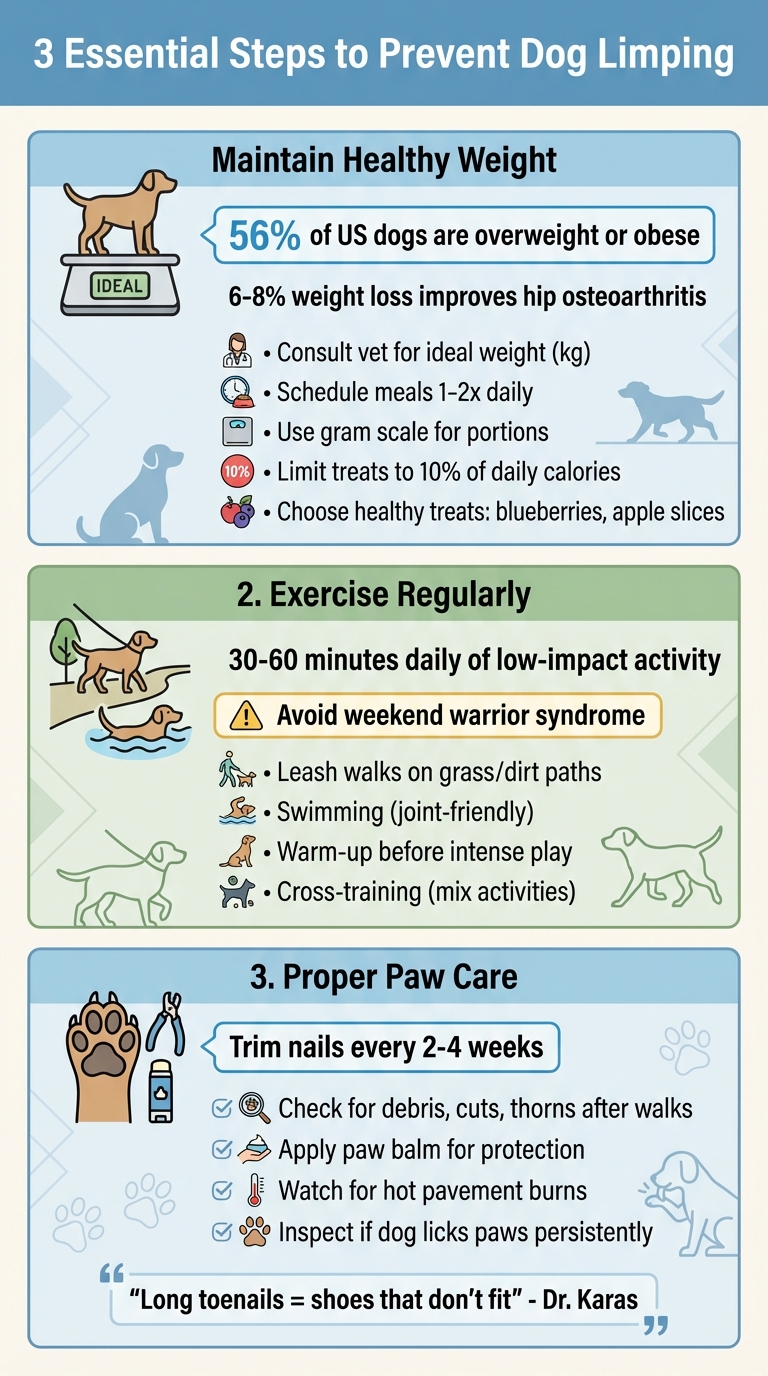
3 Essential Steps to Prevent Dog Limping: Weight, Exercise, and Paw Care Guide
Preventing limping in dogs often comes down to addressing potential issues before they become serious. By focusing on key areas like maintaining a healthy weight, ensuring regular exercise, and practising proper paw care, you can help safeguard your dog's mobility and overall well-being.
Keep Your Dog at a Healthy Weight
Carrying extra weight puts unnecessary strain on a dog's joints, speeding up wear and tear. In fact, research shows that around 56% of dogs in the United States are either overweight or obese. Even a small reduction in weight - just 6% to 8% - can make a noticeable difference for obese dogs dealing with hip osteoarthritis.
Dr. Alicia Z. Karas from Tufts University's Cummings School of Veterinary Medicine explains:
"Obesity is associated with an increase in lameness and problems with mobility. Part of that is because the dog's joints are overloaded. Another part is that fatty tissue is pro-inflammatory and will make joints hurt more".
To keep your dog at a healthy weight, consult your veterinarian to determine the ideal weight (in kilograms) and daily calorie intake. Avoid free feeding and stick to scheduled meals once or twice a day, using a gram scale for precise portioning. Treats should make up no more than 10% of your dog’s daily calorie intake. Instead of high-calorie snacks, try healthier options like blueberries or apple slices.
Exercise Your Dog Regularly
Regular, moderate exercise is crucial for building muscle strength, which helps support joints and lowers the risk of injury. However, avoid irregular exercise patterns, like intense activity only on weekends, as these can increase the risk of injuries and arthritis. Veterinary surgeon James St. Clair advises:
"Keeping your dog at a healthy weight and avoiding weekend warrior syndrome... are two simple things you can do to lower the risk and acceleration of the disease [arthritis]".
Aim for 30–60 minutes of low-impact activities each day, such as leash walks on soft surfaces like grass or dirt paths. Swimming is another excellent option, as it strengthens muscles without putting stress on joints. Before engaging in intense play or sports, warm up your dog with gentle walking or stretching exercises. You can also try cross-training by mixing activities like walking, swimming, and fetch to engage different muscle groups and prevent overuse injuries.
Groom and Care for Your Dog's Paws
Proper paw care is often overlooked but plays a big role in preventing limping. Trim your dog’s nails every 2–4 weeks, ensuring they don’t grow past the paw pads. Overgrown nails can alter your dog’s gait and strain muscles and joints. As Dr. Karas explains:
"Long toenails are the equivalent of wearing shoes that don't fit".
After walks, check your dog’s paws for debris, cuts, or thorns. In India’s hot climate, paw pads are particularly vulnerable to burns from hot pavement and can become dry or cracked. Use a dog-safe paw balm to keep the pads moisturised and protected. For minor swelling or irritation, soak the paw in warm water with Epsom salts for about 20 minutes, then pat it dry. If your dog persistently licks a specific paw, inspect it immediately - this could indicate a foreign object, sting, or injury requiring attention.
sbb-itb-5205b1e
Products That Support Joint and Paw Health
Taking care of your dog's joint and paw health can make a big difference in their comfort and mobility. With the right products - like supportive bedding, supplements, and protective gear - you can help reduce strain and keep your furry friend moving with ease.
Orthopedic Dog Beds
Adding an orthopedic bed to your dog's routine can provide much-needed support, especially for dogs dealing with joint issues. Osteoarthritis, for instance, affects about 20% of adult dogs. These beds are designed with special padding that cushions joints and prevents stiffness caused by lying on hard surfaces. For older dogs or breeds prone to joint problems, this extra comfort can even reduce their dependence on medications like NSAIDs.
Joint Health Supplements
Supplements can play a big role in supporting your dog's joint health. Ingredients like glucosamine, chondroitin, and omega-3 fatty acids are known to promote cartilage health and reduce inflammation. According to Dr. Christopher Frye from Cornell University College of Veterinary Medicine, "the supplement with the most support in the literature currently is omega-3 fatty acids from fish oil". In fact, a clinical trial found that dogs with osteoarthritis showed noticeable improvement in symptoms within 60 days of consistent use.
Before starting any supplement, consult your veterinarian and choose products with the National Animal Supplement Council (NASC) seal for quality assurance. Dosage depends on your dog's size:
- Small dogs (2–9 kg): 250–500 mg of glucosamine daily
- Medium dogs (9–20 kg): 500 mg daily
- Large dogs (20–41 kg): 1,000 mg daily
- Giant breeds (over 41 kg): 1,500 mg daily
Protective Footwear and Braces
Dog boots can protect your pet's paws from hot pavements, sharp surfaces, or rough terrain - especially important in India's heat, where ground temperatures can become extreme. For dogs with joint instability or gait issues, braces can provide extra support. They minimise painful micro-movements and promote healing, with over 80% of dogs showing improved weight-bearing within a month of use.
When choosing braces or boots, accurate measurements are key. Measure the thigh, knee, and lower leg circumferences (in cm) and the length from hock to knee. Introduce these devices gradually - start with 30 minutes on the first day and increase wear time by 30 minutes daily to help your dog adjust.
Remember to remove braces and boots at night to prevent swelling and let the skin breathe. Check the skin underneath at least twice a day for redness, sores, or hair loss.
When to See a Veterinarian
Early Warning Signs
Dogs often mask their pain, so even subtle signs like a limp can be a big deal. Pay close attention to sudden limping, especially if your dog avoids putting weight on the affected leg. Other warning signs include swelling, warmth around a joint, or hesitation to move - all of which may signal something serious.
Changes in behaviour can also reveal discomfort. Heavy panting, trembling, or hiding more than usual might mean your dog is experiencing significant pain. As Dr. Jo Myers, a veterinarian, points out:
"Interpreting pain in dogs is not always straightforward. It's unreliable to rule pain in or out based on the presence or absence of a single symptom."
When Professional Help Is Needed
Once you've noticed these warning signs, it's crucial to determine when a vet's expertise is necessary. Some situations demand immediate attention, such as visible bone protrusions, a limb hanging at an odd angle, or excessive bleeding. Neurological symptoms like dragging a limb, paralysis, or difficulty standing could indicate spinal or nerve issues and need urgent care.
For less severe cases, follow the "24-hour rule." If your dog's limp doesn't improve within a day, it's time to call the vet. While waiting, limit their movement - stick to short, leashed walks and avoid activities like jumping. To help your vet, consider recording a brief video of the limp for reference. And remember: never give your dog human painkillers like ibuprofen or paracetamol, as these can be toxic.
Conclusion
Preventing limping in dogs revolves around three main strategies: leading a healthy lifestyle, using the right tools, and recognising early warning signs. These steps align with the detailed advice shared earlier. Keeping your dog at a healthy weight reduces joint strain and lowers the chances of arthritis. Regular, moderate exercise, combined with routine grooming like trimming nails every two to four weeks, helps maintain joint flexibility and prevents gait issues.
Beyond lifestyle habits, certain products can further support your dog's joint and paw health. Orthopedic beds, joint supplements, and protective footwear are excellent options to ease joint stress and slow down degenerative changes.
Equally important is identifying problems early. Watch for signs like stiffness, hesitation on stairs, or subtle changes in your dog's walk. As veterinary surgeon Dr. James St. Clair explains:
"Just because your dog has a gradual limp does not mean you should put off taking a trip to the veterinarian. Many of the chronic conditions that cause a gradual limp are much more treatable the earlier they're caught".
FAQs
What are the early signs that your dog might be limping?
The first signs that your dog might be limping include reluctance to bear weight on one or more legs, an unusual or unsteady gait, and shorter strides than normal. You may also observe your dog steering clear of activities like running, jumping, or climbing stairs.
Watch for smaller behavioural cues too, such as licking or nibbling their paws - this can be a signal of discomfort. Spotting these signs early ensures you can address the issue promptly and avoid worsening the situation.
What is the best way to exercise my dog to prevent joint problems?
To help keep your dog’s joints healthy and avoid potential issues, it’s important to provide exercise that’s both safe and suited to their age, breed, and overall health. The best place to start? A quick chat with your veterinarian to craft an activity plan tailored to your furry friend’s specific needs.
Stick to low-impact activities like walking, swimming, or gentle play sessions. These are great for strengthening joints without putting too much pressure on them. Be mindful of overexertion, especially if your dog is a puppy or a senior, and avoid high-impact exercises that could lead to injuries.
Keeping your dog at a healthy weight is equally important. Regular exercise combined with a balanced diet can help prevent extra strain on their joints caused by excess weight. Watch for any signs of discomfort, like limping or hesitation to move, and make adjustments to their routine if needed. Above all, ensure your dog stays comfortable and happy during any physical activity.
When should I take my dog to the vet for limping?
If your dog is limping, it’s important to monitor the situation closely. If the limp persists for more than 24 hours, or if your dog shows signs of severe pain, swelling, or struggles to put weight on the affected leg, it’s time to consult a vet. Sudden and severe limping could point to a serious injury or trauma that requires immediate attention.
Additionally, if the limping is paired with visible wounds, bleeding, or if your dog appears unusually lethargic or distressed, don’t wait - reach out to a veterinarian as soon as possible. Quick diagnosis and treatment can make a big difference in preventing further issues and helping your dog heal more effectively.


