


Cats often hide signs of breathing problems, making early detection critical. Here's what you need to know:
- Monitor Breathing Rate: A healthy cat breathes 15–30 times per minute at rest. Over 30 is a warning sign; above 40 is an emergency.
- Look for Symptoms: Watch for abdominal breathing, open-mouth breathing, wheezing, coughing, or unusual postures like neck extension and elbows spread wide.
- Check Gum Colour: Healthy gums are pink. Pale, blue, or purple gums signal oxygen issues.
- Home Adjustments: Use HEPA air purifiers, low-dust litter, and avoid smoke or scented products. Keep your cat hydrated and maintain a healthy weight.
- When to Act: Panting or open-mouth breathing always requires urgent veterinary attention.
Preventive care, a clean home, and regular vet visits can help your cat breathe easier and stay healthy.
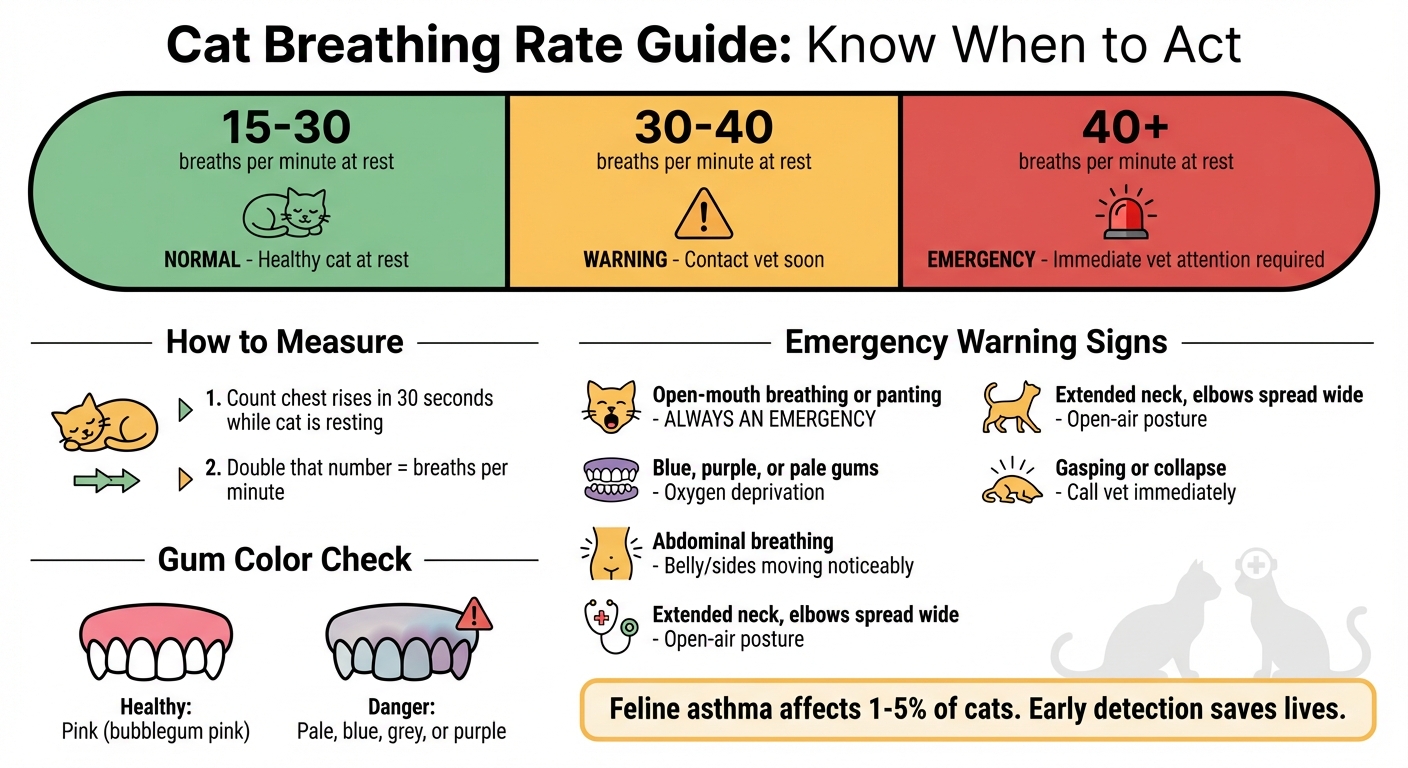
Cat Breathing Rate Guide and Emergency Warning Signs
Identifying Early Warning Signs of Breathing Problems
Symptoms to Monitor at Home
A healthy cat at rest usually breathes at a rate of 15 to 30 breaths per minute. If your cat’s breathing exceeds 30 breaths per minute, it’s a red flag that needs immediate attention. To check, count how many times your cat’s chest rises and falls in 30 seconds while it’s resting or sleeping, then double that number.
Pay attention to specific signs like abdominal breathing, where you can see the belly or sides of the chest moving noticeably. Another concerning posture is when your cat sits with its neck extended and elbows spread wide, often called an open-air posture.
Unusual sounds can also indicate trouble. Listen for wheezing (a high-pitched whistle), stridor (a harsh, rasping noise), or crackling sounds - none of these are normal. If your cat coughs, observe its posture. Cats with asthma or bronchitis typically cough with their neck and back held straight and parallel to the ground. If you notice anything unusual, record a short video or audio clip to share with your vet - it can be incredibly helpful.
Check your cat’s gum colour by gently lifting the upper lip. Healthy gums should be bubblegum pink. Pale, blue, grey, or purple gums could mean your cat isn’t getting enough oxygen, which is life-threatening. Behavioural changes, such as restlessness, reluctance to lie down, sudden lethargy, or a lack of interest in food, can also point to respiratory problems. Spotting these signs early can make all the difference in keeping your cat healthy.
When to Contact Your Veterinarian
If any symptoms worsen, it’s time to act fast. Panting or open-mouth breathing in cats is always an emergency. Dr. Barri J. Morrison emphasises:
"Panting in cats is never normal and is always an emergency."
A resting breathing rate exceeding 40 breaths per minute also demands immediate veterinary attention. Other warning signs include gasping, discoloured gums, flared nostrils, visible abdominal effort during breathing, or collapse. The PDSA advises:
"Never ignore a breathing problem (especially mouth breathing), stay calm, keep your cat calm, and contact your vet straight away."
For milder symptoms - like coughing, sneezing, a runny nose, or watery eyes - schedule a vet visit promptly. While these may not seem urgent, they still need evaluation to rule out underlying issues. If your cat is struggling to breathe, keep it in a quiet, cool space and avoid handling it too much, as stress can worsen the situation.
Monitoring Feline Respiratory Rate and Distress at Home
Setting Up an Allergen-Free Home Environment
Creating a clean, allergen-free space is essential to help cats with respiratory conditions like asthma, which affects 1%–5% of cats. Common irritants include dust, pollen, mould, cigarette smoke, household chemicals, and scented products. Dr. Richard Goldstein highlights the importance of reducing exposure:
"The more we prevent our cats from coming in contact with cigarette smoke, dust mites, irritating cat litter and other bronchial irritants, the fewer cats will need asthma treatment."
Here are practical steps to make your home safer for your furry friend.
Installing HEPA Air Purifiers
HEPA air purifiers can significantly reduce airborne allergens like dust, pollen, pet dander, mould, and dust mites, improving air quality for your cat. These purifiers are especially helpful if your cat is sensitive to tobacco smoke, aerosol sprays, or cleaning vapours. Place them in areas where your cat spends the most time, keep windows closed during high-pollen seasons, and change filters regularly. Dr. Nancy Scanlan advises:
"A HEPA filter can be very helpful, especially one with a charcoal pre-filter. The charcoal absorbs certain gases that the main filter can't."
For best results, pair air purifiers with daily vacuuming and dusting to further reduce dust mites.
Choosing Low-Dust Cat Litter
Dust from traditional clay litter can aggravate asthma symptoms. Opt for unscented, low-dust alternatives like crystal litter, recycled paper pellets, or pine pellets. Using uncovered litter boxes can also help by reducing ammonia buildup, which can irritate airways.
Removing Smoke and Chemical Irritants
Indoor air quality can be improved by avoiding smoking, burning candles or incense, and using aerosol sprays or air fresheners. Switch to natural cleaning products, unscented detergents, and skip fabric softeners when washing cat bedding. Even seemingly harmless products like essential oil diffusers, scented candles, or hair spray can irritate sensitive airways, so it's best to minimise their use. Introducing a no-shoes policy can also help limit the amount of outdoor allergens brought inside.
sbb-itb-5205b1e
Supporting Your Cat's General Health
Maintaining your cat's overall health is just as important as keeping allergens under control at home. Simple routines like ensuring adequate hydration, managing weight, and reducing stress can make a big difference in helping your cat breathe more comfortably.
Keeping Your Cat Hydrated
Staying hydrated is essential for your cat's immune system and respiratory health. Proper hydration helps thin the mucus in the airways, which is especially important for cats with chronic bronchitis. Thick mucus can obstruct breathing, making hydration a key part of their care.
Dr. Adarsh J, Assistant Techno-Commercial and Product Manager at Drools Pet Food Pvt Ltd, highlights the importance of clean water and proper food storage:
"Provide fresh water and ensure their food is stored in a dry place to avoid contamination. By following these precautions, you can help your indoor feline companion stay healthy and happy."
During India's humid monsoon season, extra care is needed. Increased humidity can raise the risk of respiratory infections. Always ensure fresh, clean water is available, and store food and water in dry places to prevent bacterial growth. Keep water bowls and their surroundings clean to avoid irritants that could worsen respiratory issues. If your cat shows severe signs of distress, like open-mouthed breathing or a blue tongue, seek emergency veterinary care immediately.
Controlling Weight Through Proper Nutrition
Excess weight can worsen conditions like asthma and chronic bronchitis, making it harder for cats to breathe. Cats are considered overweight if they weigh 10% to 19% more than their ideal weight, which can also reduce their stamina and tolerance for exercise. Neutering can lower a cat's metabolic rate by about 20%, increasing the likelihood of weight gain.
Weight loss should be approached cautiously. Aim for no more than a 1% to 2% reduction in body weight per week to avoid hepatic lipidosis, a dangerous liver condition. Consult your veterinarian to rule out underlying health issues and use a Body Condition Score (BCS) chart to set realistic goals. High-protein, low-carbohydrate diets are ideal for maintaining muscle while reducing fat.
Interactive play is another great way to help your cat stay fit. Engage in two 10- to 15-minute play sessions daily using toys like feather wands or laser pointers. Encourage natural movement with climbing trees, scratching posts, or cat shelves. Instead of free-feeding, offer smaller, controlled portions throughout the day. These habits not only help manage weight but also reduce stress, which supports better breathing.
Using Pheromone Diffusers to Reduce Stress
Stress can worsen asthma symptoms and lead to laboured breathing in cats. Managing stress is especially crucial during respiratory emergencies. Dr. Sandra C. Mitchell, DVM, DABVP, recommends creating a calm environment:
"Remain calm and limit surrounding stressors for your cat. This may mean preventing other animals and people from coming near your cat and creating a calm and quiet environment."
Set up a "safe zone" for your cat during flare-ups, ideally a cool and quiet space away from other animals or people. Avoid using essential oil diffusers or scented plug-ins, as these can irritate your cat's respiratory system and potentially trigger asthma attacks. Instead, opt for synthetic pheromone diffusers designed for cats. These create a calming atmosphere without adding harmful irritants.
Scheduling Regular Veterinary Visits
Regular veterinary check-ups are a cornerstone of keeping your cat's respiratory health in check. These visits not only help catch potential respiratory problems early but also ensure your cat stays up to date with vaccinations and preventive care. They also provide an opportunity to confirm the positive impact of maintaining a low-allergen environment and managing stress effectively.
Booking Routine Health Assessments
For kittens, frequent visits are essential. They need check-ups every 3–4 weeks until they are 16–20 weeks old, primarily for vaccinations and parasite screenings. Once your cat reaches adulthood (1 to 7 years), annual wellness exams are recommended. These visits focus on booster shots, weight checks, and listening to their lungs for any abnormalities. Senior cats, being more prone to chronic respiratory and heart conditions, benefit from biannual exams.
During these appointments, your vet will use a stethoscope to listen for early warning signs like inflammation, wheezing, or fluid build-up in the chest. If needed, they may suggest additional tests like X-rays or blood work to differentiate between asthma, bronchitis, or infections and to ensure the right treatment is provided. If your cat shows symptoms like coughing or wheezing at home, recording these episodes can be incredibly useful, as such signs may not always occur during the visit and are sometimes mistaken for hairball issues.
Maintaining Vaccination Schedules
The FVRCP vaccine is a must-have for shielding your cat from common respiratory infections. It protects against Feline Viral Rhinotracheitis (herpesvirus), Calicivirus, and Panleukopenia - pathogens responsible for the majority of upper respiratory infections. Even indoor cats need this vaccine to guard against airborne viruses.
The vaccination schedule begins with the initial series during kittenhood. A booster at 6 months is crucial to cover any gaps left by waning maternal antibodies. For adult cats, FVRCP boosters are usually given every 3 years, though cats at higher risk or those being boarded may require annual boosters.
Dr. Melissa Boldan, DVM, highlights the importance of vaccination:
"While vaccination doesn't always prevent the viruses it prevents, it does lessen the severity of their symptoms if they are exposed."
Interestingly, research shows that 97% of cats encounter feline herpesvirus during their lives, and up to 80% may develop lifelong infections that can flare up under stress. This makes staying on top of vaccinations even more critical. If you're planning to board your cat, ensure they receive a booster 7–10 days before boarding if their last vaccination was over a year ago.
Conclusion
Taking care of your cat's respiratory health involves staying observant, creating a safe home environment, and ensuring regular veterinary check-ups. Keep an eye out for symptoms like persistent coughing or rapid chest movement, as these could signal underlying issues. A healthy resting breathing rate for cats is between 15 and 30 breaths per minute - if your cat's rate consistently goes above 40 breaths per minute while resting, it's time to consult a vet immediately.
Minimising irritants in your home can make a big difference. Opt for low-dust litter, invest in HEPA air purifiers, and avoid exposing your cat to smoke or aerosols. Additionally, keeping your cat well-hydrated, maintaining a healthy weight, and reducing stress are essential steps. Obesity can lead to chronic inflammation, worsening breathing issues, while stress may trigger respiratory flare-ups.
Beyond a clean and calm home, regular medical care is key. Routine vet visits allow for early diagnosis and more manageable treatment plans. Since feline asthma affects 1%–5% of cats, daily care and preventative measures are not only better for your cat's health but also more budget-friendly than emergency treatments. With these efforts, you can help your cat live a more comfortable and healthier life, even with respiratory challenges.
FAQs
How can I check my cat's breathing rate at home accurately?
To check your cat's breathing rate at home, follow these steps:
- Make sure your cat is calm and relaxed, ideally resting or sleeping in a peaceful spot.
- Watch your cat's chest or abdomen as it rises and falls. Count how many breaths it takes in 30 seconds.
- Multiply that number by 2 to get the breaths per minute. For example, if you count 15 breaths in 30 seconds, the breathing rate is 30 breaths per minute.
A healthy resting breathing rate for cats usually falls between 20 to 30 breaths per minute. If your cat's rate consistently exceeds 30 or you notice any unusual breathing behaviour, it's best to contact a vet without delay.
How can I make my home safer for my cat's breathing?
Creating a comfortable and safe home environment can go a long way in easing breathing problems for your cat. Start by cutting down on irritants like dust, mould, tobacco smoke, and harsh household chemicals. Adding an air purifier to your home can also improve air quality by filtering out allergens and tiny airborne particles.
Regular cleaning is key to keeping dust under control. However, steer clear of heavily scented products like air fresheners or strong cleaning agents, as these can irritate your cat's sensitive airways. Make sure your home is well-ventilated and keep the litter box clean and free of dust to minimise respiratory strain.
Equally important is creating a calm, low-stress environment, as stress can sometimes trigger breathing issues such as asthma. Pair these home adjustments with routine vet check-ups to keep your cat's respiratory health in check.
When should I take my cat to the vet for breathing issues?
If your cat is showing signs of breathing trouble - like open-mouth breathing, rapid or laboured breaths, blue or pale gums, or visible discomfort - it's crucial to get them to a vet immediately. These symptoms could point to a serious medical issue that needs urgent care.
Other red flags include wheezing, constant coughing, or strange noises while breathing. Acting quickly can be key to addressing the underlying problem and protecting your cat's health. When in doubt, always reach out to your vet for guidance.


