


Your dog’s itchy skin needs more than quick fixes. Skin supplements can help repair their skin barrier, reduce inflammation, and improve coat health over time. But they’re not a cure, and results take patience.
Key takeaways:
- What supplements do: Support the skin’s barrier, reduce itching, and improve moisture retention. Common ingredients include omega-3 fatty acids, zinc, biotin, and probiotics.
- Timeline for results: Changes usually appear after 4–8 weeks. Long-term use is often necessary for chronic conditions like atopic dermatitis.
- When to stop: Most dogs with lifelong allergies need supplements indefinitely. Seasonal allergies or food-related issues might only require temporary use.
- Choosing the right supplement: Match ingredients to your dog’s allergy type. Capsules and liquids work equally well; pick based on what’s easier for your pet.
Pro tip: Track your dog’s progress with an itch scale or photos to assess improvement and consult your vet before making changes.
Bottom line: Skin supplements are a slow but effective part of managing lifelong skin conditions in dogs. Stick with them for lasting results.
RANKING BEST DOG SUPPLEMENTS
sbb-itb-5205b1e
How to Choose Skin Supplements for Your Dog
Selecting the right supplement for your dog's skin health can feel overwhelming, but focusing on proven ingredients, convenient forms, and your dog's specific allergy type can simplify the process. Here's a closer look at what you need to know.
Ingredients That Make a Difference
When it comes to skin health, not all ingredients are equal. Choosing supplements with clinically supported components ensures you're giving your dog the best care possible. Here's what works:
- Essential Fatty Acids (EPA and DHA): These omega-3s, often derived from high-quality fish oil, are the foundation of most skin health supplements. They help reduce inflammation and improve the skin's moisture retention - key for dogs with a weakened skin barrier. The recommended dosage is 300 mg per 4.5 kg of body weight, taken once daily. While no particular omega-3 formulation has proven superior, consistency and quality are critical.
- Vitamin E and Vitamin D: Both are effective in managing symptoms of atopic dermatitis. Vitamin E acts as an antioxidant, protecting skin cells, while Vitamin D helps regulate the immune system.
- Zinc and Biotin: These nutrients support skin repair and strengthen keratin production, essential for healthy skin, hair, and nails. While their effects may take time, they contribute to stronger, more resilient skin.
- Probiotics: Emerging research highlights their role in supporting gut health, which can influence how the immune system responds to allergens.
Interestingly, essential fatty acids may even have a "steroid-sparing effect," potentially reducing the need for stronger medications like prednisone over time. However, supplements should be part of a broader treatment plan and not seen as standalone solutions for severe skin conditions.
Capsules vs. Liquids: What Works Best?
The form of the supplement you choose can significantly impact how easy it is to administer. Both capsules and liquids are effective in delivering essential fatty acids, so the choice often comes down to what fits your routine and your dog's preferences.
- Capsules: Ideal for dogs that easily take pills or treats. They're portable, easy to dose, and great for general skin health.
- Liquids: Perfect for dogs that resist pills. Oral liquids can be added to food or administered directly, while topical liquids - like sprays or foams - work well for targeted areas of irritation.
If your dog has mild symptoms, once-daily capsules might be easier to manage. For dogs resistant to oral handling, liquids offer a stress-free option. Keep in mind that some topical products, like shampoos or sprays, might irritate the skin, so choose carefully.
| Factor | Capsule/Tablet | Liquid (Oral/Topical) |
|---|---|---|
| Best For | Generalised skin support | Localised issues or pilling difficulties |
| Administration | Swallowed whole or hidden in treats | Pumped onto food, into the mouth, or applied to skin |
| Efficacy (EFAs) | No difference in results | No difference in results |
| Compliance | High if the dog takes treats easily | High for dogs resistant to oral handling |
Matching Supplements to Allergy Types
Once you've decided on the form, it's time to match the supplement to your dog's specific allergy type for the best results.
- Environmental Allergies (Atopy): Dogs with atopy often benefit from high-quality fish oil rich in EPA and DHA. These omega-3s help manage chronic inflammation caused by allergens like pollen, dust mites, or mould. Since atopic dogs usually have a defective skin barrier, supplements that strengthen the outer skin layer are essential.
- Food Allergies: Here, diet takes precedence. Hydrolysed protein or novel protein diets are the primary treatments, and supplements play a secondary role. If you're conducting a diet trial, wait 6–8 weeks before introducing supplements.
- Flea Allergies: Strict flea control is the priority. However, omega-3s and skin barrier-supporting ingredients can aid in recovery from secondary skin damage caused by flea allergy dermatitis.
For smaller dogs, liquids offer precise dosing, while larger dogs might find capsules more convenient. If symptoms are mild and seasonal, a basic omega-3 supplement may suffice. For severe, year-round issues, look for formulations that combine omega-3s with vitamins, zinc, and biotin for a more thorough approach.
Before starting any supplement, it's crucial to rule out secondary infections like yeast or bacteria through cytology. Addressing these infections first ensures you can accurately assess the supplement's effectiveness.
"Canine atopic dermatitis is a chronic, pruritic, inflammatory and hereditary disease that is seen in around 10% of patients and can require lifetime management similar to eczema in humans." – Victoria Robinson, Senior Lecturer in Veterinary Dermatology
How Long to Use Skin Supplements: The Real Timeline
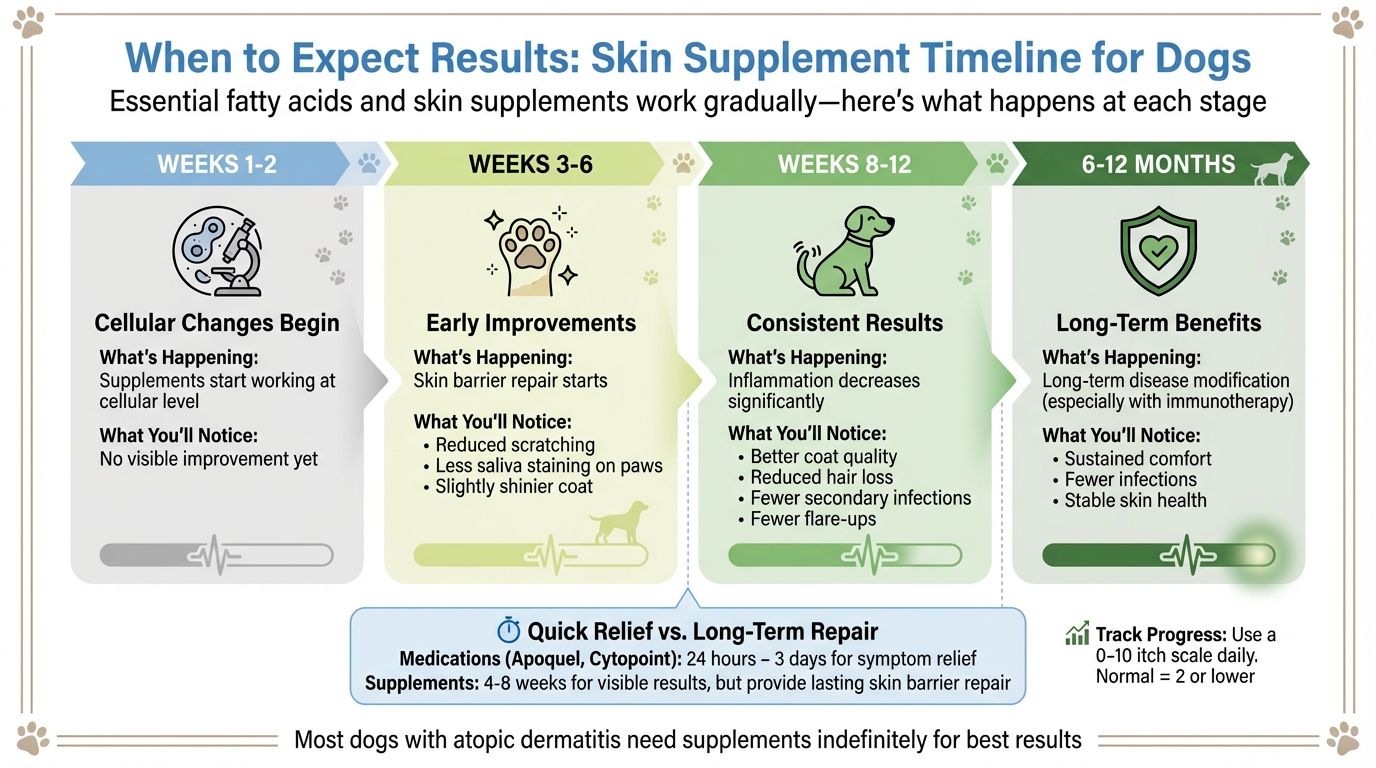
Dog Skin Supplement Results Timeline: Week-by-Week Progress Guide
Quick Relief vs. Long-Term Repair
Skin supplements aren't like medications - they take their time to show results. Medications such as oclacitinib (Apoquel) or lokivetmab (Cytopoint) can ease itching in as little as 24 hours to 3 days by suppressing symptoms quickly. On the other hand, supplements work at a slower pace, focusing on rebuilding and restoring the skin's health over weeks.
Supplements packed with essential fatty acids, vitamins, and probiotics help repair the skin barrier, reduce chronic inflammation, and adjust immune responses. These processes don’t happen overnight - they require patience. However, they play a key role in preventing long-term flare-ups.
Since atopic dermatitis is a lifelong condition with genetic roots, skin supplements often need to be used indefinitely to maintain results and prevent relapses. Stopping them too soon can lead to the return of symptoms, as the underlying cause doesn’t go away.
Now, let’s dive into the timeline so you know when to expect visible changes.
Week-by-Week: When to Expect Results
Managing skin issues isn’t a quick fix - it’s a gradual process. For instance, essential fatty acids usually take 4 to 6 weeks to show noticeable effects. Here’s a typical breakdown of what happens week by week:
Weeks 1–2:
In the first couple of weeks, the supplements begin working at a cellular level, but you likely won’t see any visible changes yet. If your pet is also on medication for immediate relief, that’s what’s providing the noticeable improvements during this time.
Weeks 3–6:
Subtle changes start to become apparent. You might see less scratching, reduced saliva stains on the paws, and a slightly shinier coat. This is when the skin barrier begins to repair itself, and inflammation starts to subside.
Weeks 8–12 and Beyond:
By this stage, you should see more consistent results - better coat quality, reduced hair loss, and fewer secondary infections. For dogs undergoing allergen-specific immunotherapy, full results may take 6 to 12 months. According to the Merck Veterinary Manual, "Improvement may not be visible for 6 months, and a year of treatment may be required before you can tell if the immunotherapy is working".
| Timeline | What's Happening | What You Might Notice |
|---|---|---|
| Weeks 1–2 | Cellular-level changes begin | No visible improvement |
| Weeks 3–6 | Skin barrier repair starts | Reduced scratching, less saliva staining |
| Weeks 8–12 | Inflammation decreases | Shinier coat, fewer flare-ups |
| 6–12 Months | Long-term disease modification* | Sustained comfort, fewer infections |
*For dogs undergoing immunotherapy.
This timeline serves as a helpful guide for tracking your pet’s progress.
How to Tell If a Supplement Is Working
Progress with skin supplements can be slow, so tracking changes is key. Use a 0–10 pruritus (itch) scale to rate your dog’s scratching intensity daily. An itch score of 2 or lower is generally considered normal. A simple calendar to log treatment doses and daily itch levels can also help you spot patterns or seasonal triggers.
Signs that the supplement is working include less scratching, reduced licking or chewing, fading redness, a shinier coat, and fewer brownish saliva stains. You might also notice fewer infections, as a healthier skin barrier makes it harder for bacteria or yeast to thrive. Taking regular photos of problem areas, like the paws or belly, can give you a clear visual of progress over time.
If you don’t see improvements after 6 to 8 weeks, it’s time to reassess. The supplement might not be the right choice, or there could be other issues - like untreated infections or food allergies - that need attention. Before starting supplements, always rule out parasites (like fleas or mites) and treat any active infections.
Tracking progress not only helps you see if the supplement is effective but also fine-tunes your pet’s overall skin care plan.
When to Stop Using Skin Supplements
Understanding the timeline for improvement is crucial, but knowing when to adjust or stop your dog's supplements is just as important for managing their long-term health.
When Your Dog No Longer Needs Supplements
For most dogs with atopic dermatitis, skin supplements are a lifelong necessity. Since this condition persists indefinitely, stopping supplements often leads to flare-ups within weeks.
That said, there are exceptions. If a food allergy is identified as the sole cause of your dog's skin problems - confirmed by a strict 8-week elimination diet - permanently avoiding the allergen might remove the need for ongoing supplements. For example, if your Labrador's itching was entirely due to chicken protein and switching to a duck-based diet resolved the issue, you might not need to continue omega-3 or biotin supplements.
Seasonal allergies are another scenario to consider. Between 40% and 75% of atopic dermatitis cases have a seasonal aspect. If your dog only shows symptoms during specific times - like monsoon months when mould spores are high or spring when pollen levels spike - you might only need supplements during those seasons. Tracking these patterns with your vet can help fine-tune the treatment plan.
While it’s important to know when supplements might no longer be necessary, it’s equally critical to recognise when they’re not working or causing harm.
Signs a Supplement Isn't Working or Causing Problems
Keep a close eye on your dog's progress. If you've been using a supplement for 6 to 8 weeks without seeing improvement in symptoms, or if new issues arise, it might be time to reassess. Gastrointestinal upset, such as vomiting or diarrhoea, is one of the most common side effects of skin supplements. For instance, high doses of fish oil can lead to loose stools or a noticeable fishy breath.
Watch for these warning signs:
- Worsening symptoms: Increased scratching, new bald spots, or fresh wounds.
- Lethargy: A drop in energy levels or appetite.
- Persistent licking: Brown saliva stains from constant licking may indicate ongoing irritation.
New ear infections or hot spots could also signal that the current plan isn’t sufficient, possibly due to secondary bacterial or yeast infections.
However, don’t rush to blame the supplements. Sometimes, what looks like a failed treatment could be due to external factors, like dust mites stirred up during cleaning, or an untreated infection requiring antibiotics rather than nutritional support. If these problems persist, it’s vital to revisit the treatment plan with your vet.
Why You Should Consult Your Vet Before Stopping
If you notice any of these warning signs, consult your vet before making changes. Abruptly stopping a supplement - especially one like essential fatty acids, which are often part of a broader treatment plan - can upset the balance of your dog’s care, leading to harder-to-manage flare-ups.
"Establishing an acceptable maintenance protocol for each dog will require repeated visits."
– Kinga Gortel, Board-certified Veterinary Dermatologist
Your vet can help determine whether your dog’s skin has stabilised or is in temporary remission. Some treatments, like allergen-specific immunotherapy, can take up to 12 months to show full results. Stopping a supplement too early - say, around the fourth month - might mean abandoning a therapy that was just starting to work.
If cost or side effects are a concern, discuss tapering to the lowest effective dose instead of stopping altogether. Your vet can also guide you from a high-dose, reactive plan to a more manageable, maintenance-focused approach without risking a relapse.
For further assistance with your dog’s supplement plan, product selection, or dosing adjustments, you can also reach out to Animeal’s consultation support for expert guidance.
Building a Long-Term Skin Health Plan for Your Dog
Supplements Are Part of the Bigger Picture
Managing skin allergies in dogs isn’t about quick fixes - it’s about creating a long-term strategy. Supplements play a supportive role in a broader management plan that includes allergen avoidance, medication, diet adjustments, and infection control measures. For instance, studies show that after 12 weeks of fish oil supplementation, many dogs require much lower doses of prednisolone.
A complete plan should also include year-round flea prevention, antimicrobial baths using chlorhexidine-based shampoos to manage yeast and bacterial overgrowth, and moisturisers to reduce skin water loss. If environmental allergies are part of the problem, allergen-specific immunotherapy (ASIT) can help retrain your dog’s immune system. However, this approach takes time - typically 9 to 12 months - to show noticeable results.
This holistic approach lays the foundation for managing your dog’s skin health effectively over the long term. Consistency and proper monitoring are key to making this plan work.
Consistency and Tracking Matter
Atopic dermatitis is a lifelong condition, which means sticking to a plan is critical, even when your dog seems to be doing well. A helpful tool is the Pruritus Visual Analog Scale (PVAS), a simple 0 to 10 scale that lets you track your dog’s itch levels daily or weekly. Monitoring these scores can reveal patterns, like whether symptoms flare up during certain seasons or after specific activities.
"The atopic dog needs long-term multimodal treatment management to secure a good quality of life, and there is a need for education, clear explanation, and coaching of owners to achieve the best treatment outcome."
– Annette van der Lee, DVM, PhD, Dip. ECVD
Regular veterinary check-ups are equally important. These visits can help catch microbial imbalances before they escalate into infections. When assessing progress, compare your dog’s comfort level to the same season in previous years rather than just the previous month, as 40% to 75% of atopic cases have a seasonal component.
By tracking symptoms and sticking to the plan, you’ll not only stay ahead of potential issues but also provide your vet with valuable data to fine-tune treatments.
Getting Help from Animeal or Your Vet

Choosing the right supplement or figuring out the correct dosage for your dog’s weight can feel overwhelming. That’s where Animeal can assist. Whether it’s a liquid EFA supplement for a small dog that struggles with capsules or a dermatological syrup for broader support, Animeal offers consultation services to help you make the best choices for your dog’s needs.
Of course, your veterinarian is your most important partner in managing your dog’s skin health. They can adjust medications, interpret test results, and guide you in safely tapering treatments when your dog’s condition stabilises. With atopic dermatitis affecting 10% to 15% of dogs, a combination of supplements, medications, and proactive care can help most dogs live comfortably with fewer flare-ups.
FAQs
How do I know my dog’s itching is allergies, not infection or mites?
To tell the difference, pay attention to the symptoms:
- Allergies (like atopic dermatitis): These typically cause ongoing or seasonal itching, redness, and inflammation. The irritation may persist throughout the year in some cases.
- Infections (bacterial or yeast): Look for signs like redness, crusting, and sometimes a noticeable odour.
- Mites (e.g., mange): These often lead to intense, localised itching accompanied by hair loss or crusting.
A veterinarian can determine the exact cause through methods like skin tests, cytology, or allergy diagnostics. Pinpointing the issue is key to providing the right treatment.
Can I give fish oil with Apoquel or Cytopoint safely?
Yes, you can usually give fish oil along with Apoquel or Cytopoint without any issues. These medications are generally compatible with fish oil, which is often used to support the skin's barrier and manage inflammation. That said, it’s always a good idea to check with your veterinarian first. They can provide tailored advice based on your dog’s health and specific needs before starting any new supplement.
What’s the safest way to taper supplements without a flare-up?
To safely reduce supplements for a dog dealing with skin allergies, it’s important to taper the dose slowly over several weeks - try decreasing by about 25% every 2–4 weeks. Keep a close eye on your dog during this time for any signs of increased itching or discomfort. If their symptoms worsen, stop the tapering process and consult your vet to adjust the plan. Throughout this period, continue with other supportive measures like prescribed medications, a proper diet, and managing environmental factors to help maintain your dog’s skin health.


