


When your vet diagnoses your dog with a skin allergy, it can feel overwhelming. Here’s what you need to know: skin allergies are chronic but manageable with the right care. Dogs with skin allergies often react to harmless triggers like pollen, dust mites, certain foods, or flea bites. The key is to identify and manage these triggers while providing consistent treatment to control symptoms.
Key Takeaways:
- Types of Skin Allergies: Common ones include atopic dermatitis (environmental triggers), food allergies, flea allergy dermatitis, and contact dermatitis.
- Diagnosis: Involves ruling out other issues like infections or parasites. Food allergies may require an elimination diet.
- Treatment Approach:
- Long-Term Care: Consistency is critical. Avoid skipping treatments, monitor for flare-ups, and consult your vet regularly.
Skin allergies demand patience and effort but can be controlled to ensure your dog lives a comfortable, happy life. Let’s break down how to manage triggers, treatments, and preventive care effectively.
How to Treat Dog Skin Allergies: the 6 Step Plan - Dog Health Vet Advice
Finding and Managing Allergy Triggers in India
Now that you grasp the chronic nature of skin allergies in dogs, the next step is identifying what's causing those symptoms. Unlike a straightforward infection, allergies usually have multiple triggers. Your dog might be reacting to dust mites in your home, pollen from outdoor plants, or even something as common as chicken in their food. Pinpointing these triggers takes a systematic and patient approach.
Common Allergy Triggers in Indian Climates
India's varied climate creates a range of allergens, making environmental triggers some of the most common. For instance, dust mites thrive in humid regions and are present all year round. Pollens from grasses, trees, and weeds are typically seasonal, so if your dog’s itching worsens at certain times of the year, it could indicate a pollen allergy.
Parasites like fleas and ticks are another major concern. A single flea bite can trigger severe symptoms in a dog with atopic dermatitis. Given India's tropical and subtropical climates, fleas are a year-round issue, making consistent prevention a must.
Food allergies are also common, with proteins like beef, chicken, eggs, corn, wheat, soy, and milk often being the culprits. Since these ingredients are staples in many commercial dog foods in India, identifying food allergies often requires an elimination diet to isolate the problem.
How to Identify Triggers
Figuring out the exact trigger requires patience and methodical steps. Start by ruling out parasites. A simple flea comb can reveal "flea dirt" (digested blood), even if live fleas aren’t visible.
For environmental allergies, vets often use Favrot's Criteria. This set of clinical signs helps diagnose atopic dermatitis. If your dog meets at least five criteria - like symptoms starting before age 3, an indoor lifestyle, itching that improves with corticosteroids, or involvement of areas like the paws and ear flaps - there’s about an 85% chance of atopy. While blood or skin tests can identify specific allergens, these are only used after a clinical diagnosis to guide immunotherapy, not to confirm the allergy itself.
"Atopy is a diagnosis of exclusion. Allergy testing (intradermal or serum) to identify allergens does not diagnose atopy and should only be performed if immunotherapy is planned." – AAHA Management of Allergic Skin Diseases Guidelines
For food allergies, an elimination diet is the most reliable method. Tracking symptom patterns can also help you differentiate between seasonal triggers like pollen and year-round ones like dust mites.
Once you understand the triggers, you can make practical changes at home.
Adjusting Your Home and Lifestyle
Reducing your dog’s exposure to allergens is the next step. For dust and mold, regular cleaning is key. Vacuum carpets and furniture often, and use an air purifier in areas where your dog spends the most time. While some research suggests overly sterile environments might increase allergy risks (known as the "hygiene hypothesis"), keeping your home clean is still essential for managing allergens.
Flea control is another priority. In India's warm climate, fleas are a year-round threat, so consistent prevention is necessary. Treat all pets in your home, not just the one showing symptoms. If your dog’s symptoms suddenly worsen, a flea check should be your first step.
Bathing can also help. Use lukewarm water and a medicated shampoo once or twice a week to remove allergens from your dog’s skin. Between baths, medicated wipes or mousses can be applied to areas like the paws and face to minimise allergen penetration.
"Bathing can reduce allergen load and can be the most effective way to implement avoidance." – Merck Veterinary Manual
Lastly, limit exposure to indoor irritants. If someone in your home smokes, keep your dog away from tobacco smoke as it’s a known trigger for atopic dermatitis. If your dog loves lounging on furniture, cover these areas with washable blankets to reduce dust mite exposure.
While managing triggers won’t completely eliminate allergies, it can significantly reduce flare-ups and improve your dog’s quality of life. Once your home is better equipped to minimise allergens, you’ll be ready to explore the treatments your vet recommends.
Vet-Recommended Treatments for Quick Relief
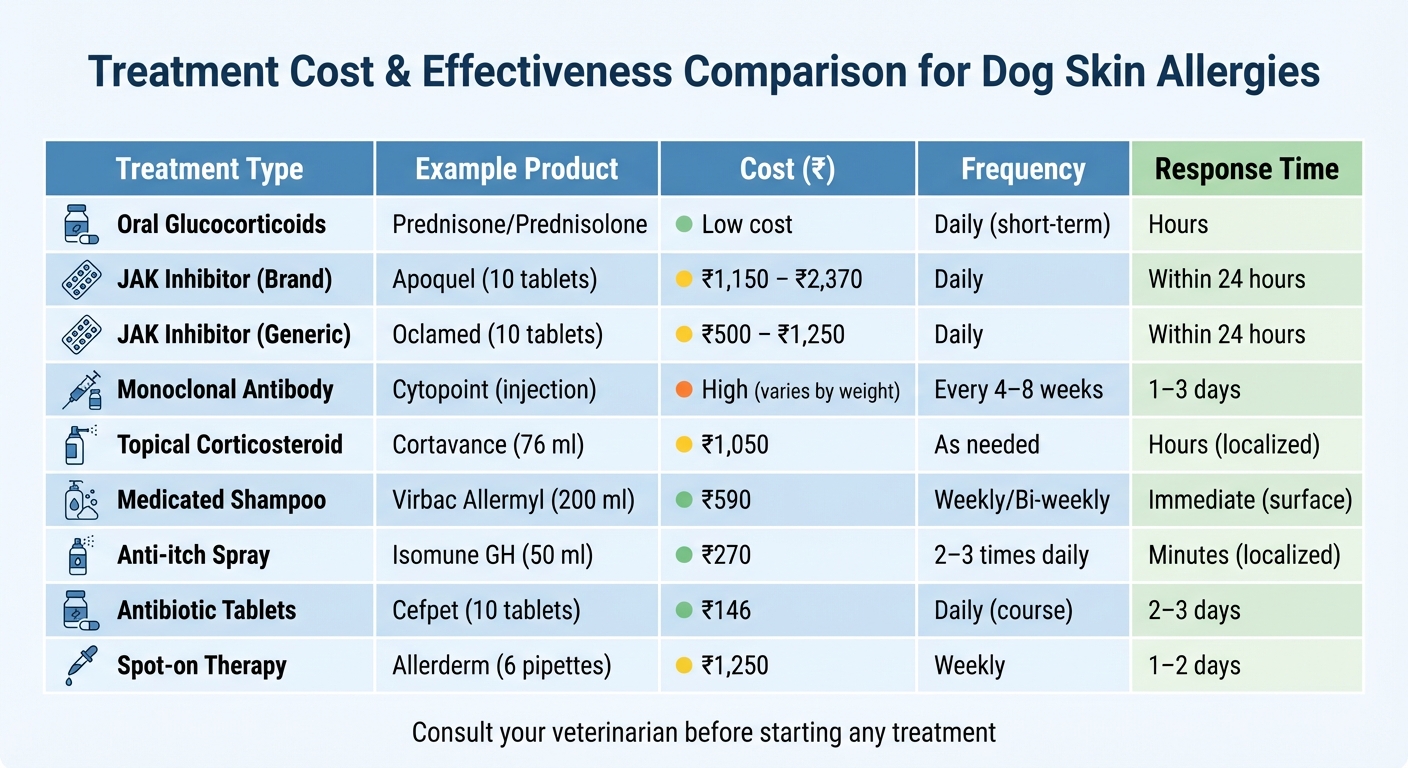
Dog Skin Allergy Treatment Options: Cost and Effectiveness Comparison
Once you've managed the triggers at home, your vet will focus on treatments to quickly ease your dog's discomfort. Allergies often lead to relentless itching, which can spiral into secondary infections, open wounds, and sleepless nights for both you and your furry companion. While these medications won't cure the allergy, they can help break the itch-scratch cycle and allow your dog's skin to heal.
Medications and Topical Solutions
Your vet may prescribe a combination of treatments based on the severity of your dog's symptoms. Oral glucocorticoids, such as prednisone or prednisolone, are often the first choice for managing acute flares. These medications work by suppressing inflammatory genes, reducing both inflammation and itching. They are highly effective and budget-friendly for short-term use (a few days to a few weeks). However, prolonged use can lead to side effects like increased thirst, frequent urination, or even diabetes.
For longer-term relief, oclacitinib (Apoquel) is a popular option. This medication targets Interleukin-31 (IL-31), a key trigger for itching in dogs. Administered daily, oclacitinib often shows results within 24 hours. In India, the branded version, Apoquel, costs between ₹1,150 and ₹2,370 for 10 tablets, while generic options like Oclamed are available at a lower cost, ranging from ₹500 to ₹1,250.
"Oclacitinib has provided veterinarians with a novel, effective, and well-tolerated treatment... with a key benefit being its impressively rapid efficacy." – Kinga Gortel, DVM, DACVD
Another effective choice is lokivetmab (Cytopoint), a monoclonal antibody injection that neutralises IL-31 before it causes itching. This treatment is especially convenient for dogs that are difficult to medicate orally, as it is given every 4 to 8 weeks. Lokivetmab usually starts working within 1 to 3 days, though it can be a more expensive option, particularly for larger breeds.
For specific problem areas, such as itchy paws or inflamed ears, topical glucocorticoid sprays (like hydrocortisone aceponate, sold as Cortavance) offer targeted relief without the systemic side effects of oral steroids. A 76 ml bottle of Cortavance costs about ₹1,050 in India and is typically applied for seven days to treat acute "hot spots".
Medicated shampoos, such as Virbac Allermyl (₹590 for 200 ml) or Lozalo (₹350 for 250 ml), help wash away allergens and soothe irritated skin. Bathing your dog once or twice a week can significantly reduce allergen build-up and prevent flare-ups. Additionally, anti-itch sprays like Isomune GH (₹270 for 50 ml) can be applied two to three times daily for immediate relief in affected areas.
If constant scratching has led to secondary infections, your vet may prescribe antibiotics like Cefpet (₹146 for 10 tablets) or antifungal medications like Bioclan (₹200 for 10 tablets). Addressing these infections is crucial for effective allergy management.
Antihistamines, such as diphenhydramine (Benadryl) or cetirizine (Zyrtec), are another option. While they are less effective for severe itching, they can help manage mild symptoms or serve as part of a broader treatment plan. Dosages typically range from 2 to 4 mg/kg for diphenhydramine and about 1 mg/kg for cetirizine, given every 8 to 24 hours. These medications are affordable but may cause drowsiness, particularly with first-generation options like Benadryl .
Here’s a quick comparison of the most common treatments in terms of cost, frequency, and response time:
Treatment Cost Comparison
| Treatment Type | Example Product | Cost (₹) | Frequency | Response Time |
|---|---|---|---|---|
| Oral Glucocorticoids | Prednisone/Prednisolone | Low cost | Daily (short-term) | Hours |
| JAK Inhibitor (Brand) | Apoquel (10 tablets) | ₹1,150 – ₹2,370 | Daily | Within 24 hours |
| JAK Inhibitor (Generic) | Oclamed (10 tablets) | ₹500 – ₹1,250 | Daily | Within 24 hours |
| Monoclonal Antibody | Cytopoint (injection) | High (varies by weight) | Every 4–8 weeks | 1–3 days |
| Topical Corticosteroid | Cortavance (76 ml) | ₹1,050 | As needed | Hours (localized) |
| Medicated Shampoo | Virbac Allermyl (200 ml) | ₹590 | Weekly/Bi-weekly | Immediate (surface) |
| Anti-itch Spray | Isomune GH (50 ml) | ₹270 | 2–3 times daily | Minutes (localized) |
| Antibiotic Tablets | Cefpet (10 tablets) | ₹146 | Daily (course) | 2–3 days |
| Spot-on Therapy | Allerderm (6 pipettes) | ₹1,250 | Weekly | 1–2 days |
The best treatment for your dog will depend on factors like age, symptom severity, and budget. For instance, oclacitinib is only approved for dogs over 12 months old, while lokivetmab can be used regardless of age. However, if your dog has a history of cancer or serious infections, medications like oclacitinib or cyclosporine may not be suitable .
While these treatments provide immediate relief, they don't tackle the root cause of allergies. That's why vets often combine them with dietary changes and supplements for a more comprehensive approach.
Managing Allergies with Diet and Supplements
While medications can provide relief during flare-ups, managing allergies in the long run often hinges on diet and supplements. Though food allergies are less frequent than airborne ones, they can still cause persistent itching and worsen over time if left unaddressed. By focusing on the right diet and supplements, you can help fortify your dog's skin barrier and potentially reduce their dependency on medication. Let’s break down how these elements work together to ease chronic irritation.
Hypoallergenic Diets for Dogs in India
Food allergies occur when your dog's immune system mistakenly reacts to certain proteins as harmful. Common triggers include beef, chicken, eggs, corn, wheat, soy, and milk - ingredients commonly found in both commercial pet foods and homemade diets.
Hypoallergenic diets aim to eliminate these allergens entirely and generally fall into two main types:
- Novel Protein Diets: These diets feature proteins your dog hasn’t consumed before, such as fish, lamb, duck, or rabbit. Since your dog’s immune system hasn’t encountered these proteins, it’s less likely to react. For example, if your dog has been eating chicken-based kibble, switching to a fish-based formula could help - provided they’ve never been exposed to fish before.
- Hydrolyzed Protein Diets: These prescription diets contain proteins broken down into tiny fragments, making them unrecognisable to the immune system. This option is ideal for dogs with a complex food history where finding a truly novel protein is challenging.
In India, options such as Royal Canin Hypoallergenic, Hill's Prescription Diet z/d, and Farmina N&D Quinoa Skin & Coat (featuring fish as a novel protein) are widely available, alongside emerging local brands offering grain-free, single-protein formulas. When choosing, prioritise formulas with a single, clearly identified protein source and avoid vague labels like "poultry meal" or "animal by-products."
While the right diet lays the groundwork for allergy management, supplements can provide an extra layer of support for your dog's skin and coat health.
Supplements for Skin and Coat Health
Even the most carefully chosen diet can benefit from the addition of targeted supplements. These supplements work alongside medications to repair the skin barrier and ease inflammation.
- Omega-3 Fatty Acids: High-quality fish oil supplements rich in EPA and DHA are excellent for reducing skin inflammation, improving coat quality, and alleviating itching. A typical dosage is 300 mg per 4.5 kg of body weight daily. For instance, a 10 kg dog would need around 660 mg per day.
- Probiotics: These support the gut-skin connection, which plays a role in immune system regulation. A healthy gut microbiome can help manage inflammation and improve overall skin health. Look for veterinary-grade probiotics with strains like Lactobacillus and Bifidobacterium.
- Essential Fatty Acids (EFAs): Derived from sources like hemp seed oil or flaxseed oil, EFAs can aid in maintaining skin barrier function. However, they are generally less effective than marine-based omega-3s.
Supplements take time to show results - usually 4 to 8 weeks. Patience and consistency are key to seeing visible improvements. And when food allergies are suspected, an elimination diet becomes an essential next step.
Using Elimination Diets to Find Food Triggers
If your vet suspects food allergies, an elimination diet trial is often the go-to method for identifying specific triggers. This approach requires strict adherence to ensure accuracy.
Here’s how it works:
- Strict Diet: Feed your dog only a novel protein or hydrolyzed protein diet for 8 to 12 weeks. No treats, table scraps, flavored medications, or chews are allowed. Even flavored heartworm tablets or beef-flavored antibiotics should be avoided, as they can interfere with the trial.
- Modify Routine: If you use flavored toothpaste for your dog, switch to an unflavored version or skip brushing temporarily. In multi-pet households, ensure your allergic dog doesn’t have access to other pets’ food.
- Food Journal: Keep a detailed record of daily itching levels, any dietary deviations, and changes in coat or ear condition.
If your dog’s symptoms improve significantly by the end of the trial, it suggests a food-related trigger. The next step is the re-challenge phase, where you reintroduce your dog’s previous food. If symptoms return within 1 hour to 14 days, it confirms the allergy. From there, you can reintroduce individual ingredients - such as chicken, beef, or wheat - one at a time over a 14-day period to pinpoint the exact culprit.
The most common reason elimination diets fail is owner non-compliance. Even a single treat or accidental exposure to a restricted ingredient can reset the process. Sticking to the regimen is crucial for accurate results.
With internal triggers addressed through diet and supplements, the next step is to tackle external factors through preventive care and grooming tailored to Indian households.
sbb-itb-5205b1e
Preventive Care and Grooming for Indian Homes
Once you’ve got your dog's diet and supplements sorted, the next step is consistent preventive care. India’s varied climates often bring a host of allergens - pollen, dust mites, mould, and fleas being the usual culprits. These triggers can be relentless, making regular grooming and keeping your surroundings clean an absolute must.
Natural Remedies for Soothing Skin
External care plays a big role in keeping your dog comfortable when dealing with itchy or inflamed skin. A few simple, natural remedies can provide temporary relief while you wait for your vet's advice. One popular option is colloidal oatmeal baths, which are known for their ability to moisturise and calm irritated skin. To try this, dissolve colloidal oatmeal (you can find it in pet stores) in lukewarm water, and let your dog soak in it for about 10 minutes. Rinse gently and pat them dry with a soft towel.
Keep in mind, these remedies are supportive measures - they work best alongside prescribed treatments and a regular grooming schedule.
Regular Grooming Practices
To complement these natural remedies, regular grooming is essential for maintaining your dog’s skin health. For dogs with atopic dermatitis, weekly to biweekly baths are recommended. Bathing helps wash away allergens like pollen, dust, and dander that can stick to your dog’s coat and skin. Using medicated shampoos with ingredients like chlorhexidine can also help manage bacterial and yeast infections, which are more common in humid weather conditions.
"Bathing dogs with AD may decrease pruritus. Bathing can reduce allergen load and can be the most effective way to implement avoidance." - Sandra Diaz, DVM, MS, DACVD
Always use lukewarm water for baths, as it can cool the skin and reduce itching. After walks, make it a habit to rinse your dog’s paws, belly, and face to remove allergens immediately. Between baths, antiseptic wipes or medicated mousses can be used on high-contact areas like paws, armpits, and skin folds to control microbial buildup. Keeping your dog’s nails trimmed is equally important - it prevents them from scratching too hard and reduces the risk of secondary infections.
| Grooming Practice | Recommended Frequency | Primary Benefit |
|---|---|---|
| Medicated Bathing | Weekly to Biweekly | Removes allergens; cools skin; controls infections |
| Rinsing after Walks | After every outdoor session | Removes grass/pollen allergens immediately |
| Topical Wipes/Mousse | Between baths | Maintains skin moisture and removes surface debris |
| Nail Trimming | As needed (Regularly) | Prevents skin damage from scratching |
Year-Round Flea and Tick Prevention
In India, fleas and ticks are a year-round problem, with their numbers peaking during the monsoon and summer months. For dogs with skin allergies, even one flea bite can lead to a severe reaction called flea allergy dermatitis. That’s why monthly flea and tick prevention is non-negotiable. Use vet-recommended products like spot-ons, oral tablets, or collars, and make sure to apply them regularly - even if you don’t see fleas.
Keep your home flea-free by vacuuming carpets, furniture, and pet bedding frequently. Wash your dog’s bedding weekly in hot water to kill any lingering pests. If you have multiple pets, ensure that all of them are on a flea prevention plan, as fleas can easily hop from one animal to another. In areas where fleas are particularly bad, consider treating your yard or outdoor spaces with pet-safe insecticides during peak seasons.
Monitoring and Building a Long-Term Care Routine
Managing your dog's skin allergies is an ongoing process, not a one-time solution. It requires teamwork between you, your dog, and your veterinarian. By keeping an eye on your dog's skin health and making adjustments as needed, you can create a care plan that reduces flare-ups and helps your dog feel more comfortable over time.
Tracking Skin Health Over Time
Keeping a record of your dog's skin condition is a simple but effective way to stay ahead of potential issues. Make a habit of noting down episodes of itching and checking areas like the face, ears, paws, armpits, and belly for early warning signs. Itching is usually the first sign of atopic dermatitis, even before visible skin changes appear. Look for red or moist skin, frequent licking of paws, face rubbing, or scooting as indicators of a flare-up.
If scratching becomes chronic, it can lead to more serious issues like hair loss, thickened skin, or discoloration. Should these symptoms arise, it’s a signal to revisit your care plan.
"The best assessment of response [to treatment] is to compare the degree of disease or discomfort between similar seasons."
- Sandra Diaz, DVM, MS, DACVD
A photo journal can be incredibly useful for tracking changes. Weekly photos of problem areas under consistent lighting can help you and your vet assess progress or identify worsening symptoms. Since 40% to 75% of dogs with atopic dermatitis experience seasonal patterns, identifying when symptoms peak can help you anticipate and manage flare-ups more effectively.
Adjusting Care for Different Seasons
India's diverse climate means allergen levels vary throughout the year, and your dog's care routine should adapt accordingly. For example, during the monsoon, high humidity can increase the risk of yeast and bacterial infections. Using antifungal shampoos and thoroughly drying your dog after walks can help reduce exposure to mould spores and damp allergens.
In summer, environmental allergies often worsen due to rising pollen levels. If itching increases between March and June, it may be necessary to use topical treatments more frequently. Winter, on the other hand, tends to bring indoor allergens like dust mites along with the risk of dry skin. While you might lower medication doses during this time, flea prevention should remain a priority, as fleas are active year-round in many Indian cities.
| Season | Common Triggers | Care Adjustments |
|---|---|---|
| Monsoon | Mould, humidity, yeast | Use antifungal shampoos; dry thoroughly |
| Summer | Pollen, dust, heat | Increase topical treatments; monitor hot spots |
| Winter | Dust mites, dry skin | Maintain flea control; moisturise skin |
These seasonal adjustments, guided by your observations, help ensure your dog stays comfortable year-round.
When to See Your Vet Again
Your detailed log can also help you identify when it’s time to consult your vet. Sudden relapses or new symptoms may indicate an underlying issue, such as a lapse in flea control, a dietary problem, or a secondary infection. Monitor for signs like new rashes, crusting, oozing, a yeasty smell, or persistent ear scratching. Chronic ear infections, in particular, can be a subtle but significant indicator of an allergy flare-up.
If your dog’s skin becomes darker, thicker, or shows increased hair loss, it’s time for a vet visit. Similarly, any side effects from medications - such as vomiting, lethargy, or increased thirst - should be reported immediately. Managing atopic dermatitis is a lifelong process, so regular progress checks with your vet are essential.
"A relapse of clinical signs in a dog that is otherwise well controlled should prompt an investigation into what caused the exacerbation of pruritus."
- Merck Veterinary Manual
Conclusion: Keeping Your Dog Healthy and Comfortable
Managing your dog's skin allergies isn't about seeking a permanent fix - it's about creating a life where your dog feels comfortable, happy, and can thrive despite the condition. By focusing on consistent care and setting realistic expectations, as discussed earlier, you can make a noticeable difference in your dog's well-being. While skin allergies are a lifelong challenge, regular care can help keep them under control.
Success doesn't mean flawless skin every day. It’s about reducing flare-ups, letting your dog sleep better, scratch less, and enjoy activities like playing, eating, and resting without constant irritation. Treatments like allergen-specific immunotherapy, which benefits around 66% of dogs, combined with proper medication, diet, grooming, and managing their surroundings, can provide lasting relief.
"A good management plan requires the use of several different treatments, the understanding and reasonable expectations for response from the pet owner, and frequent progress evaluations so that the plan can be adjusted as needed."
- Merck Veterinary Manual
This isn’t something you caused, and improvement takes time. For instance, immunotherapy might take 6–12 months to show noticeable results. What truly matters is your dedication - monitoring symptoms, adjusting care for seasonal changes, and working closely with your vet. Alongside medications and environmental adjustments, a balanced diet and regular grooming are essential parts of a well-rounded approach. This ongoing effort is what defines successful allergy management.
FAQs
How do I know what my dog is allergic to?
To figure out what might be causing your dog’s allergies, the vet will start by reviewing their medical history and symptoms. They may also perform tests like skin cytology or use a flea comb to rule out specific issues. For food allergies, the most reliable method is an elimination diet - this involves feeding your dog a controlled diet for 8–12 weeks without any deviations. Allergy testing can help pinpoint environmental triggers that might require immunotherapy, though it doesn’t confirm atopy (a genetic tendency to develop allergic conditions). It’s equally important to rule out parasites like fleas, as they can either imitate or worsen allergy symptoms.
Why is my dog still itching after medication?
If your dog continues to itch even after taking medication, there might be underlying issues causing or aggravating the symptoms. Common culprits include fleas, bacterial or yeast infections, or even food allergies. These factors can irritate your dog's skin and make itching worse. Some allergies, like atopic dermatitis, are chronic and need consistent management over the long term.
Medications such as Apoquel or Cytopoint can help ease the discomfort, but keep in mind they don't eliminate the root cause of the allergy. It's a good idea to consult your vet to reassess the treatment plan. They might recommend adjustments or explore triggers like your dog's diet or environmental factors to provide better relief.
Apoquel vs Cytopoint - what should I choose?
When deciding between Apoquel and Cytopoint, it’s all about what suits your dog’s condition and your vet’s recommendation. Apoquel acts fast by blocking itch signals (IL-31), providing quick relief. On the other hand, Cytopoint is a monthly injection that targets IL-31 with fewer side effects, making it a great option for ongoing management. Sometimes, vets may even combine the two for better results. Your vet will customise the treatment plan based on your dog's specific needs.


