


When your dog has diarrhea, it’s often a sign of an underlying issue, ranging from minor dietary mishaps to infections or parasites. Preventing this problem involves simple but effective measures to maintain their digestive health. Here’s a quick guide:
- Stick to a consistent diet: Sudden food changes can upset your dog’s stomach. Transition new foods gradually over 7–10 days.
- Avoid table scraps: Human foods, especially fatty or toxic items like chocolate, onions, or cooked bones, can cause severe digestive issues.
- Provide clean water: Fresh, clean water helps prevent dehydration and reduces exposure to harmful bacteria or parasites.
- Maintain hygiene: Regularly clean your dog’s living areas, food bowls, and remove faecal matter promptly.
- Use probiotics and fibre: These support gut health and improve stool consistency. Safe options include plain canned pumpkin or dog-specific probiotics.
- Routine vet care: Annual check-ups, faecal tests, vaccinations, and deworming keep your dog healthy and protected against parasites or infections.
- Monitor outdoor activities: Keep your dog on a leash to prevent them from eating harmful items or drinking from dirty water sources.
If diarrhea lasts more than 48 hours or is accompanied by symptoms like lethargy, vomiting, or blood in stools, consult a vet immediately. Puppies and senior dogs are especially vulnerable to dehydration, so extra care is crucial.
How To Stop Your Dog's Diarrhea...And Keep it From Coming Back!
Keep Your Dog's Diet Consistent
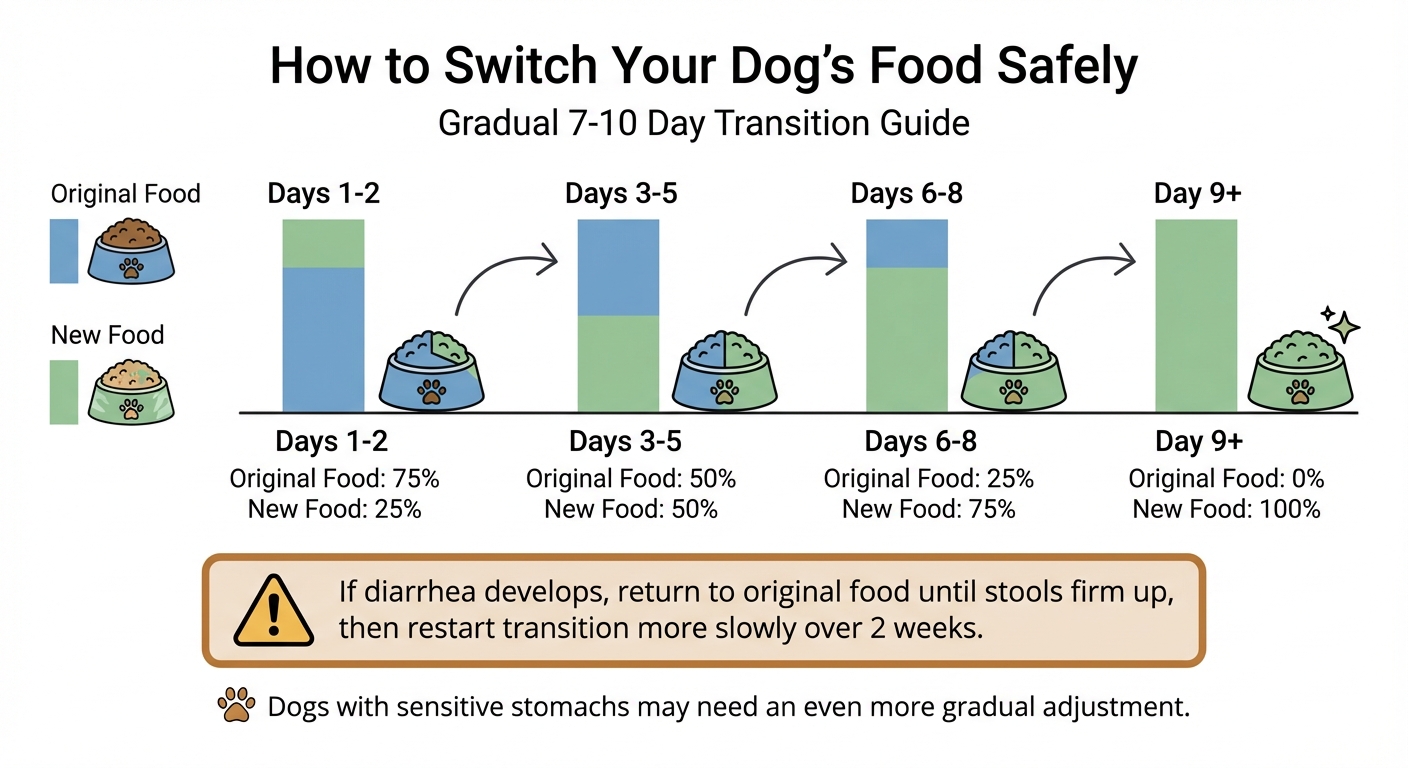
7-10 Day Dog Food Transition Schedule
Dogs' digestive systems thrive on consistency. Sudden changes in diet can upset the balance of beneficial gut bacteria, often leading to loose stools or diarrhoea. In fact, one of the most common causes of acute diarrhoea in dogs is eating something outside their regular, balanced diet.
Choose Quality Dog Food
The right food can make a big difference. Dogs have unique nutritional needs depending on their age, size, and breed. For example, puppies, large breeds, and senior dogs all require specific nutrients to keep their digestive systems healthy. Selecting food tailored to these needs can help minimise digestive issues.
Switch Foods Slowly Over 7-10 Days
Changing your dog's food? Take it slow. A gradual transition over 7 to 10 days gives your dog's gut time to adapt, reducing the risk of diarrhoea. Here's a simple guide to follow:
| Transition Day | Original Food % | New Food % |
|---|---|---|
| Days 1-2 | 75% | 25% |
| Days 3-5 | 50% | 50% |
| Days 6-8 | 25% | 75% |
| Day 9+ | 0% | 100% |
If your dog develops diarrhoea during this process, go back to the original food until their stools firm up. Then, restart the transition more slowly, over two weeks. Dogs with sensitive stomachs might need an even more gradual adjustment.
Don't Feed Table Scraps or Human Food
While transitioning foods is important, so is sticking to appropriate meals. High-fat human foods like bacon, gravy, or poultry scraps can inflame the pancreas, potentially causing pancreatitis. This condition often leads to severe diarrhoea and vomiting. Veterinarians frequently observe a rise in pancreatitis cases after festive meals.
"Eating something other than their regular food or something they picked up off the ground are common causes of stomach upset and diarrhoea in dogs."
– Dr. Jo Myers, Veterinarian, Vetster
Human snacks are not only nutritionally incomplete for dogs, but they can also contain harmful ingredients. Foods like onions, garlic, grapes, raisins, chocolate, and xylitol (a common sweetener) are toxic to dogs and may cause serious health problems, including kidney failure, anaemia, or seizures. Cooked bones are another hazard - they can splinter easily, risking punctures to the digestive tract or life-threatening blockages.
Focus on Hydration and Hygiene
After establishing a balanced diet, the next step in protecting your dog's digestive health lies in proper hydration and hygiene. Clean water and good hygiene practices are essential for preventing diarrhoea and its related complications, such as dehydration and kidney strain. Rapid fluid loss can place undue stress on the kidneys, potentially leading to serious health issues. Simple daily habits can go a long way in shielding your dog from these risks.
Provide Fresh, Clean Water Daily
Always ensure your dog has access to fresh, clean water. This helps reduce the risk of exposure to harmful pathogens. If clean water isn't available, dogs may turn to contaminated sources, which can harbour diarrhoea-causing parasites like Giardia and Coccidia, as well as harmful bacteria such as Salmonella and E. coli.
"Have fresh water available at all times."
– Cornell University College of Veterinary Medicine
Did you know that your pet’s digestive system accounts for roughly 60% to 80% of their immune system? Keeping it in good shape starts with proper hydration. Clean water aids in flushing out toxins or pathogens your dog may have accidentally consumed. If your dog is showing mild stomach upset, try offering cooled, boiled water in small, frequent amounts.
Avoid Dirty Water Sources
Stagnant or public water sources can be a breeding ground for dangerous pathogens that cause severe gastrointestinal issues.
| Common Water-Borne Pathogen | Type | Symptoms in Dogs |
|---|---|---|
| Giardia | Parasite | Severe, watery diarrhoea |
| Coccidia | Parasite | Diarrhoea, sometimes with mucus or blood |
| Salmonella | Bacteria | Severe, watery diarrhoea, often containing blood |
| Campylobacter | Bacteria | Severe, watery diarrhoea, often containing blood |
"Keep your dog on a leash, and stop them from drinking from natural water sources such as ponds or puddles, or from public dog watering bowls."
– Dr. Angela Beal, PetMD
When you’re out walking, keep your dog on a leash to prevent them from drinking from potentially contaminated sources. Teaching commands like "leave it" can also be helpful in keeping your dog away from unsafe water. Carrying a portable water bottle and bowl ensures your dog stays hydrated without relying on shared public water stations. At home, maintaining a clean environment helps minimise the chances of re-infection.
Regularly Clean Your Dog’s Living Areas
A clean living space reduces your dog’s exposure to bacteria, viruses, and parasites that could lead to diarrhoea. Wash your dog's bedding, crates, and play areas frequently, especially if they have a habit of picking up random objects. Food and water bowls should be cleaned daily to prevent bacterial buildup.
Secure household rubbish in dog-proof containers to avoid scavenging. Promptly remove faecal matter from your yard or garden to lower the risk of reinfection. For cleaning indoor accidents, use pet-safe sanitising sprays. Some products can even turn tap water into a sanitiser that kills pathogens without leaving harmful residues. While most mild cases of diarrhoea in dogs resolve within 24 to 48 hours with proper care, maintaining good hygiene can help prevent these issues from arising in the first place.
Add Probiotics and Fibre to Your Dog's Diet
Improving your dog's gut health can help lower the risk of diarrhoea. Probiotics and fibre work together to create a balanced digestive system - probiotics provide beneficial bacteria, while fibre acts as a prebiotic, feeding those bacteria and helping them thrive. This combination is particularly helpful for dogs recovering from illnesses or antibiotic treatments, which often disrupt the natural balance of gut flora. These dietary adjustments work hand-in-hand with maintaining a consistent diet and proper hydration, as mentioned earlier.
Use Probiotics Made for Dogs
Probiotics are live microorganisms, such as Lactobacillus, Bifidobacterium, and Enterococcus, that promote a healthy balance of bacteria in your dog's digestive system. Always choose probiotics specifically designed for dogs, as their gut flora and nutritional requirements differ from those of humans. These supplements are typically measured in billions of colony-forming units (CFUs), with recommended daily doses ranging from 1 billion to 10 billion CFUs. Introduce probiotics gradually to help your dog’s system adjust, and for the best results, give them during or after meals.
Add Safe Fibre Sources
Fibre plays a key role in supporting probiotics by serving as food for these beneficial bacteria, boosting their activity. It also helps improve stool consistency, regulate colon motility, and bind harmful microbial toxins.
You can include safe fibre sources like plain canned pumpkin (ensure it’s not pumpkin pie filling with added sugars and spices), boiled sweet potatoes (without the skin), plain oatmeal, or bananas. Other options include psyllium husks or unflavoured, unsweetened Metamucil - use 1 teaspoon for small dogs and up to 3 teaspoons for larger dogs, once or twice daily. When adding fibre to your dog’s diet, always ensure they have access to plenty of fresh water to avoid dehydration. Combined with proper hygiene, these dietary changes can strengthen your dog’s digestive health.
Try Rice Water for Mild Stomach Issues
Rice water is a gentle remedy for mild stomach upsets in dogs. To make it, boil 240 mL (1 cup) of white rice in 960 mL (4 cups) of water for 10–30 minutes until the water turns milky. This soothing liquid provides easily digestible carbohydrates for energy and essential minerals while helping to reduce gas. Offer small amounts - 2–3 mL for small dogs or 30–60 mL for larger dogs - every 30–60 minutes. White rice is preferable to brown rice, as it’s easier on a sensitive stomach, while brown rice contains too much fibre for an already stressed digestive system. These simple dietary tweaks, paired with regular vet check-ups, contribute to a well-rounded preventive care routine.
sbb-itb-5205b1e
Take Your Dog for Regular Vet Visits
Routine vet visits play a key role in preventing digestive troubles, including diarrhoea. These check-ups help your vet catch potential issues early - like kidney disease, liver disease, pancreatitis, or even cancer - that could lead to digestive problems. Annual faecal tests are especially important, as they can detect parasites like roundworms, hookworms, whipworms, and giardia, which often cause chronic or sudden diarrhoea. When paired with a good diet and hygiene, regular vet care helps keep your dog's digestive system in check.
Adult dogs should visit the vet at least once a year. Puppies, on the other hand, need more frequent visits - every 3 to 4 weeks - until they’re 4 months old. Senior dogs (aged 7 and above) require check-ups twice a year or more. During these visits, bring a fresh stool sample for parasite screening and be prepared to discuss your dog’s diet, treats, and any recent changes in their bowel habits.
Keep Up with Deworming and Vaccinations
Vaccinations are a critical defence against infections that can cause severe diarrhoea. Core vaccines, like those for parvovirus and distemper, are particularly important for puppies, who are more vulnerable to these diseases.
"Vaccination will prevent potentially life-threatening causes of diarrhoea, especially in young dogs, caused by parvovirus." – Dr. Carly Fox, Senior Veterinarian at Schwarzman Animal Medical Center
Year-round heartworm and flea/tick preventatives are equally essential. Many heartworm medications also help control intestinal parasites. Regular deworming, combined with annual faecal screenings, ensures your dog remains parasite-free and maintains healthy digestion.
Watch for Early Warning Signs
If your dog’s diarrhoea lasts longer than 48–72 hours or is paired with symptoms like loss of appetite, lethargy, black or tarry stools, or vomiting, don’t wait - contact your vet immediately.
"Many cases of diarrhoea in dogs and cats are mild and self-limiting. If a pet stops eating, is lethargic, the diarrhoea is black or tarry in quality, there is associated vomiting, or the diarrhoea doesn't resolve in 48–72 hours then veterinary care should be sought." – Dr. Meredith Miller, Associate Clinical Professor of Small Animal Medicine, Cornell University
Checking for dehydration at home is simple. Lift the skin at the back of your dog’s neck and see if it snaps back right away. If it doesn’t, your dog may be dehydrated and should see a vet urgently.
Watch Your Dog During Outdoor Activities
Keeping an eye on your dog during outdoor adventures is another way to prevent digestive issues. Always use a leash, teach commands like "leave it" to stop them from eating harmful items, and steer clear of stagnant water sources. Eating non-food items is a common cause of upset stomachs in dogs.
Introduce New Foods Carefully
Maintaining your dog's digestive health goes beyond consistent feeding and hygiene - it also involves careful food introductions. Sudden changes in diet can upset your dog's stomach. Whether you're switching food brands, trying a new protein, or adding treats, abrupt changes can lead to vomiting, diarrhoea, or even appetite loss. For dogs with sensitive stomachs, the adjustment period may need to extend to 10–14 days instead of the typical 5–7 days. Take it slow, observe your dog's reactions, and follow these steps to transition their diet safely.
Use a Bland Diet for Recovery
If your dog is recovering from diarrhoea, a bland diet can help their digestive system settle before returning to their regular food. A simple mix of boiled lean meat and white rice in a 1:1 ratio works well. Opt for proteins like chicken, turkey, or hamburger, ensuring the meat is boiled thoroughly to remove excess fat - too much fat can worsen diarrhoea or even lead to pancreatitis.
Feed small portions every 2–3 hours, starting with 1–2 tablespoons per serving. Stick to this diet for 3–5 days, then gradually reintroduce their regular food over the next three days by mixing it in small amounts with the bland diet.
Add New Foods One at a Time
Adding new foods too quickly can make it difficult to identify the cause of any adverse reactions. Introduce one new food at a time and wait at least a week before adding another, whether it's a treat, supplement, or flavoured medication. Signs of food allergies or intolerances - such as chronic diarrhoea, itchy skin, recurring ear infections, or even unusual behaviours like hyperactivity - should prompt a visit to the vet. They might recommend a strict elimination trial lasting at least eight weeks.
"A diet trial can sometimes help with diagnosis (i.e. confirm a food intolerance if there is a positive response) as well serve as treatment. If your dog's veterinarian recommends a food trial, the trial should go for at least eight weeks." – Dr. Carly Fox, Senior Veterinarian, Schwarzman Animal Medical Center
During an elimination trial, your dog will eat only a hypoallergenic or novel protein diet, such as rabbit or venison, without any other food sources - not even a single treat. After the trial period, foods can be reintroduced one at a time to identify the source of the issue. While this process requires patience and strict adherence, it’s the most effective way to pinpoint food sensitivities and protect your dog from future digestive troubles.
Conclusion
To help prevent diarrhoea in dogs, focus on three main areas: keeping their diet consistent, ensuring proper hydration and hygiene, and staying up-to-date with veterinary care. Gradually transition to new foods, avoid giving table scraps, and ensure your dog only drinks clean, safe water. A clean environment also plays a big role in reducing risks.
Regular vet visits and timely vaccinations are essential for catching potential issues early. If diarrhoea persists beyond 48 hours or is accompanied by concerning symptoms like blood in the stool, repeated vomiting, or unusual lethargy, consult a veterinarian right away. Puppies and senior dogs are especially vulnerable to dehydration, so they require extra attention.
FAQs
What symptoms of diarrhea in dogs require immediate veterinary attention?
If your dog has diarrhoea, keep an eye out for serious symptoms that might require immediate veterinary attention. Contact a vet if the diarrhoea lasts longer than 48 hours, contains blood (either bright red or black and tarry), or is paired with vomiting, weakness, lethargy, abdominal pain, or signs of dehydration. Watch for indicators like dry gums, sunken eyes, or heavy panting.
Puppies, older dogs, or those with pre-existing health conditions are particularly at risk. Acting quickly in such cases can help avoid complications and ensure your dog gets the proper care they need.
What is the best way to introduce new foods to my dog's diet without causing stomach upset?
To safely introduce new foods into your dog's diet, it’s essential to make the change gradually over a span of 5 to 7 days. Begin by mixing 25% of the new food with 75% of the current food on the first day. Slowly increase the proportion of the new food - 50% by day 3, 75% by day 5, and finally transition to 100% of the new food by day 7. This slow adjustment allows your dog's digestive system to adapt and minimises the chances of problems like diarrhoea or vomiting.
However, if your dog experiences discomfort, such as ongoing diarrhoea, vomiting, or a loss of appetite, stop feeding the new food immediately and consult your veterinarian. Also, make sure your dog always has access to clean, fresh drinking water during the transition to aid digestion and overall well-being.
How do probiotics and fibre improve my dog's digestion?
When it comes to your dog's digestive health, probiotics and dietary fibre are essential components that can make a noticeable difference.
Probiotics are beneficial bacteria that help maintain a healthy gut environment. They support proper digestion, improve nutrient absorption, and even strengthen your dog's immune system. By balancing gut bacteria, probiotics can reduce the risk of digestive issues like diarrhoea and promote overall gut health.
Fibre, on the other hand, plays a different but equally vital role. It helps regulate stool consistency and ensures healthy bowel movements. There are two types of fibre:
- Soluble fibre, which absorbs water and forms a gel-like substance, aiding in smooth digestion.
- Insoluble fibre, which adds bulk to stools and helps improve transit time.
Together, these elements can prevent common digestive problems like diarrhoea caused by dietary changes, stress, or food intolerance. They work hand-in-hand to maintain a balanced and healthy digestive system for your dog.
Adding probiotics and fibre to your dog's diet is especially beneficial during times of dietary transition or stress. However, it's always a good idea to consult your veterinarian before making any changes to your dog's diet or introducing new supplements. This ensures the changes align with your dog's specific health needs.


